
 English
  Deutsch
  русский
Table of Contents
Hair Transplant Before and After Real Clinic Results
Turkey hair transplant before and after results are the most concrete evidence demonstrating why Turkey has become a global reference in the field of hair transplantation. The transformations achieved in operations performed in Istanbul, in particular, meet international standards not only in terms of density but also in terms of natural hairline, facial harmony, and long-term permanence.
Results for women are planned differently from the first consultation — the thinning pattern, the hairline shape and the option of working without shaving — which our women’s hair transplant in Turkey page explains.
Every procedure planned at Istanbul Vita is tailored to the individual patient based on their age, facial proportions, existing hair loss, donor capacity, and aesthetic expectations, rather than following a one-size-fits-all template. This approach ensures that the Turkish hair transplant before and after results achieved are free from an artificial appearance and offer lasting aesthetics.
For patients coming from abroad, hair transplant before and after Turkey examples have become one of the strongest deciding factors in choosing a clinic. Real patient transformations clearly demonstrate that the operation is not merely a technical procedure but a change that directly affects quality of life.
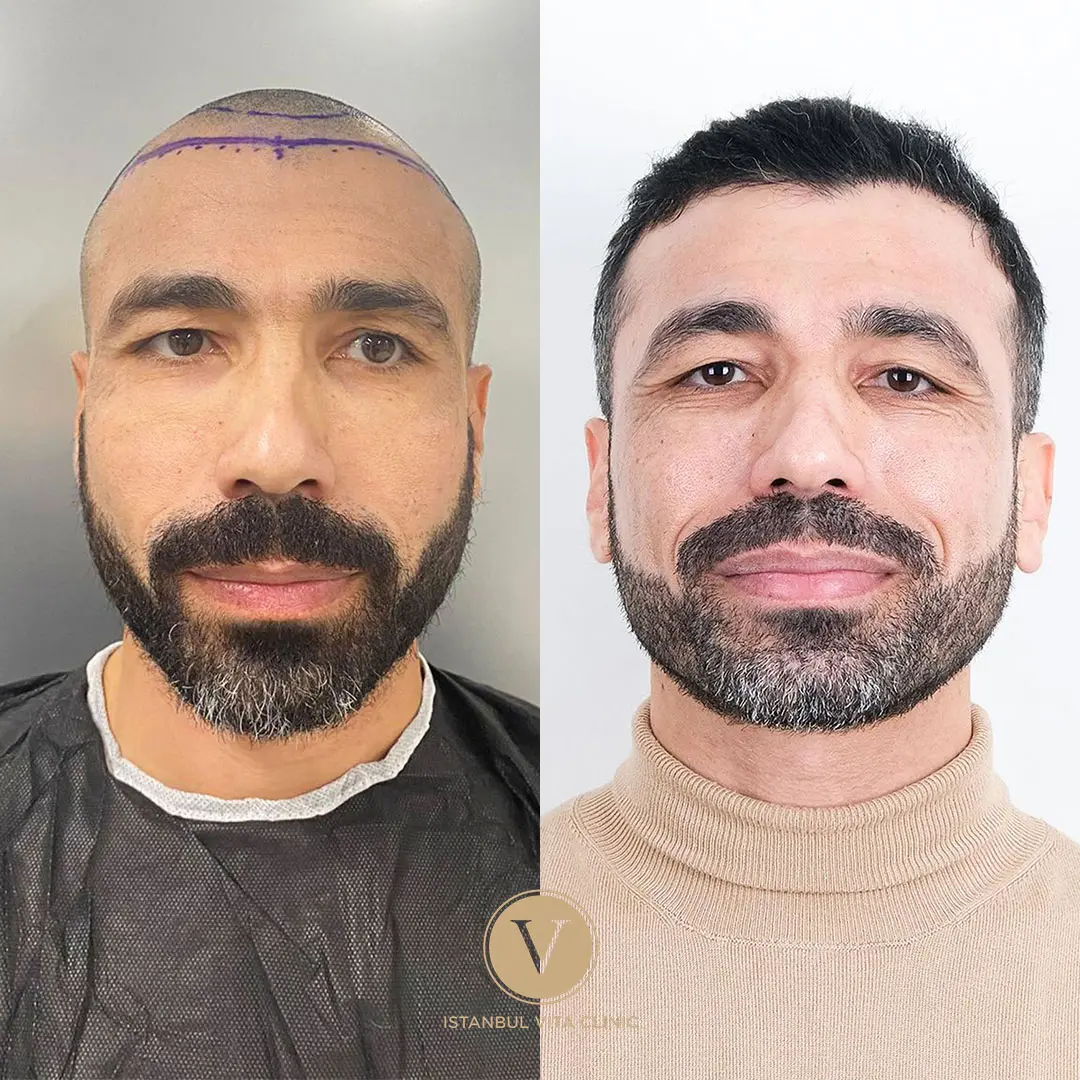
Results of a FUE Hair Transplant Before and After
Comparisons of FUE hair transplants before and after make it evident why FUE is currently the most popular method. This technique guarantees a quick and scar-free healing process by extracting each graft separately. Simultaneously, the grafts' angle and direction during transplantation are designed to precisely match the natural pattern of hair growth.
The salient features of the hair transplant before and after FUE results are as follows:
-
A natural hairline and a gentle transition
-
Density balance between the crown and mid-area
-
Returning quickly to everyday life
-
Long-term homogeneous appearance of hair
Because of this, both before and after Turkey searches, FUE results for hair transplants consistently rank highly.
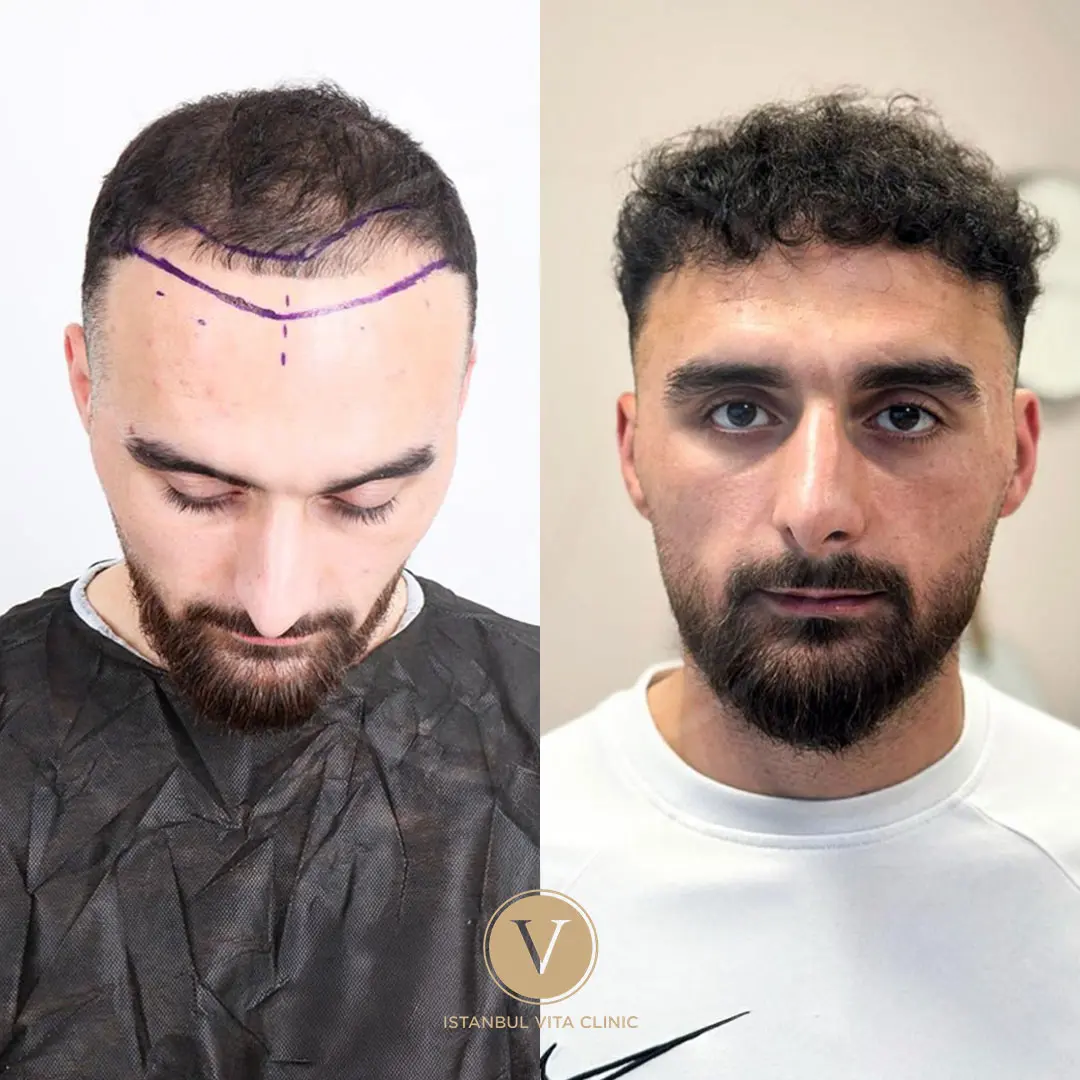
DHI Hair Transplant Before and After Density Effect
The first thing that stands out in DHI hair transplant before and after comparisons is the high density achieved in the transplanted area. By placing grafts directly with a pen without opening channels, existing hair can be thickened without damage.
Specifically:
-
Micro-density at the front hairline
-
Thinning hair between strands in women
-
Transplantation between existing hair without being visible
In such cases, the DHI method offers distinct advantages. DHI hair transplant before and after results provide a natural-looking hair appearance that is indistinguishable in terms of direction and speed.
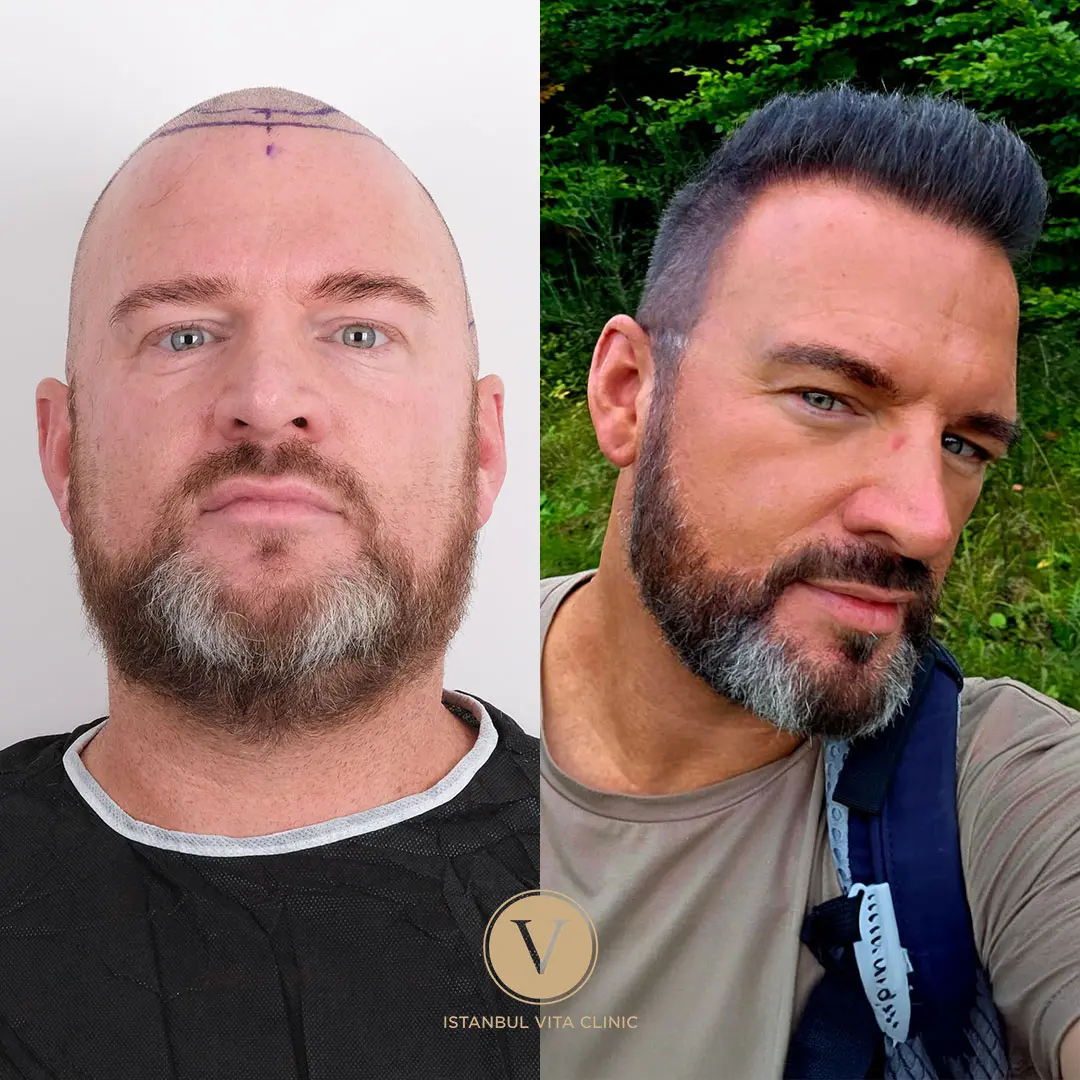
Vita Technique Hair Transplant Before and After Results
Vita Technique before and after comparisons demonstrate an advanced application that delivers the most natural and personalized results in hair transplantation. This technique optimizes the angle, density, and direction of grafts, offering superior results in terms of both aesthetics and long-term durability. Hair transplant before and after photos clearly show the natural transitions and face-compatible hair lines achieved with the Vita Technique.
With the Vita Technique, you can enjoy a range of advantages, such as:
-
Soft, natural transitions along the front hairline
-
Consistent density in the middle and crown sections
-
Protection and preservation of your current hair
-
A speedy return to your daily activities
-
A long-term look that’s both beautiful and natural
By blending FUE and DHI methods, this technique takes hair transplant results to the next level. The Vita Technique's before and after photos clearly show how successful and natural the procedure is, especially for those who have already had hair transplants or need a bit more density.
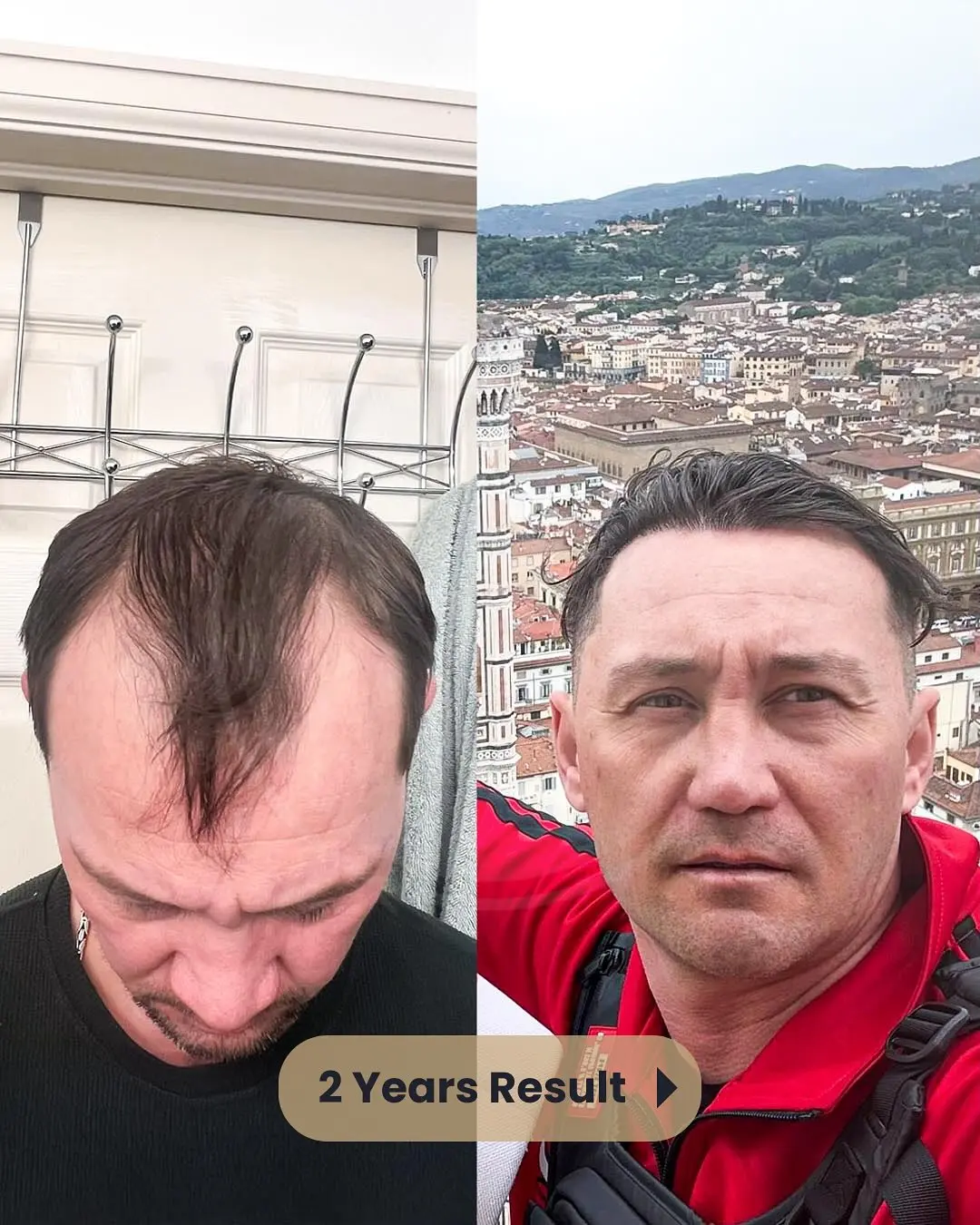
Hair Transplant Before and After Men Results
Hair transplant before and after men comparisons clearly demonstrate the transformation achieved in the areas most commonly affected by male pattern hair loss. The most common areas of intervention are the front hairline, the temple region, and the crown area.
The defining elements of aesthetic success in male hair transplant before and after and men hair transplant before and after examples are as follows:
-
Hairline appropriate to natural forehead proportions
-
Smooth temple transitions
-
Angulation appropriate to the rotational structure of the crown area
-
Balance of density between the mid-area and the front hairline
Incorrect designs in male patients can create an artificial appearance, regardless of hair density. Therefore, planning is the most critical stage that determines the outcome.
Furthermore, hair transplant before and after male and men's hair transplant before and after results also demonstrate how different age groups require varying approaches in planning.
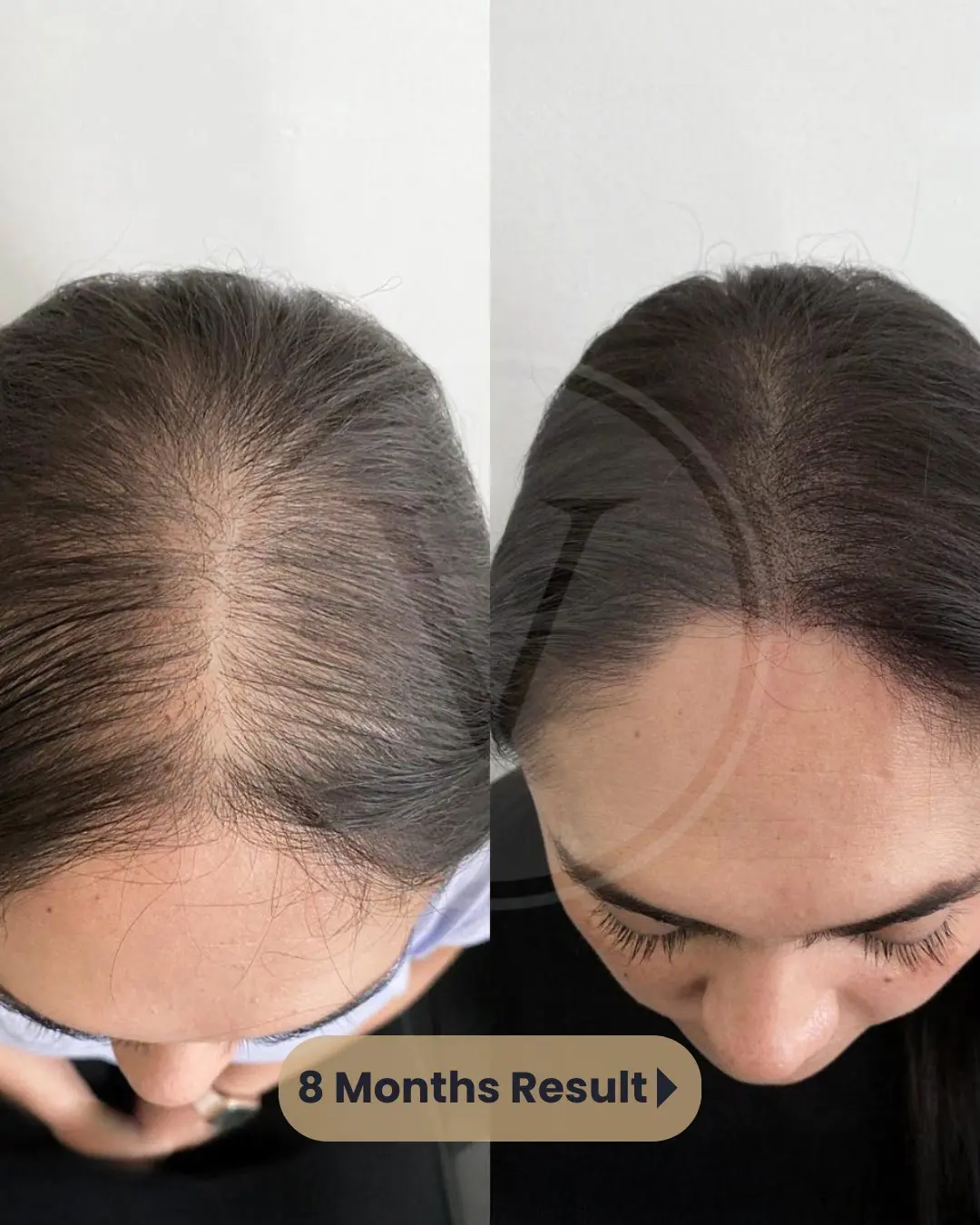
Female Hair Transplant Before and After Facts
Female hair transplant before and after results clearly show that hair transplantation in women requires a completely different approach than in men. Hair loss in women is mostly not linear; it is seen as widespread thinning.
The key success criteria in female hair transplant before and after, women's hair transplant before and after, hair transplant before and after women, hair transplant before and after woman, and hair transplant before and after female comparisons are as follows:
-
Preservation of existing hair
-
Natural placement of transplanted follicles among existing hair
-
Preservation of the natural hairline at the front
-
Increase in overall hair volume
Examples of female hair transplant before and after and blonde hair transplant before and after clearly demonstrate the impact of planning based on hair color and strand thickness on the outcome.
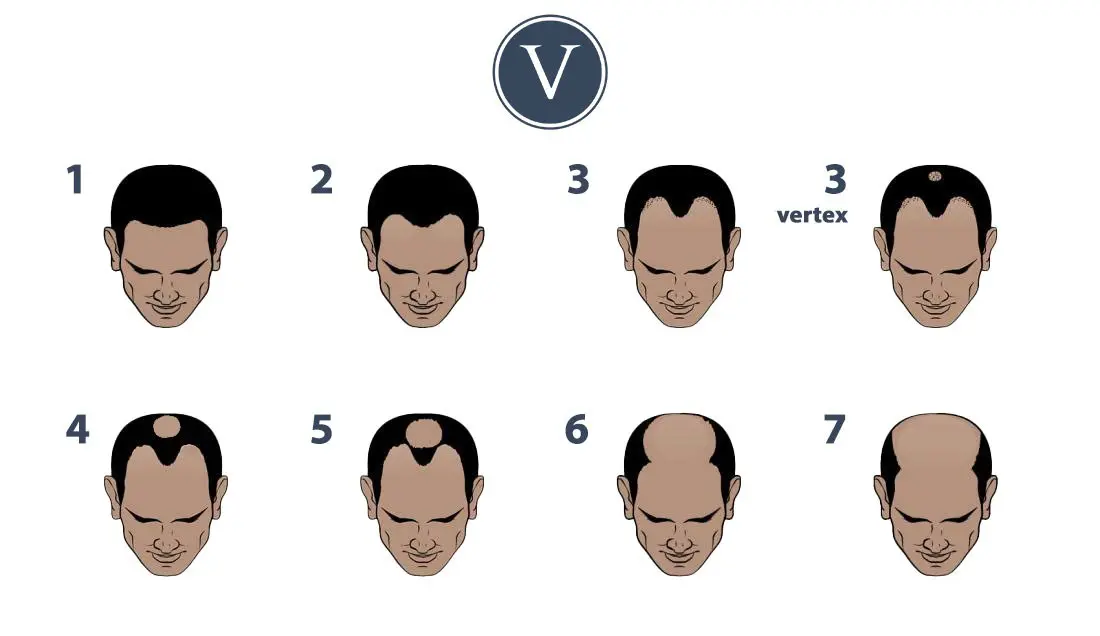
Hair Transplant Before and After Results by Norwood Scale and Graft Count
Hair transplant before and after pictures are far more significant if one considers both the Norwood scale and the graft count. The Norwood scale indicates the degree of hair loss, while the graft number is what shows the amount of coverage and density that can be attained. Different planning strategies of graft distribution, angle, and technique are needed for each Norwood stage. That is why realistic and natural outcomes mostly depend on whether the right graft count is combined with the correct Norwood level.
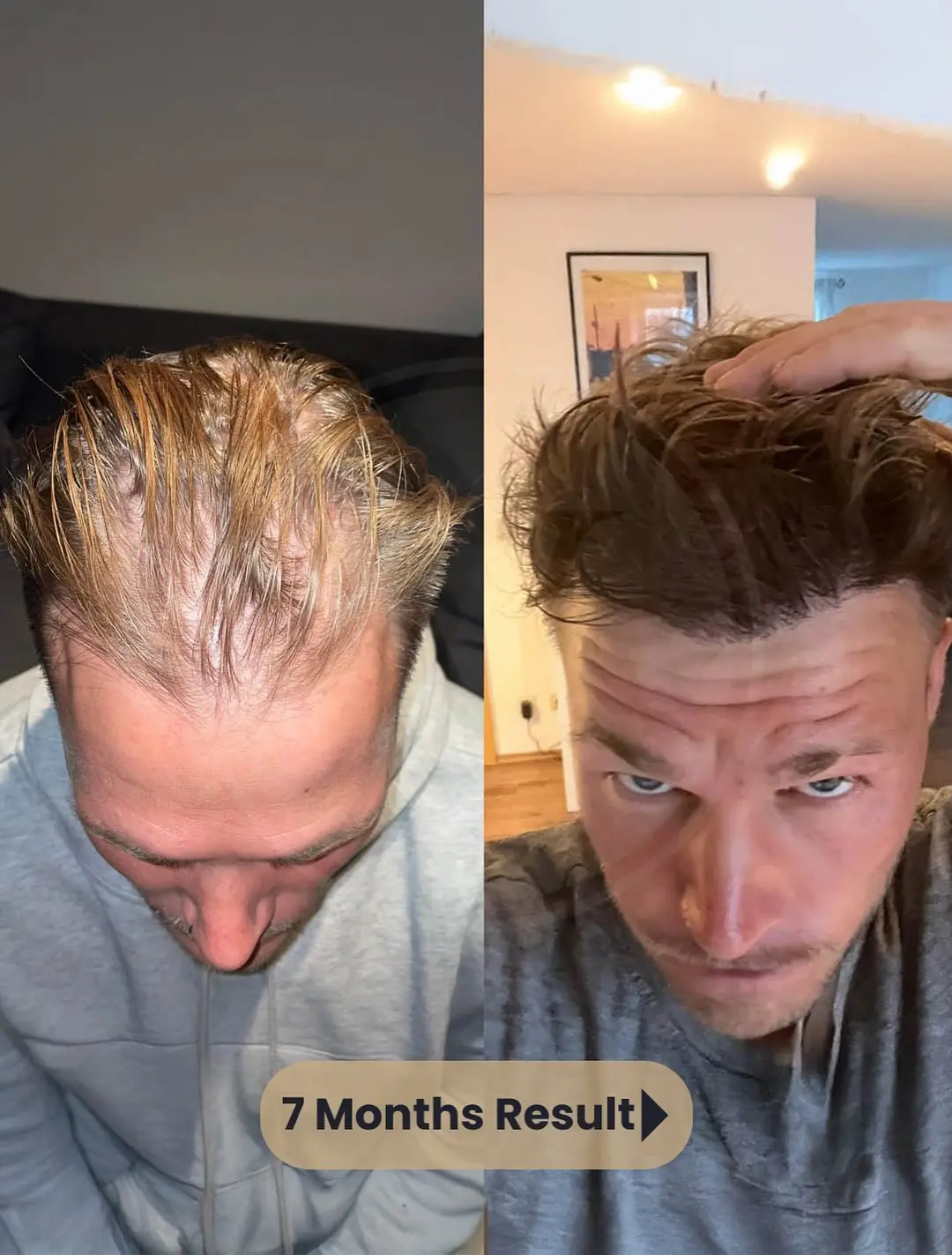
Norwood 1 Hair Transplant Before and After Results
Norwood 1 typically shows a slight recession at the hairline and very little hair loss.
Norwood 1 before and after results demonstrate minor enhancements with an emphasis on preserving a natural appearance, strengthening the current hairline, and adding a small amount of density. In many cases, 1000 graft hair transplant before and after results are sufficient for small local corrections and fine touch-ups. FUE or DHI procedures often suffice at this stage.
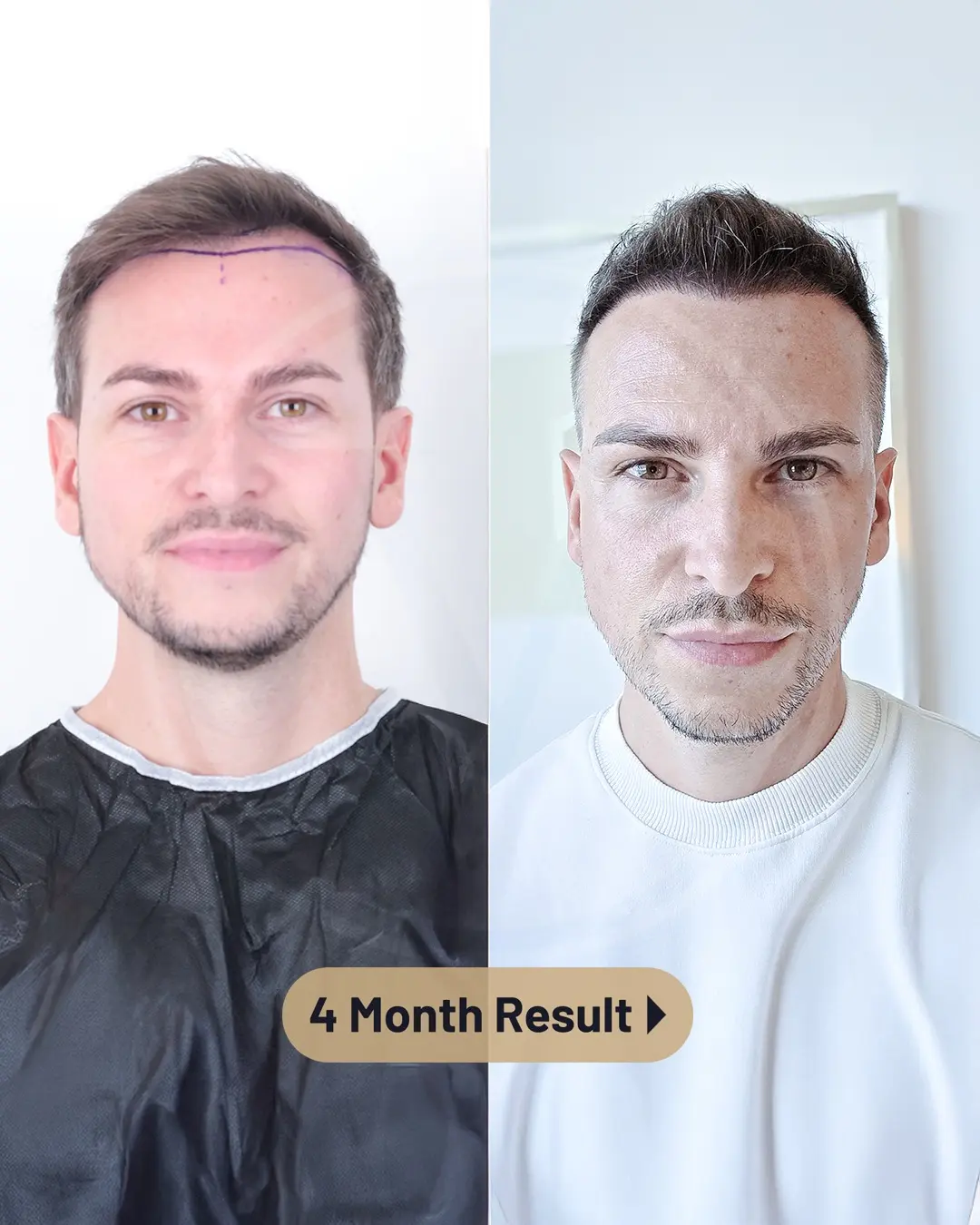
Norwood 2 Hair Transplant Before and After Results
In Norwood 2, the hairline recession becomes more noticeable at the temples.
Before and after results demonstrate a fuller, well-defined hairline, with temple areas restored for a youthful appearance. Many patients evaluate their outcomes under 2000 grafts hair transplant before and after and 2500 grafts hair transplant before and after comparisons, depending on the depth of recession and donor capacity.
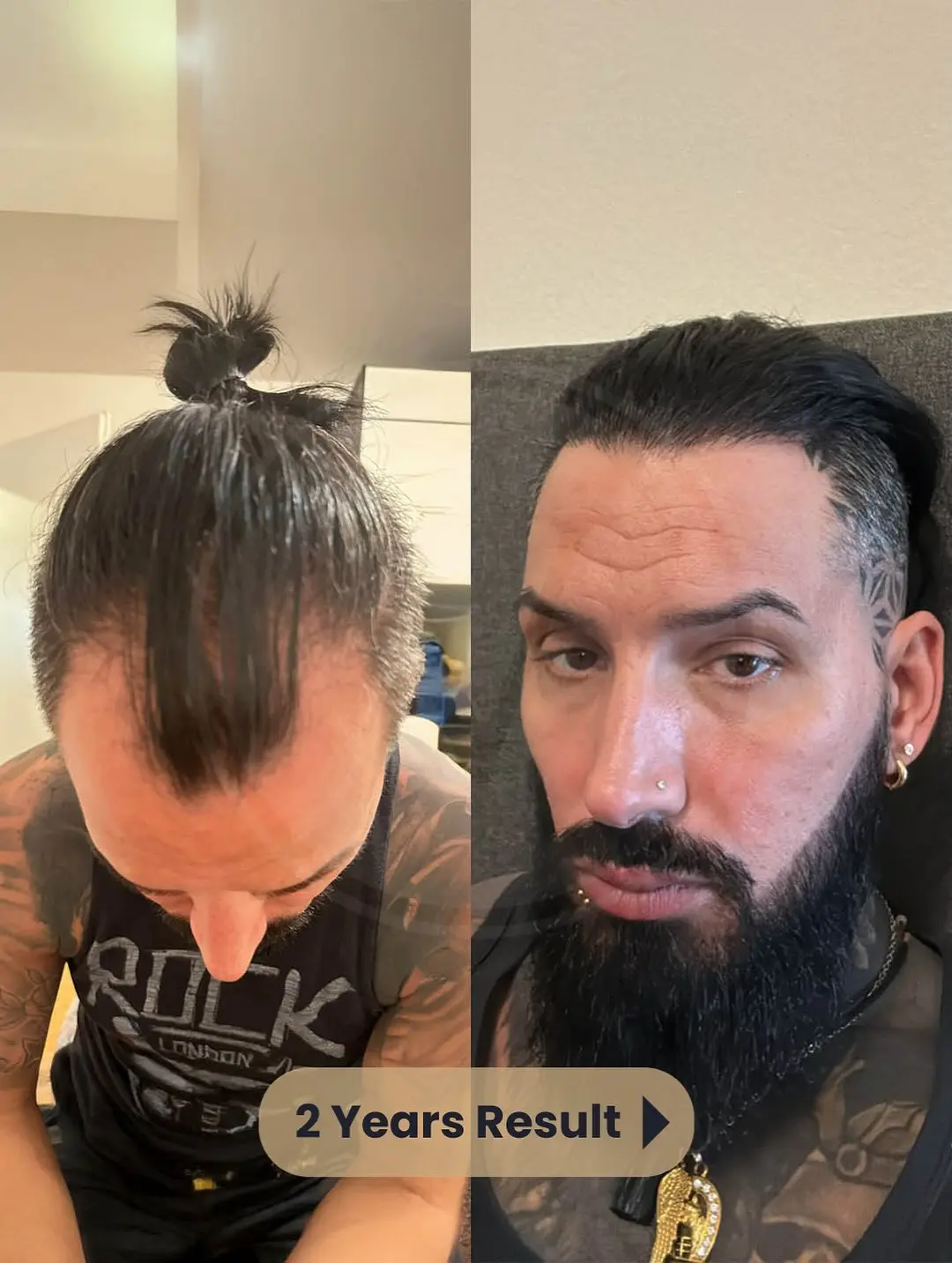
Norwood 3 Hair Transplant Before and After Results
Norwood 3 is considered the onset of significant hair loss with deeper temporal recession.
Frontal hairline reconstruction and minor mid-scalp coverage are highlighted in 3000 grafts hair transplant before and after results, which frequently match the needs of Norwood 3 patients when proper planning is applied.
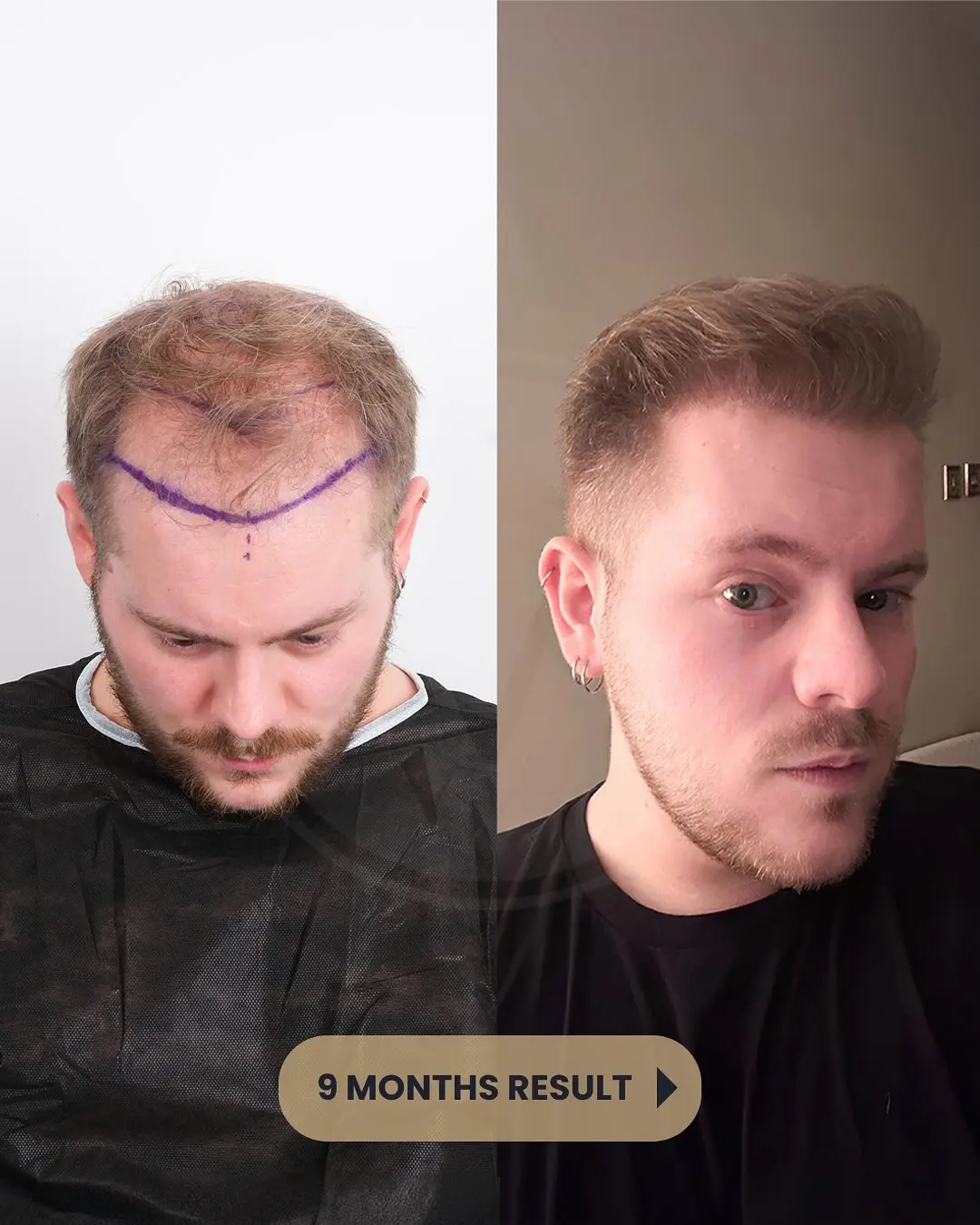
Norwood 4 Hair Transplant Before and After Results
Norwood 4 shows prominent frontal and crown thinning.
This stage is most commonly associated with 3500 grafts hair transplant before and after and 4000 grafts hair transplant before and after comparisons. The goal is to balance density between the hairline and the crown while maintaining natural hair direction and curl.
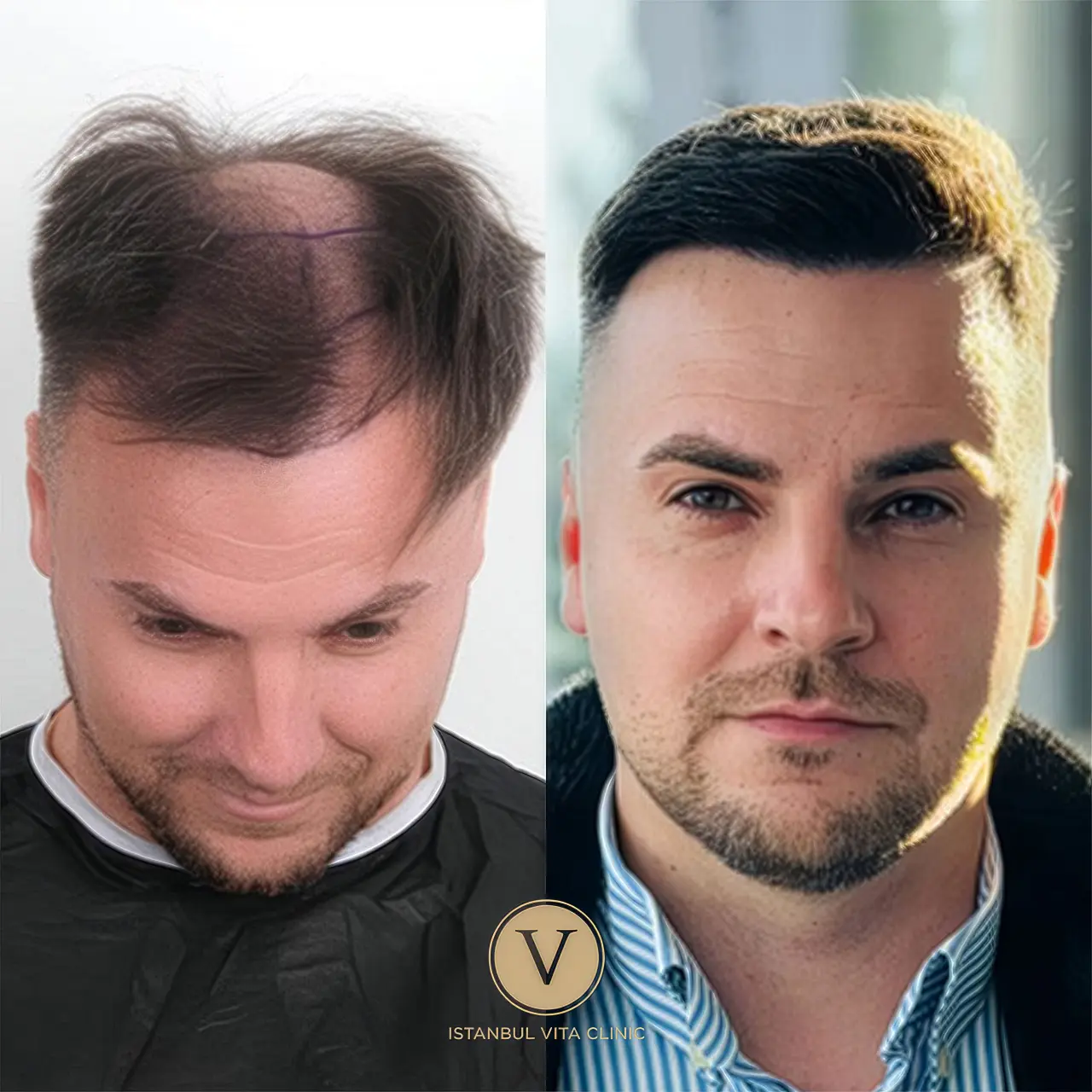
Norwood 5 Hair Transplant Before and After Results
Large frontal and crown regions are impacted during Norwood 5, frequently leaving a thin hair bridge between them.
Because both areas need significant density restoration for a cohesive appearance, patients at this level usually assess results within the scope of 4500 grafts hair transplant before and after and 5000 grafts hair transplant before and after results.
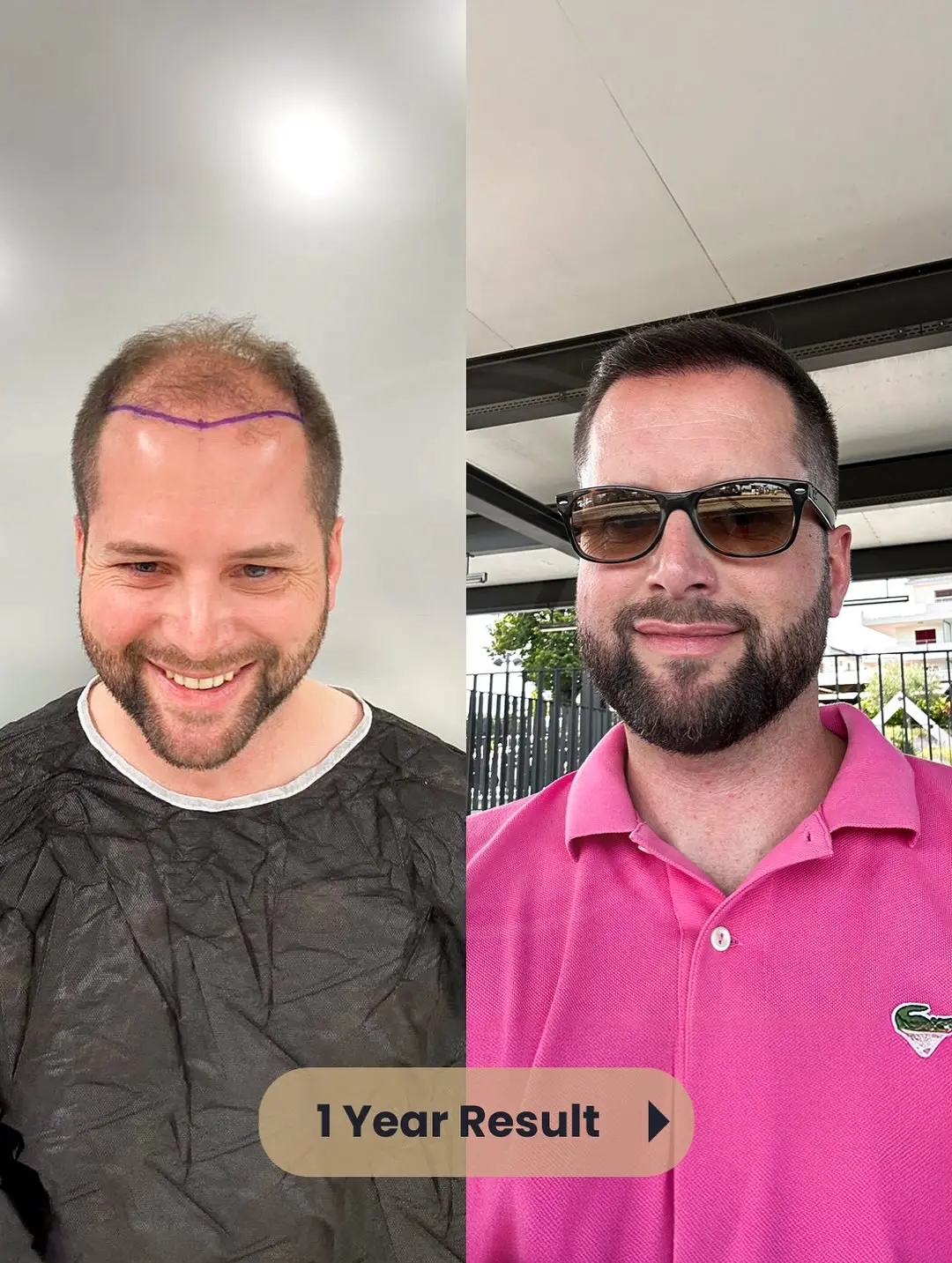
Norwood 6 Hair Transplant Before and After Results
Norwood 6 features a severe connection between frontal and crown bald areas.
At this advanced stage, 6000 grafts hair transplant before and after results are commonly evaluated. High graft volume, strict donor management, and precise angulation are essential to avoid an artificial appearance.
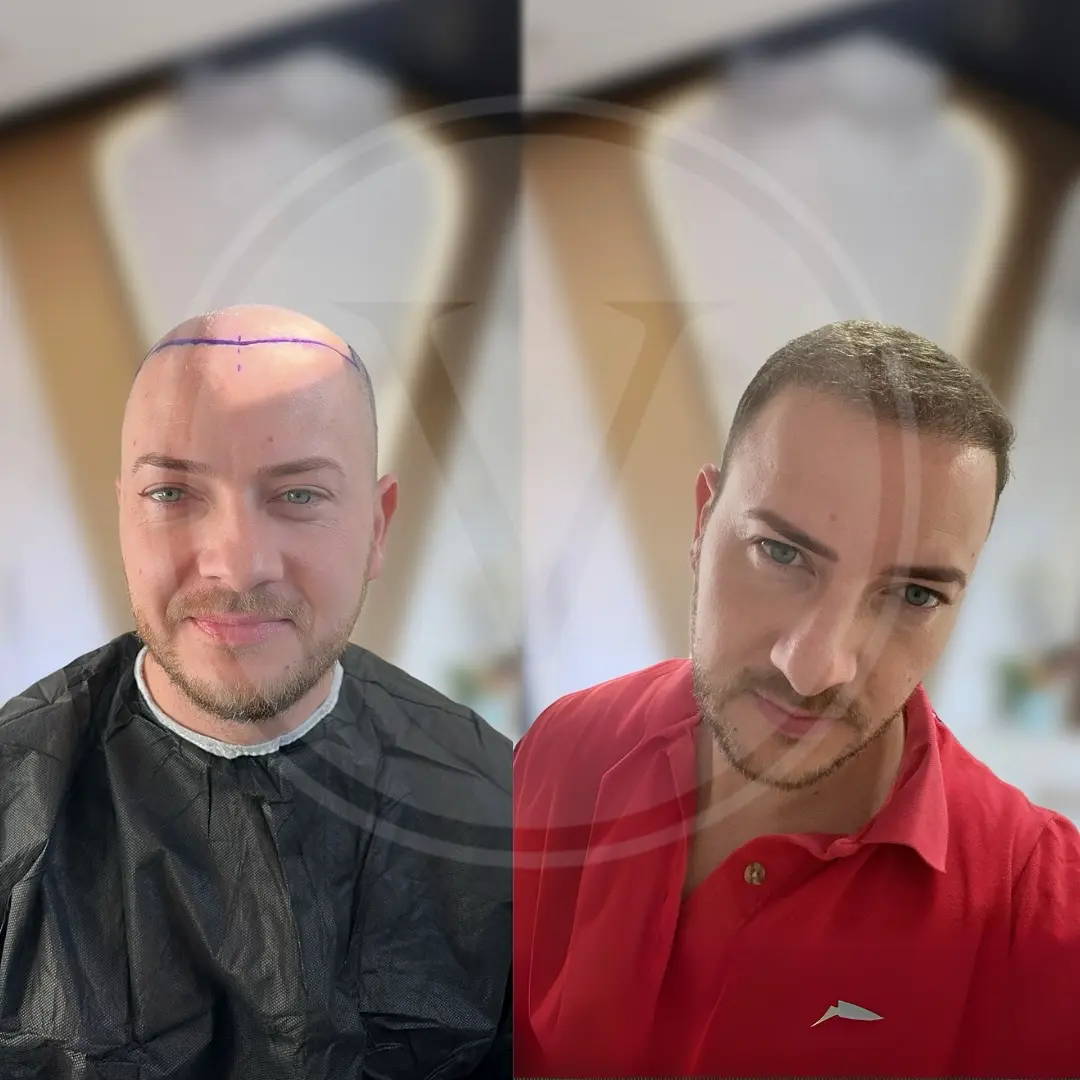
Norwood 7 Hair Transplant Before and After
Norwood 7 is the most severe stage of male pattern baldness, with only a narrow ring of hair remaining on the back and sides.
Before and after comparisons of Norwood 7 hair transplants and 8000 graft hair transplants are commonly discussed. These patients frequently require numerous treatments, advanced donor planning, and occasionally beard or body hair supplementation. With modern procedures, even this level can achieve natural-looking covering and restored face symmetry.
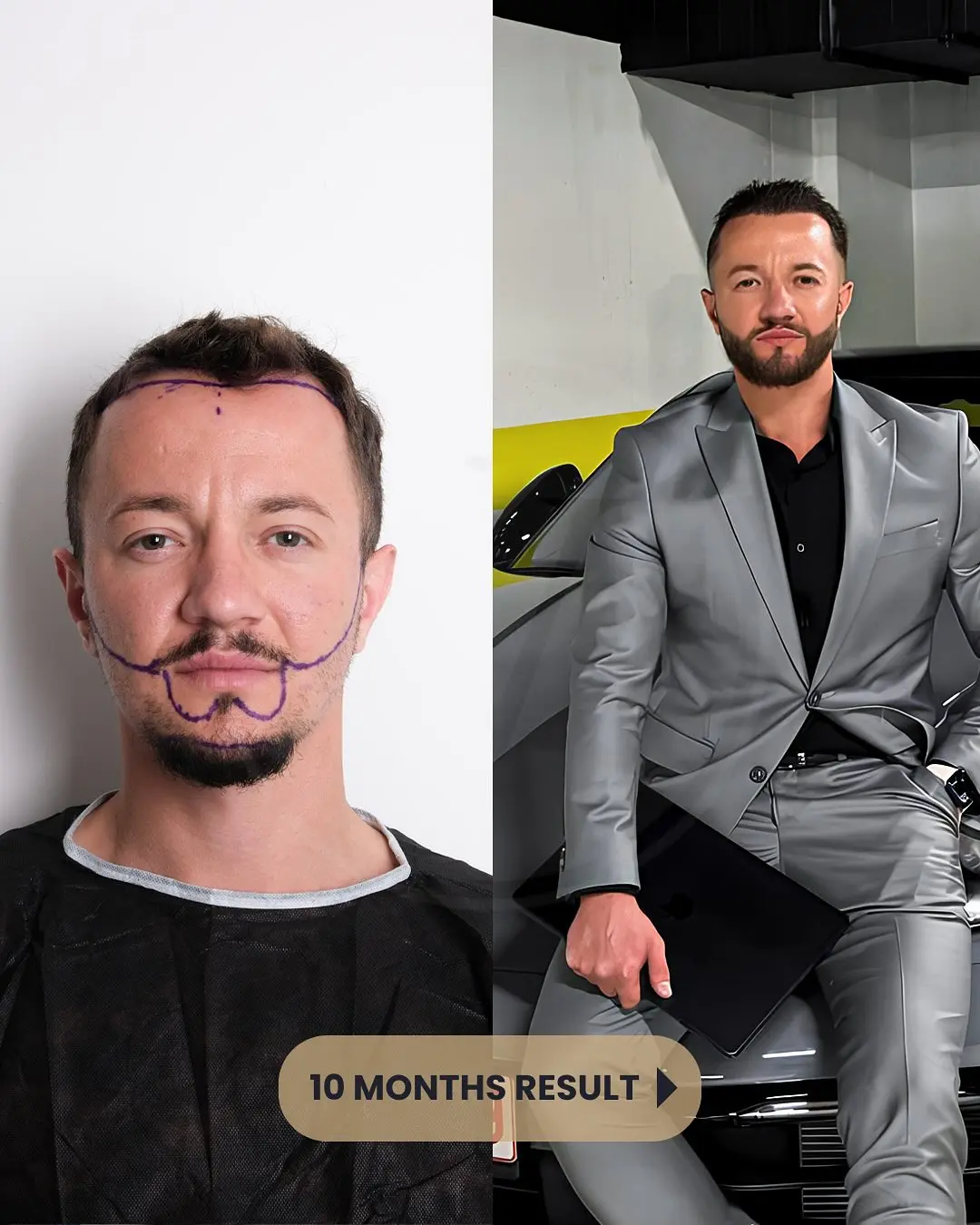
Beard Hair Transplant Before and After and Alternative Donor Use
Beard hair transplant before and after and beard to scalp hair transplant before and after results demonstrate how effective beard follicles can be as an alternative for patients with insufficient donor areas at the back of the head.
At the same time, facial hair transplant before and after results provide a strong reference for patients who want to achieve aesthetic density in the beard and mustache area. Due to their thick structure, beard follicles are also frequently preferred in areas that require density, such as the crown.
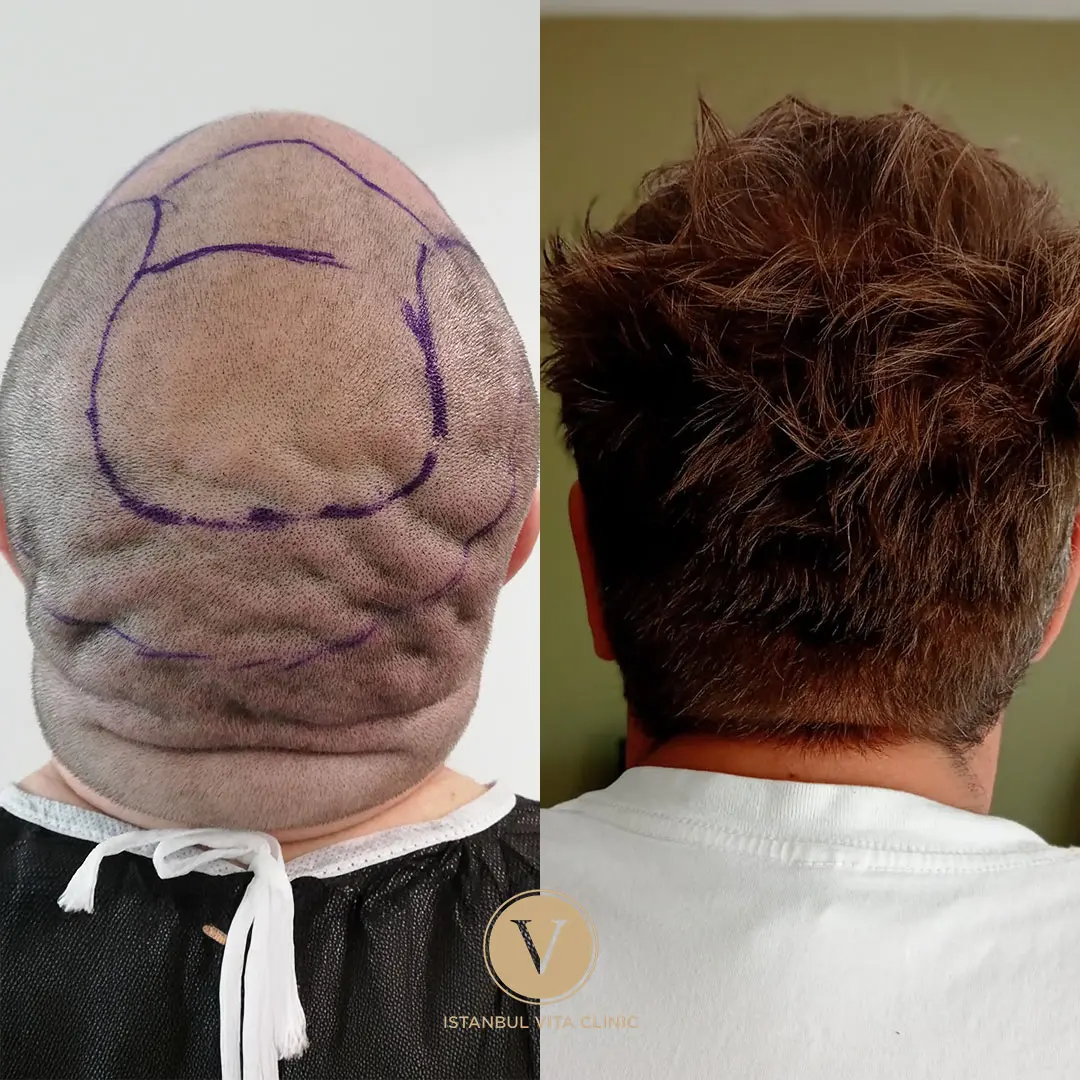
Crown Hair Transplant Before and After Natural Appearance
Crown hair transplant before and after comparisons are a direct indicator of the success achieved in the crown area, one of the most technically challenging areas for hair transplantation. Since the hair in the crown area grows in a circular direction, procedures performed at the wrong angle create an unnatural appearance.
Crown transplants performed with proper planning perfectly mimic the natural curl of the hair, and the density appears completely uniform. Even the smallest angle error directly affects the aesthetic result in this area.
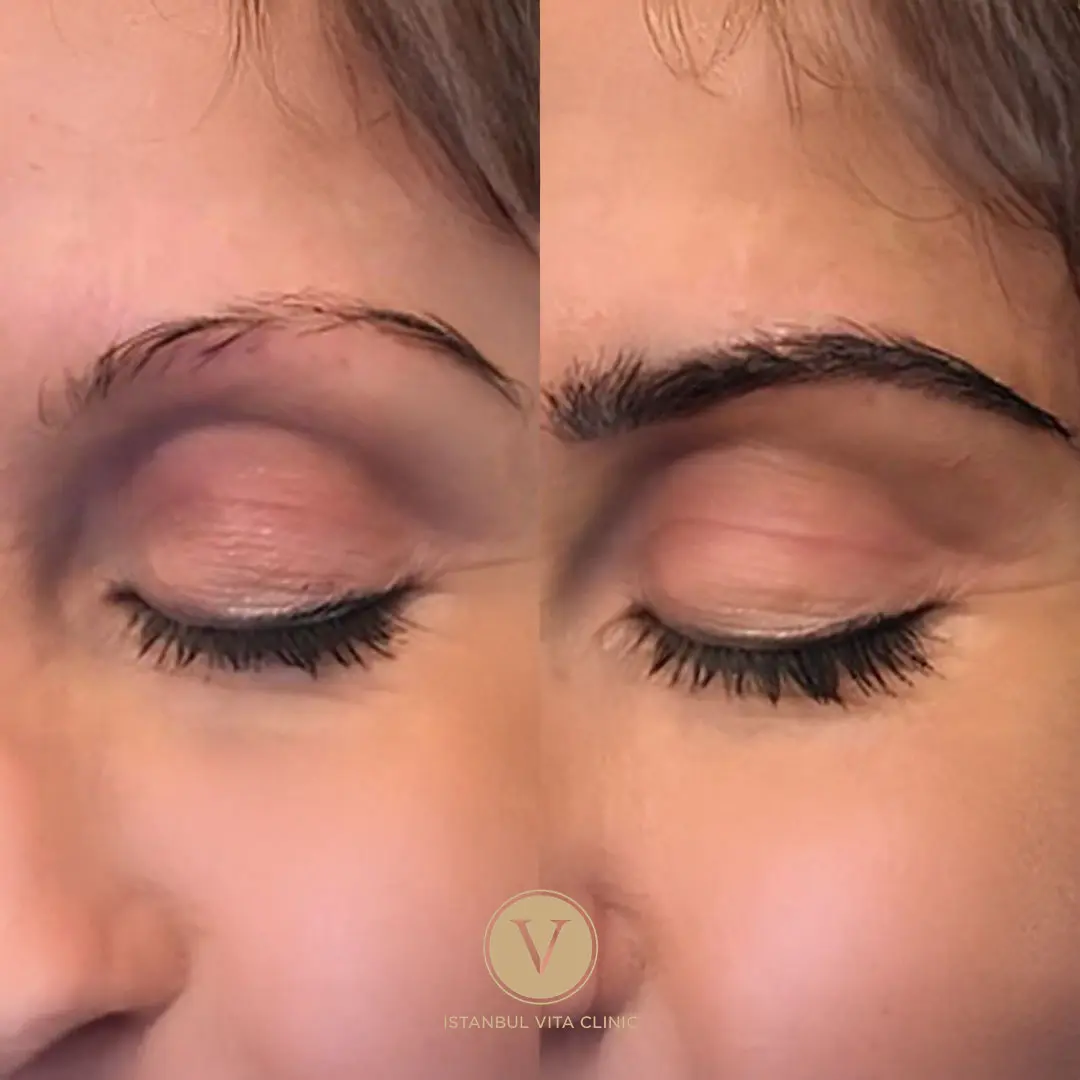
Eyebrow Hair Transplant Before and After Effect
Eyebrow hair transplant before and after results are one of the procedures that show the fastest change in facial expression. In eyebrow transplantation, the direction, angle of growth, and placement depth of each root are planned at a micro level. A properly performed eyebrow transplant dramatically improves facial aesthetics and completely changes the look.
Stem Cell Hair Transplant Before and After Supportive Power
Stem Cell hair transplant before and after comparisons are important in terms of faster root nourishment, increased hair thickness, and support for the growth process. These applications, which strengthen root adaptation, increase long-term quality, especially in cases where dense grafts are used.
Chest Hair Transplant Before and After with Body Hair Donor Use
Chest hair transplant before and after results show that chest hair follicles can also be successfully used in some advanced cases where classic donor areas are insufficient. Because chest hair is thicker and has a different growth cycle, it is preferred as a supporting donor, especially in the crown area and areas requiring density. When the right patient selection is made, chest hair transplant before and after results can be extremely satisfying.
Have Questions? Let's Chat on WhatsApp!
Get instant answers 24/7. Receive your doctor-led hair analysis within 1 day, plus pricing and booking support.
Start WhatsApp ChatHair Transplant Before and After Turkey: The Real Reason Behind Its Success
Turkey's success in hair transplantation both before and after is based on the following pillars:
- Skilled surgical teams
- A customized approach to planning
- High-tech infrastructure
- Following surgery, routine patient follow-up
When these factors are combined, Turkey has emerged as a global leader in hair transplantation, both in terms of cost and in terms of quality and naturalness.
The Time Factor in Hair Transplant Before and After Results
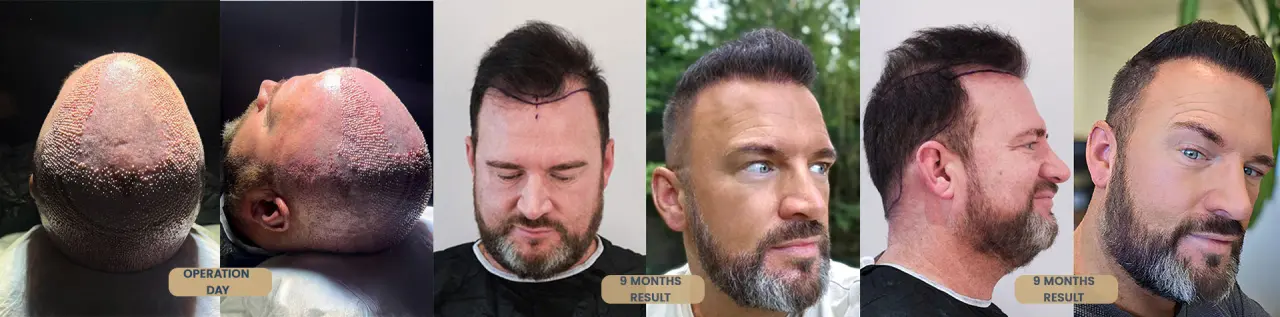
When evaluating hair transplant before and after photos, it is important to correctly interpret the timeline:
- First 10–15 days: Crusting
- 1–3 months: Shock loss
- 4–6 months: First growth
- 9–12 months: Increased density
- 12–15 months: Final result
Hair transplant before and after pictures seen in the early stages often do not reflect the final quality. The true aesthetic transformation occurs after a year of patient follow-up.
Result: Hair Transplant Before and After Istanbul Vita Guarantee
Hair transplant before and after is not just an aesthetic procedure; it means a permanent change in a person's life. The results achieved in women and men, with different hair types and different graft plans, clearly demonstrate how powerful transformations can be created when the right clinic, the right technique, and the right planning come together.
Istanbul Vita's customized approach, state-of-the-art technology, and ethical medical practices enable it to provide natural, long-lasting, and face-compatible hair transplant results. In Turkey, Istanbul Vita is well known for hair transplants both before and after.
Frequently Asked Questions (FAQ)
What details should be checked in hair transplant before and after results?
Hair transplant before and after results help assess not only hair density but also natural hair direction, symmetry, and long-term appearance after the recovery process.
Why are turkey hair transplant before and after results so popular worldwide?
Turkey hair transplant before and after results are globally recognized due to advanced techniques, experienced surgeons, and cost-effective treatments combined with high medical standards.
What difference does graft count make in 3500 grafts hair transplant before and after or 5000 grafts hair transplant before and after?
3500 grafts hair transplant before and after is usually suitable for moderate hair loss, while 5000 grafts hair transplant before and after is preferred for larger bald areas and higher density goals.
What should women expect from female hair transplant before and after results?
Female hair transplant before and after results focus on restoring density in thinning areas without creating an artificial look. The transplanted hair is placed among existing strands to achieve a balanced and natural outcome.
What should patients expect from FUE hair transplant before and after results?
FUE hair transplant before and after comparisons show minimal scarring, fast recovery, and highly natural hair growth due to individual graft extraction and implantation.
How do DHI hair transplant before and after results show higher density?
DHI hair transplant before and after photos clearly show that this technique increases visible density in treated areas. Before and after comparisons highlight how direct implantation allows grafts to be placed closer together without harming existing hair, resulting in a fuller and natural look, especially in frontal and thinning zones.
What should I look for when reviewing crown hair transplant before and after photos?
When examining crown hair transplant before and after images, pay attention to hair density, the natural swirl pattern, and how well the transplanted hair blends with existing hair. Proper angle and distribution ensure the crown looks balanced and realistic, giving a natural overall appearance.
How does beard to scalp hair transplant before and after help patients with limited donor hair?
Beard to scalp hair transplant before and after comparisons show how beard follicles can supplement scalp density when the back of the head provides insufficient donor hair. Before and after images illustrate that these grafts integrate naturally, enhancing overall fullness in crown and mid-scalp areas.
Are Norwood 7 hair transplant before and after results possible with modern techniques?
Norwood 7 hair transplant before and after photos confirm that even severe hair loss can achieve substantial cosmetic improvement. Before and after comparisons show that staged procedures, careful donor management, and realistic planning can produce natural and aesthetically pleasing results.
 conversation


