
 Türkçe
  English
  Italiano
  Français
  Español
  русский
  Deutsch
  Română
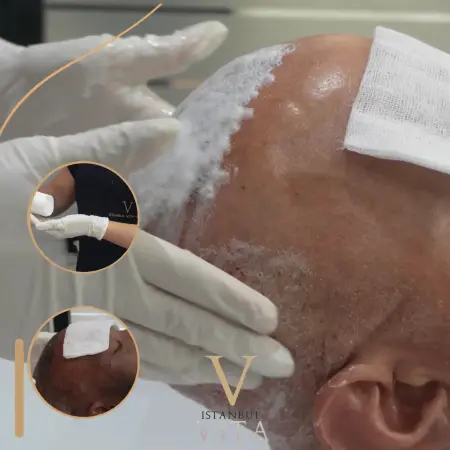
Table of Contents
Why Washing Matters After a Hair Transplant
A hair transplant leaves the scalp covered in dried blood, crust, and product residue in the days right after surgery. Left alone, that buildup doesn't just sit there harmlessly — it can trap bacteria and slow down healing. Regular, gentle washing clears it away and creates a cleaner environment for the grafts to settle in.
There's also an infection angle to it. A scalp that's washed properly and kept clean is simply less hospitable to bacteria than one that isn't, which matters most in exactly the window when the grafts are most vulnerable.
When Does the First Wash Happen?
The first wash takes place the day after surgery, at the clinic, done by trained staff rather than left to the patient. From there, daily washing continues at home for the first 10 days, following the same gentle technique shown during that first session.
The First Wash at Istanbul Vita
At Istanbul Vita, the first wash starts with a foam treatment applied directly to the transplanted area. The foam stays on for 15 minutes before being rinsed off with warm water — long enough to properly soften the crusts without needing to scrub at them.
The products used are the ones included in the Istanbul Vita post-operative care package, a specially formulated post-operative shampoo and washing foam, both pH-balanced and mild, rather than standard chemical shampoos that can be harsh enough to irritate healing follicles.
Technique matters as much as the products. Hair roots get cleaned with gentle fingertip movements — no rubbing, no pressing — so the crusts loosen without any pressure being transferred to the grafts underneath.
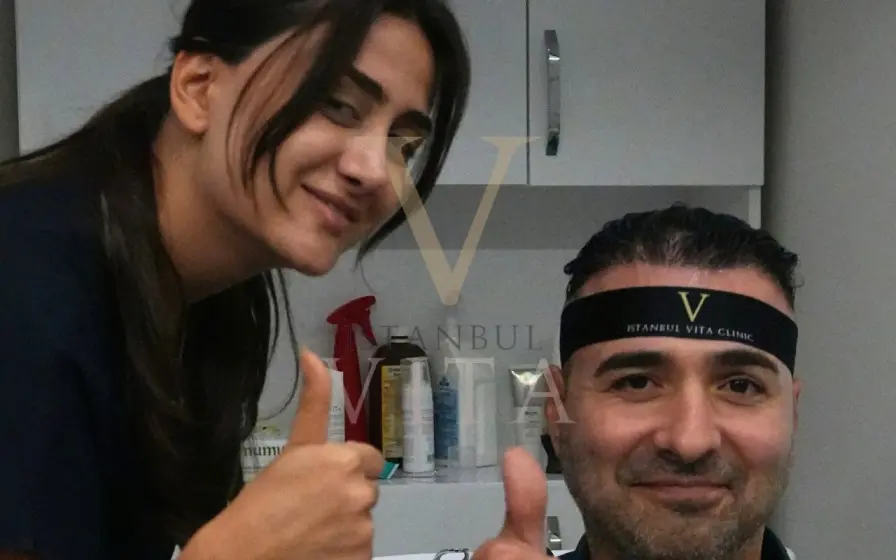
An antibiotic cream is then applied to the donor area to support healing and lower the risk of infection. A headband is also applied to help prevent swelling and keep it from spreading down to the face.
How to Wash Your Hair at Home: Step-by-Step
Once daily washing moves to the hotel or home, the same routine from the clinic carries over.
Applying the foam
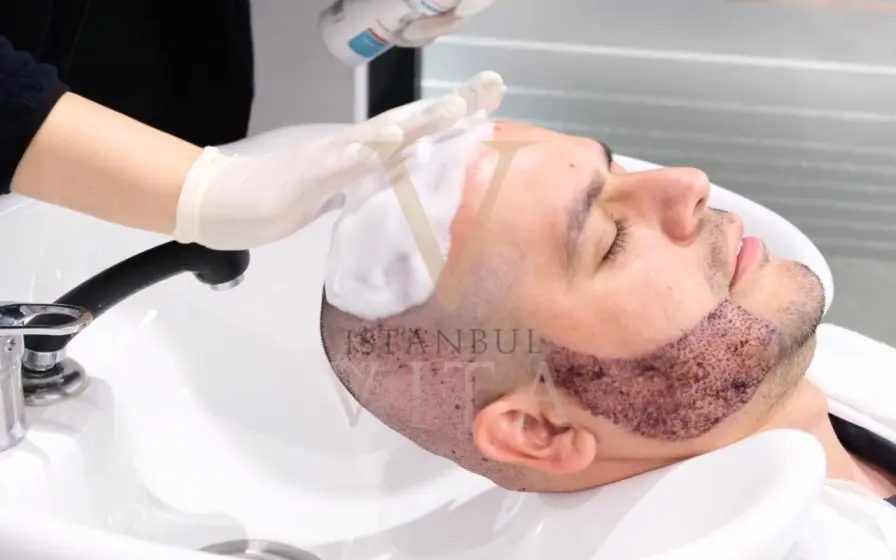
The foam gets its own step before the shampoo even comes into play. Squeeze it into your hand first, then dab it gently onto the transplanted area — small, light touches rather than spreading it around. Let it sit for 15 minutes.
This step exists specifically to soften the crusts before anything else touches the scalp. Skipping straight to shampoo without it means fighting through buildup that hasn't had a chance to loosen, which is exactly the kind of extra friction the grafts don't need this early on.
Rinsing off the foam
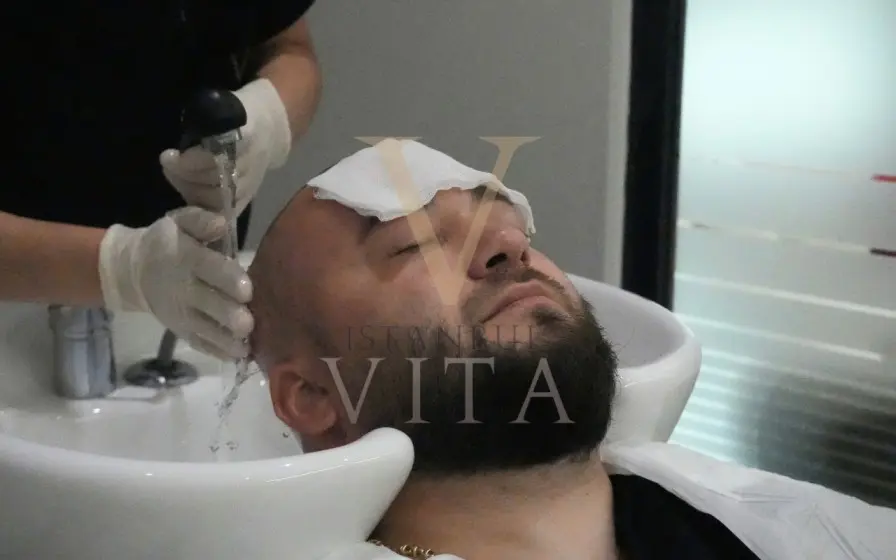
Once the 15 minutes are up, rinse the foam away with lukewarm water at low pressure, letting the water do the work rather than rubbing it off.
Shampooing the donor area
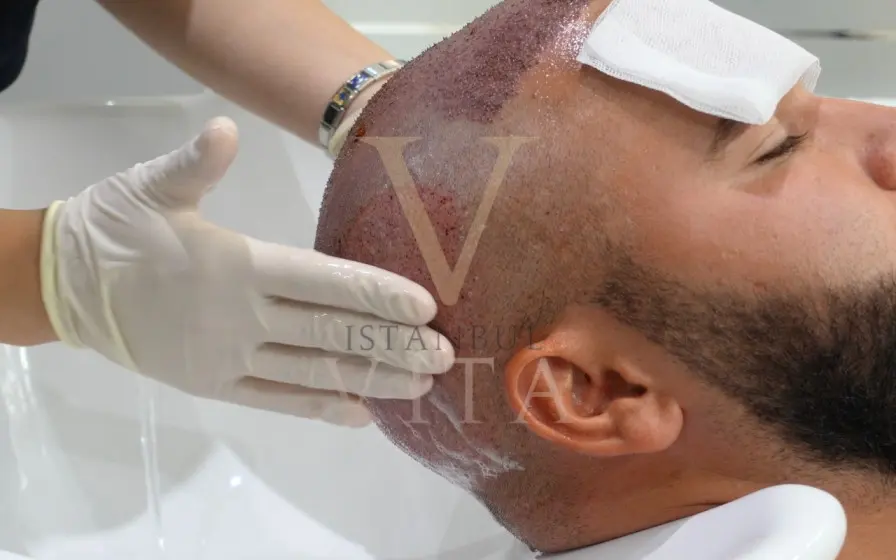
Take some shampoo in your hand and work up a lather with a bit of water first. Massage it gently into the donor area, being mindful not to catch or tug at any grafts nearby. Gentle movements are the rule here too, not just on the transplanted side.
Final rinse
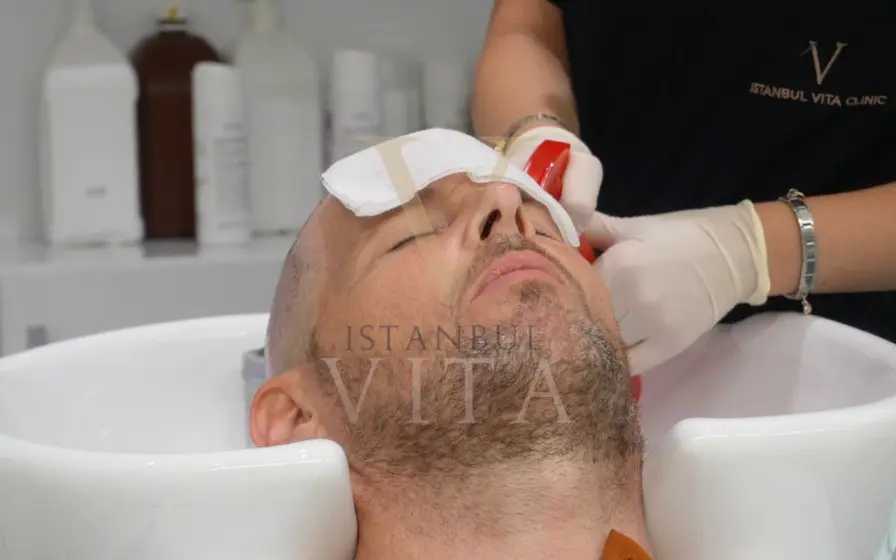
Rinse everything off again with lukewarm, low-pressure water.
Drying
Let the scalp air-dry on its own. Hair dryers are best avoided in the early days — even on a low setting, they tend to be too hot and too strong for a scalp that's still healing.
Have Questions? Let's Chat on WhatsApp!
Get instant answers 24/7. Receive your doctor-led hair analysis within 1 day, plus pricing and booking support.
Start WhatsApp ChatHow Long Should You Keep Washing Daily?
Daily washing continues for the first 10 days after surgery. This is also the window when the scabs gradually soften and loosen, making them easier to clear away without picking or forcing anything.
Removal of Scabs
It is common for the transplanted hairs to scab; this is not a cause for concern. Here, the daily cleaning regimen during the first ten days serves two purposes: it softens the scalp and the scabs, which is precisely what makes them simpler to remove later.
The method described in the post-op instructions and instructional video can be used to remove the residual scabs around day 10. It is not advised to pick, scratch, or force them off any earlier than that; instead, let the washing routine take care of it.
What to Avoid While Washing
A few things work against the healing process and are worth avoiding for these first 10 days:
- Rubbing the scalp instead of washing gently
- High-pressure water directly on the transplanted area
- Chemical shampoos, hair dyes, or other harsh products
- Hair dryers or any heat styling
Scalp Redness, Swelling and When to Contact the Clinic
Some redness and swelling on the scalp is normal in the days following surgery, and it typically settles on its own. If either one persists longer than expected or seems to be getting worse rather than better, it's worth letting the medical team at Istanbul Vita know rather than waiting it out.
Other Aftercare to Keep in Mind
Washing is only one part of the early recovery period. Most patients can return to normal daily activities after about two weeks, though the same recovery timeline that applies to exercise is worth keeping in mind — light activity like walking is generally fine around day 14, while anything more strenuous should wait closer to a month.
Shaving is another one to hold off on: the transplanted area shouldn't be shaved until the first month is complete.
Frequently Asked Questions About Washing After a Hair Transplant
When does the first wash happen after a hair transplant?
The first wash is done by the medical team the day after the procedure. After that, daily washing at home continues for the first 10 days using the same gentle technique.
What should I keep in mind when washing after a hair transplant?
Wash gently, avoid harsh or rubbing motions, and stick to the foam and shampoo recommended by the doctor rather than switching to regular chemical products.
Have Questions? Let's Chat on WhatsApp!
Get instant answers 24/7. Receive your doctor-led hair analysis within 1 day, plus pricing and booking support.
Start WhatsApp ChatHow do I wash away crusts after a hair transplant?
Shampoo is applied to the surrounding, non-transplanted area first and worked into a light foam. That foam is then carried over onto the transplanted area with gentle touches, then rinsed off with warm, low-pressure water.
Can I use a hair dryer after a hair transplant?
No. A soft towel and gentle blotting is the better option, followed by letting the hair air-dry the rest of the way.
When can I return to normal activities after a hair transplant?
Most patients can resume daily activities after about two weeks. Light activity such as walking is usually fine sooner, around day 14, while more intense exercise should wait closer to a month.
When can I shave after a hair transplant?
Not until the first month after surgery has passed.
When can I go back to washing my hair normally after a hair transplant?
Patients can return to a normal washing routine, regular shampoo, regular pressure, once the first 10-day period is over and the crusts have fully cleared. The scalp is generally far less sensitive by that point, though it's worth confirming with the doctor if anything still feels tender.
 conversation


