
 English
  Italiano
  Français
  Español
  русский
  Deutsch
  Română
  Türkçe
Table of Contents
Hair restoration has evolved beyond a single standard procedure. Today, many leading clinics use a hybrid hair transplant combining FUE Follicular Unit Extraction and DHI, Direct Hair Implantation in one procedure. This hybrid FUE–DHI approach allows surgeons to match each area of the scalp with the most suitable technique.
At Istanbul Vita, the combined FUE and DHI hair transplant technique is used to give patients denser packing, more natural hairlines, and better use of limited donor hair. Instead of forcing one method to do every job, our medical team applies FUE where speed and coverage matter most, and DHI where precision and angle control matter most.
This page explains exactly how the combined FUE and DHI technique works, who it suits, what results to expect, and what affects combined FUE and DHI hair transplant cost in Turkey so you can make an informed decision before booking a consultation.
Get a Free Hair Analysis From Our Medical Team
- Free Hair Analysis based on your photos
- Doctor-reviewed assessment, not a sales call
- Response within 15–30 minutes
- Hotel + Transfer Included in treatment packages
- Dedicated International Patient Support, before and after surgery
Get Your Free Consultation Send your photos today and find out if a combined FUE and DHI hair transplant is right for you.
What Is a Combined FUE And DHI Hair Transplant?
A combined FUE and DHI hair transplant uses both extraction and implantation techniques within the same procedure to maximize density and natural-looking results. It is based on what each area of the scalp needs.
- FUE (Follicular Unit Extraction), the grafts are removed one by one from the donor area that is usually the back and sides of the scalp. Then it is implanted into the small incisions made in the recipient area.
- DHI (Direct Hair Implantation): Grafts are extracted and then placed directly into the scalp using a Choi Implanter Pen, without making a separate incision first.
In a hybrid procedure, both methods are used in the same session. The surgeon decides, area by area, which technique gives the best graft survival, density, and natural appearance.
This is different from choosing "FUE or DHI." It is choosing FUE and DHI together, in the proportion that fits your hair loss pattern.
Why Some Patients Benefit From Both FUE and DHI
No two scalps lose hair the same way. Some patients have:
- A receding hairline but a strong crown.
- Heavy thinning at the crown but a stable hairline.
- Diffuse thinning across the whole scalp.
- A limited donor area from a previous transplant.
A single technique is enough to struggle to handle all of these patterns equally well. FUE is very efficient for covering large areas quickly. DHI gives tighter control over angle and direction, which matters most in the hairline.
Combining both lets the surgical team:
- Use DHI for the hairline where the direction and angle decide how natural the result will look.
- Use FUE Hair Transplant for the middle scalp and crown coverage where the speed allow more grafts to be placed per session.
- Adjust the graft applications in the real time that is based on the Donor density and graft survival during the procedure.
How the Combined FUE And DHI Hair Transplant Technique Works
1. Donor Assessment
The surgical team examines donor density across the back and sides of the scalp. This helps determine how many grafts can be safely extracted without thinning the donor area itself.
2. Extraction
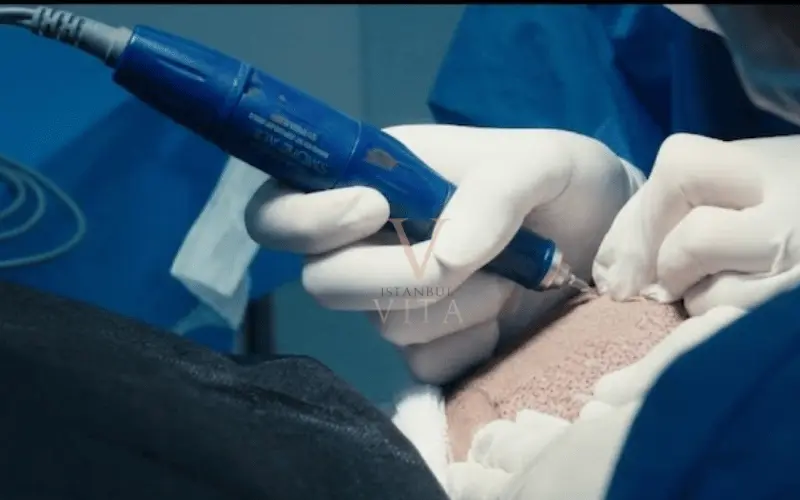
Grafts are extracted using fine micro-punches, often with Sapphire FUE technology, to support precise extraction and efficient healing. Each follicular unit is checked for quality before it is set aside for implantation.
3. Graft Preparation
Extracted grafts are sorted by the number of hair they contain. The single hair grafts are generally reserved for the hairline. 2 or 3 hair grafts are placed for their back where the natural hair is denser.
4. Hairline Creation
Using the Choi Implanter Pen, the surgeon places grafts directly into the scalp along the planned hairline. This step focuses on implantation angle, direction, and spacing to build a soft, natural-looking front edge.
5. Density Enhancement
Behind the hairline, FUE-style implantation is used to fill in mid-scalp and crown areas. This allows more grafts to be placed efficiently across larger areas.
6. Recovery
Both extraction sites and recipient areas are dressed, and the patient receives aftercare instructions covering washing, sleeping position, and activity limits for the following weeks.
Why Clinics Use DHI for Hairlines and FUE for Coverage
The hairline is the most visible part of any hair transplant. Even a small error in the implantation angle can make the results look very unnatural. That is why DHI is often preferred for the hairline design
- Choi implanter pen let the surgeon control the angle and depth without a separate incision step
- The grafts can be placed at irregular, natural angles instead of a uniform line, which then mimics how the hair actually grows.
- Inflammation happens almost immediately after the extraction which can support the stronger grafts survival for these high visibility grafts.
FUE, by contrast is better for the areas where the coverage and speed matter more than micro-precision:
- Incisions can be made before implantation, and this will allow the team to work in parallel and place more grafts per hour.
- It works well for the larger areas like the crown restoration zone or mid-scalp, where density matters more than exact angle on every single graft.
- It allows flexible graft allocation when the donor area has variable density across different zones.
Used together, this division of labor is the core idea behind the hybrid hair transplant: precision where it is seen most, efficiency where volume matters most.
FUE vs DHI vs Hybrid Hair Transplant
| Factor | FUE | DHI | Hybrid (FUE + DHI) |
|---|---|---|---|
| Extraction method | Punch extraction | Punch extraction | Punch extraction |
| Implantation tool | Forceps, after incisions | Choi Implanter Pen | Both, by zone |
| Incisions made in advance | Yes | No | Depends on zone |
| Best for | Larger coverage areas | Hairline precision | Hairline + coverage together |
| Graft handling time outside scalp | Slightly longer | Shorter | Varies by zone |
| Implantation angle control | Good | Excellent | Excellent where DHI is used |
| Typical session speed | Faster for large areas | Slower, more precise | Balanced |
| Scarring | Minimal, tiny round scars | Minimal, tiny round scars | Minimal, tiny round scars |
| Suitable for high density planning | Yes | Yes, in smaller zones | Yes, across the whole scalp |
| Common use case | Crown, mid-scalp | Hairline, temples | Norwood 4–6, diffuse thinning |
The Good Candidate for a Combined FUE And DHI Hair Transplant
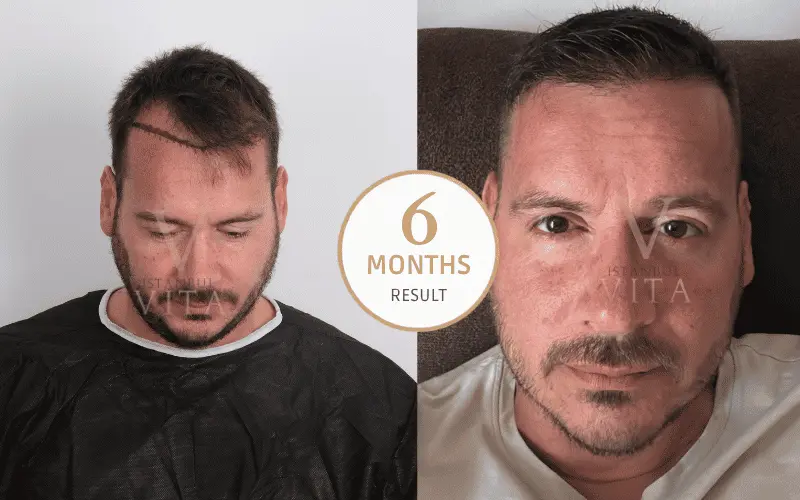
A combined FUE and DHI hair transplant is commonly recommended for:
- Norwood 3: Early hairline recession where precise hairline design matters most.
- Norwood 4: Hairline recession combined with crown thinning, needing both precision and coverage.
- Norwood 5: Larger bald areas connecting the front and crown, where graft allocation across zones is critical.
- Diffuse thinning: Overall thinning without a clear bald patch, where flexible technique use helps blend results.
- Crown hair loss: Crown restoration often benefits from FUE's coverage speed combined with DHI detailing at the edges.
- Previous transplant patients: Those with limited donor density from an earlier procedure, where careful graft allocation is essential to avoid over-harvesting.
This procedure is not automatically right for everyone. Candidacy depends on donor density, scalp laxity, hair characteristics, and the pattern of loss on the Norwood Scale. A proper evaluation requires reviewing your scalp directly or through detailed photos.
Benefits of Combining FUE and DHI
- Natural hairline: DHI's angle control and supports a softer, more irregular front line that will look closer to the natural growth.
- Higher density: Combining methods can allow tighter graft placement across the whole treated area, not just one zone.
- Better graft control: Sorting grafts by hair count and assigning them to the right zone improves how the result looks at every distance.
- Strategic graft allocation: Limited donor hair is distributed based on visual priority — hairline and crown often need different densities.
- Efficient use of donor area: Because the team is not locked into one method, they can adapt extraction and implantation choices to protect long-term donor supply.
Wondering if you're a suitable candidate for a combined FUE and DHI hair transplant?
Send photos of your scalp to Istanbul Vita for a free doctor reviewed hair analysis and receive a personalized graft estimate within 15–30 minutes.
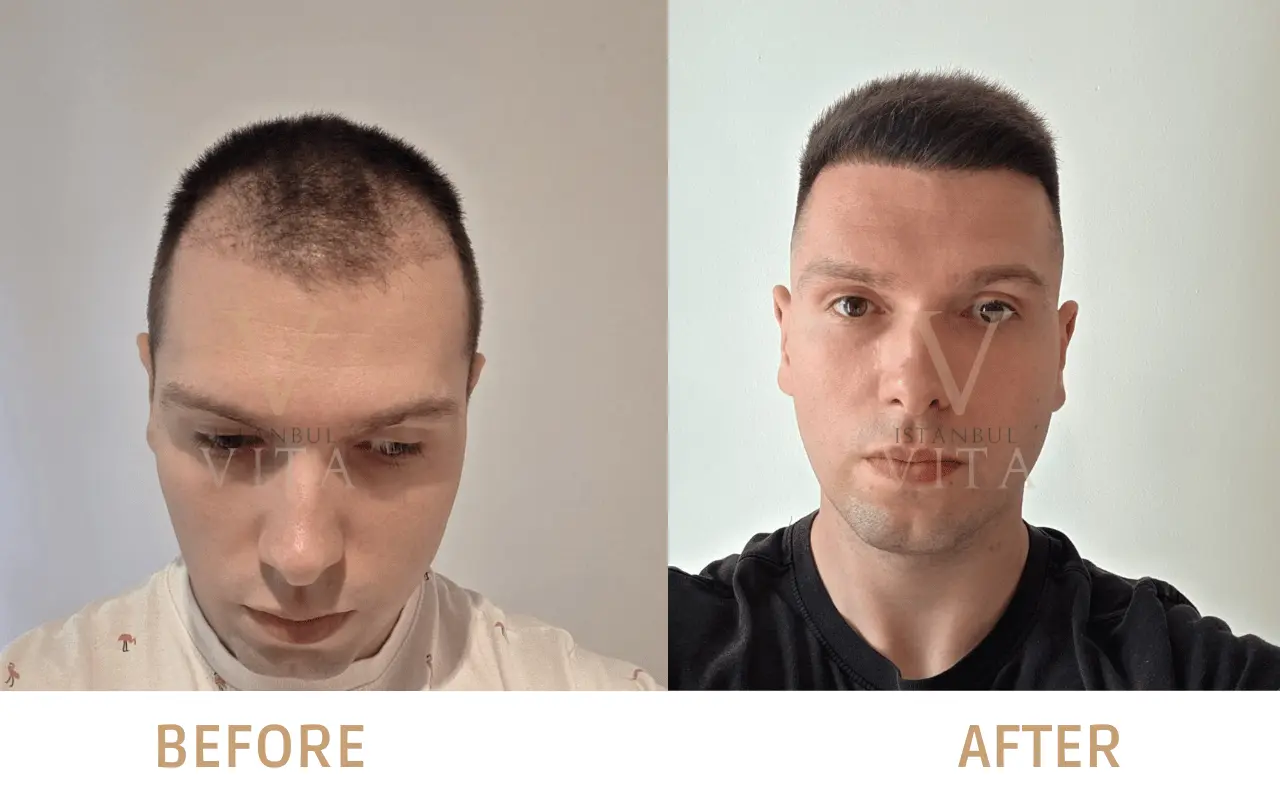
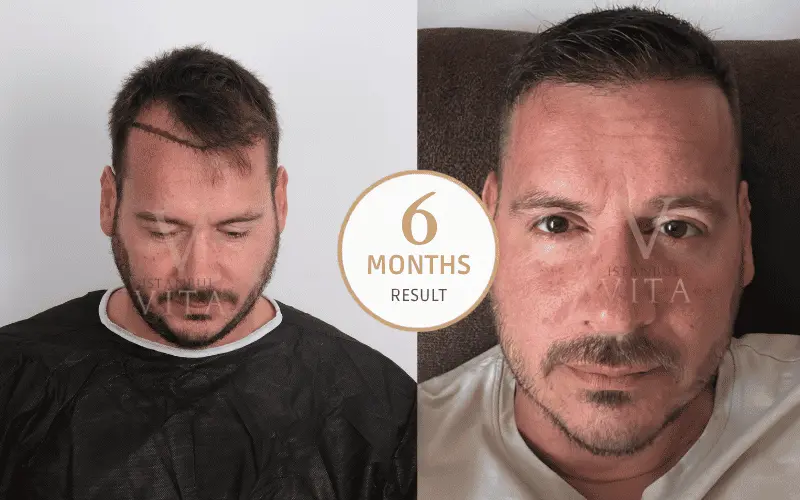
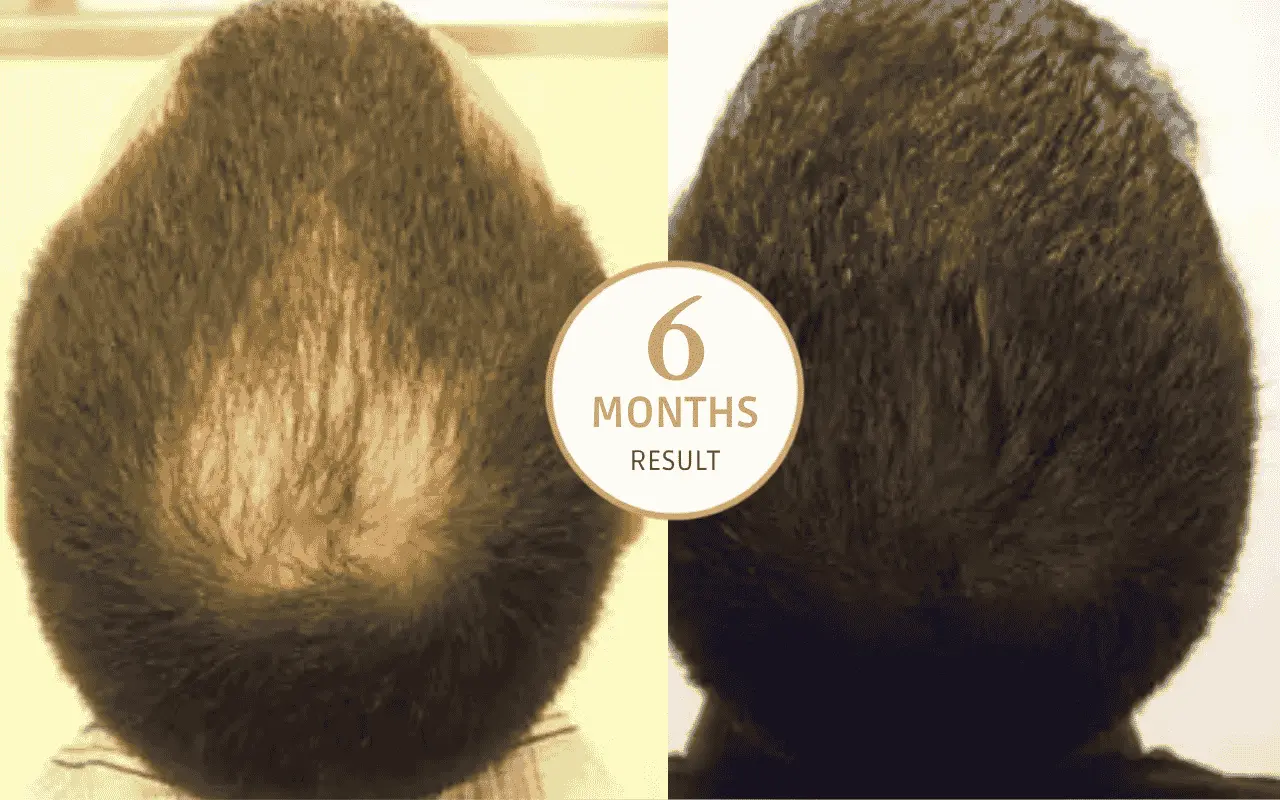
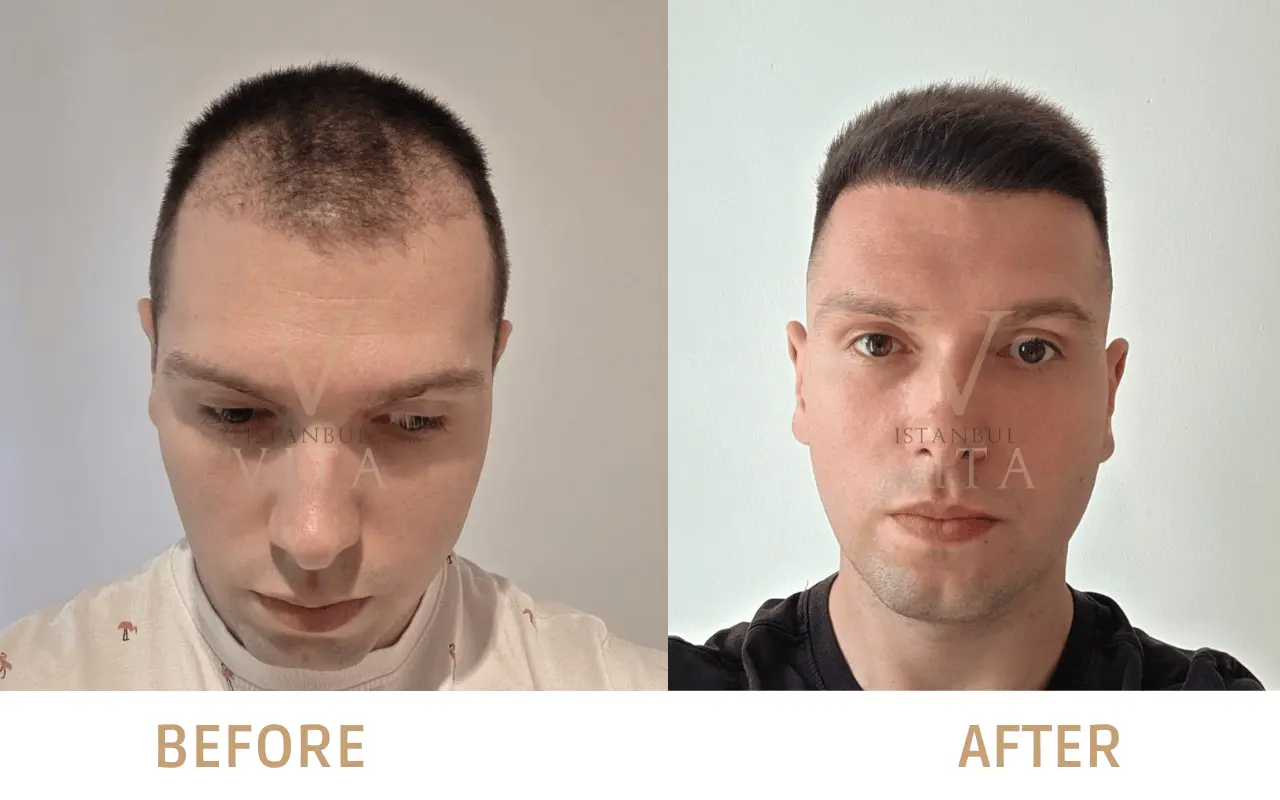
Combined FUE & DHI Hair Transplant Before and After
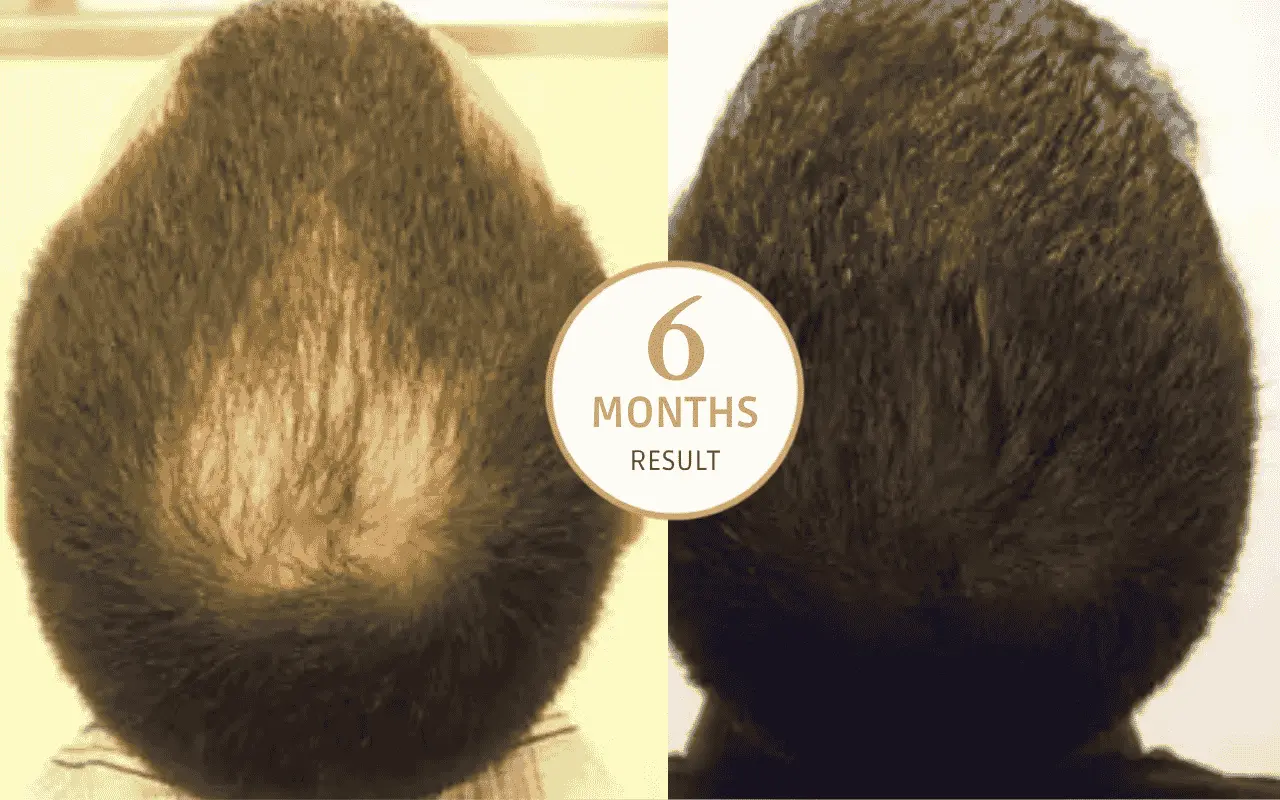
The hair transplant result follows a predictable, gradual pattern. Setting realistic expectations is the part of responsible patient education and outcomes can be different for each individual.
What most patients can realistically expect:
- The transplanted hairline appears immediately after surgery, but it is not the final result early redness and swelling are normal.
- Transplanted hair typically sheds within 2–4 weeks. This is expected and does not mean the graft failed.
- New growth usually begins around month 3–4, often fine and thin at first.
- Visible density improves steadily between months 6 and 9.
- Final texture, thickness, and styling-readiness are usually assessed around month 12–18.
Hybrid hair transplant before and after comparisons should always be viewed at the same stage of recovery, since hair appears different at month 3 versus month 12.
Combined FUE and DHI Hair Transplant Cost in Turkey
We avoid quoting a single fixed price here, because Combined FUE & DHI hair transplant cost depends on individual factors that can only be assessed properly through a consultation. The main factors include:
| Cost Factor | Why It Matters |
|---|---|
| Number of grafts needed | Larger Norwood stages require more grafts and more surgical time |
| Donor area density | Lower donor density may require more careful technique planning |
| Proportion of FUE vs DHI used | Different zones may need different ratios of each technique |
| Clinic facilities and team size | Surgical team size affects session length and graft handling time |
| Package inclusions | Hotel, transfer, and aftercare support add value beyond the surgery itself |
| Number of sessions required | Some advanced cases need a second session for full density |
Want a personalized graft estimate and treatment plan? Send your photos to Istanbul Vita and receive a free doctor-reviewed hair analysis within 15–30 minutes. Our experienced surgical team uses advanced techniques such as Sapphire FUE and DHI to create personalized treatment plans for international patients.
Recovery Timeline
| Stage | What to Expect |
|---|---|
| Day 1 | Mild swelling possible. Donor and recipient areas are tender. First wash is usually guided by the clinic. |
| Week 1 | Scabs form and begin to flake off. Redness fades gradually. Most patients return to light daily activity. |
| Month 1 | Initial shedding of transplanted hairs ("shock loss") is common and expected. The scalp looks mostly healed. |
| Month 3 | New growth may begin, often fine and sparse at first. Donor area has fully recovered. |
| Month 6 | Noticeable density increase. Hair texture starts resembling natural growth. |
| Month 12 | Most patients see close to final density and can judge overall results. Continued thickening may still occur. |
Every patient's recovery and graft requirements are different.
Get a free consultation from our Doctors to learn how many grafts you may need and whether a combined FUE and DHI hair transplant is suitable for your hair loss pattern.
Have Questions? Let's Chat on WhatsApp!
Get instant answers 24/7. Receive your doctor-led hair analysis within 1 day, plus pricing and booking support.
Start WhatsApp ChatWhy Patients Choose Istanbul Vita?
- Licensed clinic operating under recognized medical regulations in Turkey.
- Experienced medical team trained in both FUE and DHI techniques, including Sapphire FUE and Choi Implanter Pen methods.
- International Patient Support covering the travel questions, language support in 13 languages, and pre post-op communication.
- There are customized treatment plans that are based on your donor density, Norwood stage, and goals not a one-size-fits-all package.
- Hotel and transfer packages are also there, so the international patients can focus on recovery, not logistics.
- Thousands of international patients are treated, building practical experience across a wide range of hair loss patterns.
Our medical team has helped thousands of international patients achieve natural-looking results using combined FUE and DHI techniques.
Send your photos today for a free hair analysis and treatment recommendation.







 conversation


