
 English
Table of Contents
Male pattern baldness is a common problem among men around the world, affecting many people regardless of age or background. Even though it may look simple, with thinning hair and receding hairlines, doctors use a detailed classification system to examine this condition. This system is known as the Norwood scale.
Male pattern hair loss can be assessed using the Norwood scale. In order to accurately define each stage of hair loss, it provides an effective means for doctors, scientists, and people suffering from hair loss to exchange information regarding hairlines, thinning on the crown, and scalp coverage. An important skill to develop is an understanding of the Norwood hair loss scale. This is because it serves as a foundation for diagnosis, treatment plans, expectations, and hair restoration.
What Is the Norwood Scale?
The Norwood Scale, also referred to as the Norwood Hair Scale or the Norwood Balding Scale, is a tool used to define the various stages of male pattern baldness. It aids in the description of the hair loss stages that start with a slight recession and progress through several stages to advance balding. Descriptions such as receding hairline and thinning crown can initially appear vague and confusing. The Norwood Scale provides a more concrete definition of each stage. It also assists clinicians in gauging the severity of the hair loss condition and tracking its progression in patients over a period of time. Currently, the Norwood Scale enjoys extensive application in dermatology clinics, hair transplant clinics, and medical literature across the globe. It continues to be an essential diagnostic aid in androgenic alopecia in men.
The History of the Norwood–Hamilton Scale
This system is based on principles developed in the 1950s by Dr. James Hamilton, who worked on establishing classifications for the stages of male pattern baldness. The key point was to distinguish the patterns of hair loss associated with genetic and hormonal factors. This idea was continued by Dr. O’Tar Norwood in the 1970s when he refined the stages and added new nuances. Norwood’s work made the system far more useful in clinical environments by:
- Adding more recognizable stages
- Improving visual accuracy
- Including frontal, temporal, and crown hair loss patterns
As a result, the Norwood scale replaced earlier models and became the internationally accepted classification for male pattern baldness stages.
How the Norwood Hair Scale Works
The Norwood scale shows hair loss in seven stages, from Norwood 1 through Norwood 7. Each stage shows a different pattern and level of hair loss. Instead of only looking at how much hair is left, this system also looks at:
- Hairline recession
- Temple thinning
- Vertex (crown) baldness
- Whether or not there is a connection between frontal and crown hair loss
This way, the Norwood scale hair classification becomes much more precise than simply using thinning hair descriptions. It also helps identify clinically significant hair loss more clearly.
Norwood Scale Hair Loss Stages Explained
Understanding the individual stages of the Norwood scale hair loss stages provides valuable insight into how male pattern baldness evolves over time.
Norwood Scale 1 (Norwood 1 Hairline)
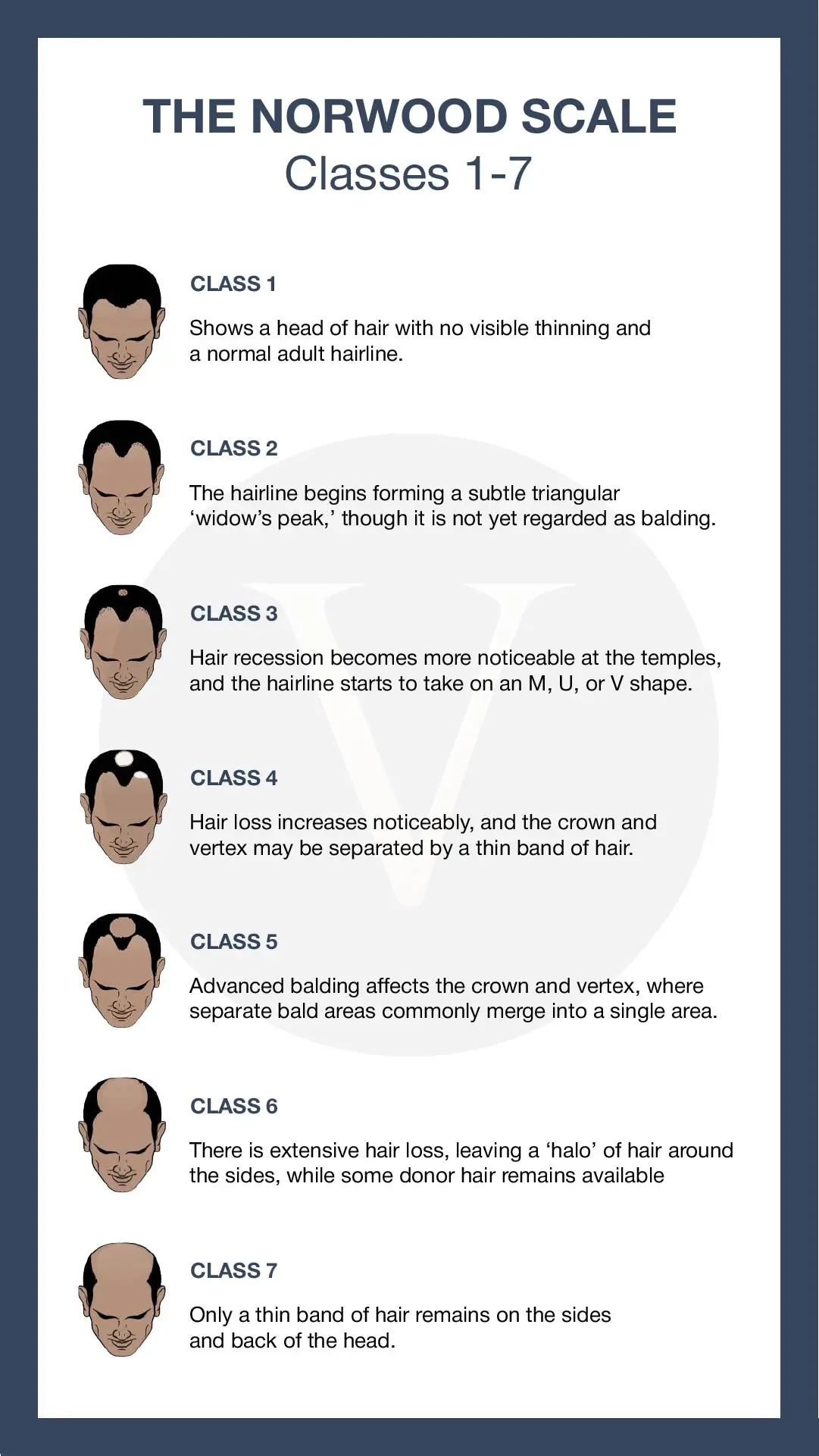
The Norwood scale 1 or the Norwood 1 hairline represents a hairline that looks either juvenile or mature with little to no recession. The frontal hairline is dense at this stage, and there is no thinning at the temples or crown.
- Characteristics:
- Straight or slightly rounded hairline
- No temple recession
- Full coverage across the scalp
The Norwood scale 1 does not involve hair loss. It is common for many adults to have this hairline throughout their lives.
Norwood Scale 2 (Norwood 2 Hairline)
Stage Norwood 2 represents the initial appearance of signs indicating male pattern baldness. In Norwood stage 2, receding takes place at the temples, forming an “M” type of hairline. Key features include:
- Mild recession at the temples
- No hair loss in the crown region
- Confused for an adult hairline by many men
The changes in hair are so slight that many men fail to recognize Norwood 2 as hair loss. Nevertheless, dermatologists refer to this as the earliest sign of hair loss according to the Norwood scale.

Norwood Scale 2 Examples
In Norwood scale 2 examples, the recession is shallow and symmetrical. The hairline at the front is still looking good, but the temples have pulled back by about 1 to 2 centimeters.
Norwood Scale 3 (Norwood 3 Hairline)
Hairline recession stage 3 on the Norwood scale is widely regarded as the first major milestone in the process of balding. Looking at the hairline, one can notice that it recedes further, thus acquiring a more pronounced shape. In case of a Norwood 3 hairline, some distinct characteristics should be highlighted:
• Significant recession at the temples
• A pronounced “M” or “U” shape of the hairline
• Noticeable decrease in hair density at the frontal scalp area
Norwood scale 3 is generally considered the phase when balding becomes a cosmetic concern and an emotional burden for men. This stage is also seen as the starting point of people’s research into hair restoration procedures. Individuals at this phase tend to compare Norwood 3 before-and-after results to get a better idea of their possible outcomes.
Norwood Scale 3 Variations
Some individuals experience diffuse thinning instead of receding hairlines. Diffuse thinning is characterized by the fact that while the hairline remains intact, there is reduced density across the frontal and mid-scalp areas. This highlights the importance of visual evaluation in addition to medical assessment when interpreting images in the Norwood scale hair loss stages.
Norwood Scale 4 (Norwood 4 Hairline)
As soon as you enter Norwood scale 4, hair loss starts progressing faster and becomes more complex. Both the frontal hairline and the crown will clearly show visible signs of thinning. Important features of Norwood scale 4 hairline:
- Severe frontal recession
- Visible crown bald spot
- Thinning band between the front and crown areas
- It is a transitional period when hair loss zones start expanding and merging.
Norwood Scale 5
Norwood scale 5 is an example of an advanced stage of male pattern baldness. In this case, the hair bridge connecting the frontal hairline and vertex has either thinned or disappeared completely.
Characteristics of Norwood 5:
- There has been significant recession in the frontal hairline
- The bald region on the crown is larger than before
- The thinning band between the frontal area and crown is weakened
At this stage, hair loss is no longer just a cosmetic issue and is considered an advanced level within the Norwood scale male pattern baldness stages.
Norwood scale 5 is the stage where the number of grafts required for hair transplantation planning begins to increase significantly. At the same time, the correct assessment of donor capacity becomes critical.
Norwood Scale 6
Norwood 6 is the stage where the connection between the frontal area and the crown is completely lost. At this stage, the bald areas merge to form a larger opening. Distinguishing features of Norwood 6:
- The front and crown areas are completely merged
- Only the sides and back of the head retain dense hair
- The top of the head is largely bald
Norwood scale 6 is typically seen in individuals with aggressive hair loss. Assessments made at this stage are extremely important for determining realistic expectations in terms of the Norwood hair loss scale.
Norwood Scale 7
Norwood scale 7 is the most advanced and final stage of male pattern baldness. At this level, the top of the head is almost completely bald. Characteristics of Norwood 7:
- The top of the head is completely bald.
- Hair remains only above the ears and along the hairline at the back of the head.
- The donor area is limited.
This stage represents maximum hair loss on the Norwood scale. Although hair restoration is possible, planning, donor management, and expectation control must be extremely meticulous.
Diffuse Thinning and the Norwood Scale
Some men experience hair loss that doesn’t follow the usual Norwood patterns. This is often described as diffuse thinning on the Norwood scale. In diffuse thinning:
- The hairline stays mostly intact
- Overall density decreases across the top of the scalp
- It may not clearly match a specific Norwood stage
This can sometimes make it harder to interpret Norwood scale hair loss stage images accurately.
Norwood Scale Hair Loss Stages Images Explained
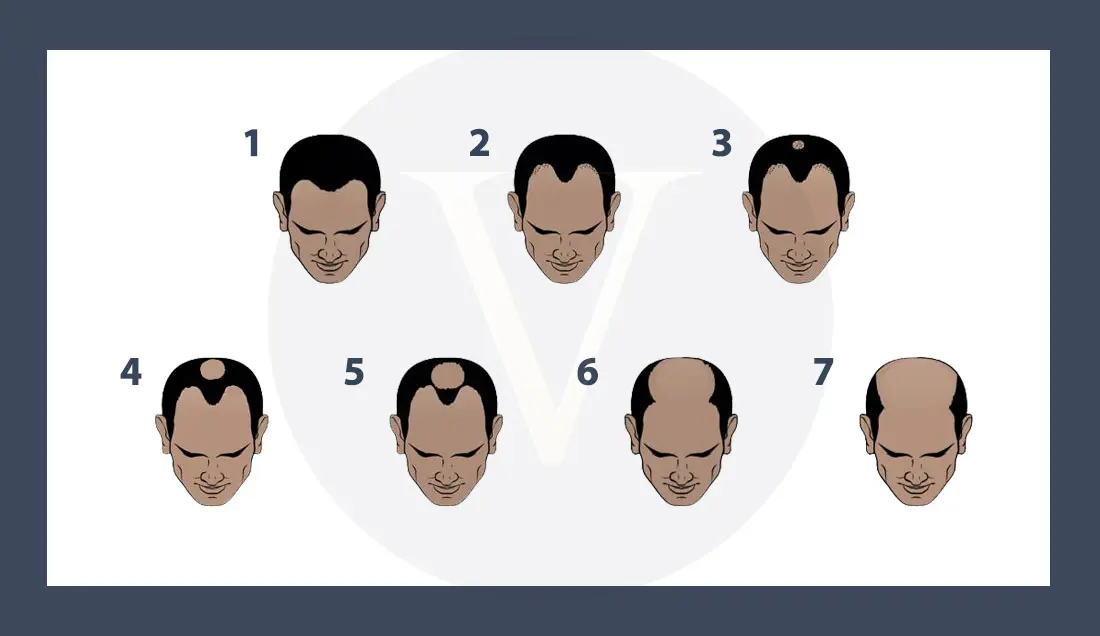
Hair loss Norwood scale images serve to highlight how hair loss progresses. These images clearly depict the following:
- Frontal recession
- Thinning of the crown area
- Hair bridge loss
- While these schematic images show key patterns such as frontal recession, crown thinning, and hair bridge loss, they do not reflect individual differences.
Norwood Scale and Male Pattern Baldness
Hair loss Norwood scale images serve to show how hair loss progresses. These images depict the following:
- Frontal recession
- Thinning of the crown area
- Hair bridge loss
While these schematic images show important patterns such as frontal recession, crown thinning, and hair bridge loss, they do not reflect individual differences.
How Doctors Use the Hamilton Norwood Scale Clinically
Dermatologists and hair transplant specialists use the Hamilton Norwood scale for the following purposes:
- To make a diagnosis
- To evaluate treatment options
- To make long-term plans
The Hamilton-Norwood scale creates a universal language in clinical communication and provides clarity between patient and doctor.
Norwood Scale and Hair Transplant Planning
The Norwood scale hair loss stages play a critical role in hair transplant planning. Based on the Norwood level:
- The number of grafts required
- The design of the frontal hairline
- The priority of the crown
Based on the Norwood level, key factors such as the number of grafts required, frontal hairline design, and crown priority are determined. In advanced stages, especially Norwood 4 and above, a staged transplant approach often provides more balanced and natural outcomes.
Limitations of the Norwood Balding Scale
Although the Norwood balding scale is considered one of the most widely accepted models of hair loss classification, this scale is not free from limitations. The purpose of the scale was to depict the most common patterns; however, it should be noted that in some cases hair loss can manifest in different ways.
The major limitations of the scale include:
- It is focused on frontal and crown recession only.
- It does not fully address density loss in diffuse thinning.
- It is specifically created for men and cannot be applied to women.
For people who experience diffuse thinning according to the Norwood hair loss scale, the visible signs may not fully reflect the actual severity of the condition. Thus, a professional examination is important. Even though the Norwood hair loss scale is a widely recognized model, there are many other classification systems. None of them seem to reach the same level of clarity and recognition.
In comparison with other models, the Norwood scale:
- Successfully describes the phases of hair loss.
- Provides a clearer depiction of male pattern baldness progression.
- Does not always present clear visual references for patients.
For these reasons, the Norwood scale remains the preferred choice for academic purposes and practical use.
Have Questions? Let's Chat on WhatsApp!
Get instant answers 24/7. Receive your doctor-led hair analysis within 1 day, plus pricing and booking support.
Start WhatsApp ChatCan the Norwood Scale Change Over Time?
Of course! Since it is a progressive issue, your Norwood level can and often does change over time. Some important things to note are:
- There are individuals who will remain at Norwood 2 for several years.
- There are others who can progress from Norwood 3 to 5 within a short period of time.
- It should be noted that genetics and hormonal sensitivities play an important role in this progression process.
Being aware of your current position on the Norwood scale regarding hair loss can help you understand what to expect in the future. With this information, you can decide whether to prevent or restore your hair loss.
Norwood Scale Hair and Treatment Timing
Recognizing early hair loss through the Norwood hair loss scale can increase the effectiveness of any intervention.
At earlier stages (Norwood 1–2):
- There are medicines that can help reduce the rate of hair loss.
- Maintaining the hairline becomes much easier.
When it comes to advanced stages (Norwood 5–7):
- The focus shifts to restoration.
- Donor region management is vital.
Such a comparison clearly illustrates the importance of accurate staging with the Norwood hair scale.
Norwood Scale Hair Loss Stages Images and Expectations
While observing the norwood scale of hair loss stages:
- People at the same stage can differ greatly
- Styling, lighting, and hair type can influence appearance
- Pictures are for illustration, not exact representation
Realistic expectations are important when looking at the norwood scale of male pattern baldness stages.
Is the Norwood Scale Accurate for Everyone?
The Hamilton-Norwood scale tends to be quite accurate for males suffering from androgenetic alopecia. However, its accuracy may depend on factors such as:
- Proper clinical diagnosis
- Identification of diffuse thinning
- Individual variability
In some cases, hair loss does not strictly follow the Norwood scale.
Real Before and After Results at Each Norwood Stage
These are Istanbul Vita patients graded at this stage before surgery, photographed before the procedure and at the result. Graft numbers and technique differ with donor capacity and goals.

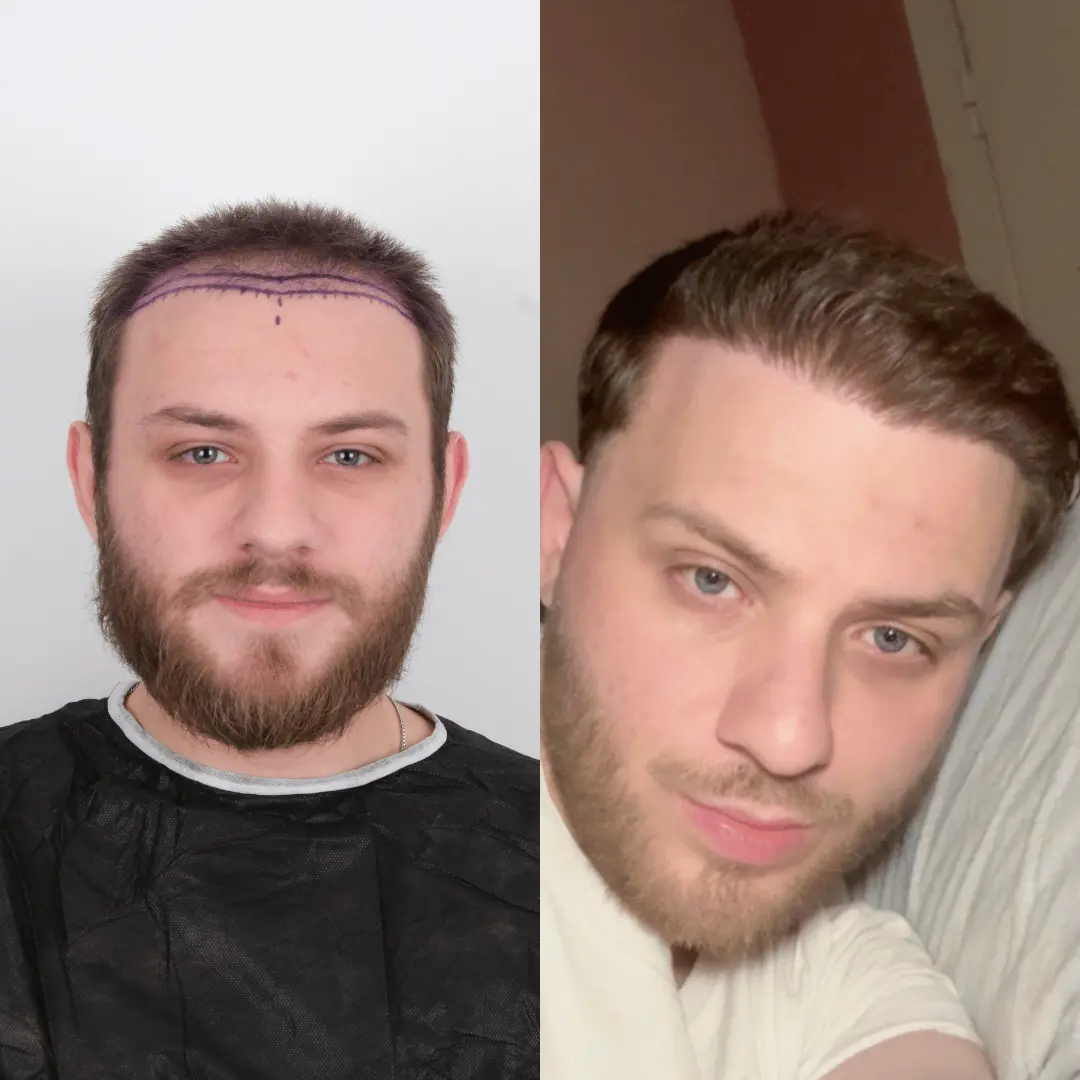
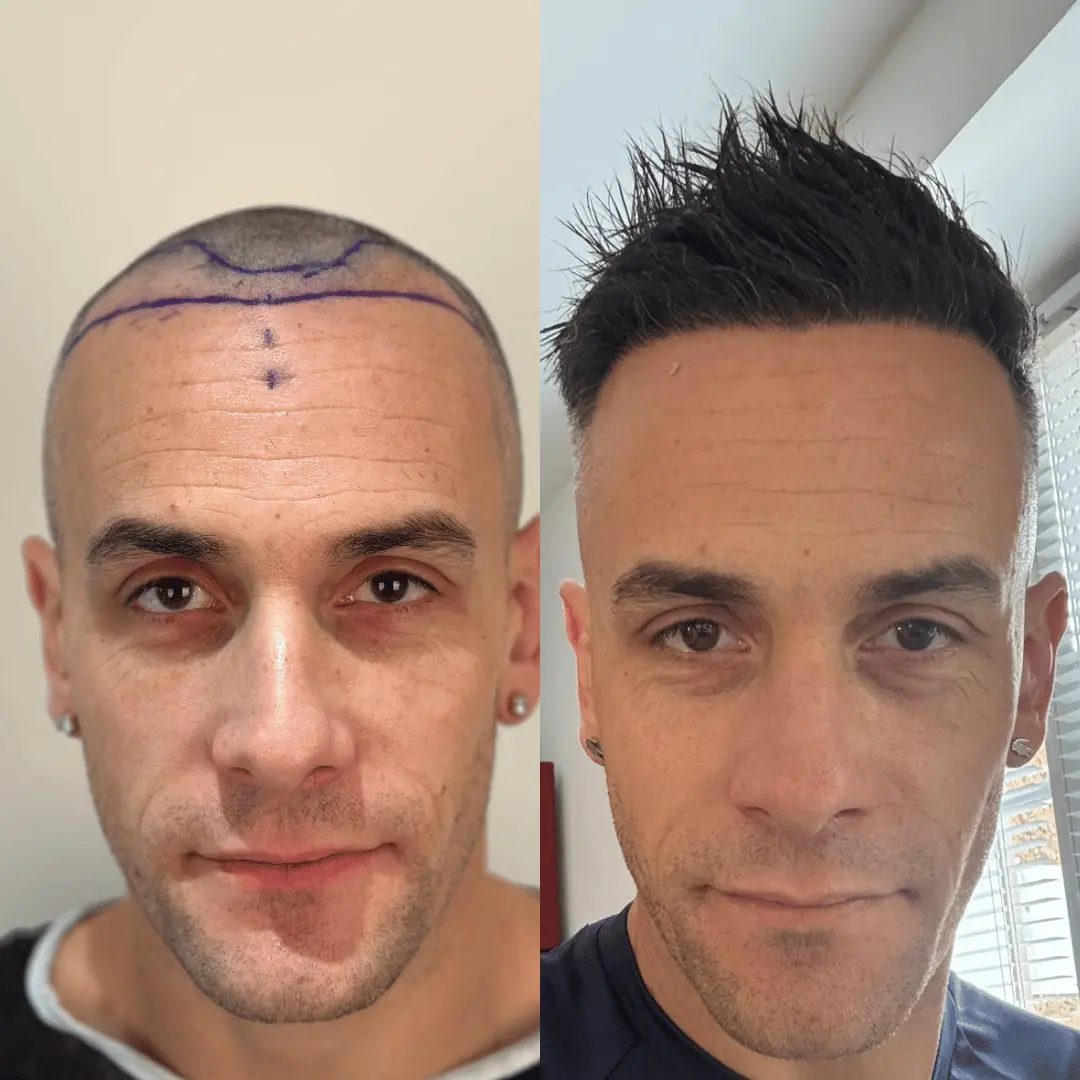
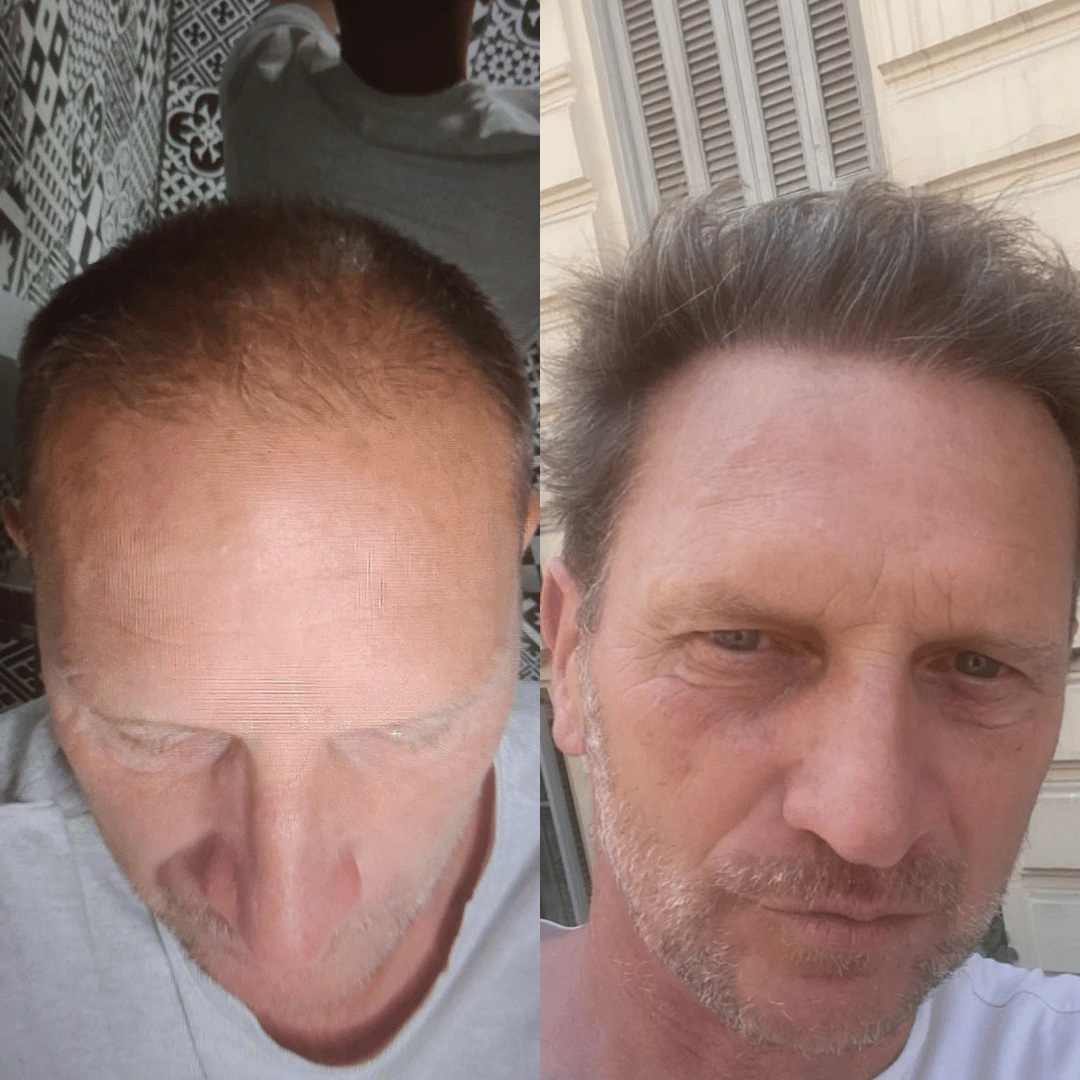
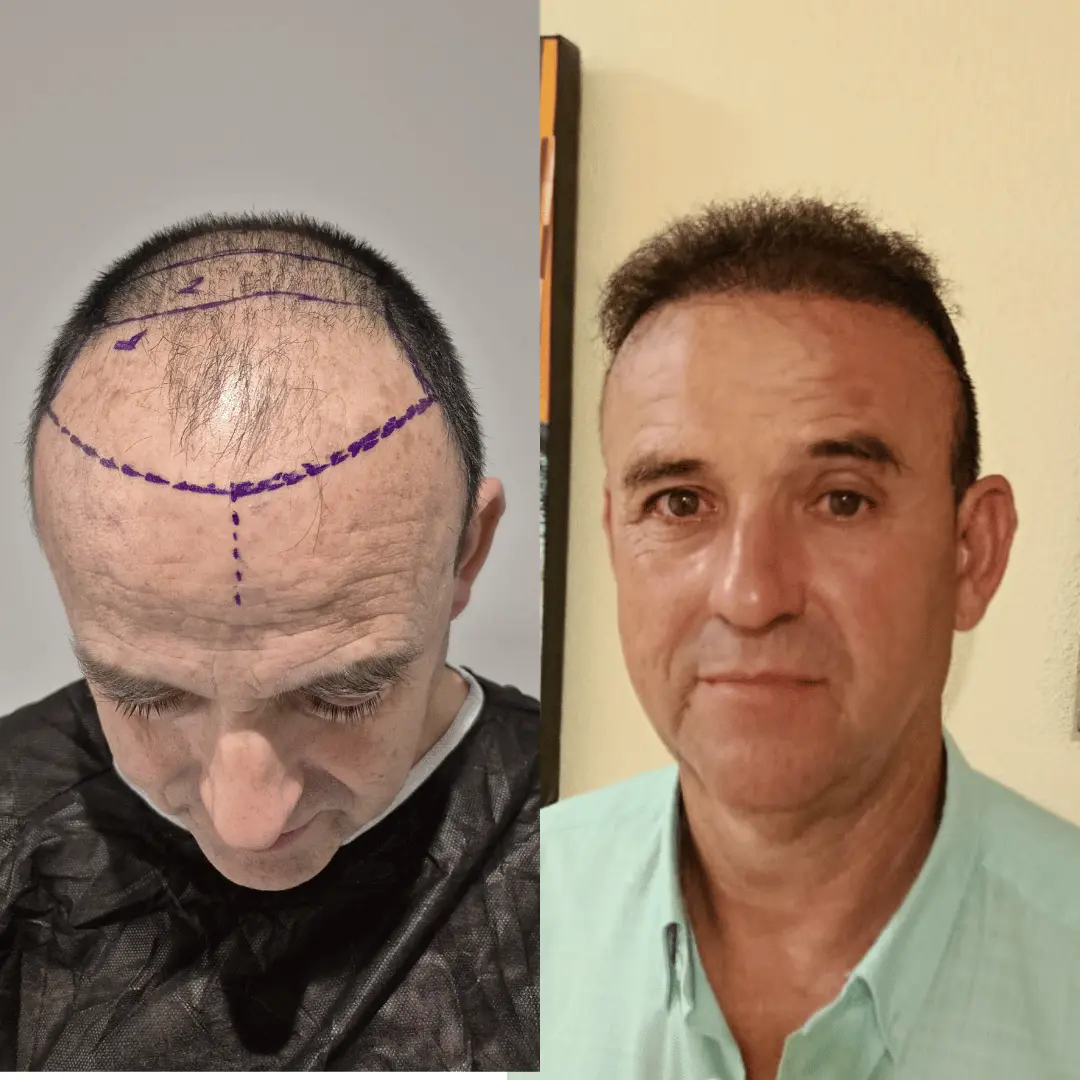
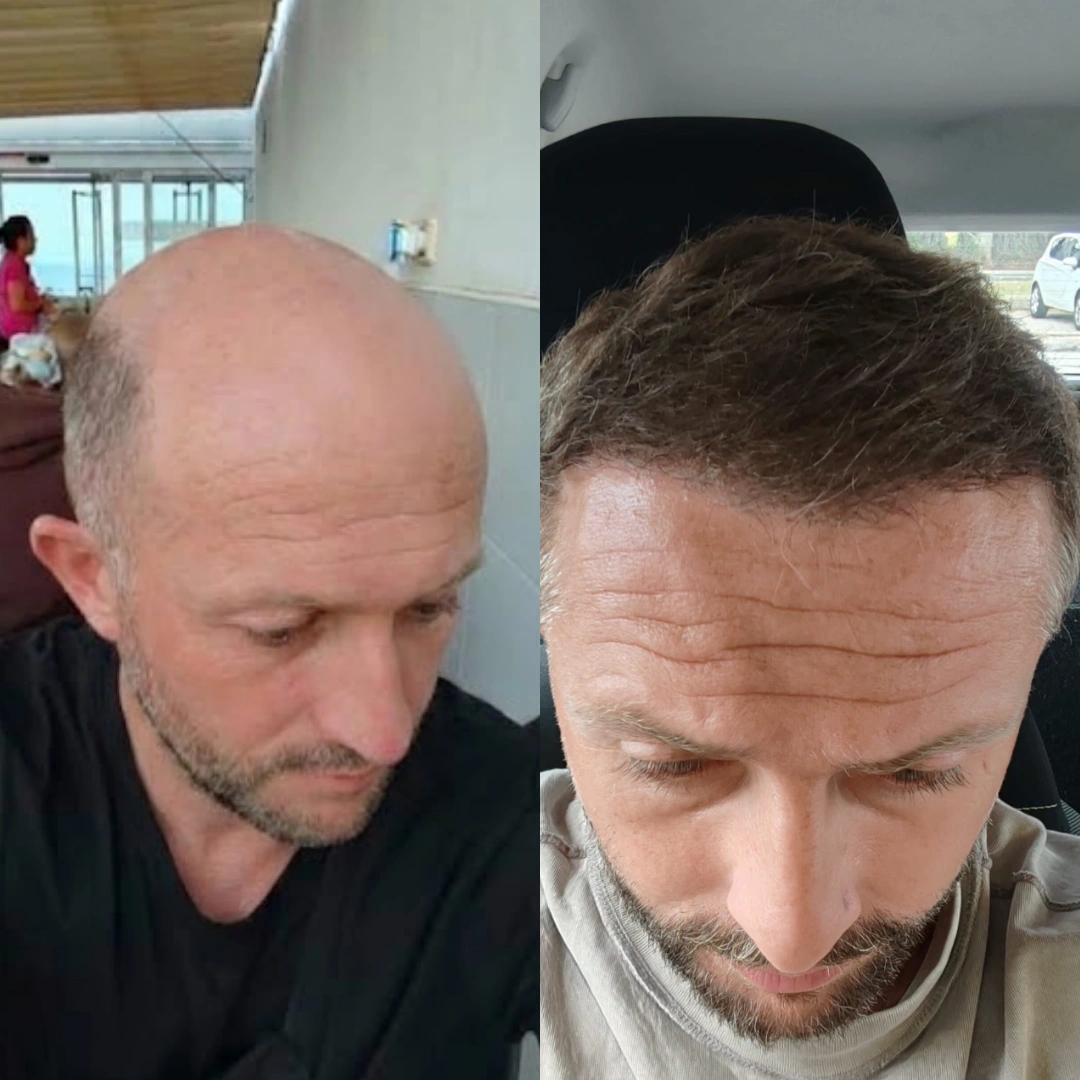
At any stage, the practical questions are how many grafts you would need and whether your donor area can supply them. See how the DHI hair transplant is planned at Istanbul Vita, who it suits and what the packages cost.
Frequently Asked Questions (FAQ)
What is the Norwood Scale?
The Norwood scale is a medical tool that helps categorize the stages of male pattern hair loss. It breaks down hair loss into seven distinct stages, starting with Norwood scale 1, which indicates minimal to no recession, all the way to Norwood scale 7, where hair loss is quite significant across the entire top of the scalp. Doctors and hair restoration specialists use the Norwood hair loss scale to evaluate the severity of hair loss, predict future progression, and plan appropriate treatment or hair transplant strategies.
Is Norwood 2 hair loss?
Although Norwood 2 hair loss is still at its early stages, it is not really classified as balding yet. By this stage, there will be an onset of slight recession of hair along the temples, which could actually look like a hairline due to natural aging. Men can stay in the Norwood 2 stage for many years with little changes taking place. Although this condition may mean the start of androgenic alopecia for some men, surgery is not always necessary.
How many hair grafts needed in Norwood 3?
In Norwood 3, you would generally need between 1,000 and 2,500 hair grafts. The exact number can vary depending on several factors such as the extent of hairline recession, the desired hairline design, target density, and the condition of the donor area. Norwood 3 hair loss is usually visible and often becomes a motivating factor for hairline restoration.
Norwood 6 number of grafts needed?
People who are diagnosed as having Norwood 6 have serious hair loss issues that cause the front and the crown to join together to form a single bald region. It’s worth noting that hair transplant operations tend to require up to 3,500 to 6,000 grafts, among others. The overall number of grafts that will be required by an individual may depend on several aspects such as the amount of donor hair, the scalp condition, and what you are aiming at in terms of density. In some cases, the procedure may involve more than one session.
 conversation


