
 Türkçe
  English
  Italiano
  Français
  Español
  русский
  Deutsch
  Română
Table of Contents
Getting ready for a hair transplant isn't just about showing up on the day. What the doctor learns beforehand — about your hair loss, your donor area, your health, your medications, your goals — shapes how the whole surgery gets planned. Following the pre-surgery instructions matters just as much as the planning itself.
Preliminary Consultation and Planning
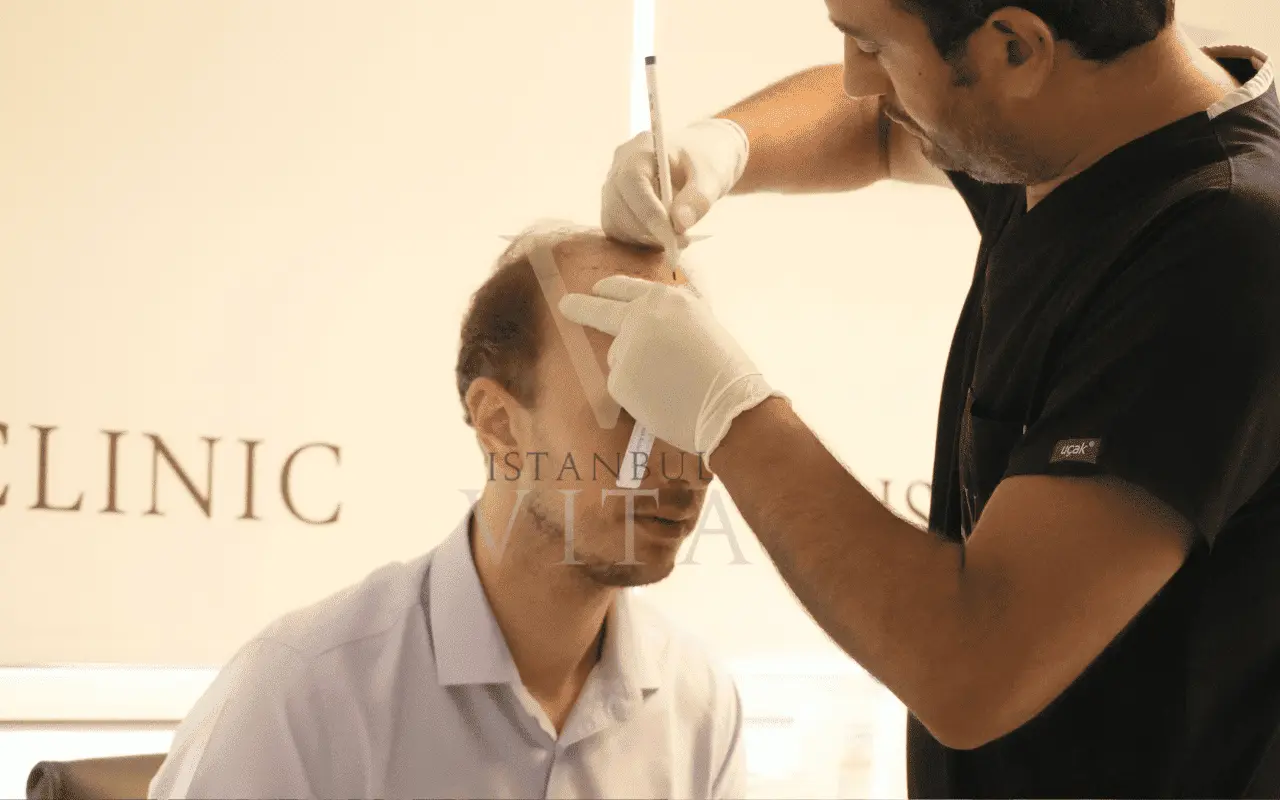
Before anything else, there's an evaluation with the doctor at Istanbul Vita. Hair loss pattern, donor area, hair characteristics, scalp condition and expectations all get looked at here, and this is where the doctor settles on which method fits.
Graft count, recipient regions, hairline position, donor potential and the overall treatment plan usually come up at this stage too.
Assessment of Health Status
General health gets checked next — heart conditions, diabetes, hypertension, allergies, past surgeries, anything else relevant. Accurate, complete medical history matters here; it's how the team catches anything that needs special attention.
At Istanbul Vita, blood tests and an EKG are run for every patient ahead of surgery.
Use of Medications and Supplements
Before your hair transplant, make sure your doctor knows about any medication, vitamin, or supplement you use regularly, including non-prescription products. This gives the doctor a chance to check whether any of them could affect the procedure, particularly bleeding or blood pressure.
Depending on your medical history and the medication involved, you may be asked to change the timing of certain products or stop taking some of them for a while before surgery. Do not stop or change prescription medication on your own. Any changes should be made only after discussion with the doctor who is managing your treatment.
Food and fluid intake should also be considered before surgery. In many cases, having a light breakfast is acceptable, but patients who will receive sedation may be asked to fast for around 6 to 8 hours. It is also important to stay well hydrated in the days leading up to surgery.
It is worth planning what you will wear on the day as well. A button-up or zip-front shirt is usually more practical than a T-shirt or sweater because it can be removed without passing it over the newly treated scalp.
What to Avoid Before Getting a Hair Transplant
Hair and Scalp Products
Hair dyes, harsh chemicals and anything that irritates the scalp are best skipped in the run-up to surgery, especially if the doctor has flagged them specifically. On the day itself, the scalp should be free of any product — no hairspray, gel, wax or fibers.
Have Questions? Let's Chat on WhatsApp!
Get instant answers 24/7. Receive your doctor-led hair analysis within 1 day, plus pricing and booking support.
Start WhatsApp ChatAlcohol and Smoking
Alcohol affects bleeding and circulation; smoking affects blood flow and how tissue heals. Both are worth cutting out for a period before surgery, timed to whatever the doctor recommends — it's one of the simpler ways to reduce avoidable risk during recovery.
Sun Exposure
Too much sun before surgery can leave the scalp red, irritated or burned, so the donor and recipient areas need to stay out of direct sun beforehand. If any irritation or sunburn shows up close to the surgery date, that's worth mentioning to the doctor.
Getting this part right is only half the picture — the recovery period afterward comes with its own care routine, which matters just as much for the outcome.
Final Considerations
Good preparation means the surgery gets tailored to the individual case — hair loss pattern, donor area, overall health, all of it. Medical exams, tests and whatever the physician recommends should all be accounted for.
Scalp irritation, sun exposure, alcohol, smoking, and unapproved medication changes are worth avoiding in the lead-up. Sticking to both the pre-op and post-op instructions is what truly determines how well the surgery and recovery go.
Frequently Asked Questions About Preparing for a Hair Transplant
How long before surgery should I stop smoking and drinking alcohol?
Cutting both out for a while before surgery is a smart move. Alcohol affects bleeding, while cigarettes slow circulation and get in the way of how tissue heals. The exact timeline depends on what the doctor advises, but skipping both ahead of time is one of the easiest ways to sidestep unnecessary complications during recovery.
Can I take my regular medications before a hair transplant?
That depends on the medication. Most patients do not need to stop everything they normally take just because they are having a hair transplant. Your doctor will go through your medication list before the procedure and tell you if anything needs to be changed. This also applies to vitamins and supplements. If you take prescription medicine, keep taking it as prescribed unless your doctor tells you otherwise.
Have Questions? Let's Chat on WhatsApp!
Get instant answers 24/7. Receive your doctor-led hair analysis within 1 day, plus pricing and booking support.
Start WhatsApp ChatWhat should I wear on the day of surgery?
A button-up or zip-front shirt is best, since it can be taken off without pulling anything over the head — useful right after the procedure when the scalp is sensitive.
Do I need blood tests before a hair transplant?
Yes. Blood tests and an EKG are run for every patient at Istanbul Vita ahead of surgery, regardless of medical history.
Can I dye or style my hair before the procedure?
Hair dyes, harsh chemicals and other products that irritate the scalp are best avoided in the run-up to surgery, and the scalp should be completely product-free on the day itself.
 conversation


