
 English

Table of Contents
Are you experiencing symptoms of hair loss on your hairline and wondering if you’ve gotten to Norwood Scale 2? This is a significant step in Androgenic Alopecia which is often not recognized; nonetheless, this phase serves as a pivotal point in the hair loss journey. There are various reasons for hair loss, including genetics, aging, hormones, environment, stress, poor lifestyle, and different diseases. This article will cover what Norwood 2 is, its position in the entire Norwood Scale, and, most significantly, what you can do to minimize or completely prevent hair loss at this stage.
This is what you need to know:
What is Norwood Type 2?
Norwood type 2 can be considered the primary stage of the Norwood Scale. Clinicians use this method a lot to figure out how bad a man's hair loss is. Norwood 2 indicates a minor receding hairline in the form of a moderate U, M, or V shape and balanced hair loss on both sides with preservation of the frontal hairline. In the Norwood 2 stage, there is no hair loss in the vertex area, and it is characterized by minimal reduction of hair density. Even though the Norwood 2 stage is relatively light and not severe, it often serves as the first sign that one can have androgenetic alopecia.
In terms of practical considerations, there are several ways in which different hair loss prevention methods can be utilized during Norwood stage 2. One should keep in mind that all those who have reached this stage do not necessarily progress to later stages because of their genes. Yet, there is always the possibility of additional hair loss in the future that should be prevented for that reason. There are several proven approaches to doing this using Minoxidil and Finasteride pills.
This information is for informational purposes only. Consult your doctor before use.
For detailed information about the Norwood scale, you can read our full article.
Features of a Norwood 2 Hairline
Norwood 2 is among the initial stages of the Norwood scale that classifies male pattern baldness, where minor alterations start to occur on the frontal hairline. Normally, differentiating between Norwood 2 and developing hairline is hard; however, some common characteristics make it possible to recognize it, as people with this condition may progress to alopecia.
Characteristics of a hairline in Norwood 2 include:
- Temple recession (initial): The first characteristic is the hair pulling back in both temples.
- Development of an M, U, or V-shape: With hair withdrawing in both temples, there is an angular shape compared to the round hairline at the beginning. Middle part hair stays unaffected.
- Hair density: In spite of the loss of hair in the frontal area, hair on the scalp is thick. This hair loss occurs only in the front. Hair on the crown area stays unharmed.
- Change in hairline affects appearance of the face: Although hair loss may be slight, it leads to the maturation of one's face.
- Pattern of hair loss showing advancement in the next stage: Even though slightly noticeable, this pattern is a clear indication that one has entered the initial stages of moving towards another Norwood level.
Reasons of Norwood Type 2 Hair Loss
Usually, the main reason for Norwood Type 2 hair loss is Androgenetic Alopecia. In other words, it is an inherited and biological process that can be referred to as the first stage of the disease. Thus, one should note that the main reason for Norwood Type 2 hair loss is biology.
The major causes include the following:
- Hereditary Predisposition: People who come from families where people have suffered from hair loss usually have a higher susceptibility to hormonal effects because of the genetic background of their organism.
- Susceptibility to DHT: This is an extremely strong hormone that affects hair follicles because they are sensitive to this male hormone. The follicles of such people atrophy as they have a genetic predisposition.
- Follicle Miniaturization: Due to the permanent effect of the male hormone, the follicles become smaller and produce thin hair. After this, the hair stops growing as the follicles become inactive (atrophy).
- Functioning of Androgen Receptors in the Temporal-Frontal Area: Hair loss under stage 2 Norwood usually starts from the temporal area since androgen receptors function in that part of the scalp actively.
- Hormones and Aging: Changes in natural hormones and particularly DHT production at an advanced age might speed up the process of hairline recession in males.
- Other Reasons for Hair Thinning (Secondary Causes): It does not lead to the development of baldness independently, but might enhance the existing hair shedding process and reveal latent androgenic alopecia.
Who Are the People Most Affected by Norwood Type 2?
Most cases of Norwood type 2 are reported in men who have an inherent vulnerability to the condition called Androgenetic Alopecia. These are individuals whose parents experienced early hairline recession. With age comes the likelihood of this hair loss becoming more pronounced as a result of the impact of hormones, particularly the Dihydrotestosterone hormone. The manifestation of hairline alteration will be noticeable as an individual enters their teen years and continues into their thirties. The hormones' impact on hair growth will become visible in individuals during these periods. Individuals who are vulnerable to Dihydrotestosterone are prone to experiencing Norwood type 2 since their temples will start receding.
Is Norwood 2 Permanent or Progressive?
Norwood 2 is often viewed as a progressive stage of Androgenetic Alopecia. If nothing is done, the hairline will likely continue to recede. While some people may notice their hair loss slows for a while, genetics and the ongoing effects of Dihydrotestosterone (DHT) usually lead to further hair loss, especially at the temples.
With the correct medical intervention and healthy decisions made in one’s lifestyle, the hair condition may be preserved or even enhanced. However, regaining one’s original hairline is very difficult without opting for surgery.
Is It Possible to Get a Hair Transplant in Norwood 2?
Hair Transplantation is a possibility in the case of Norwood Type 2, but it is not the best solution for most specialists. First, one should know that Androgenetic Alopecia is a progressive disease. Hair transplant does not mean hair loss will stop; thus, in several years, your head will look unattractive because of bald spots around the transplanted area. Second, you may need another hair transplant for better harmonization of the hairline.
Regardless of everything mentioned above, some people choose to have a transplant at that period of hair loss because the hairline stops growing and looks very ugly. At the same time, a hair transplant should be conducted only after the end of the hair fall process. One needs to visit a specialist who will evaluate your situation and determine the effectiveness of the surgery.
How to Treat Norwood Type 2 Hairline?

Type 2 Norwood is characterized by the presence of an early and very manageable form of Androgenetic Alopecia, during which appropriate measures based on proven practices may considerably delay the course of the condition and even promote hair thickening. Prompt treatment is likely to minimize its progression, possibly even stopping it in its tracks, and to increase hair growth; however, it cannot be reversed.
Successful treatment depends on a two-pronged approach: revitalizing weakened follicles and addressing the root cause of the condition, primarily Dihydrotestosterone.
Here are the best solutions to pursue.
Activating Hair Follicles
It is at this stage that increasing blood flow and activating hair follicles become important because most follicles are alive.
Microneedling
In this procedure, small wounds on the scalp are inflicted to initiate the process of wound healing.. This response may help hair regrowth. It can also improve the delivery of applied substances.
Scalp massage
Manually stimulating the scalp on a daily basis, between five and ten minutes, enhances the microcirculation and relieves tension from the scalp. It is believed that this technique can affect hair growth and gene regulation, and can prevent fibrosis in the hair follicle area.
Optimal blood circulation delivers the nutrients and oxygen needed for healthy, strong hair.
DHT Effects Limitation
As mentioned above, the primary cause of hair thinning is DHT sensitivity; hence, it is important to limit the effects.
Scalp Hygiene
Maintaining good hygiene is crucial since it helps eliminate excess oil and dead skin cells, which damage your hair follicles.
Self-treatment Precautions
Although self-treatment may appear to be an easy option and even appealing, using a homemade mixture such as salt or coal scrubs does not have any scientific evidence backing its effectiveness against DHT. Moreover, it could cause irritation of your scalp.
What should be done? Primarily, it is necessary to minimize the effect of DHT on your hair follicles
Medication (Primary Treatment Regimens)
Drug treatments are believed to be the most effective way of treating hair loss in the early stages.
Minoxidil (topical/ systemic)
- Boosts the circulation to increase hair follicle duration
- Sets thicker and fuller hair
- Limited by two concentrations, namely, 2% and 5%
- Results become visible after the continuous administration of the drug
Finasteride (systemic/topical)
- Blocks the activity of the 5-alpha reductase, leading to the reduction of the DHT hormone production
- Halts hair loss progression and may restore hair growth
Hair Transplantation (Advanced Option)

If the medication fails or if the condition of a person suffering from alopecia Type 2 is too serious, hair transplantation might be required.
DHI (Direct Hair Implantation)
One of the newest and least invasive methods of hair transplantation is known as DHI Technique. The procedure involves extraction of hair follicles and their further introduction to the scalp using implanter pens. This way, it is easier to ensure better control over the angle and depth of hair follicles introduction, which will contribute to obtaining denser and natural results. However, it must be mentioned that best results will be provided in case of hair loss cessation.
Sapphire FUE (Follicular Unit Extraction)
It is an innovative procedure that makes use of sapphire blades instead of the conventional steel blades. This results in precise cutting, minimal tissue damage, and fast healing following the procedure. Sapphire FUE technology is particularly beneficial in cases where there is a need to restore natural hairlines and density.
Combined Technique (DHI + Sapphire FUE)
Combined Technique has the advantages of both the DHI and Sapphire FUE techniques. Normally, Sapphire FUE is used for creating channels, whereas DHI for hair implantation. The combination of these techniques leads to better outcomes in hair density and appearance.
The best outcome can be achieved through stabilizing the hair loss with medicine according to age, donor quality, and hair loss pattern.
Vita Technique
Vita Technique was developed by the specialists from Istanbul Vita and is regarded as an advanced technique in comparison with other techniques. This method uses personalized hair implantation planning at a microscopic level. It distinguishes itself from other methods by the thorough analysis of the donor area to increase its density without losing its natural look. Vita Technique guarantees the personalized approach to each patient during the whole procedure of hair implantation based on the unique characteristics of hair, hair loss state, and patients' requirements.
To see a comprehensive description of the patients' changes and procedure results, you may refer to our article on hair transplant before and after results in Turkey.
Have Questions? Let's Chat on WhatsApp!
Get instant answers 24/7. Receive your doctor-led hair analysis within 1 day, plus pricing and booking support.
Start WhatsApp ChatLifestyle and Auxiliary Treatment
Additional treatments can help improve the overall condition of one’s hair.
-
Balanced Nutrition: To produce keratin, make sure you have enough protein, iron, zinc, biotin, and vitamin D
-
Scalp management: Treatment of dandruff, inflammation, and sebum production will lead to a good scalp condition suitable for hair growth
-
Dealing with Stress: Continued stress may worsen your symptoms and cause other diseases.
How Many Grafts Are Needed for a Norwood 2 Hair Transplant?
The mean number of grafts needed for people who suffer from hair loss and are Norwood Class 2 based on the Norwood Scale is 1,500 to 2,500. Nonetheless, the number of grafts that are needed differs from one person to another because there are certain variables that need to be considered.
Norwood 2 vs. Norwood 3 – What’s the Difference?
Differentiating between the two types of Norwood, Norwood Type 2 and Norwood Type 3, is very important in order to diagnose the progress of Androgenic Alopecia, and at which stage action needs to be taken. Whereas Norwood Type 2 is considered to be the early stage of hair receding, Norwood Type 3 is considered the first clinical sign of baldness.
| Feature | Norwood 2 | Norwood 3 |
|---|---|---|
| Hairline Recession | Slight recession, mainly at temples | More pronounced recession forming a distinct V shape |
| Pattern | Mild U, M, or V shape | Deeper temple recession, more exposed forehead |
| Crown Involvement | Usually not affected | May begin to show thinning in some cases |
| Hairline Definition | Symmetrical and well-defined | Noticeable separation between hairline and forehead |
| Balding Classification | Not considered true balding | First stage considered true balding |
| Hair Density | Generally remains high | Begins to decrease in affected areas |
A Real Norwood 2 Hair Transplant at Istanbul Vita
These are Istanbul Vita patients graded at this stage before surgery, photographed before the procedure and at the result. Graft numbers and technique differ with donor capacity and goals.
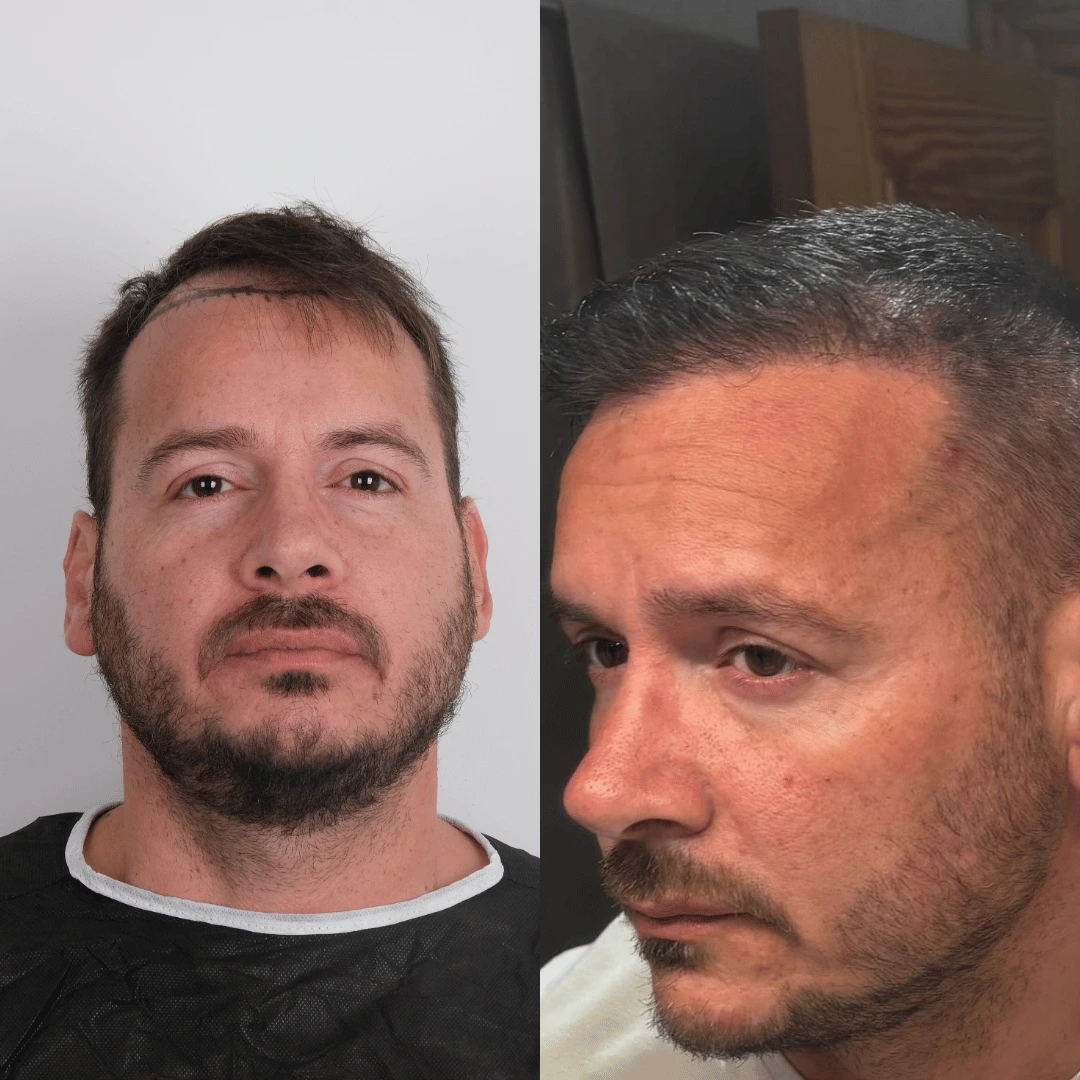
At any stage, the practical questions are how many grafts you would need and whether your donor area can supply them. See how the Sapphire FUE hair transplant is planned at Istanbul Vita, who it suits and what the packages cost.
Frequently Asked Questions (FAQ)
Is Norwood 2 a case of baldness?
Yes, the condition is classified as being an early stage of Androgenetic Alopecia. Although this stage is relatively mild, it may mark the start of a receding hairline, and the problem may progress further in the future.
Can it be reversed, and does it result in hair restoration?
A full reversal is not guaranteed, but seeking early treatment will certainly yield a positive result. Medications such as Minoxidil and Finasteride help prevent further deterioration of the condition and even stimulate hair growth.
Should you get a hair transplant if suffering from Norwood 2?
No. For transplant procedures to become successful, hair loss should be stable. Consult a specialist regarding your condition.
How do you know when you have a receding hairline?
The condition features small amounts of symmetrical hair receding on the sides resulting in an M-shape or widow’s peak hairstyle while leaving the central portion unaffected.
What kind of haircut should you get if having Norwood 2?
Hair should be short and textured. For example, the crew cut, buzz cut, or textured hair can prove helpful. Long hair may also be used to conceal the temple area.
Is Norwood 2 similar to a mature hairline?
No. While the former is a stage on the path of balding, the latter refers to a natural and stable phenomenon.
How would I know if my condition will progress past Norwood 2?
Receding hairlines that progress past the Norwood 2 stage exhibit deeper temple recession, thinning at the front of the hairline, or early signs in the crown.
Is it possible to stay with Norwood 2 for a long period of time?
Yes. If appropriate measures are taken, many people retain their hairline at this level for several years. But without treatment, further recession may occur.
Is Norwood 2 common among men in their twenties and thirties?
Absolutely. It is not uncommon for many young men to start experiencing temple recession during those stages.
Can one only have hair loss up to the Norwood 2 stage?
Yes, but not everyone who gets here will experience hair loss further down the line. Some will go on to lose more hair, while others will maintain the same condition throughout their lives.
How long does the Norwood 2 last?
That cannot be determined since there are some men who will be at this stage for life, while others will suffer from hair loss progressing even further.
 conversation


