
 English

Table of Contents
Many people think Afro hair grows straight down from the skin. In reality, afro hair follicles follow a curved path beneath the skin. That unique anatomy is one of the reasons why surgeon experience is so important in achieving natural, long-term transplant results.
When considering Afro hair transplants in Turkey, many people assume the location is what makes the difference. In reality, experience matters far more than geography. Some clinics have worked with tightly coiled hair for years, while others have very little experience with this hair type. The difference usually isn't visible during surgery, but years later, when density, curl direction, and natural growth patterns begin to develop.
An experienced surgeon approaches the first consultation differently. Instead of focusing immediately on graft numbers or pricing, they begin by evaluating curl pattern, follicle direction beneath the scalp, donor characteristics, and long-term planning. Those early decisions often have a greater impact on the final result than the location of the clinic itself.
Why Specialized Experience Matters for Afro Hair Transplants
Repetition builds judgment. A surgical team that has handled coiled or spiral-shaped follicles hundreds of times develops instincts that no manual teaches. That level of experience comes from treating this hair type consistently over many years, allowing surgeons to make better decisions throughout every stage of the procedure.
Beyond Medical Tourism: What Experienced Clinics Offer
There's a logistical layer too, though it shouldn't be confused with the main point. Coordinators fluent in several languages, video consultations before travel, structured check-ins afterward. Useful scaffolding. It supports a sound surgical plan. It has never been the thing that creates one.
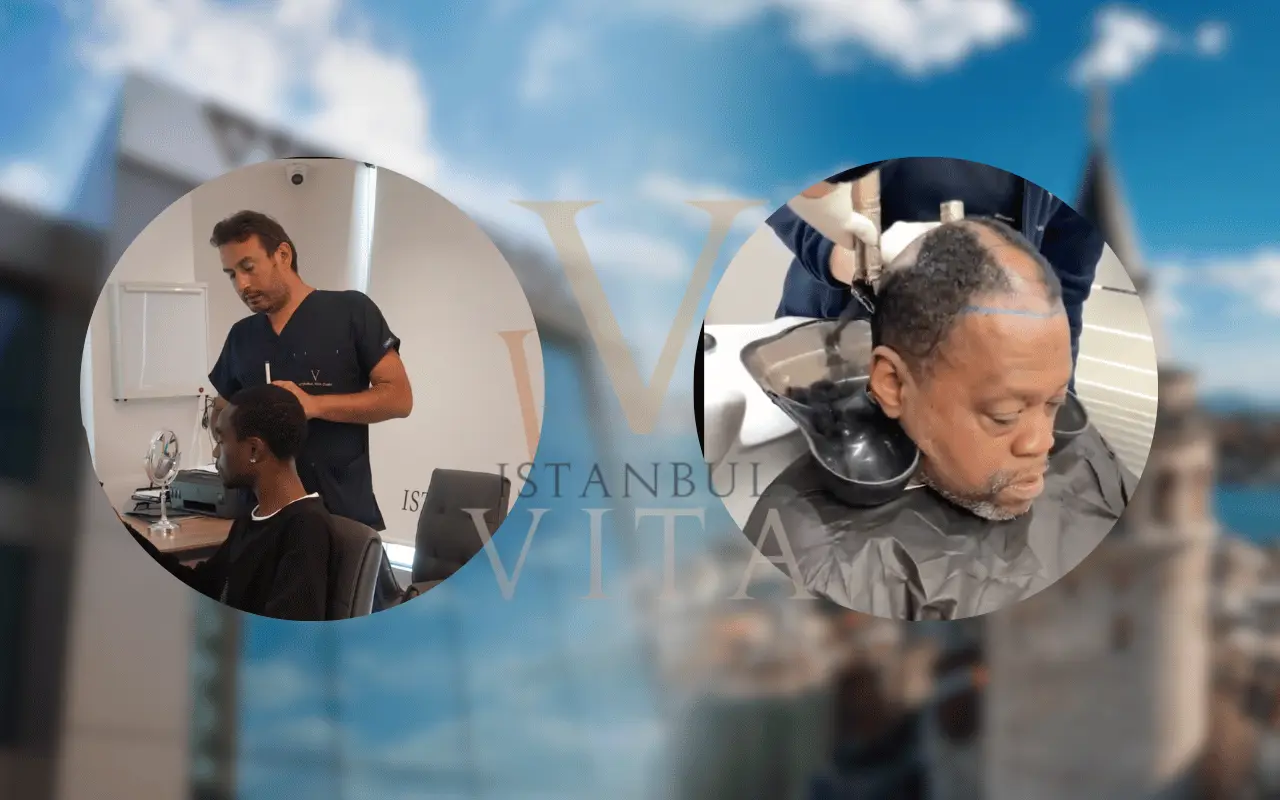
Why Two Clinics in the Same City Can Deliver Very Different Outcomes
Teams accustomed to straighter textures often default to the same angle and depth they'd use on any scalp. That default is risky here. Spiral-shaped grafts sitting beneath the surface don't respond well to a one-size approach, and the result can look flatter, less directional, than what the patient expected from the brochure photos.
How Can You Recognize a Truly Experienced Afro Hair Transplant Surgeon?
Watch how the consultation unfolds, not the marketing copy on the website. A physician who genuinely knows this texture usually spends real time on pattern and scalp characteristics before graft counts or pricing ever come up.
Questions Worth Asking During Your Consultation
- How many cases involving this specific texture has the treating surgeon personally handled?
- Who performs the channel work and placement, the surgeon or a delegated technician?
- How is curl direction assessed before any plan gets finalized?
- What's the strategy for protecting density in the back and sides long-term?

What Evidence Should a Clinic Be Able to Show?
Reassurance costs nothing to say. A provider with genuine background in this area should be able to walk a patient through actual case examples, describe its zoning method in specific terms, not vague ones, and explain exactly where the surgeon stays involved once the operation starts.
| Evaluation Criteria | Experienced Afro Hair Clinic | General Hair Transplant Clinic |
| Physician experience with afro hair | Regular, documented case history | Limited or occasional exposure |
| Donor area assessment | Zone-based, curl-specific mapping | Standard, non-differentiated approach |
| Follicle curvature understanding | Extraction angle adjusted for curl path | Often applies straight-hair extraction angles |
| Personalized planning | Individual curl type and density review | Generalized treatment plan |
| Documented afro cases | Available on request | Rarely tracked separately |
| Consultation quality | Detailed, curl-focused discussion | Brief, price-focused discussion |
Common Mistakes International Patients Make When Choosing a Clinic
Wrong city is rarely the actual mistake. Assuming every provider in Istanbul has handled this texture regularly, that's the one that costs people.
Assuming Every Clinic Has Afro Hair Experience
Many clinics perform hair transplants every day without seeing much of this particular hair texture. A handful of cases doesn't build the same instincts as hundreds, and given how differently spiral-shaped grafts behave during harvesting, that gap shows up in the mirror months later.
Focusing on Price Instead of Surgical Planning
Comparing quotes is normal, even smart. Trouble starts when price becomes the only variable and zoning strategy gets skipped in the process. Checking an afro hair transplant results timeline before committing to anyone tends to put cost in better perspective, since planning quality usually shapes long-term results more than the number on the invoice ever does.
| Aspect | Classic FUE | DHI | Vita Technique® |
| Extraction approach | 0.9–1.0 mm punches | 0.8–0.9 mm punches | 0.6–0.7 mm sapphire punches |
| Implantation strategy | Separate channel opening and placement | Simultaneous channel opening and implantation | Zone-based planning with angle control for curl direction |
| Physician involvement | Varies by clinic | Varies by clinic | Doctor-led channel opening in every case |
| Donor preservation | Larger extraction wounds | Reduced tissue trauma | Designed to reduce trauma through smaller punches |
| Ideal use cases | Straight to wavy hair, larger sessions | Precision-focused cases with donor tension considerations | Cases requiring detailed curl-pattern and density planning, including afro hair |
None of this guarantees a fixed result or a set number of weeks to recovery. What actually moves the needle is who's holding the instrument, and whether the plan behind it accounted for texture and scalp characteristics from day one.
Why Does Experience Have a Lasting Impact on Results?
Surgery day is a small fraction of the timeline. What happens years later, whether density holds up in the back of the scalp, whether new growth blends in or stands out, traces back to choices made during that first appointment.
Have Questions? Let's Chat on WhatsApp!
Get instant answers 24/7. Receive your doctor-led hair analysis within 1 day, plus pricing and booking support.
Start WhatsApp ChatDonor Preservation, Density, and Natural-Looking Growth Over Time
Harvested with care for direction and pattern, the back of the scalp tends to hold density better if a second round is ever needed down the line. Grafts set at the right angle also blend in as they grow out and get styled, rather than sitting there looking obviously transplanted the way mismatched ones often do.
Why Do International Patients Choose Istanbul Vita for Afro Hair Transplantation?
Years of working with international patients seeking treatment for coily and tightly coiled textures shaped how the clinic approaches this kind of case. That background didn't come from chasing volume. It came from repeat exposure to a texture that, frankly, punishes a generic approach.
Planning at Istanbul Vita stays physician-led throughout, from the initial assessment of curl pattern through microscopic evaluation of how individual follicles curve beneath the scalp. That microscopic step matters more than it sounds. Grafts get classified by thickness, texture, and growth pattern before extraction even begins, using the same donor-zoning logic behind the Vita Technique®, adapted here for coiled and spiral-shaped strands.
Afro Technique® reflects that same philosophy applied specifically to textured hair: careful donor area preservation, a graft-by-graft planning process rather than a one-size approach, and surgical decisions made case by case instead of from a fixed template. None of this is framed as a shortcut to speed. If anything, it slows the early planning stages down, on purpose.
The reasoning behind that is straightforward. A high case count means little if the underlying planning doesn't account for how this specific texture behaves during harvesting and placement. Istanbul Vita's approach treats that planning stage, not the procedure count, as the part worth getting right.
Frequently Asked Questions
Is Istanbul a good place for an afro hair transplant?
Several providers there have genuine background with this texture, but it varies enormously from one practice to the next. The surgeon's actual case history matters more than the city.
Why does experience matter more than location in afro hair transplant surgery?
Because these follicles curve beneath the scalp, harvesting and placement call for a different approach than straighter textures need. A surgeon's specific background with this pattern affects the outcome far more than the clinic's zip code.
How can I tell if a clinic in Istanbul has real afro hair experience?
Ask about documented cases, how the scalp gets zoned, and who actually performs the channel work. A provider with genuine background answers in specific terms, not general reassurance.
What makes afro hair transplant surgery more complex than other hair types?
The curved shape beneath the skin changes harvesting angle, scalp assessment, and placement direction, all of which need separate handling compared to straighter textures.
Does a higher price always mean a more experienced clinic?
Not really. Price reflects overhead and technique as much as anything. Documented case history and consultation depth tend to say more about actual skill.
 conversation


