
 English

Table of Contents
FUE vs DHI Hair Transplantation: Methods, Advantages, and Differences
Hair transplantation today has evolved beyond being merely an aesthetic procedure; it has become a comprehensive process where planning, technical execution, and clinical experience are evaluated together. With the increasing demand for a natural appearance, patients increasingly ask which hair transplantation method is most suitable.
For how the DHI side of this comparison works in practice — planning, graft ranges and what a session includes — see our DHI hair transplant in Istanbul page.
As a physician with long-standing experience in the field of hair transplantation, I have had the opportunity to closely evaluate the outcomes of different techniques at Istanbul Vita Clinic, both during the application processes and through patient feedback. One of the most common questions I encounter is, “Which is better,FUE or DHI?”
In this article, I will provide a detailed comparison of FUE and DHI hair transplantation techniques, examining their application methods, advantages, limitations, and the situations in which each may be preferred.
What is FUE? The Basic Approach in Hair Transplantation
FUE (Follicular Unit Extraction) is a hair transplantation technique in which hair follicles are individually harvested from the donor area and transferred to the recipient area. It is considered one of the most widely used methods today. In this technique, hair follicles are generally taken from the occipital region and placed in the recipient area according to a carefully planned strategy.
FUE stands out due to its applicability to large areas and the flexibility it offers in planning. At Istanbul Vita Clinic, we have observed that FUE can yield highly successful and natural results when applied with proper planning. However, the crucial factor is not just harvesting the follicles but also how and according to which plan they are implanted. One of the main advantages of FUE is its adaptability to different types of hair loss. However, in uncontrolled or poorly planned applications, achieving the desired natural appearance can be difficult.
What is DHI? A Controlled and Dense Implantation Approach
DHI (Direct Hair Implantation) is a technique in which hair follicles are implanted directly into the recipient area using specialized pens. In this method, channel creation and implantation can occur simultaneously. DHI is particularly valued for allowing denser and more controlled implantation. It provides an important advantage in aesthetically critical areas such as the frontal hairline, where precise placement is crucial. In our experience, DHI offers a controlled approach, especially in narrow areas and regions where higher density is desired. However, this method may not be appropriate for all patients. DHI typically requires a longer procedure and demands careful assessment of the donor area.
In some advanced approaches such as the Vita Technique, more refined tools and planning strategies are used to further enhance outcomes. By utilizing 0.6–0.7 mm sapphire tips, the procedure allows for smaller incisions, which can reduce tissue trauma and support faster healing while enabling denser transplantation. With 0.6–0.8 mm sapphire micro-channels, it becomes possible to achieve up to 30% higher density (approximately 55–60 grafts/cm²) while maintaining precise angle control. In certain zones (D1/D2), density can reach 80–100 grafts/cm², while still preserving a natural appearance in the hairline (F1). Additionally, thanks to the use of smaller punches and sapphire channels, healing time can be reduced to around 5–7 days.
| Feature | Classic FUE | DHI | Vita Technique |
|---|---|---|---|
| Punch Size (Graft Extraction) | 0.9 – 1.0 mm Wider cuts, increased scarring risk, longer healing time | 0.8 – 0.9 mm Better but still has donor area thinning risk in dense extractions | 0.6 – 0.7 mm Sapphire Smaller cut = less tissue trauma + faster healing + denser transplant |
| Channel Opening (Sapphire Tips & Angle Planning) | Steel slits 1.0 – 1.2 mm This width limits transplant density (approx. 35–40 grafts/cm²) | Implanter pen Channel opening and placement simultaneous, but limited direction and angle control | 0.6 – 0.8 mm Sapphire Microscopic channels enable 30% higher density (55–60 grafts/cm²) with perfect angle control |
| Density & Naturalness | 35–40 grafts/cm² Sparse appearance risk | 40–45 grafts/cm² Dense, but especially front hairline angle naturalness limited | 80–100 grafts/cm² Dense + natural with extra density in D1/D2 zones and 100% natural hairline in F1 |
| Healing Time | 10–14 days Scabbing lasts longer due to wide channels | 7–10 days Faster scabbing, but donor area more traumatic | 5–7 days Fastest healing thanks to small punches and sapphire channels |
Key Differences Between FUE and DHI
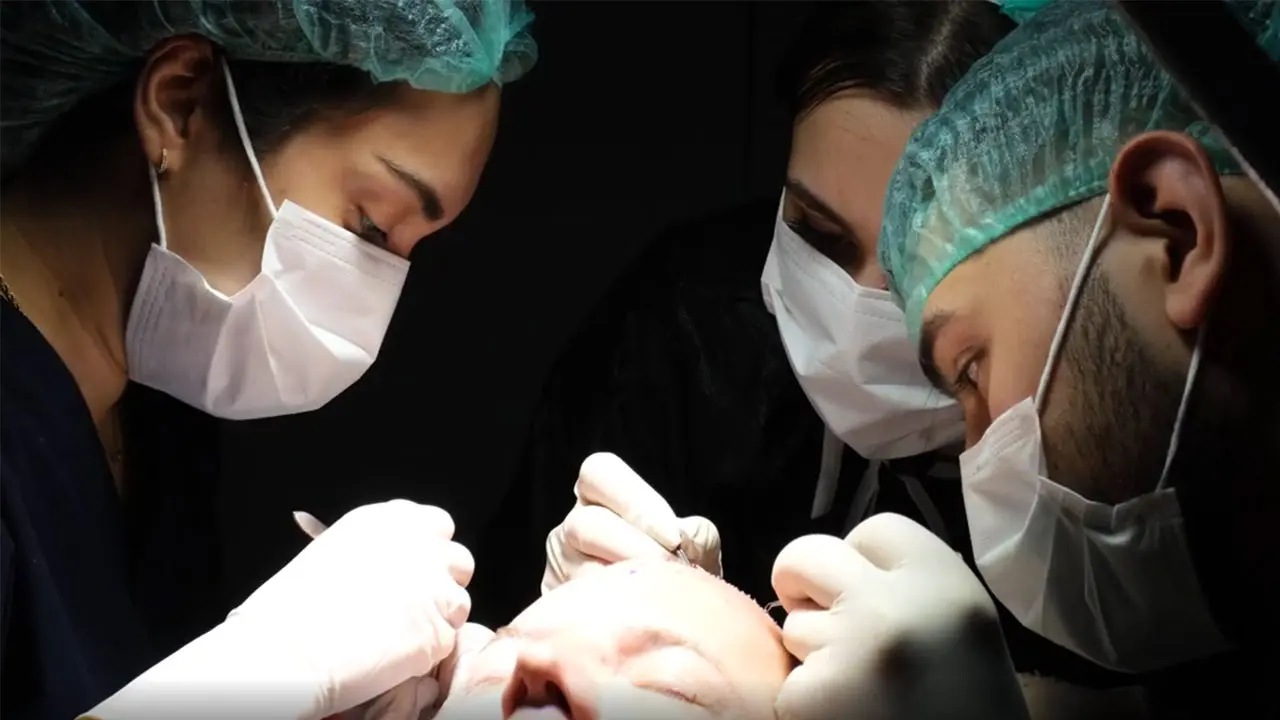
When comparing hair transplantation techniques, the differences between FUE and DHI are usually evaluated in terms of the application process, density planning, and technical details. The main differences include:In FUE, channel creation and implantation are performed in separate steps, while in DHI, these steps can be done simultaneously.
- DHI allows for denser implantation in certain regions.
- FUE is advantageous for covering larger areas.
- DHI procedures generally take longer and require greater precision.
It is clear that the planning process is more decisive than the choice of technique itself.
Which Hair Transplant Method is Better?
There is no single answer to the question of which hair transplant method is better. The most appropriate technique varies depending on individual factors such as hair loss pattern, donor area quality, and patient expectations. From a clinical perspective, one of the most important considerations is not only the technique itself but how the entire process is planned. While FUE and DHI differ in their application methods, both can produce natural results when performed with proper planning and precision. In some clinical settings, additional planning approaches may also be used to further refine the outcome. However, regardless of the method, the key factor remains the same: a well-structured and individualized treatment plan. For instance, FUE may be more suitable for larger areas, whereas DHI can be advantageous in regions that require more controlled and dense placement, such as the frontal hairline.
In the end, achieving a natural appearance depends less on the chosen technique and more on how effectively the procedure is tailored to the individual.In some cases, FUE may be more suitable, while in others, DHI offers advantages. For example:
- FUE may be more effective for large areas.
- DHI may be preferred for sensitive regions such as the frontal hairline.
Therefore, hair transplantation planning must always be individualized.
FUE vs. DHI in Terms of Natural Appearance
The primary expectation in hair transplantation is achieving a natural appearance. However, this depends not only on the technique but also on planning and execution details. Results at Istanbul Vita Clinic demonstrate that with proper angle and direction planning, both FUE and DHI can produce natural results.
Key factors for a natural appearance include:
- Designing a natural hairline
- Correct hair orientation
- Balanced density distribution
When these factors are ensured, the choice of technique becomes secondary.
Density and Graft Planning: Which Method Has an Advantage?
Density is one of the most closely observed aspects of hair transplantation. However, not only density but also its distribution is critically important. DHI allows denser implantation in specific areas. Nevertheless, higher density does not always translate to better results. Studies show that a balanced and properly planned density provides a more natural appearance than overly dense implantation.
Common Mistakes in Hair Transplantation
Proper management of the hair transplantation process is essential. The most frequently observed mistakes include:
- Focusing solely on graft count
- Ignoring natural hairline design
- Neglecting angle and direction planning
- Lack of individualized planning
- Neglecting post-operative care
Avoiding these mistakes ensures better outcomes.
What Determines Success in Hair Transplantation?
Successful hair transplantation results from a combination of proper planning, execution, and experience—not merely the technique used. Experiences at Istanbul Vita Clinic show that the best results are achieved through personalized planning, correct angles, and balanced density.Patients considering hair transplantation should focus on the quality of application and planning rather than just the technical name. At Istanbul Vita Clinic, hair transplantation involves not only choosing a technique but also detailed planning, graft analysis, and personalized implementation.
Dividing the donor area into segments and planning the recipient area according to natural hair growth patterns are essential parts of the procedure. This approach ensures the creation of a natural hairline and balanced density distribution, providing advantages regardless of the technique used.
Clinical Comparison: FUE vs. DHI
Hair transplantation methods differ not only in application but also in equipment, technical details, and recovery. These details directly affect the naturalness of the results and patient comfort.
Some key technical differences include:
Punch Size for Graft Harvesting
Punch size for graft harvesting: In classic FUE, 0.9–1.0 mm punches are used, which may prolong recovery due to larger incisions. In DHI, 0.8–0.9 mm punches are common, but intensive harvesting may stress the donor area. Smaller 0.6–0.7 mm punches reduce tissue trauma and speed recovery.
Channel Creation and Angle Control
Channel creation and angle control: FUE typically uses steel slits of 1.0–1.2 mm, which may limit implantation density. DHI allows simultaneous implantation, but angle control may not always be precise. Micro-channels created with 0.6–0.8 mm sapphire tips improve angle control and natural appearance.
Density and Natural Appearance
Density and natural appearance: FUE generally achieves 35–40 grafts/cm², DHI 40–45 grafts/cm². Advanced planning can achieve higher density in suitable patients, but proper distribution is more important than raw numbers.
Recovery
Recovery: FUE recovery usually takes 10–14 days, DHI 7–10 days. Procedures using smaller punches may show initial recovery within 5–7 days. At Istanbul Vita Clinic, we have observed that the fineness of equipment and precision of application directly affect both recovery and the naturalness of results.
Frequently Asked Questions (FAQ)
Which is better, FUE or DHI?
There is no single correct answer to this question. The most suitable method depends on factors such as the type of hair loss, donor area capacity, and individual expectations. With proper planning, both FUE and DHI can achieve successful and natural-looking results.
What is the main difference between FUE and DHI?
The main difference between FUE and DHI lies in the application method. In FUE, channel opening and implantation are performed in separate steps, while in DHI these processes can be carried out simultaneously. At Istanbul Vita Clinic, the focus is not just on the technique itself, but on planning and angle control.
Does the DHI method provide higher hair density?
The DHI method can allow for higher density in certain areas. However, in hair transplantation, the most important factors are not only density, but also how evenly and naturally this density is distributed.
How long does the healing process take after a hair transplant?
The healing process varies from person to person. Generally, scabbing occurs within the first few days, followed by shedding within 2–3 weeks. New hair growth begins in 3–6 months, and final results are typically visible after about 12 months.
Which method provides the most natural hair transplant results?
Natural results depend more on the quality of planning and execution than on the method itself. When hairline design, angle, and direction are properly planned, both FUE and DHI can achieve natural-looking outcomes.
Have Questions? Let's Chat on WhatsApp!
Get instant answers 24/7. Receive your doctor-led hair analysis within 1 day, plus pricing and booking support.
Start WhatsApp Chat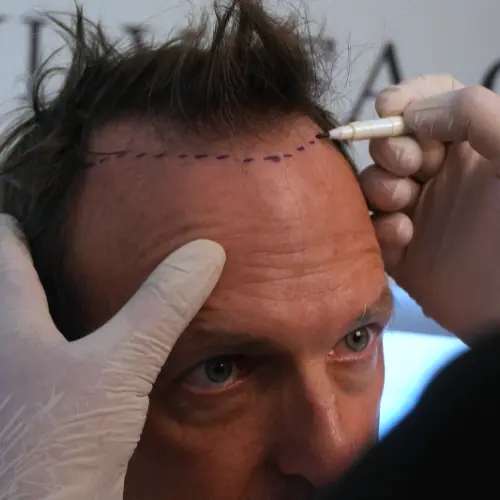
 conversation


