
 English
Table of Contents
Vita Technique Hair Transplant: A Modern Approach to Natural Results
Hair transplantation today is no longer just an aesthetic procedure; it has become a comprehensive process that combines planning, technical precision, and experience. As expectations for natural-looking results continue to rise, the details of the techniques used and the quality of their application have become more important than ever.
As a physician who has been working in the field of hair transplantation for many years, I have had the opportunity to closely observe the outcomes of different techniques through both clinical practice and patient feedback. One of the most frequently asked questions I encounter in this process is: “What is the Vita Technique?”
In this article, I will explain the Vita Technique hair transplant approach in a clear and straightforward way, focusing on how it is performed, how it differs from other techniques, and what advantages it offers.
What is the Vita Technique?
Istanbul Vita Clinic has a technique that focuses on innovation and naturalness. The Vita Technique can be described as an approach to hair transplantation that focuses on natural hairline design, precise angle planning, and balanced density distribution. The goal is not simply to transplant hair, but to achieve results that appear natural over time and harmonize with the patient’s facial structure. Based on our clinical experience at Istanbul Vita Clinic, one of the most important observations is, successful hair transplantation is determined not only by the number of grafts, but by the quality of planning and execution.
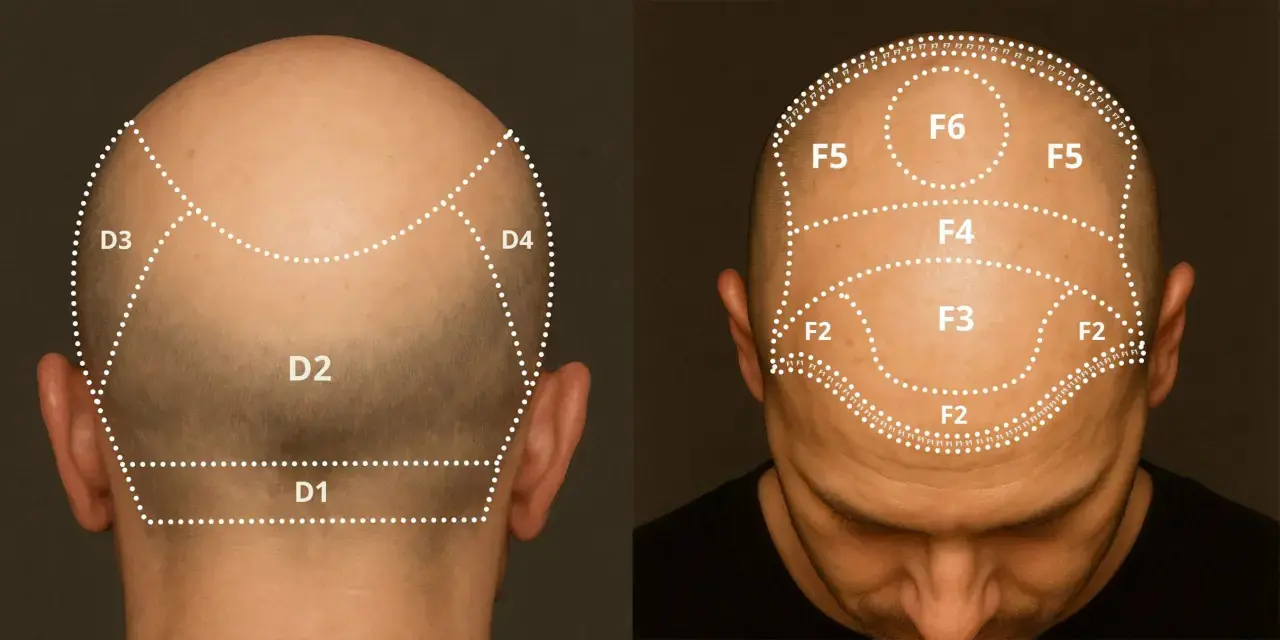
The microscopic examination of the donor region, which has been separated into many zones, including D1, D2, D3, and D4, is one of the key components of the Vita Technique. There are grafts with various traits in every zone. Following the donor area analysis, the receiver area is divided into F1–F7 sections using the same procedure.Different types of grafts are implanted in various locations based on the density and pattern of natural hair growth. Single grafts are used to provide the hairline area a softer appearance, while numerous grafts with higher densities are used in the middle and crown sections to give the hair more density.
It is also important to note that while similar terminology may be used across different clinics, the Vita Technique is a proprietary clinical approach developed and standardized within Istanbul Vita Clinic.For this reason, its full protocol and application framework are implemented exclusively within Istanbul Vita Clinic, where consistency in planning, technical execution, and patient-specific customization is maintained.
Among these elements, angle control and density distribution play a key role in achieving natural-looking results.
This approach includes:
- Personalized hair transplant planning
- Prioritization of a natural hairline design
- Careful control of hair direction and angles
- Efficient use of grafts
For this reason, the Vita Technique is considered one of the modern approaches in contemporary hair transplantation.
How is the Vita Technique Performed?
The Vita Technique is not a single procedure but a comprehensive approach that focuses on every stage of the process.
Personalized Planning
Each individual has a unique pattern of hair loss, facial structure, and donor area capacity. Therefore, a personalized plan is essential rather than a standardized approach. When designing the hairline, not only the current condition but also potential future hair loss is taken into consideration.
Graft Extraction
The careful extraction of hair follicles from the donor area plays a critical role in the success of the procedure. Clinical observations show that preserving graft quality positively influences the post-transplant process. For instance, using fine punches in the range of approximately 0.6–0.7 mm during graft extraction may help minimize tissue trauma. This can contribute to a more comfortable healing process and allow for a more controlled implantation phase.
Channel Opening and Implantation
One of the key factors for achieving natural results is the angle and direction of hair growth. Natural hair does not grow in a single direction but follows gradual transitions. For this reason, channels are created in alignment with the natural growth pattern. In the channel creation stage, the use of sapphire blades in the range of 0.6–0.8 mm enables the formation of precise micro-channels. This supports better angle control and allows grafts to be placed more accurately according to the natural growth direction.
Density and Distribution Planning
In hair transplantation, not only density but also how it is distributed is crucial. Irregular or poorly planned implantation can result in an unnatural appearance, so a balanced and homogeneous distribution is essential. When density planning is performed carefully, it is possible in suitable cases to achieve approximately 55–60 grafts per cm² while maintaining a natural appearance. In selected areas, particularly in the frontal zones, higher density planning can be applied without compromising the natural hairline. In some cases, depending on donor capacity and individual suitability, higher density approaches—up to 80–100 grafts per cm² in targeted zones—may be considered.
Differences Between Vita Technique, FUE, and DHI
When comparing hair transplant techniques, FUE and DHI are among the most widely used methods. The Vita Technique, however, is not a completely separate system but rather an approach that focuses on optimizing the application process.
FUE (Follicular Unit Extraction)
Suitable for covering larger areas and widely used in practice.
DHI (Direct Hair Implantation)
Allows for higher density implantation but may require a longer procedure time.
Vita Technique
- Emphasizes natural hair direction and angle planning
- Focuses on balanced density distribution
- Prioritizes graft preservation
- Applies a personalized treatment approach
For these reasons, the Vita Technique can be considered among the options in hair transplant planning.
| Feature | Classic FUE | DHI | Vita Technique |
|---|---|---|---|
| Punch Size (Graft Extraction) | 0.9 – 1.0 mm Wider cuts, increased scarring risk, longer healing time | 0.8 – 0.9 mm Better but still has donor area thinning risk in dense extractions | 0.6 – 0.7 mm Sapphire Smaller cut = less tissue trauma + faster healing + denser transplant |
| Channel Opening (Sapphire Tips & Angle Planning) | Steel slits 1.0 – 1.2 mm This width limits transplant density (approx. 35–40 grafts/cm²) | Implanter pen Channel opening and placement simultaneous, but limited direction and angle control | 0.6 – 0.8 mm Sapphire Microscopic channels enable 30% higher density (55–60 grafts/cm²) with perfect angle control |
| Density & Naturalness | 35–40 grafts/cm² Sparse appearance risk | 40–45 grafts/cm² Dense, but especially front hairline angle naturalness limited | 80–100 grafts/cm² Dense + natural with extra density in D1/D2 zones and 100% natural hairline in F1 |
| Healing Time | 10–14 days Scabbing lasts longer due to wide channels | 7–10 days Faster scabbing, but donor area more traumatic | 5–7 days Fastest healing thanks to small punches and sapphire channels |
How is a Natural Look Achieved in Hair Transplantation?
The most important indicator of a successful hair transplant is that it looks natural and unnoticeable.
To achieve this:
- A natural hairline is created
- Single and multiple grafts are placed strategically
- Hair direction is designed to mimic natural growth
- Angles are carefully adjusted
When these elements are combined, natural-looking results can be achieved.
Clinical Experience and the Role of Planning
The outcome of a hair transplant depends not only on the technique used, but also on the quality of planning and execution. At Istanbul Vita Clinic, it has been observed that careful attention to hairline design and density planning contributes positively to overall results.
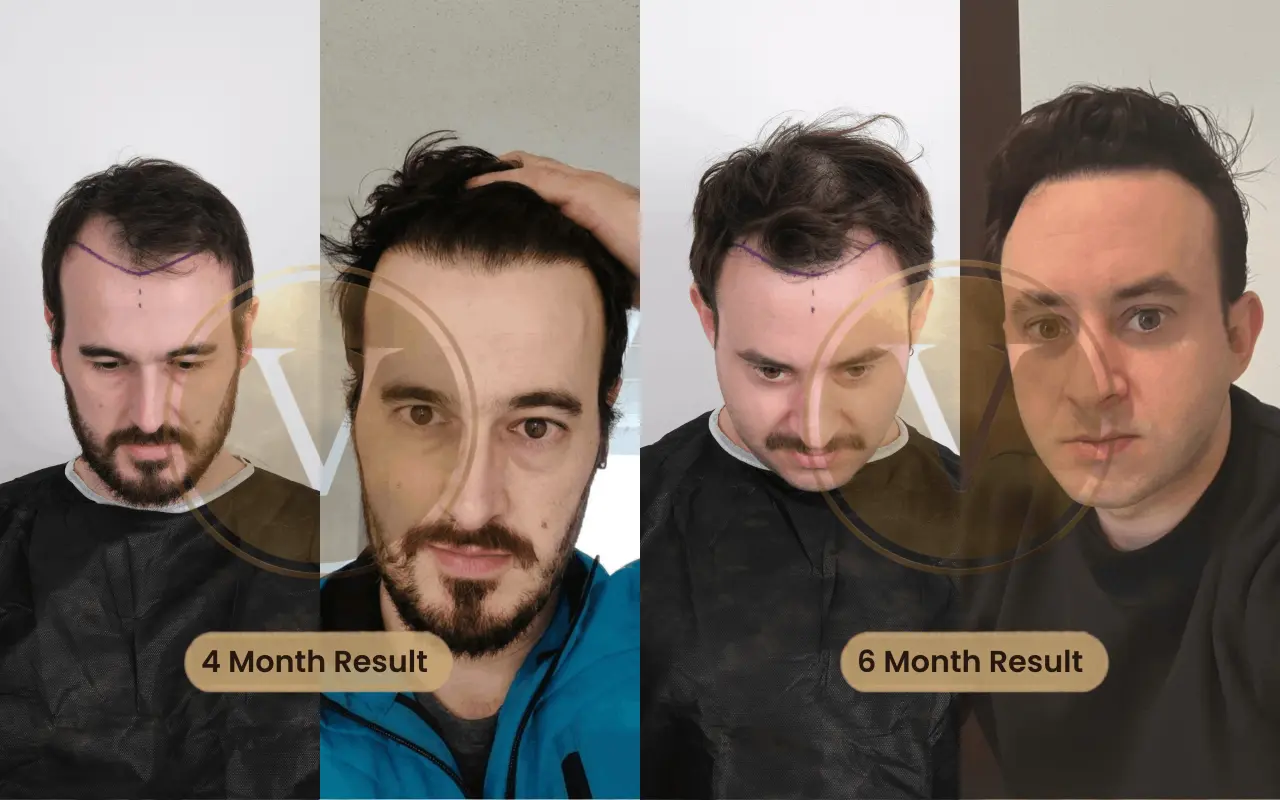
Ultimately, what matters most is not the name of the technique, but how well it is planned and applied for each individual.
Who is Suitable for the Vita Technique?
- Seek a natural hairline
- Aim for a dense yet natural appearance
- Have undergone a previous hair transplant and need revision
- Prefer a more controlled and carefully planned process
However, the most appropriate method should always be determined through individual evaluation.
Common Mistakes in the Hair Transplant Process
For individuals considering hair transplantation, proper management of the process is essential. However, certain common mistakes can negatively affect the final outcome.
Some of the most frequently encountered issues include:
Focusing only on the number of grafts:
Success in hair transplantation is not determined solely by the number of grafts, but by the quality of planning and execution.
Ignoring natural hairline design:
Artificial or overly straight hairlines can lead to unnatural results.
Incorrect angle and direction planning:
Failure to replicate natural hair growth direction may result in an unnatural appearance.
Lack of personalized planning:
Applying the same approach to every individual can lead to unsatisfactory outcomes.
Neglecting post-transplant care:
Aftercare plays a critical role in the final results of a hair transplant. Avoiding these common mistakes can significantly improve both the natural appearance and overall success of the procedure.
Post-Transplant Process and Expected Results
The recovery process after a hair transplant requires patience.
Generally:
- First days: Mild scabbing
- 2–3 weeks: Shedding phase (shock loss)
- 3–6 months: New hair begins to grow
- 12 months: Final results become visible
The timeline may vary depending on the individual.
Why is the Vita Technique Preferred?
In recent years, the Vita Technique has gained attention due to:
- Focus on natural-looking results
- Balanced density planning
- Personalized treatment approach
At Istanbul Vita Clinic, this approach is often preferred by individuals seeking natural and long-term results. For this reason, the Vita Technique stands out as one of the options for those looking for a natural hair transplant method. As a patented approach, the Vita Technique is performed exclusively at Istanbul Vita Clinic with a standardized and controlled application process.
What Determines Success in Hair Transplantation?
Achieving successful results depends not only on the technique, but on the combination of planning, execution, and experience. Clinical experience shows that the best outcomes are achieved through personalized planning, proper angle design, and balanced density distribution. The Vita Technique represents an approach that focuses on these essential details. When natural hairline design and density planning are carefully combined, more satisfying long-term results can be achieved.For individuals considering hair transplantation, focusing not only on the name of the technique but also on the quality of planning and execution is a more effective approach.
Frequently Asked Questions About Vita Technique
How does the Vita Technique differ from FUE and DHI techniques?
The Vita Technique is a unique hair transplantation approach developed as an alternative to FUE and DHI, focusing on planning, angle control, and density distribution. The goal of this technique is not only hair transfer, but also achieving a natural and aesthetic result in the long term.
Why is the Vita Technique preferred over other techniques?
The Vita Technique aims to deliver more natural results through careful hairline design, precise angle planning, and balanced density distribution. This approach offers a more controlled and detail-oriented process compared to standard methods. It has been developed and standardized by Istanbul Vita Clinic.
Is it possible to achieve higher density with the Vita Technique?
In suitable patients, higher-density hair transplantation can be planned with the Vita Technique. However, density is not the only goal; natural appearance and balanced distribution are always the priority.
What advantages does the Vita Technique offer in terms of natural appearance?
In this technique, the hairline, graft placement, and implantation angles are carefully planned according to the natural direction of hair growth. This helps minimize the risk of an artificial appearance and supports a natural-looking result.
Who is the Vita Technique suitable for?
The Vita Technique is suitable for individuals who want a natural hairline, aim for a dense yet balanced appearance, and value personalized planning. At Istanbul Vita Clinic, this approach is applied based on individual patient evaluation.
Have Questions? Let's Chat on WhatsApp!
Get instant answers 24/7. Receive your doctor-led hair analysis within 1 day, plus pricing and booking support.
Start WhatsApp Chat
 conversation


