
 English
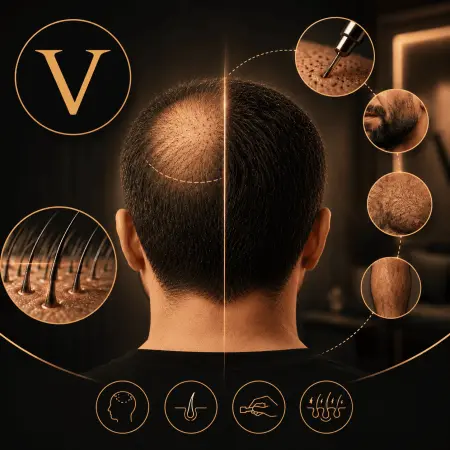
Table of Contents
What Is a Body Hair Transplant?
A body hair transplant is a hair restoration procedure that uses follicles taken from areas outside the scalp usually the beard, chest, or legs and relocates them to thinning or bald areas of the head. It's used when the scalp alone can't supply enough grafts for the density a patient needs.
This isn't a shortcut or a budget alternative. It's a specific solution for a specific problem: an insufficient donor area. If you've been told your scalp "doesn't have enough hair to work with," this is usually the point where body hair transplant to head planning enters the conversation.
It's not for everyone, and it doesn't behave exactly like scalp hair once transplanted. It also isn't something that should be decided based on a quick online quiz or a generic price list the right candidate profile, the right donor mix, and the right surgeon all change the outcome more than most patients realize. The rest of this guide explains exactly where body hair works, where it doesn't, and what a realistic result actually looks like.
Can Body Hair Be Used for Hair Transplant? What the Research Says
Yes but with meaningfully different outcomes depending on the donor site. Not all body hair performs the same way once it's moved to the scalp, and this is exactly where a lot of patients get misled by generic marketing claims that treat every donor area as interchangeable.
Body Hair vs. Scalp Hair: Key Biological Differences
Scalp hair grows in a longer anagen (growth) phase, which is exactly why it's the gold-standard donor source. Body hair especially from the chest or legs spends more time in the resting (telogen) phase, grows slower, and often has a finer, different-textured shaft that doesn't always match the surrounding scalp hair once it regrows.
Beard hair is the exception to this pattern. It's thick, has a strong growth cycle, and is the closest match to scalp hair in terms of both survival and long-term behavior after transplantation. This is why experienced surgeons often prioritize beard hair first when scalp donor supply runs low, and only turn to chest or leg hair when beard hair alone isn't enough.
Growth Rate, Texture, and Survival Rate Comparison
A comparative clinical study evaluated anagen effluvium (shedding after transplant) and one-year survival rates across scalp, beard, and chest donor grafts implanted under identical conditions. The results showed excellent survival for beard grafts at 95%, followed by scalp grafts at 89%, with chest hair grafts trailing meaningfully behind a gap that matters a great deal when a patient is deciding how much of their final density should come from body hair.
| Donor Source | 1-Year Survival Rate | Growth Phase Behavior | Texture Match to Scalp |
| Scalp hair | 89% | Long anagen phase | Perfect match |
| Beard hair | 95% | Strong, thick growth | Close match, slightly coarser |
| Chest/body hair | ~76% | Shorter anagen, more resting phase | Finer, less uniform |
This is why the honest answer to "can body hair be used for hair transplant" is: yes, as a supplementary donor source not as a full replacement for scalp or beard hair. Any clinic promising a full head of density using body hair alone is skipping over data that's been published for years.
Who Is a Candidate for Body Hair Transplant?
Body hair transplant candidates are typically patients with advanced hair loss and a scalp donor area that's already been used, is naturally limited, or was damaged by a previous poorly performed procedure. If that sounds familiar, you're not alone this is one of the most common reasons patients reach out for a second opinion after an earlier transplant didn't go the way they expected.
When Scalp Donor Area Isn't Enough
If you need a high number of grafts for advanced Norwood stages, or if you've already had one or more transplants your scalp's donor zone may simply run out of usable follicles. This is the most common reason doctors turn to body hair to head transplant planning, and it's also why an honest consultation matters more here than almost anywhere else in hair restoration. A doctor who tells you body hair isn't a good fit for your case, when it genuinely isn't, is doing you a bigger favor than one who says yes to everyone.
Ideal Donor Zones: Beard, Chest, Legs
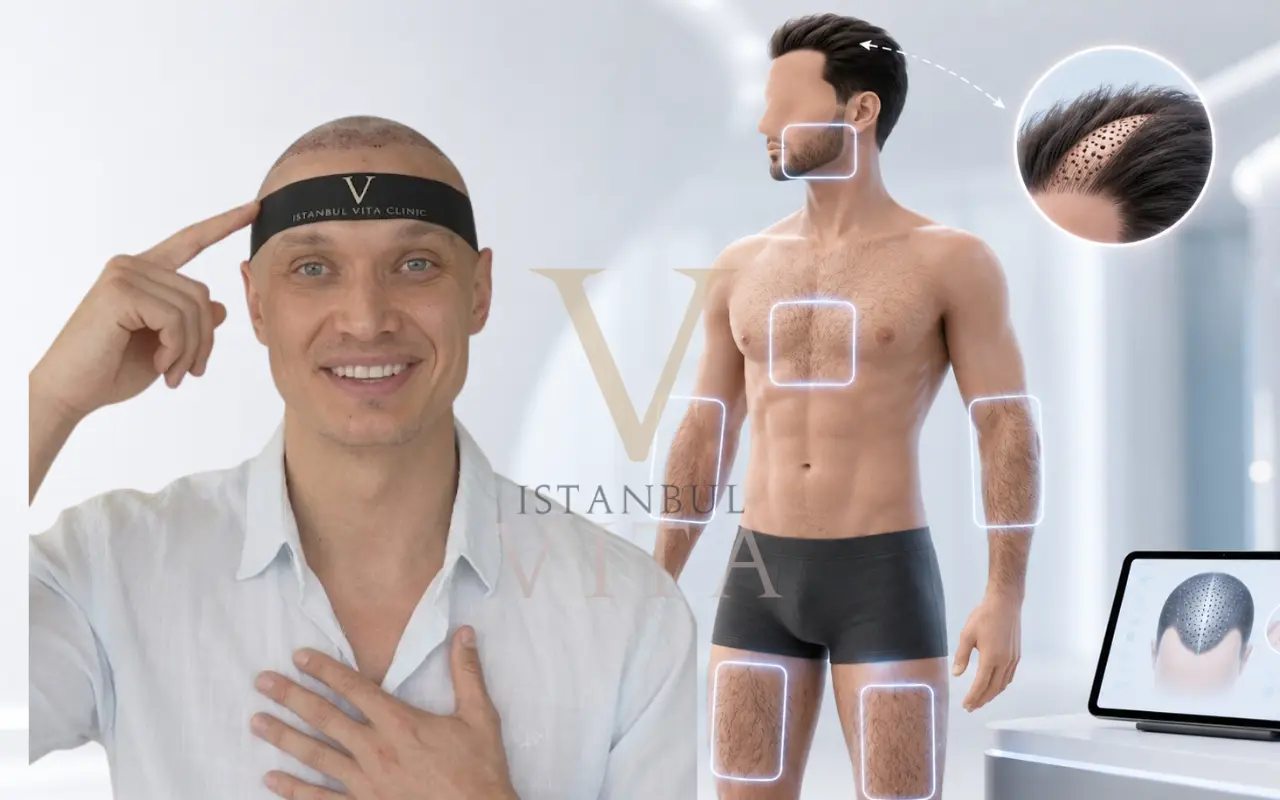
Beard hair is the preferred secondary donor source due to its higher survival rate and coarser texture, which works especially well for adding density in the crown. Chest hair can supplement mid-scalp areas, while leg hair is used far less often due to lower survival and a tendency to miniaturize over time.
A long-term 15-year case study on leg-to-scalp transplantation found that while survival was initially strong, transplanted leg hairs gradually miniaturized after roughly a decade, making the results less effective long-term. This is exactly the kind of long-term data that should shape your decision not just before-and-after photos from month six, which is unfortunately what most patients base their choice on.
Body Hair Transplant to Head: Step-by-Step Process
Extraction Technique for Body Grafts
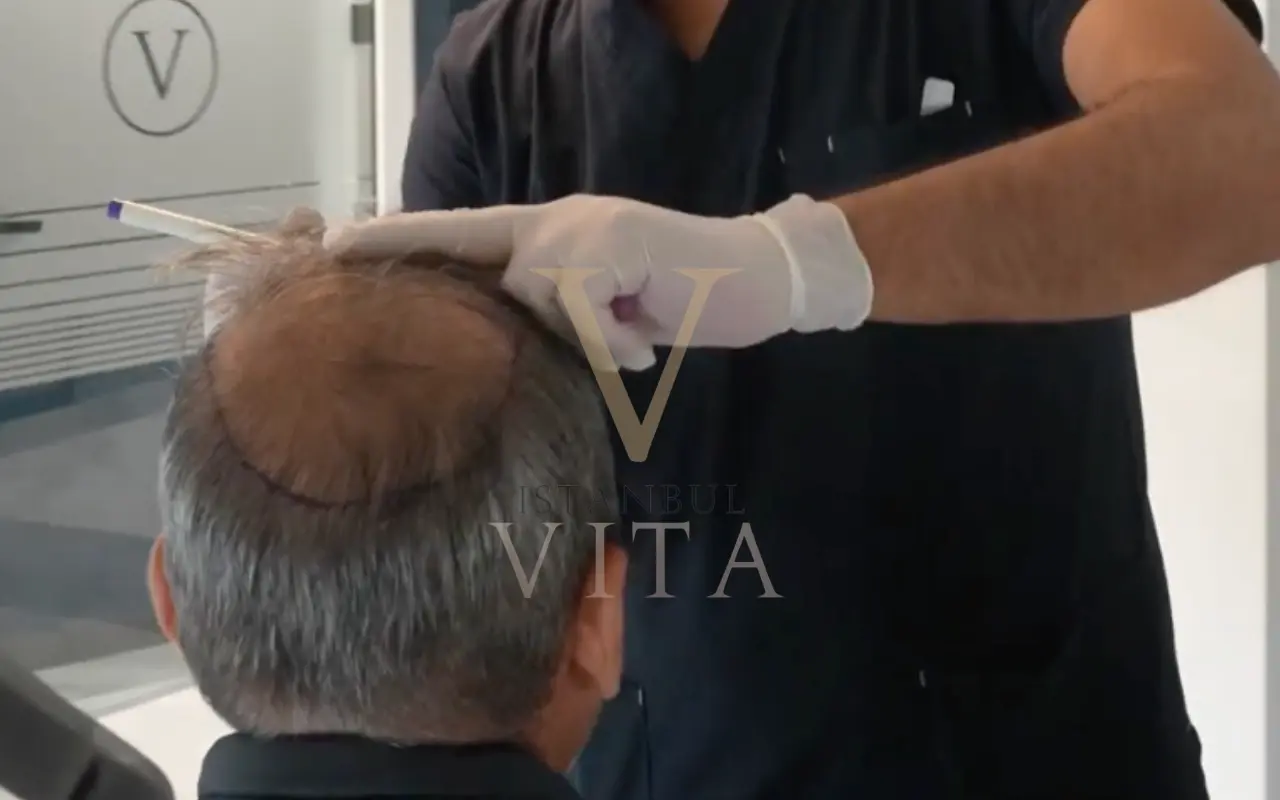
Body hair grafts are extracted follicle by follicle using FUE (Follicular Unit Extraction), the same core method used for scalp donor hair. Because body hair follicles often have a different growth angle and are single-hair units rather than multi-hair follicular groups, extraction requires more precision and, typically, more time per graft. Rushed extraction is where most of the damage happens not because the technology fails, but because the person holding the punch didn't slow down enough for a harder donor zone.
Why Doctor-Led Planning Matters for Body Hair Cases
Because body hair behaves differently once transplanted, its placement has to be planned carefully usually mixed with scalp or beard grafts rather than used on its own in visible areas like the hairline. At Istanbul Vita, this kind of graft planning is handled directly by the treating physician rather than left entirely to technicians. The clinic's medical team includes doctors such as Dr. Mustafa Ayhan Balcı, Dr. Harun Eymen Alakaya, Dr. Tuğçe Yılmaz Arslan, and Dr. Özge Miray Gültekin, each experienced in advanced transplantation methods including the Vita Technique®, Combined Technique, and Afro hair restoration.
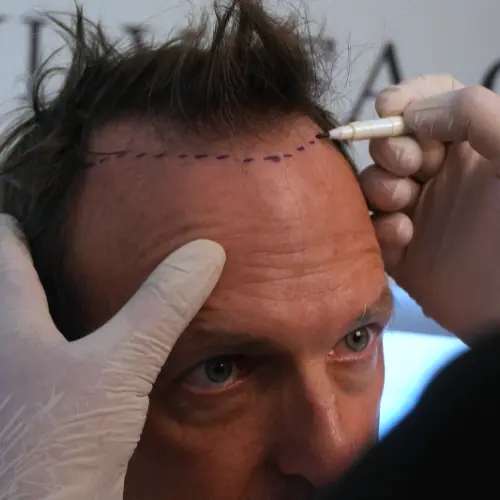
Every patient at Istanbul Vita receives 40 to 60 minutes of consultation time with a doctor before any decision is made long enough to actually go through donor zone analysis rather than rush through a sales pitch. Channel opening, the step that determines the final angle and direction of every graft, is performed by the doctors themselves rather than delegated entirely to technicians. That level of physician involvement matters even more in body hair cases, where a wrong placement decision is far harder to correct than in a standard scalp-only procedure.
Body Hair Transplant Results: What to Realistically Expect
Growth Timeline After Body Hair Transplant
Like any transplanted follicle, body hair grafts go through shock loss in the first few weeks, then begin regrowing gradually. Full results typically take 10 to 14 months to mature often slightly longer than pure scalp-to-scalp procedures, since body hair grafts need more time to adjust to their new environment and blood supply.
Natural Look: Can Body Hair Blend with Scalp Hair?
Body hair transplant to head results can look natural, but only when body grafts are used strategically typically for adding density in the mid-scalp or crown, not along the hairline where texture mismatch is most visible. A skilled surgeon will blend body grafts with scalp or beard hair rather than relying on them exclusively, which is exactly why the skill of the person doing the graft placement matters more than the name of the technique on the clinic's website.
This is also where microscopic donor classification becomes genuinely useful rather than just a marketing term. Under the Vita Technique®, for example, the donor area is analyzed and divided into distinct zones D1 through D4 based on graft thickness, texture, and growth pattern, while the recipient scalp is similarly mapped into regions labeled F1 through F7. Finer single-hair grafts are reserved for the hairline, while denser multi-hair grafts, including suitable body hair grafts, are directed toward the mid-scalp and crown where texture blending matters less.
Body Hair Transplant Cost: What Affects the Price
Body hair transplant cost is generally higher than a standard scalp-only FUE procedure. Extraction takes longer, requires more surgical skill, and often involves combining multiple donor sources in a single session beard, chest, and scalp grafts planned together rather than treated as separate procedures.
| Country / Clinic | Average Body Hair Transplant Cost |
| USA | $15,000+ |
| Spain | €6,200+ |
| Germany | €8,800+ |
| France | €8,000+ |
| Switzerland | €8,000+ |
| Romania | €4,200+ |
| Russia | $4,000+ |
| Italy | €5,000+ |
| United Kingdom | €6,000+ |
| Turkey | €2,000–€4,000 |
| Istanbul Vita Clinic | From €3,200 |
This is one of the main reasons body hair transplant in Turkey has become such a common search not because it's cheaper for cheapness' sake, but because all-inclusive pricing models remove the surprise costs that pile up elsewhere. At Istanbul Vita, for instance, pricing within that $3,200–$9,000 range depends on the technique used, the number of surgical days, and the size of the medical team involved not on the number of grafts transplanted, which removes the incentive some clinics have to under-plan density just to hit a lower headline price.
Risks, Limitations, and Common Mistakes to Avoid
Why Technique and Doctor Experience Change the Outcome
The biggest risk in body hair transplant procedures isn't the donor source itself it's inexperienced extraction. Body hair follicles are more fragile and angle-sensitive than scalp hair, so a high transection (damage) rate during extraction is far more likely in the hands of an undertrained technician working under time pressure.
| Technique | Punch Size | Typical Density Achieved | Recovery Time |
| Classic FUE | 0.9 – 1.0 mm | ~35–40 grafts/cm² | 10–14 days |
| DHI (implanter pen) | 0.8 – 0.9 mm | ~40–45 grafts/cm² | 7–10 days |
| Vita Technique® (sapphire) | 0.6 – 0.7 mm | Up to 80–100 grafts/cm² in suitable cases | Shorter recovery, reduced tissue trauma |
Smaller punch sizes and microscopic donor classification reduce trauma to fragile body hair follicles which is exactly why technique precision matters more here than in standard scalp-only cases. In Classic FUE, the larger 0.9–1.0 mm punches create bigger wounds and a longer recovery window. DHI improves on this by opening the channel and implanting the follicle in a single motion using an implanter pen, which can reduce trauma but may still create some donor site tension. The Vita Technique® goes a step further by using 0.6–0.7 mm sapphire punches to open microscopic channels, aiming to minimize trauma while supporting tighter angle control a detail that matters considerably when a graft's original growth direction, like that of a body hair follicle, is different from the surrounding scalp hair.
Beyond technique, patient screening matters just as much. Pre-operative blood analysis and EKG testing, standard practice at reputable clinics, help confirm a patient is medically fit for a longer combined-donor session, since body hair procedures often run longer than a single-source scalp transplant.
Have Questions? Let's Chat on WhatsApp!
Get instant answers 24/7. Receive your doctor-led hair analysis within 1 day, plus pricing and booking support.
Start WhatsApp ChatChoosing the Right Clinic for Body Hair Transplant in Turkey
If you've read this far, you already know body hair transplant isn't a simple, one-size-fits-all procedure. It demands a surgeon who understands graft behavior across different donor zones and who plans placement with precision, not guesswork and it demands a clinic willing to tell you honestly whether you're actually a good candidate.
Istanbul Vita approaches body hair cases with microscopic donor area analysis, classifying grafts by thickness, texture, and growth pattern before any extraction begins. The clinic was founded by Hasan Başol, the creator of the Vita Technique® and the developer of a combined DHI and Sapphire FUE approach designed to improve precision during both extraction and implantation. Başol also introduced SUPER DHI, a protocol built to support procedures involving more than 6,000 grafts in suitable cases relevant context for patients whose donor needs extend well beyond a standard single-source transplant.
With more than 15 years of experience and a boutique model limited to 1–3 procedures per day, Istanbul Vita's doctors stay directly involved in channel opening and treatment planning rather than delegating the entire case to technicians. The clinic operates from a modern facility with 25 treatment and operating rooms, supported by a team of more than 200 professionals, and provides multilingual coordination in 13 languages for international patients. It's licensed by the Republic of Türkiye Ministry of Health and holds an International Health Tourism Authorization Certificate.
The clinic's track record has drawn recognition beyond patient reviews alone: Istanbul Vita has been named Best Hair Transplant Clinic in Europe (2023) and Best Hair Transplant Clinic in Turkey (2021 & 2022), and has been featured or referenced by international outlets including Forbes, USA Today, Reuters, The Guardian, GQ, RealSelf, and Austria's ORF TVthek. None of that replaces a proper consultation, but it does offer some external context when you're comparing clinics from outside Turkey and can't easily verify claims on your own.
You're not expected to make this decision alone a proper consultation, where a doctor actually reviews your donor areas in detail before recommending a plan, is the safest starting point before committing to any body hair transplant procedure.
Frequently Asked Questions
Is body hair as good as scalp hair for a transplant?
No, not in every case. Scalp hair remains the primary donor source, and beard hair comes close in survival rate. Body hair from the chest or legs is typically used as a supplementary source, not a full replacement.
Does body hair grow back after being harvested for a transplant?
No. Once a follicle is extracted, it doesn't regenerate at the donor site, which is why extraction planning matters just as much as placement.
How long does it take to see results from a body hair transplant?
Most patients see meaningful growth by month 6, with full results typically visible between 10 and 14 months.
Can body hair be used for the hairline?
Generally, no. Because of texture and growth angle differences, body hair is usually reserved for mid-scalp or crown density rather than the hairline, where a natural, uniform look matters most.
 conversation


