
 English
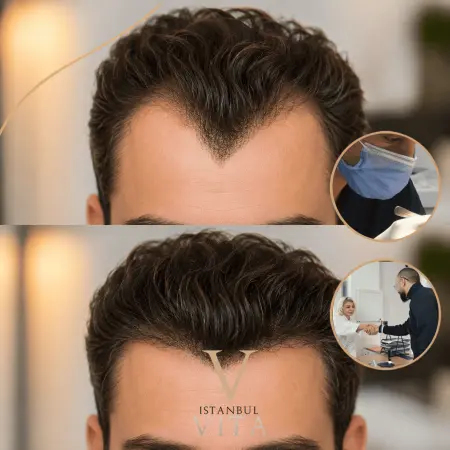
Table of Contents
A widow's peak is a naturally occurring V shape that appears in a person's hairline. Some have this characteristic from birth; for others, the widow's peak appears when their temples start to recede. In case you wonder whether hair transplantation surgery can do something about a widow's peak, the answer is yes. It can soften, shape, or even maintain the widow's peak as desired.
To determine how to treat a widow's peak and achieve natural results, one has to find out whether he or she has a widow's peak, a receding hairline, or both. This aspect is crucial in planning the treatment process.
Another important factor in achieving the right result is hair texture. Wavy and Afro textured hair usually offers greater visual coverage in the hairline area than straight hair does. A doctor-led hair transplant in Turkey will help you to choose the best treatment for your hair and medical team.
What Is a Widow's Peak?
It is a point in V-shape located at the central part of the hairline and is positioned lower than the rest of the hair surrounding it. On its own, it's a normal genetic hairline variant, not hair loss. It just becomes more obvious once the surrounding hairline starts to recede.
Common Widow's Peak Patterns
Not all widow's peaks look alike, and the pattern usually decides what kind of correction actually makes sense.
- Natural, stable widow's peak, present since the teenage years, no ongoing recession
- Receding widow's peak, where the temples thin out and make the center point look sharper by comparison
- High widow's peak, sitting further back on the scalp, usually tied to normal hairline maturation
- Asymmetrical widow's peak, one side receding faster than the other
- Diffuse or thinning peak, the shape's still there, but overall density across the front has dropped
Widow's Peak vs Receding Hairline: What's the Difference?
A widow's peak is a shape. A receding hairline is a process. Simple as that, though the two get mixed up constantly because recession tends to happen around a widow's peak, not at it. That makes a perfectly stable trait look like active hair loss when it isn't.
Imagine a typical a receding hairline where the temples are receding on both sides but not the central part, and after years of growing that way, you have a widow's peak even if you didn't have one before. Telling the two apart isn't just a semantic exercise either; it changes the treatment plan. A stable trait can just be reshaped for looks. Active recession requires a design that takes into account hair not yet shed.
Can a Hair Transplant Change a Widow's Peak?
Yes, and fairly directly. A hair transplant moves donor follicles, usually from the back and sides where density holds up best, into the frontal hairline. Since that hairline gets built graft by graft, its final shape comes down to a design decision the surgeon and patient work out together, well before surgery even starts. Biology doesn't dictate the outcome here, the plan does.
So a widow's peak can be softened, made more pronounced, shifted a bit, or largely left alone, whatever fits the face shape and hair type in front of the surgeon. The transplant supplies the material. The design determines what is done with it.
Can You Remove or Soften a Widow's Peak?
Softening a peak doesn't usually mean erasing it outright, since a hairline with zero central definition tends to look strangely flat. On the contrary, it is more concerned with proper grafting density and positioning around the center.
Practically, the doctor may reduce the widow's peak angle a little bit. Then single hair follicle transplants are put on the sides in order to soften the transition. Also, the density is filled on both sides in order not to make the center point alone. This technique is well suited for patients who prefer a more rounded look of their hairline.
Can You Create a Widow's Peak with a Hair Transplant?
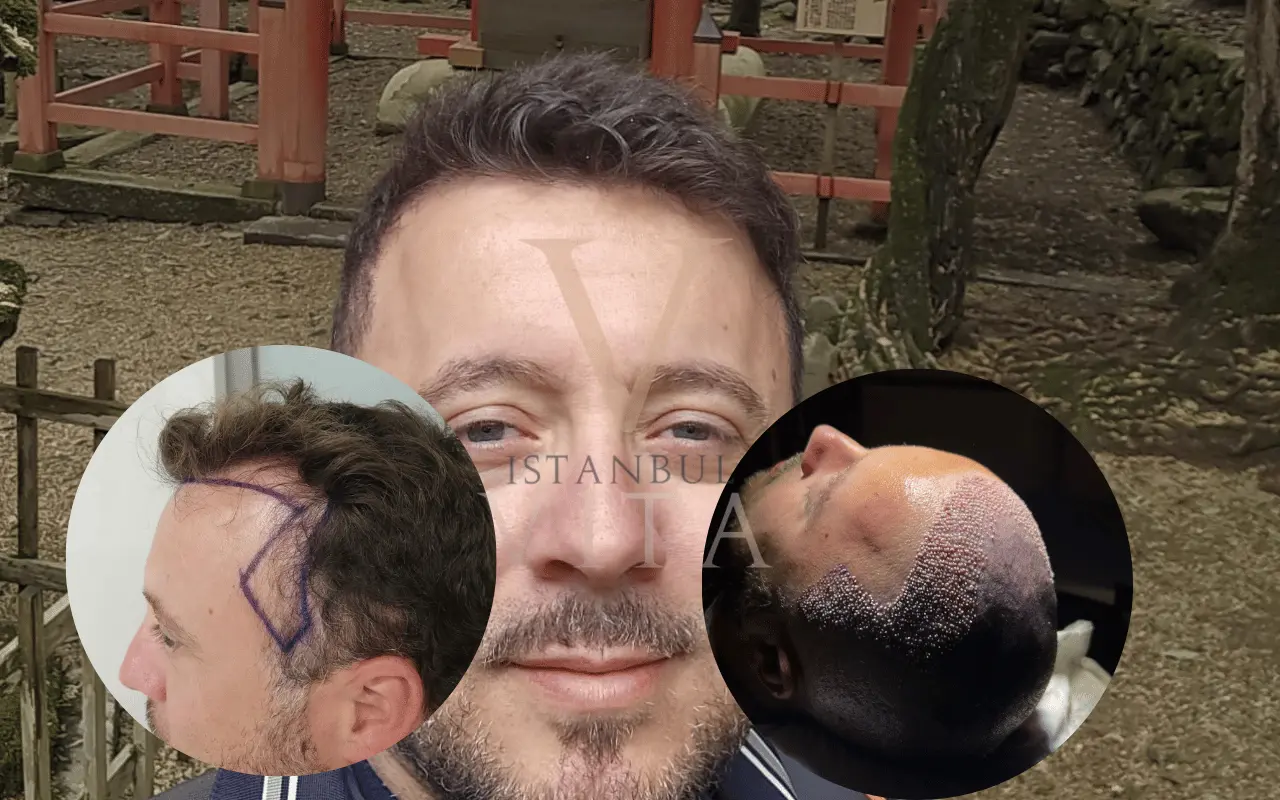
The reverse request comes up plenty too. Patients with a naturally flat or rounded hairline sometimes want a widow's peak added on purpose, often because it suits their face shape, or because it's simply how their hairline looked years earlier.
Creating one from scratch involves the positioning of hair strands at an angle that is just a bit more pronounced in relation to the central position, but otherwise keeping the line more straight. The task is precise and meticulous, and requires careful interaction between the patient and surgeon in the planning process. A few millimeters here or there changes how defined that peak ends up looking.
Who Is a Good Candidate?
A few things tend to line up in patients who get good results from this procedure.
| Factor | Why It Matters |
|---|---|
| Stable donor area | Enough healthy grafts for a hairline redesign without over-harvesting |
| Realistic expectations | Reshaping the hairline is a design change, not a guarantee of one exact look |
| Diagnosed hair loss pattern | Active shedding needs evaluating before anything permanent goes in |
| Age and hairline maturity | Very young patients may still be mid-maturation, often better off waiting |
People who continue losing their hair rapidly, or those who have not yet completed shaping of the hairline, are usually told to wait or combine surgery with preservation of whatever hair is left. Grafts placed too early can end up looking disconnected from loss that keeps going afterward.
How Hair Type Affects Widow's Peak Design
Hair texture changes how a hairline reads from across the room, and coiled or afro-textured hair shows this more than most. Even a slight change in curl pattern will cause the same peak to become more distinct in some cases and less defined in others.
Widow's Peak Considerations in Curly and Afro-Textured Hair
Coiled follicles tend to curve beneath the scalp before they emerge, which means extraction and implantation angles need extra planning to avoid transection and keep density intact. The clinic's piece on afro hairline design goes into how curl type and graft angle get handled together for black patients specifically.
Hair classification matters too. More coarse and tighter curl pattern hair, which might be found somewhere between 4A and 4C, works differently when the same graft density is used compared to looser curl patterns. For a more detailed description of how this classification affects the hair transplant planning process, see thehair type 4 transplant planning article.
How Hairline Design Affects Natural Results
A widow's peak transplant only looks convincing if the rest of the hairline backs it up. Surgeons generally map the frontal zone into small sections, single grafts right at the very front edge, denser grafts further back, so the shift from skin to hair happens gradually instead of all at once.
Doctor involvement matters a lot at this stage. Symmetry, graft angle, and how density transitions across the line, these are usually planned and physically carried out by the surgeon rather than handed off to support staff. There's more on why that hands-on involvement affects outcomes in the clinic's article on doctor-led hair transplant planning.
Approaches built around microscopic donor analysis, like the Vita Technique®, sort grafts by thickness and growth direction before anything gets placed. That kind of upfront classification supports the finer control this sort of hairline work really needs.
How Many Grafts Are Needed?
Graft counts swing quite a bit depending on how much of the hairline actually needs rebuilding.
- Softening or refining a peak that already exists: usually a smaller count, focused on the central zone and just around it
- Rebuilding a receded hairline while keeping a stable peak: a moderate count, covering the full frontal line
- Building a peak from a flat or rounded hairline: fewer grafts overall, but placed with a lot more precision at the center point
None of this means much without a scalp and donor evaluation first, since hair caliber, density, and how much of the area needs redesigning all shift the total from one patient to the next.
What Happens During the Procedure?
Consultation and Hairline Mapping
It starts with a look at the current hairline, the donor supply, hair type, and facial proportions. Surgeon and patient settle on a target shape together, softening it, rebuilding it, or creating one from nothing, before a single graft gets extracted.
Extraction and Implantation
Follicles come out of the donor area, usually with FUE-based methods, then go into the newly designed hairline following that agreed angle and density plan. Single-hair grafts are done on the very tip of the hairline to make the transition softer. Multi-hair grafts will be placed behind the hairline for density.
Recovery and Hair Growth Timeline
Week one after the procedure is when there will be swelling and redness at the hairline, and this will resolve itself after 10-14 days. Shedding will take place during the next couple of weeks after this, and while it may surprise the patient, this is a normal phase in the whole process.
New growth generally kicks in around month three or four. Visible thickening keeps going through months six to nine. By month twelve, most patients are looking at something close to the final hairline shape, once the new hair settles into its natural thickness and direction.
Risks and Limitations
Like any hairline procedure, results here depend on donor supply, and there's no undoing it if the original design doesn't land the way it was supposed to. Being aggressive in lowering the hairline, making an incorrect angle in case of curly or afro hair types, and having excessive density that is too far forward are just some of the factors that may make the outcome look unnatural.
Donor hair is finite, so an overly ambitious redesign in a younger patient can eat into flexibility for later procedures if hair loss keeps progressing elsewhere. That's part of why a more conservative, staged approach tends to get recommended for patients still early in their hair loss pattern.
Frequently Asked Questions
Is a widow's peak a sign of balding?
Not by itself. It's a common genetic hairline shape, though it can look more pronounced once temple recession sets in with age.
Can a widow's peak hair transplant be combined with a full hairline restoration?
Yes, and it usually is. Widow's peak reshaping is often folded into a broader frontal hairline restoration rather than done as its own separate step.
How long do the results of a widow's peak hair transplant last?
Transplanted grafts are generally permanent. The native hairline around them, though, can keep changing with age and further hair loss.
Does curly or afro-textured hair limit widow's peak redesign options?
No, it does not necessarily have anything to do with hair loss. It just means that extra caution must be taken when removing and relocating hair follicles.
Have Questions? Let's Chat on WhatsApp!
Get instant answers 24/7. Receive your doctor-led hair analysis within 1 day, plus pricing and booking support.
Start WhatsApp Chat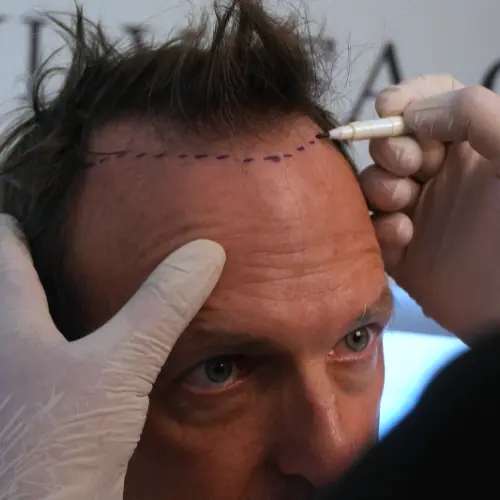
 conversation


