
 English
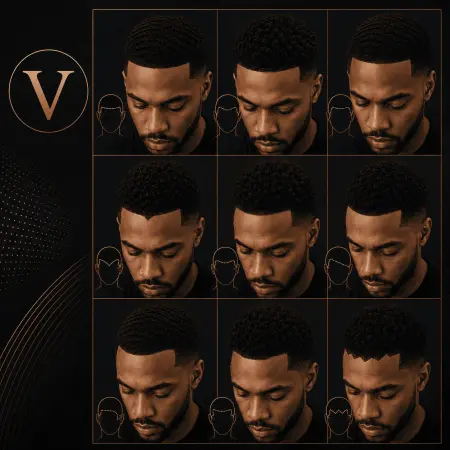
Table of Contents
What Is the Best Hairline Design for Black Men?
The best hairline design for black men is one that is planned around three things at once: the patient's current age, the natural curl pattern of the hair, and the shape of the face. There is no fixed template that works for everyone.
A lot of men make a costly mistake here. They pick a hairline they saw on social media, ask for that exact shape, and end up with a result that looks slightly off on their own face. The line itself may be technically well executed, but if it ignores facial proportions or hair texture, it will never look fully natural.
Good black men hairline design starts with a doctor-led assessment, just as every successful black hair transplant should. The surgeon needs to study the donor area, the curl behavior of afro-textured hair beneath the skin, and how the forehead and temples are shaped before a single graft is placed.
Think of it less as copying a photo and more as solving an equation with three variables: age, curl pattern, and bone structure. Change any one of them, and the ideal line shifts with it.
Mature vs. Juvenile Hairline: Which Suits Black Men Best?
Most black men are better suited to a mature hairline rather than a low, juvenile one. A juvenile hairline sits close to the eyebrows and can look unnatural once a man passes his late twenties or thirties, especially as the surrounding hair continues to change with age.
Choosing between the two is not just an aesthetic preference. It is a long-term decision that determines whether the transplant will still look right in ten or twenty years, which is exactly why black men hairline design should never be rushed into a single consultation.
Why a Juvenile Hairline Rarely Ages Well
A juvenile hairline is flat, low, and often has minimal temple recession. It might look striking immediately after surgery, but as a man's face matures and the native hair around the transplant naturally recedes slightly with age, a hairline that never moved becomes an obvious giveaway.
This mismatch is one of the most common regrets after a poorly planned black men hairline transplant. The transplanted zone stays frozen in place while the rest of the hairline follows its natural pattern, and the contrast becomes visible over time.
Signs You Need a Mature Hairline Design
A mature hairline design is usually the safer, more natural-looking choice for:
-
Men over the age of 28–30 at the time of the procedure
-
Patients with a naturally higher forehead or an oval to rectangular face shape
-
Anyone with early temple recession, since a mature line works with this pattern instead of against it
-
Men who want the result to still look believable a decade later
A slightly higher, gently irregular hairline with soft temple points tends to blend better with facial aging than a perfectly straight, low line.
Age is not the only factor here, but it is the one patients underestimate most. A surgeon who understands mature black men hairline design will often ask about a patient's father or older brothers, since natural recession patterns tend to run in families and give useful clues about where the line should eventually settle.
How Facial Proportions and Forehead Shape Decide Your Hairline
Facial proportions are one of the most overlooked parts of hairline design for black men, yet they influence the outcome more than almost any other factor. A hairline that ignores forehead height, jaw width, and overall facial balance will rarely look natural, no matter how skilled the technical extraction is.
Surgeons typically divide the face into thirds hairline to eyebrows, eyebrows to nose base, and nose base to chin to judge whether a forehead is proportionally short, average, or long. This single measurement often decides how much the hairline should be lowered, and by how many centimeters.
Skin tone and hair-to-scalp contrast also play a quiet but real role. Because afro-textured hair often creates a sharper visual contrast against the scalp than lighter, finer hair types, small irregularities at the hairline edge become more noticeable. This is one more reason why precise planning matters more here than in many other hair transplant cases.
Temple Points and Temple Recession in Black Male Patients
Temple points are the small peaks on either side of the forehead where the hairline curves down toward the sideburns. In black male patients, these points often need slightly more density and a sharper curve than in other hair types, because coily hair can visually soften angles that would otherwise appear crisp.
Temple recession, when present, is not always something to fully reverse. In many cases, restoring partial recession while keeping some natural taper produces a more age-appropriate, masculine result than filling the temples completely.
What to Do About a Widow's Peak
A widow's peak, the V-shaped point at the center of the hairline, is a common and often desirable feature in natural black hairlines. When present before hair loss began, many surgeons choose to recreate or preserve it, since removing it entirely can make the final hairline look artificially flat and generic.
Old photographs are genuinely useful here. Bringing pictures from five or ten years earlier gives the surgeon a reference point for the original shape, rather than guessing based on the current, receded hairline alone.
How Doctors Plan a Natural Black Men Hairline Transplant
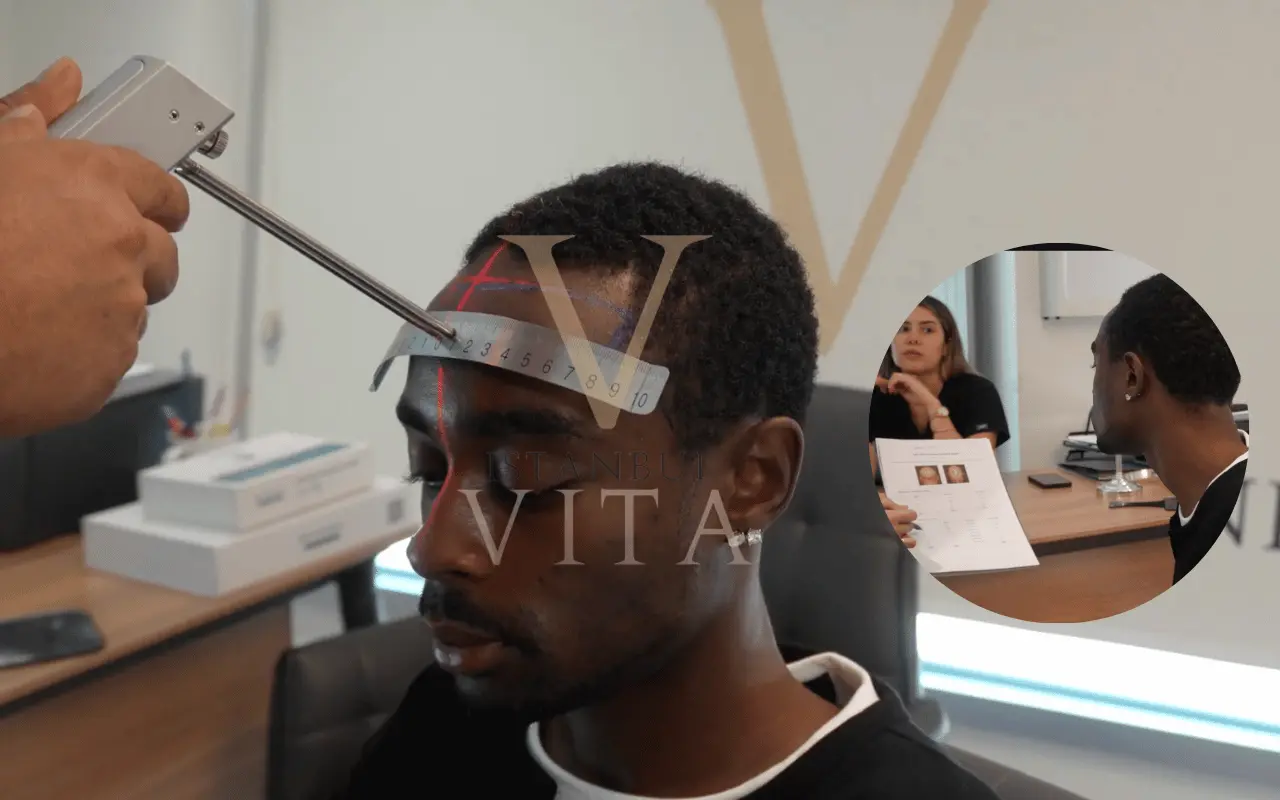
Planning a natural black men hairline transplant is a multi-step process that begins well before the first incision. At Istanbul Vita Clinic, this stage typically takes 40 to 60 minutes of direct doctor consultation, since hairline design cannot be rushed through a quick measurement.
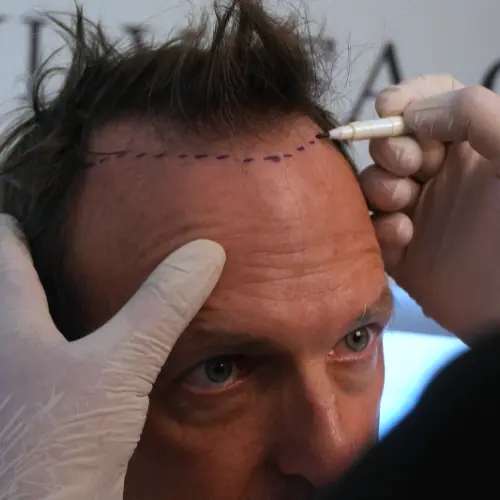
The donor area is examined first, followed by facial mapping, and only then is the exact shape of the new hairline drawn directly on the scalp for the patient to review before surgery begins.
Why Microscopic Donor Analysis Matters for Coily Hair
Afro-textured hair grows with a curved root beneath the skin, even when the visible strand looks tightly coiled or almost straight at the surface. This is why microscopic donor analysis plays such a critical role in curly and coiled hair transplant in Turkey procedures.
Under microscopic view, the surgical team can classify grafts by thickness, curl direction, and root angle before extraction even starts. Istanbul Vita's Vita Technique®, developed by the clinic's medical director Hasan Başol, is built specifically around this kind of graft-by-graft classification, dividing the donor area into detailed zones so that only the right grafts go into the right part of the hairline.
Have Questions? Let's Chat on WhatsApp!
Get instant answers 24/7. Receive your doctor-led hair analysis within 1 day, plus pricing and booking support.
Start WhatsApp ChatSingle Grafts vs. Multi Grafts: Where Each Belongs
The front line of any hairline transplant should never be filled with thick multi-graft units. It creates a blocky, unnatural edge that is easy to spot, especially in afro-textured hair where density can appear more visually dense than it truly is.
This is a detail many patients never think to ask about, yet it is one of the clearest signs of experienced black hair transplant planning versus a rushed, one-size-fits-all approach.
| Graft Type | Where It Belongs | Why It Matters |
| Single grafts (1 hair) | Frontal hairline, temple points | Creates a soft, undetectable transition at the edge |
| Double grafts (2 hairs) | Just behind the hairline | Adds gradual density without a sharp edge |
| Multi grafts (3–4 hairs) | Mid-scalp and crown | Builds volume where density matters more than precision |
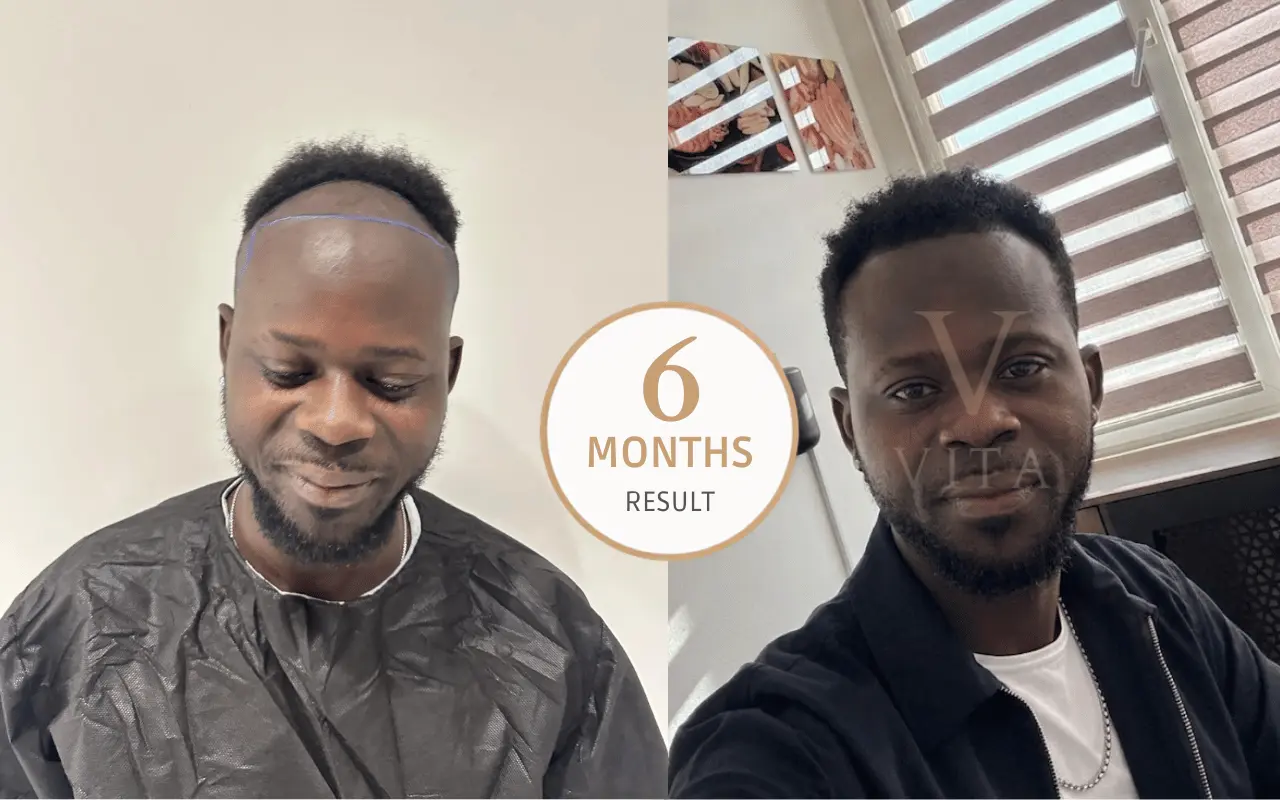
What Do Real Black Men Hairline Transplant Results Look Like?
Real results develop gradually, not overnight. Most patients notice some shedding of the transplanted hair in the first three to four weeks, which is a normal and expected part of the healing cycle rather than a sign of failure.
| Timeline | What Typically Happens |
| Week 1–2 | Scabbing forms and fades; swelling, if any, subsides |
| Month 1–3 | Shedding phase; scalp may look thinner before it improves |
| Month 4–6 | New growth becomes visible along the hairline |
| Month 8–10 | Density and curl pattern become clearer |
| Month 12+ | Final hairline shape, thickness, and natural curl are fully visible |
The curl pattern itself tends to reappear gradually and can take slightly longer to settle than in straight hair, since each strand needs to grow long enough to express its natural coil.
Patience is genuinely part of the process. A hairline that looks patchy at month three can look completely different, fuller and correctly angled, by month nine, simply because coily hair needs more length before its true shape becomes visible.
Frequently Asked Questions
Does hairline design differ for black men compared to other hair types?
Yes. Afro-textured hair grows with a curved root beneath the skin, which changes how grafts must be extracted and angled, especially along the sensitive frontal hairline zone.
Is a low hairline ever the right choice for black men?
In select cases, particularly younger patients with a naturally high forehead, a slightly lower line can work. It is decided case by case, not applied as a default.
Can a widow's peak be recreated during a hairline transplant?
In many cases, yes. If it existed naturally before hair loss, recreating it usually produces a more authentic-looking result than a completely flat line.
How long does it take to see the final hairline shape?
Most patients see a clear shape by month six, with full density and natural curl expression continuing to refine up to month twelve.
Does the price change based on how many grafts the hairline needs?
At Istanbul Vita Clinic, no. Pricing is based on the technique, procedure days, and complexity of the case rather than the number of grafts used.
 conversation


