
 English
Table of Contents
Not every imperfect result is a failure. And failures themselves don't all look the same. In fact, a transplant is considered unsuccessful when the outcome just doesn't match what a well-planned procedure should deliver in growth. It can be in direction, in how it actually looks day to day.
A few signs tend to come up again and again:
- Poor or patchy graft growth
- That unnatural, "pluggy" look
- A hairline that reads as artificial or oddly placed
- Visible linear or dot scarring in the donor area
- Density that's uneven or just too thin
- Grafts growing in the wrong direction entirely
Here's roughly how a well-executed result compares to what patients most often describe when something's gone wrong:
| Expected Outcome | Possible Problem |
|---|---|
| Natural growth pattern following the scalp's direction | Visible, unnaturally placed grafts |
| Balanced density across the scalp | Patchy, uneven coverage |
| Hairline shaped around facial structure | Design might be artificial, too straight, or poorly placed |
Should any of these apply to you, it would be worth getting the region checked out just in case something could be done about it.
Can a Failed Hair Transplant Be Repaired?
Not every case gets fixed the same way, though. It really comes down to what caused the problem in the first place, how much healthy donor hair is still left, and what shape the existing grafts are in.
Repair isn't really one procedure. It's more a set of solutions matched to whatever's actually wrong. That might mean:
- Correcting or redistributing existing grafts
- Improving density in thin or patchy areas
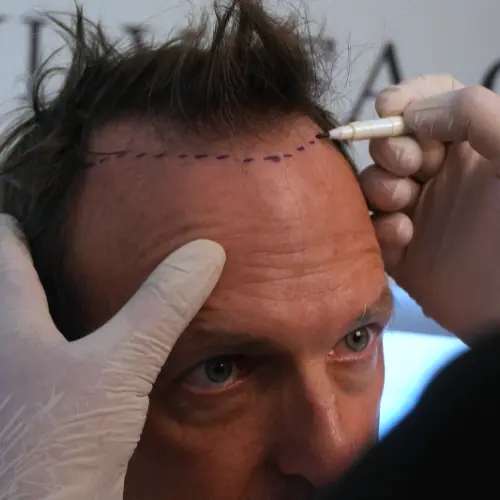
- Redesigning the hairline for something more natural
- Managing or camouflaging scarring in the donor area
Honestly, an honest assessment matters more than optimism here. Some issues are pretty straightforward to fix. There are other instances, particularly those involving highly over-harvested donor regions, where this is not possible and time needs to be taken.
Why Do Hair Transplants Fail?
Understanding the cause is really what decides whether correction is realistic, and what kind actually makes sense for your case.
Poor Hairline Planning
A poorly done hairline can look odd even if everything else about the implant has been done properly. The reason for this is that the hairline has been planned in a way that does not consider such things as the shape of the face, the effects of aging, and future hair loss.
Incorrect Graft Placement
Grafts placed at the wrong angle, or facing the wrong way relative to native hair, rarely blend in the way they should. Even with decent survival rates, bad placement leaves you with something that's technically "grown" but visually just off.
Poor Donor Management
- Overharvesting from a limited donor area
- Thinning or visible gaps where hair was taken
- Fewer options left for any future procedure
This one's more serious than people realize, since donor supply doesn't come back once it's used up. Overuse it early, and your future options shrink fast.
Lack of Long-Term Planning
Hair loss keeps moving for a lot of people. A transplant that looked great right after surgery can start looking unnatural years later if the native hair around it kept thinning and nobody planned for that in advance.
What Are the Options for Failed Hair Transplant Repair?
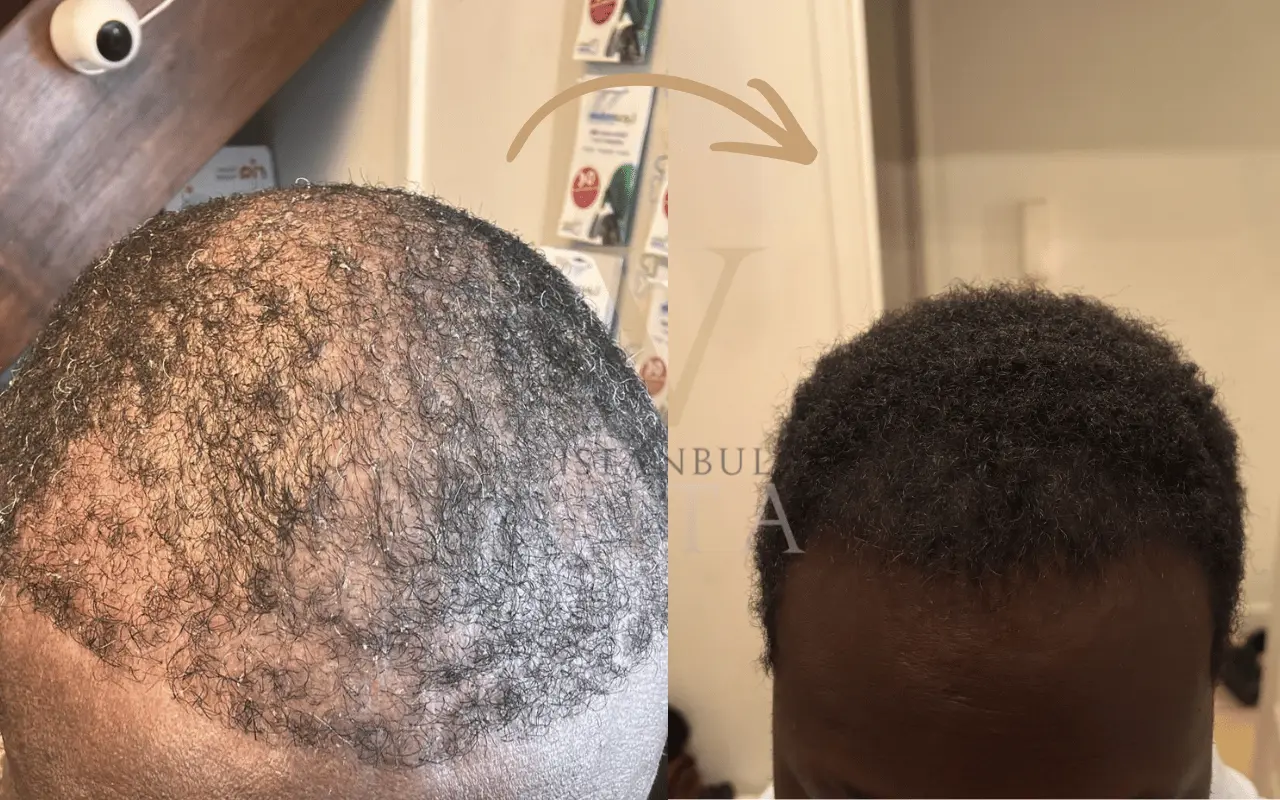
The right approach really depends on what's actually wrong. There's no single technique that fixes every failed result — anyone telling you otherwise is oversimplifying.
| Problem | Possible Approach |
|---|---|
| Unnatural hairline | Hairline redesign |
| Low density | Additional graft placement |
| Wrong growth direction | Strategic correction |
| Visible scarring | Scar camouflage |
Some patients need just one of these fixes. Others need two or three combined. That's basically why a proper revision hair transplant plan starts with looking at the person in front of you, not handing out a fixed package with a set graft count.
Why Is Revision Hair Transplant More Complex Than the First Procedure?
A first-time procedure works with a clean scalp and a donor area nobody's touched yet. Revision is a different story entirely. You're dealing with:
- Existing grafts that need evaluating, not just adding more on top of
- A donor area that's already been used, maybe with less left to work with
- Scar tissue that can mess with how well new grafts survive
- Very little room left for another mistake
That's exactly why donor preservation and microscopic planning matter so much more the second time around. Every graft used in a revision has to earn its place. There's usually not much margin to fix a second mistake if something goes wrong.
How Is a Failed Hair Transplant Evaluated Before Repair?
A proper evaluation goes way beyond just counting how many grafts are "missing." It typically covers things like:
- Donor area analysis, to see what healthy capacity's actually left
- A close look at existing grafts — survival rate, direction, all of it
- Scalp condition and any scarring
- What technique was used the first time around
- Where hair loss might head in the future
At Istanbul Vita, revision planning starts with figuring out what actually happened during the previous procedure, instead of jumping straight to "let's add more grafts." Indeed, this one move by itself may affect the entire course of therapy, because the same external manifestation may have completely different origins in different people.
What Results Can Patients Expect After Hair Transplant Repair?
It is critical to be upfront from the beginning and set realistic expectations. The objective of revision surgery is that of improvement, rather than making things look perfect and as if nothing was wrong to begin with.
- It's about improvement, not perfection
- Healing follows a timeline pretty similar to a first procedure: several months, generally
- Growth shows up gradually, with final results usually visible somewhere around 10 to 12 months
- A handful of factors, donor quality and scalp condition among them, shape how it turns out
Patience really does matter here. Evaluation of a revision outcome prior to maturation of the grafts usually results in unnecessary anxiety.
Have Questions? Let's Chat on WhatsApp!
Get instant answers 24/7. Receive your doctor-led hair analysis within 1 day, plus pricing and booking support.
Start WhatsApp ChatAre You a Candidate for Hair Transplant Repair?
It is not always necessary for everyone with a problematic outcome to require the same amount of intervention. And honestly, not everyone's ready for a second procedure right away. A few things tend to determine candidacy:
- At least 12 months have passed since the original procedure
- The donor area still has usable, healthy capacity left
- The problem is actually identifiable — density, direction, hairline shape, whatever it is
- Overall scalp health allows for further grafting or correction
- Expectations are realistic about what improvement can actually look like
Some patients are strong candidates for a full correction. Others might only suit a smaller, more conservative adjustment, especially if the donor area took a hit the first time around. This is why candidacy gets figured out through an actual assessment, not just guessed at based on how the result looks in a photo.
How to Choose a Safe Clinic for Your Repair Surgery
However, the case of revision surgery poses more risks, so one should pay more attention to the clinic and the professionals rather than less attention. Here are some aspects that should be considered before making a choice:
- Do the doctors plan and execute the procedure or just the consultation?
- Does the donor area get properly assessed before anyone promises a graft count?
- Does the clinic have a license to conduct surgeries?
- Are previous revision cases discussed honestly, limitations included?
- Is communication and follow-up support available in your language?
Istanbul Vita operates under Ministry of Health authorization and supports international patients through the whole evaluation and treatment process. For revision patients, in particular, having a proper understanding of the realistic outcome is as important as the method of the surgery.
How Can a Failed Hair Transplant Be Repaired?
Repair usually follows a fairly structured process rather than jumping straight into a new procedure. It starts with evaluating the existing grafts and donor area, then matching what's found to a correction strategy that actually fits.
That can look like:
- Doctor-led planning at every stage, from the first assessment through implantation
- Microscopic donor analysis to see what capacity's really left
- Hairline redesign or graft redistribution where it's needed
- Techniques chosen based on the specific case, not applied by default
Frequently Asked Questions
Can a failed hair transplant be fixed?
It really depends on what caused the original problem: poor placement, low density, donor overharvesting, could be any of them. A proper evaluation always comes before any correction plan gets recommended.
How long should I wait before repairing a failed hair transplant?
At least 12 months after the original procedure. That gives the grafts enough time to fully grow in, and lets the real extent of the problem actually become clear.
Can an unnatural hairline after transplantation be corrected?
Yes. Depending on what's wrong, it might mean redesigning the shape, adjusting density, or fixing graft direction along the hairline itself.
Can overharvested donor areas be repaired?
Options get more limited here, since donor supply just doesn't grow back once it's gone. Repair usually focuses on redistributing whatever grafts already exist and preserving what healthy capacity's left, rather than heavy re-harvesting.
 conversation


