
 English

Table of Contents
Grey hair catches up with almost everyone sooner or later. The question we get asked constantly, though, is whether it changes anything once you're considering a transplant. Can grey or white hair even be transplanted? Will it hold up the same way darker hair does?
Yes, it can. Color has almost nothing to do with whether a transplant works. What actually matters is your follicle health, the donor area you're working with, your scalp's condition, and the specific pattern your hair loss has taken.
Doesn't matter if you just noticed your first grey hairs last spring or you've been fully silver for twenty years: modern techniques can still give you results that look natural and last. Provided, of course, you're a good candidate in the first place.
How grey hair actually plays into the procedure, what really decides whether it's successful, which methods tend to work best, and what you can honestly expect once it's done. Turkey hair transplant planning will help you to answer all these questions.
Can You Get a Hair Transplant with Grey Hair?
Yes. Grey or white hair isn't a dealbreaker.
There's this assumption floating around that because grey hair has lost its pigment, the follicle underneath must be somehow weaker. It's an understandable guess, but it's wrong.
Hair goes grey because the cells that make melanin slow down with age — that's it. The color shifts, but the follicle itself is often in perfectly good shape.
Sit down for a consultation and you'll notice the surgeon barely glances at your hair color. What they're actually studying is your donor area. Healthy follicles back there, combined with a hair loss pattern that responds well to surgery, and grey hair does just as well as dark hair.
For most people, hair color turns out to be cosmetic detail, not a medical roadblock.
Why Hair Color Doesn't Affect Hair Transplant Success
Whether a transplant works comes down to one question: do the follicles survive and keep growing once they're moved? Pigment doesn't enter into that equation.
Melanin colors the strand. That's its whole job. It has nothing to do with whether the follicle underneath can handle being relocated. A healthy follicle keeps producing hair no matter what shade comes out of it: black, brown, blonde, grey, doesn't matter.
Which is exactly why patients with grey hair so often walk away with results just as good as someone twenty years younger.
Surgeons aren't looking at color anyway. They're looking at a handful of other things before they'll even recommend surgery.
Why Donor Hair Matters More Than Hair Color
Here's a misconception that comes up constantly: people assume white or silver hair is somehow too "old" to survive a move to a new spot.
Truth is, surgeons care far more about where hair comes from than what color it is.
The donor zone — back and sides of the scalp, typically — holds follicles that are genetically wired to resist the hormone behind pattern baldness. Those follicles tend to keep going for life, even once hair loss elsewhere has gotten fairly advanced.
Move them somewhere thinner, and they usually bring that same resilience along with them.
So what does a surgeon actually check during your consultation? Usually some combination of:
- Donor hair density
- Follicle health
- Hair shaft thickness
- Scalp condition
- Pattern of hair loss
- How that hair loss is likely to progress
- Your broader medical history
Any one of those tells a surgeon more about your odds than hair color ever will.
Why Does Hair Turn Grey?
Nothing mysterious about it, not just aging. Melanocytes, the cells responsible for pigment, gradually lose steam.
Less melanin means new hair comes in grey, then silver, eventually white.
A few things speed the process along:
- Natural aging
- Genetics
- Oxidative stress
- Certain vitamin deficiencies
- Some underlying medical conditions
People tend to link grey hair with getting old, fair enough. But the follicles themselves often stay perfectly capable of growing hair for decades after they've gone grey. Which explains why so many people with grey hair still make great transplant candidates.
Is Grey Hair Harder to Transplant?
For the patient, honestly, it feels no different at all.
For the surgeon, there's a small wrinkle. White and silver strands don't stand out much against pale scalp skin, so spotting them during extraction and implantation takes a bit more care. Surgeons deal with this using magnification, better lighting, and generally slowing down where it counts.
None of that trickles down to your recovery or your final results — it's really just a behind-the-scenes adjustment on their end.
Grey Hair vs. Dark Hair in Hair Transplantation
| Feature | Grey Hair | Dark Hair |
|---|---|---|
| Suitable for transplantation | Yes | Yes |
| Graft survival | Similar | Similar |
| Healing time | Similar | Similar |
| Hair growth | Similar | Similar |
| Long-term results | Comparable | Comparable |
Dark hair might look more striking right after surgery just from the contrast against the scalp. But biologically? A healthy follicle does the same thing no matter what color comes out of it.
Best Hair Transplant Techniques for Grey Hair
Pretty much every modern transplant method works fine with grey donor hair. What actually decides which technique fits you is your hair loss pattern, how much donor hair you've got, and what result you're after — color barely enters into it.
FUE (Follicular Unit Extraction) Individual follicular units get extracted, then placed into the thinning or bald spots. It's one of the most popular methods around, mostly because scarring stays minimal and results tend to look convincing.
Sapphire FUE same extraction process as regular FUE, but sapphire blades open up the recipient sites instead. The extra precision helps with graft placement and getting the hairline right.
DHI (Direct Hair Implantation) A specialized pen lets the surgeon control angle, direction, and depth as each graft goes in. Surgeons often lean on this one when precision is the priority.
Whichever method ends up being used, what really matters is the surgical team behind it and how good your donor follicles are. Hair color just doesn't carry much weight here.
Can You Dye Transplanted Grey Hair?
Yes. Once your scalp's fully healed, there's usually nothing stopping you from dyeing transplanted grey hair the same as the rest of it.
Most specialists say wait at least 4 to 6 weeks before reaching for permanent dye. Go too early and you risk irritating a scalp that's still settling in.
Past that window, transplanted hair acts exactly like the donor hair it came from, cut it, style it, wash it, color it, whatever. The follicles aren't at risk.
If you color your hair often, mention it during your consultation. Your surgeon can tailor the aftercare advice around that.
Will Transplanted Hair Turn Grey Over Time?
Comes up a lot, this one.
Answer's really about the donor hair itself. Follicles carry their genetic traits with them wherever they end up. Move grey hairs, they keep growing grey. Move pigmented hairs, and yeah, they might eventually go grey too — same as they would've anyway.
Put simply: a transplant doesn't speed up greying or slow it down. It just relocates healthy follicles from one spot on your scalp to another.
Hair Transplant for Older Patients
Because people associate grey hair so strongly with age, plenty assume they're simply too old for surgery. Age by itself, though, rarely settles the question.
A healthy 65-year-old can genuinely be a better candidate than someone in their twenties dealing with unstable hair loss or a thin donor supply.
Rather than fixating on age, surgeons who know what they're doing look at the scalp's overall condition, the donor area's quality, and whether the results you're picturing are actually achievable.
Healthy follicles, decent general health, grey hair on its own shouldn't be what holds you back.
Who Is a Good Candidate for a Hair Transplant?
Every case is a bit different, but a few signs generally point toward a good outcome.
| Good Candidate | May Need Further Evaluation |
|---|---|
| Healthy donor hair | Active scalp disease |
| Stable hair loss | Rapid ongoing hair loss |
| Good overall health | Poor donor density |
| Realistic expectations | Certain uncontrolled medical conditions |
| Sufficient donor capacity | Extensive hair loss with limited donor supply |
Honestly, a proper consultation is the only real way to know where you stand.
Hair Transplant Recovery Timeline
Recovery after a grey hair transplant follows pretty much the same path as any transplant.
| Time After Surgery | What to Expect |
|---|---|
| First few days | Mild swelling, redness, small scabs around the grafts |
| 2–3 weeks | Temporary shedding of transplanted hairs (shock loss) |
| 3–4 months | New hair starts coming in |
| 6–9 months | Density and coverage noticeably improve |
| 12 months | Final results are typically visible |
Choosing the Right Hair Transplant Clinic
Hair color barely factors into how well a transplant goes. What actually matters is careful planning, precise graft placement, and a solid long-term strategy.
When you're sizing up clinics, keep an eye on:
- How experienced the medical team actually is
- Whether real, qualified doctors are involved through the whole procedure — not just the initial consultation
- How the clinic handles donor area management
- Real before-and-after patient results
- How thorough the consultation and aftercare actually are
- Whether the clinic's upfront about your treatment plan, or vague about it
A clinic that's worth your time and money will look closely at your scalp, tell you the truth about your options, and only push for surgery when it genuinely makes sense for you. If you want to contact a professional clinic with doctor-led hair transplant in Turkey, İstanbul Vita will be a great choice.
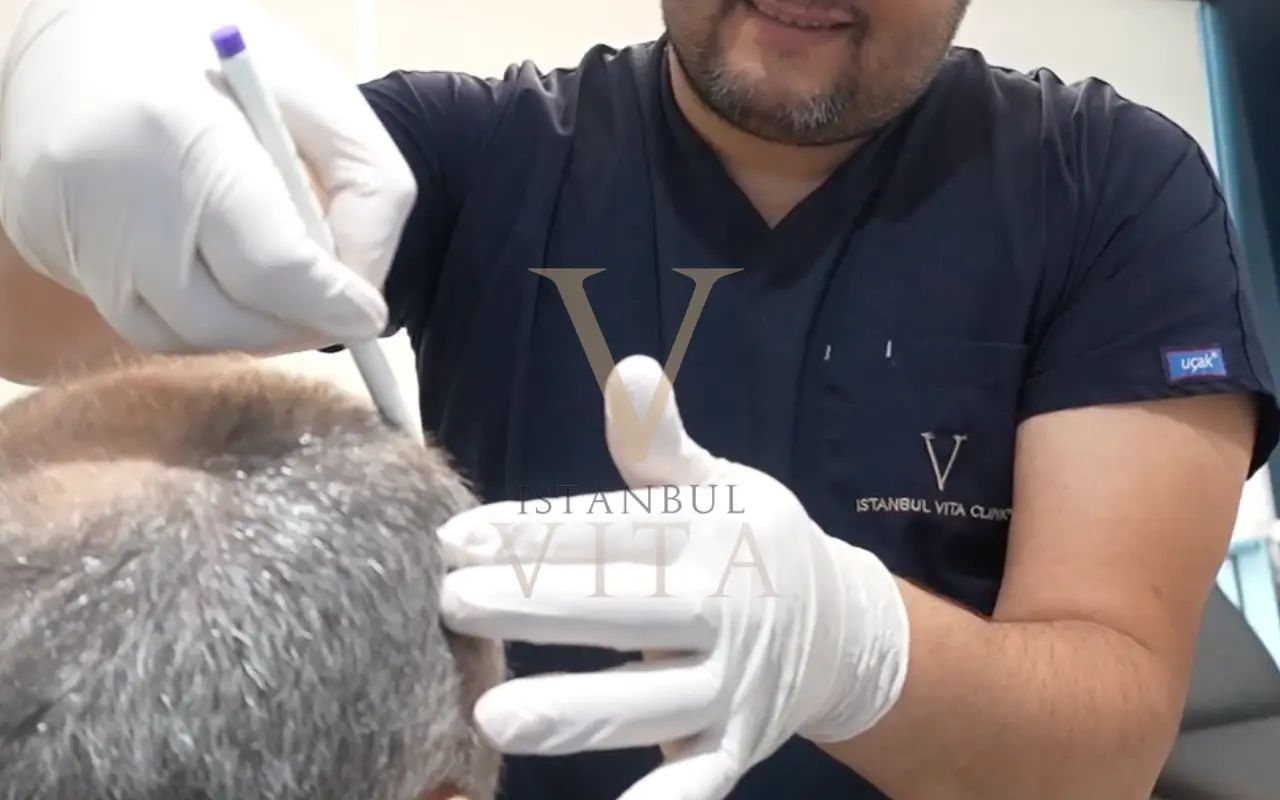
What Your Surgeon Evaluates Before Surgery
| Assessment | Why It Matters |
|---|---|
| Donor hair density | Determines how many grafts can be safely harvested |
| Hair shaft thickness | Affects how dense the final result looks |
| Scalp health | Supports healing and graft survival |
| Hair loss pattern | Helps plan a result that looks natural |
| Medical history | Flags anything that might complicate treatment |
Frequently Asked Questions
Can grey hair be transplanted?
Yes. Healthy grey follicles do just as well as any other hair, since color has no bearing on survival.
Does grey hair reduce the success rate of a hair transplant?
No. It's donor hair quality, surgical skill, and aftercare that decide success, not the color of the hair.
Can transplanted grey hair be dyed?
Yes, once your scalp's fully healed and your surgeon says it's fine to go ahead.
Is there an age limit for getting a hair transplant?
Not really. What matters is overall health, donor hair quality, and your hair loss pattern, not your age on a birth certificate.
Does transplanted grey hair continue to grow?
Yes. The follicles stay biologically active once they're moved, so they keep producing hair the same as they always did.
Which hair transplant technique is best for grey hair?
FUE, Sapphire FUE, and DHI can all deliver great results. Which one fits depends on your donor area and goals; not on your hair color.
Have Questions? Let's Chat on WhatsApp!
Get instant answers 24/7. Receive your doctor-led hair analysis within 1 day, plus pricing and booking support.
Start WhatsApp Chat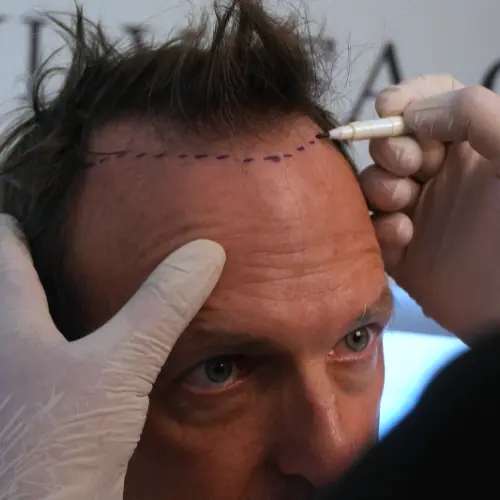
 conversation


