
 English

Table of Contents
Can You Get a Hair Transplant If Your Hair Never Fully Grew Back After Chemotherapy?
Yes in many cases, a hair transplant may be possible after chemotherapy. However, it should only be considered after cancer treatment has been completed, your health is stable, and your oncologist confirms that surgery is appropriate. But the answer depends entirely on one factor most people don't think about: the condition of the donor area, not just the visible bald or thinning spots.
Most people begin to see new hair growth within a few months after chemotherapy, but the speed and completeness of regrowth vary. Some patients regain their previous density, while others experience long-term thinning because certain chemotherapy drugs can permanently affect part of the hair follicle population. If you finished treatment months or even years ago and you're still looking in the mirror wondering why your hair never came back the way it used to, you're not imagining it. This is a real, documented outcome for a portion of patients, and it has a name in medical literature: persistent chemotherapy-induced alopecia. The good news is that it's also one of the more evaluable, plannable situations in hair restoration as long as the right assessment is done first.
What Determines Whether a Hair Transplant Is Possible After Chemotherapy
The decision isn't based on how long ago your treatment ended. It's based on what's actually happening at the follicle level, in the areas a surgeon would use as donor tissue.
Donor Area Strength and Follicle Quality
A transplant only works if there's enough healthy, stable hair to redistribute. In post-chemotherapy patients, donor strength can vary significantly from one region of the scalp to another something a generic consultation often misses. This is why microscopic evaluation of the donor zone, rather than a visual glance, is the real deciding factor in whether surgery makes sense.
How Long You Should Wait Before Being Evaluated
Doctors generally want to see 6 to 12 months of stable growth pattern before making a final recommendation. Not because of a fixed rule, but because follicles need time to show their true recovery state. Evaluating too early may lead to unnecessary procedures or unrealistic expectations because hair recovery is often still changing. The exact timing should always be decided together with your oncologist and hair restoration surgeon.
Why Not Every Case of Incomplete Regrowth Needs the Same Approach
Two patients can both say "my hair didn't grow back" and mean completely different things medically.
Diffuse Thinning vs. Patchy Bald Areas
Some patients experience overall thinning across the whole scalp, with no single donor zone strong enough to harvest from safely. Others have more localized gaps a thin crown, a receded temple line while the back and sides remain dense and healthy. These two patterns call for entirely different strategies, and mistaking one for the other is a common reason transplant results disappoint people.
Persistent Chemotherapy-Induced Alopecia and Transplant Candidacy
Research on this condition shows incidence rates that vary widely by drug type, with taxane-based regimens carrying the highest risk of incomplete regrowth, according to peer-reviewed studies published in the Journal of the American Academy of Dermatology (JAAD). What matters clinically isn't the diagnosis label it's whether enough donor tissue remains intact to work with. This is exactly the kind of nuance a proper consultation is built to catch.
| Factor | Favorable for Transplant | Needs Further Evaluation |
| Donor area density | Stable, concentrated in back/sides | Diffusely thin across whole scalp |
| Time since last chemo session | 12+ months, growth pattern settled | Under 6 months, still fluctuating |
| Medical clearance | Oncologist and bloodwork confirmed | Not yet reviewed |
| Scalp condition | No active inflammation or fragility | Ongoing sensitivity or irritation |
These are general guidelines rather than fixed rules. Every patient should be assessed individually.
How Istanbul Vita Approaches Post-Chemotherapy Hair Restoration
Cases following chemotherapy often require a more detailed assessment than routine hair transplant consultations. This is where a doctor-led evaluation becomes particularly valuable. Istanbul Vita limits its schedule to 1–3 procedures per day, which allows every consultation including the initial assessment to run 40 to 60 minutes with an actual physician, not a sales coordinator.
Doctor-Led Microscopic Donor Analysis (Vita Technique®)
The clinic's signature approach, the Vita Technique®, was built around exactly this kind of precision. Developed by Medical Director Hasan Başol, it involves mapping the donor area into distinct zones under microscopic analysis, classifying grafts by thickness and growth pattern before any extraction begins. For someone whose donor quality is uneven due to prior chemotherapy, this level of detail isn't a luxury it's helping the surgical team determine whether transplantation is appropriate and how donor hair should be distributed most effectively.
Personalized Planning Instead of One-Size-Fits-All
With more than 15 years of experience and a team of four specialized doctors, Istanbul Vita builds every plan around the individual's hair characteristics rather than applying a standard template. Channel opening one of the most precision-dependent steps of the procedure is performed directly by the doctor in every case, which matters even more when working with donor tissue that has been through chemotherapy.
Have Questions? Let's Chat on WhatsApp!
Get instant answers 24/7. Receive your doctor-led hair analysis within 1 day, plus pricing and booking support.
Start WhatsApp ChatWhich Technique Works Best When Donor Hair Is Limited or Fragile
When donor supply is tighter than average, the extraction method itself becomes part of the strategy, not just a technical detail.
Sapphire FUE, DHI, and the Vita Technique® Compared
| Technique | Extraction Precision | Typical Density Achieved | Recovery Window |
| Classic FUE | 0.9–1.0 mm punches | ~35–40 grafts/cm² | 10–14 days |
| DHI | 0.8–0.9 mm, implanter pen | ~40–45 grafts/cm² | 7–10 days |
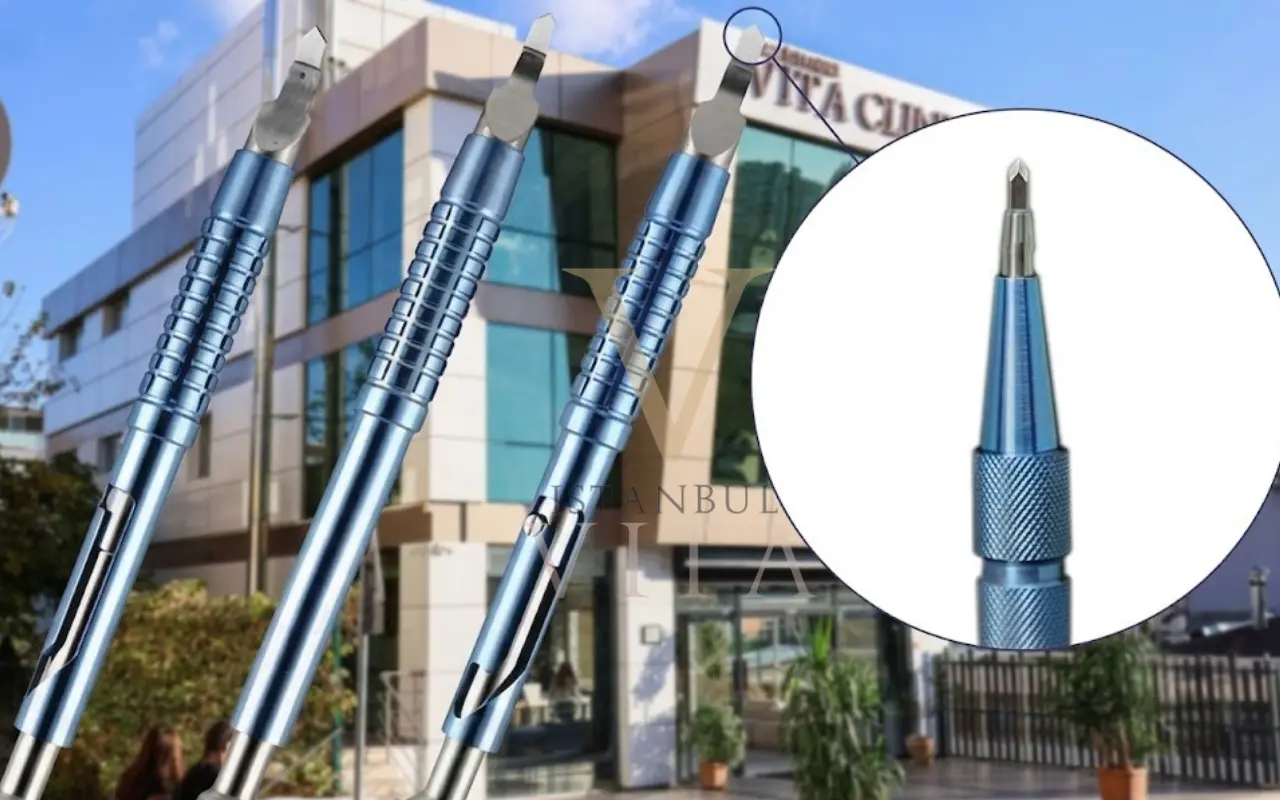
| Vita Technique® | 0.6–0.7 mm sapphire punches | Up to 80–100 grafts/cm² (suitable cases) | Shorter, with better angle control |
For patients with limited donor reserves, minimizing trauma per extraction site matters more than usual every graft counts differently when the supply isn't unlimited. This is one of the specific reasons the finer punch sizes used in the Vita Technique® tend to be a better match for this patient group.
What Results Look Like for Post-Chemotherapy Patients
Realistic Expectations and Timeline
Results build gradually. Most patients see initial growth by month 3–4, with meaningful density visible around month 8–10, and a fuller picture by month 12–18. For someone rebuilding confidence after cancer treatment, this timeline matters just as much as the surgical plan itself knowing what to expect, and when, removes a lot of unnecessary anxiety.
Find Out Where You Stand
If you're unsure whether your donor area can support a transplant, the best way to understand your options is through an individual assessment. is a proper, hands-on evaluation not a guess based on how your hair looks in photos. Istanbul Vita's physicians spend real consultation time reviewing exactly this kind of case, using microscopic donor analysis to give a clear, honest answer either way. With a boutique schedule of 1–3 patients per day and support available in 13 languages, the team at Istanbul Vita can walk you through what your options actually look like.
Frequently Asked Questions
Is a hair transplant possible if my hair didn't grow back the same after chemo?
In many cases, yes as long as there's enough healthy donor tissue elsewhere on the scalp. This is confirmed through a detailed evaluation, not a general assumption.
How do doctors know if I'm a good candidate?
Through microscopic donor analysis, timing since your last treatment and medical clearance. These three factors together, not any single one, determine candidacy.
What if my donor area is also thin?
This is exactly why the assessment matters so much some patients turn out to have more usable donor tissue than they expected, while others may need a different approach altogether. A proper consultation will tell you which situation applies to you.
Does it matter which clinic I choose for this kind of case?
Yes, significantly. Cases involving donor tissue affected by prior chemotherapy require more precision and a more individualized plan than typical hair loss cases, which makes doctor-led assessment and experience especially important.
 conversation


