
 English
Afro Hair Transplant Recovery Guide – 2026 Timeline
Afro hair transplant recovery is a very important stage of the hair restoration journey. Because Afro textured hair follicles grow in the curved pattern beneath the scalp, the healing process is quite different from that of straight hair types. Understanding the Afro hair transplant recovery timeline will help the patients to protect their grafts, reduce complications, and achieve the best possible results.
With this carefully gathered information guide, you will get everything that you need to know about Afro hair transplant recovery in 2026.
What Makes Afro Hair Transplant Recovery Different From Other Hair Types?
Afro hair follicles grow in a curved, spiral shape beneath the scalp. That curl begins at the root, not at the surface. This means:
- Follicle extraction requires a curved punch tool, not the standard straight FUE punch used for straight hair.
- Implantation angles must be carefully calculated to match natural coil direction.
- The healing process of curved hair follicles is different from that of straight hair follicles.
Afro Hair Transplant Recovery Timeline: Week by Week
Afro hair transplant recovery process follows a predictable process but knowing what's normal at each stage prevents panic and protects your grafts.
| Stage | What's Happening | What You Should Do |
| Days 1–3 | Swelling, redness, tenderness around donor and recipient sites | Rest, sleep elevated, take prescribed medication |
| Days 4–7 | Small scabs form around each graft | Gentle saline misting only; no touching or rubbing |
| Week 2 | Scabs naturally fall off | Continue gentle washing with prescribed shampoo |
| Weeks 3–6 | Shock loss — transplanted hairs shed | Don't panic. This is normal and expected |
| Months 2–4 | New growth begins beneath the scalp | Scalp massage (if approved by surgeon) stimulates blood flow |
| Months 6–9 | Visible hair growth, curl pattern starts to emerge | Moisturize regularly; avoid heat |
| Month 12+ | Full density and curl pattern establish | Resume full Afro hair care routine |
One thing many patients don't expect is the shock loss phase between weeks three and six feels devastating.
You'll see the hairs you just paid for falling out. This is not a failure. It's a biological reset.
The follicle is intact beneath the skin. Growth follows.
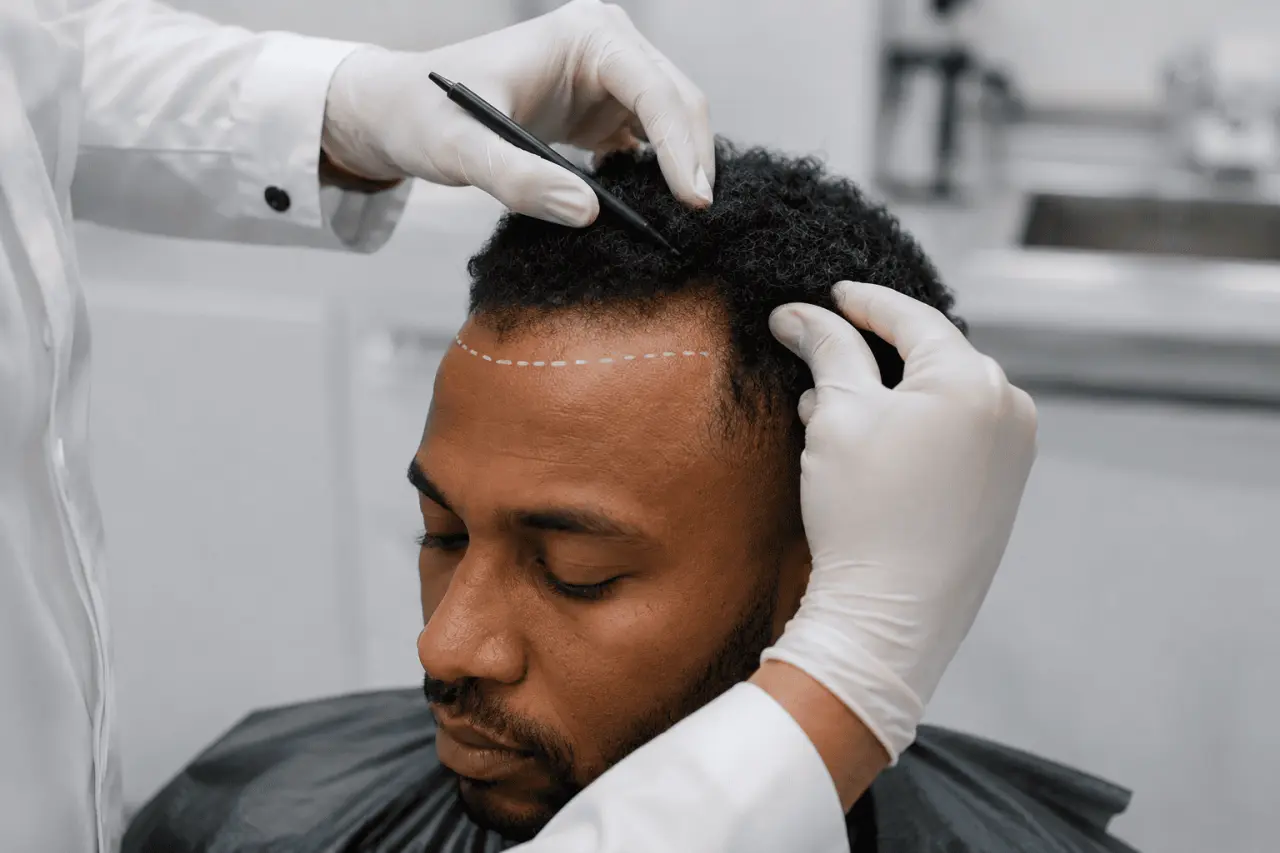
Helpful Post-op Tips That You Should Follow
Hydration becomes especially important after surgery for afro hair transplant recovery.
Afro scalp tends to be dry by its nature, which can be aggravated after surgery
Drink up to 2–3 litres of liquid per day during your recovery period. Dehydrated scalp needs time to heal and it increases risks for post-surgery complications.
Your sleeping posture after surgery
Use a special position when sleeping at 45 degrees for the first week. This way there won't be swelling of the forehead area with transplanted hair.
It is very important that you shield yourself from the sun
UV exposure will result in hyperpigmentation and hinder the process of wound healing. In the initial three months after surgery, you should always cover your head with a wide brimmed hat. Only use physical sunscreens like zinc.
Quit smoking
The British Journal of Dermatology reports that smoking decreases hair graft survival rate because of the constriction of micro-vessels that feed hair follicles with blood. It is sufficient to quit for only two weeks prior to the procedure and for four weeks afterwards.
High protein intake
The main component of hair is keratin, which is a protein. Post-procedure, make sure to take more eggs, beans, meat, and nuts. If you face any restrictions in your diet, then take vitamins D and zinc because they regulate hair follicle cycling.
Have Questions? Let's Chat on WhatsApp!
Get instant answers 24/7. Receive your doctor-led hair analysis within 1 day, plus pricing and booking support.
Start WhatsApp ChatWhy Turkey, and Istanbul Specifically, Has Become the Global Hub for Afro Hair Transplants
Istanbul conducts the highest number of hair transplants in any city worldwide, having more than 500 clinics working around the city up until the year 2026.
Particularly for Afro hair patients, some few but increasing specialist clinics offering surgeons well-versed in Afro-specific FUE methods have been gaining clients from the UK, US, West Africa, and Europe.
The price difference is remarkable; with an Afro hair transplant priced between €2,000 and €5,500 per 2,000-3,500 grafts in Istanbul compared to prices between €8,000-€15,000 for similar procedures in the UK and Western Europe.
Questions for patients to ask:
- Do they demonstrate before-and-after images for Afro-textured clients?
- What is the punch tool used by the surgeon to deal with curvilinear follicles?
- Is there a specialised nurse attending to Afro patients during post-transplant recovery?
- What is the procedure for foreign clients after treatment?
Any legitimate clinic answers all of these questions without delay.
When to Call Your Doctor Immediately
Afro hair transplant recovery is normally smooth. However, the following symptoms need immediate treatment from a medical professional:
- Temperature greater than 38° C (100.4° F)
- Discharge or pus from the grafting site
- Sudden redness or heat throughout the scalp
- Increasing pain after day five rather than improvement
- Swelling which does not improve after day three
These are rare complications but possible. Clinics performing surgery overseas must provide an emergency contact number around the clock. This is one red flag to consider prior to surgery.
What's Your Next Step?
Should you be still searching for various clinics or thinking about having hair transplant surgery, our clinic based in Istanbul, Vita Clinic, assists in Afro-textured hair transplants every week and can answer all your questions concerning the treatment and your special hair structure. Talk to the Istanbul Vita team
When Can I Return to Normal Hair Care?
| Activity | When It's Safe |
| Gentle washing with mild shampoo | Day 3–5 (as directed by surgeon) |
| Wide-tooth comb on transplanted area | Week 3–4 |
| Moisturiser or light oil | Week 2 onward (fragrance-free) |
| Protective styles (loose braids, etc.) | Month 3–4 |
| Heat tools | Month 6+ |
| Chemical treatments (relaxers, colour) | Month 12+ |
Have Questions? Let's Chat on WhatsApp!
Get instant answers 24/7. Receive your doctor-led hair analysis within 1 day, plus pricing and booking support.
Start WhatsApp ChatFrequently Asked Questions
Will My Curl Pattern Come Back?
Yes. This is one of the most reassuring facts about Afro hair transplantation. It is stored inside the hair follicle and not in the hair itself.
As long as the hair follicles are taken out and transplanted properly, the hair will grow back just like how your hair curls.
How Long Until I See Real Results?
Most patients see meaningful growth between months six and nine.
Full, final results including density and curl definition typically appear at the 12 to 18-month mark.
Is Itching Normal? What Can I Do?
Yes, itching is a reliable sign of healing. New follicles activating beneath the skin trigger a mild inflammatory response that's the itch you feel.
What you must not do is scratch. Scratching dislodges grafts in the first two weeks and causes scarring thereafter.
Is There More Risk of Scarring With Afro Textured Hair?
This is definitely an issue. Darker complexion people may have a tendency to develop keloid scars that grow outside of the injured site.
An experienced surgeon should determine if you have this tendency before the treatment and modify his techniques.

 conversation


