
 English
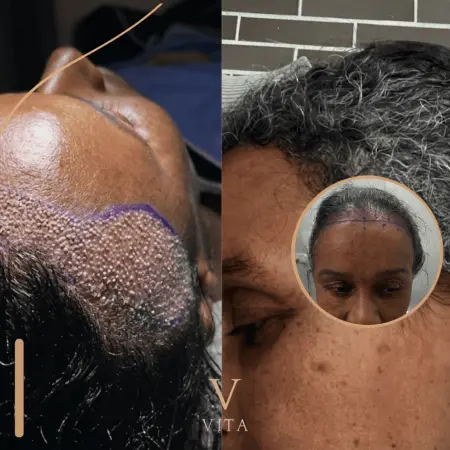
Table of Contents
A curl looks the same from the outside no matter what's happening underneath it. That's the part most people researching restoration for tightly coiled or Afro-textured hair don't think to ask about, and it's also the part that ends up shaping the entire surgical plan.
Patients comparing an Afro hair transplant often narrow the decision down to a single question: which instrument or method is "best." But the more useful question is different. It's about how a clinic reads the shape of a root before touching it, since roots don't always travel in the direction the visible strand suggests. To understand the broader process, including follicle analysis, planning and technique selection, you can explore our detailed Afro hair transplant guide.
This is the reasoning behind Afro Technique®, developed specifically for coily, curly and tightly textured hair. Below is a closer look at what it actually covers, and where the common assumptions about it tend to go wrong.
What Is Afro Technique®?
Afro Technique® is a planning-and-procedure approach used alongside FUE and DHI, adapted specifically for coily and curly hair. Rather than functioning as a standalone method that replaces everything else, it modifies how extraction, channel work and graft placement are carried out when the surgical team is dealing with roots that bend beneath the surface.
Microscopic assessment sits at the center of it. Before any grafts are removed, the surgical team studies how individual roots are shaped, how thick they are, and roughly which direction they're likely to travel once below skin level.
Why Textured Roots Need a Different Kind of Assessment
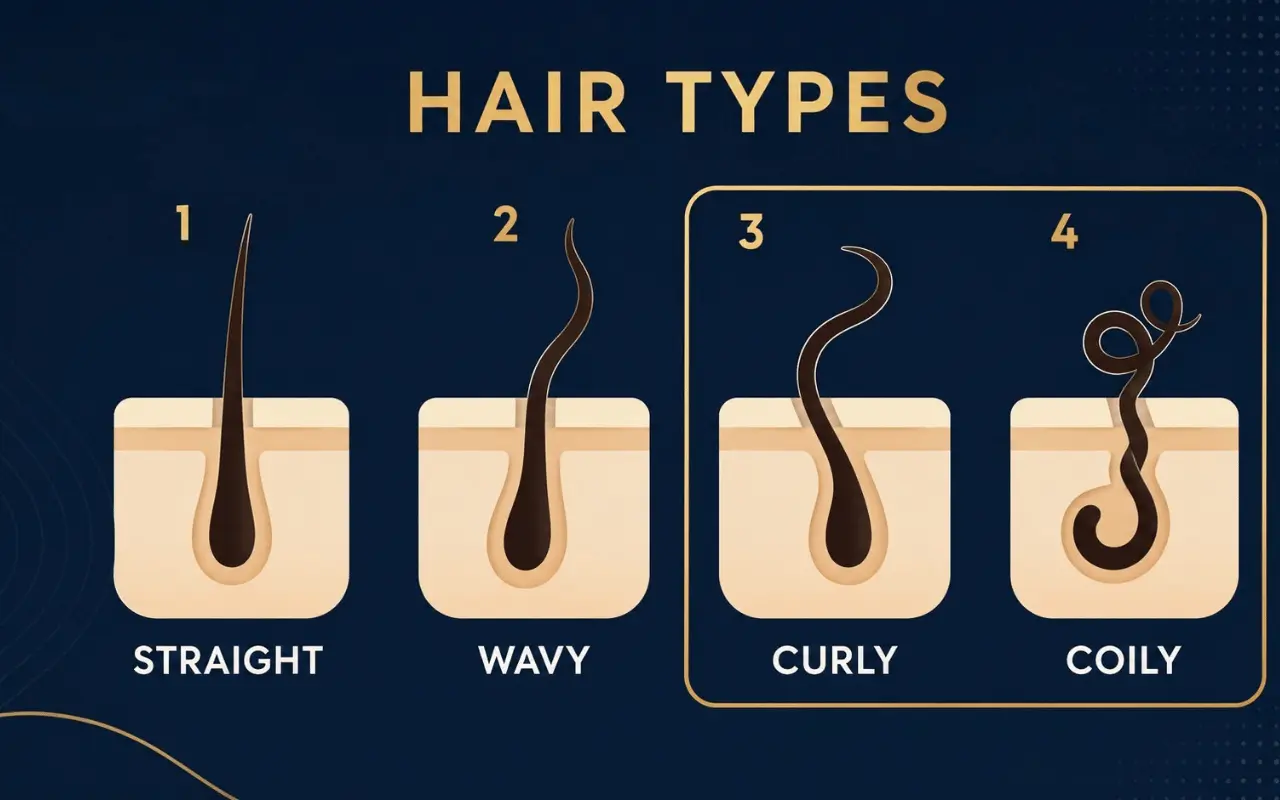
Most people are familiar with the four main curl categories under the Andre Walker system, running from the looser S-shape of 4A down to the dense, less defined zigzag of 4C. Useful for describing what's visible. Not especially useful for surgery.
Here's the disconnect: the visible curl tells you almost nothing reliable about the subcutaneous shape of the root. A strand can appear moderately curly while the root beneath it takes a sharp turn a few millimeters under the skin. Straight-line extraction, the kind that works fine on straighter hair, becomes risky here because a fixed removal path can slice straight through a bend it wasn't built to follow.
Width plays into this too. Coarser roots generally call for different handling than finer ones, and a plan built around one measurement rarely accounts for both.
| Factor | Why It's Relevant | Effect on the Plan |
| Surface curl | Visible but not predictive of what lies beneath | Starting reference only |
| Subcutaneous shape | The root's actual path may differ from the strand above it | Removal angle adjusted per graft |
| Root width | Coarser strands may need different handling | Informs instrument sizing |
| Donor density | Limits how much can be safely harvested | Shapes overall graft distribution |
| Growth direction | Determines how natural the final look reads | Guides insertion depth and direction |
None of these sit in isolation. A root can be wide with only a slight bend, or narrow with a sharp one, and the combination is what the surgical team is actually reacting to, not a single trait on its own.
How Donor Assessment Works
The process starts before a single graft is touched. Zones across the donor area are examined for density, thickness and general shape, giving the team a working map of what they're dealing with in different regions of the scalp.
This is what allows a surgeon to anticipate rather than improvise. Instead of adjusting mid-procedure when a root turns out to bend more sharply than expected, the assessment stage flags likely variation ahead of time, region by region.
Sapphire tips are used during harvesting, oriented specifically for coily and curly patterns to work with the strand's natural direction rather than against it. Insertion during implantation follows a similar logic, with depth and direction set to match how the hair actually grows, particularly along the hairline where the result is most visible.
Does Instrument Size Actually Matter?
Somewhat, but it's not the deciding factor people assume it is. A finer instrument does tend to reduce tissue trauma, and Afro Technique® generally favors smaller sapphire tips for this reason. Still, the right size for a given patient comes down to root width and how sharply it bends, not a fixed number that applies across the board.
This is where a lot of pre-consultation research gets slightly misled, treating one measurement as though it alone determines the outcome.
| What Patients Often Assume | What's Actually True |
| Smaller instrument = safer, always | Depends on root width and shape, not size alone |
| All coily hair bends the same way | Variation exists even within the same curl type |
| Afro Technique® is basically FUE with a new name | It's FUE and DHI adapted for coily anatomy, not a rebrand |
| One method fits every patient | Donor quality and root shape shift the plan case by case |
| More grafts always look better | Distribution and natural direction matter as much as count |
Have Questions? Let's Chat on WhatsApp!
Get instant answers 24/7. Receive your doctor-led hair analysis within 1 day, plus pricing and booking support.
Start WhatsApp ChatWhere It Fits Alongside FUE and DHI
Classic FUE typically uses wider punches and steel channels, which caps achievable density and can leave more visible scarring risk. DHI opens channels and places grafts in one motion through an implanter pen, which speeds things up but limits how much the angle can be fine-tuned.
Afro Technique® borrows from both, tightening the punch size and steel-versus-implanter tradeoffs specifically for roots that curve. It's less a third category and more a set of adjustments layered onto methods that already exist, tuned to anatomy that doesn't behave like straight hair.
What's Worth Asking Before Choosing a Method
A technique's name doesn't tell you much on its own. It's worth asking how a clinic actually evaluates curl and root shape during consultation, whether that assessment happens under magnification, and who is physically doing the harvesting and channel work.
At Istanbul Vita Clinic, this kind of individualized assessment runs through the whole process for coily and curly cases. Donor characteristics are mapped before harvesting starts. Dr. Mustafa Ayhan Balcı and Dr. Harun Eymen Alakaya, who specialize in this hair type, are directly involved in planning rather than stepping in only at the surgical stage. A consultation, in this context, functions less as a sales step and more as a way to actually understand what a given patient's roots need, since two people with near-identical surface curl can still require different technical decisions.
Frequently Asked Questions
What is Afro Technique®?
A planning approach used alongside FUE and DHI, built specifically around how coily and curly roots behave beneath the skin.
Is it the same procedure as FUE?
Not exactly. It adapts FUE's extraction principles with finer instruments and curl-specific direction control rather than replacing the method outright.
Can it be used for 4C hair?
Generally yes, though suitability depends on donor density and root shape assessed individually during consultation.
Does it always use one specific punch size?
No. Sizing is adjusted per patient based on root width and how much it curves.
Why are curved roots more difficult to work with?
Because a straight extraction path can miss the actual direction the root travels underneath the skin, raising the chance of damaging it.
Do all patients with textured hair need the same plan?
No. Root shape, density and thickness vary enough from person to person that planning tends to be individualized rather than standardized.
 conversation


