
 English
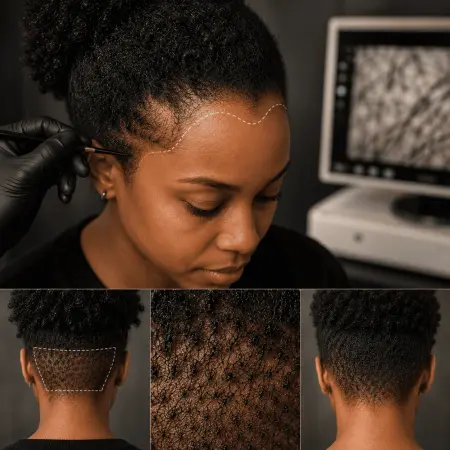
Booking a consultation before anyone has looked at your donor area or figured out why you're actually thinning is how a lot of women end up disappointed and out several thousand dollars. Afro and coily texture doesn't behave like straight strands under a punch tool, and not every case of thinning in Black women is even a surgical problem to begin with.
Are You a Good Candidate for Afro Hair Transplant as a Woman?
The honest answer is that it comes down to your donor supply, the cause of your thinning, and how stable that loss currently is not your ethnicity or curl type alone. An afro hair transplant for women can work beautifully when the diagnosis is correct, but the same procedure can disappoint someone whose real problem was never surgical to begin with and that distinction matters more for Black women than most patients realize, since female loss rarely has one single cause.
Signs You May Be Ready for Surgery
Good candidates usually share a few traits. Loss has stopped progressing quickly, the donor area at the back and sides is dense and healthy, and the thinning is localized rather than spread evenly across the scalp.
General health also plays a role. A candidate should be free of uncontrolled conditions that could interfere with healing, and she should walk into the consultation with a realistic picture of what grafts can and cannot achieve.
Factors That May Delay or Rule Out Surgery
Not every case should move forward right away, and an honest clinic will say so. Surgery is often postponed or reconsidered when one of the following applies:
- Active scalp disease psoriasis, folliculitis, or an unresolved infection need treatment first, since inflamed skin lowers graft survival.
- Insufficient donor density if the back and sides can't reliably supply enough follicles, a staged approach or non-surgical treatment may be discussed instead.
- Uncontrolled medical conditions poorly managed diabetes, thyroid disorders, or clotting issues should be stabilized before booking.
- Smoking nicotine restricts blood flow to the scalp, reducing graft survival during the critical early weeks.
- Unrealistic expectations if someone's picturing dramatically thicker strands overnight, with no shedding phase at all, that's usually my cue to slow the conversation down before anything gets booked.
None of this rules surgery out for good. In most cases it just means dealing with the underlying issue first, then coming back for a second look once things have settled.
What Causes Hair Loss in Black Women?
Almost every consultation starts the same way a patient walks in already fairly certain she knows why she's thinning. Sometimes she's right. Often there's more underneath than she realized, and sorting that out has to happen before anyone talks seriously about surgery, because operating on the wrong cause rarely ends well for either of us.
Traction Alopecia vs. Hormonal and Genetic Hair Loss
Take traction alopecia. I see it constantly in women who've worn tight braids, weaves, or pulled-back styles for years. The front edge or temples usually give way first, slowly, and if we catch it before real scarring sets in, it often bounces back on its own. Female pattern loss doesn't play by the same rules — genetics and hormones drive it rather than styling choices, the crown thins out evenly instead of receding at the edges, and left untreated, it just keeps going.
Hormones complicate the picture further, and this is usually the part patients are least prepared for. A woman with PCOS can develop crown thinning that looks, frankly, almost identical to garden-variety female pattern loss, so before assuming genetics I want to know about her cycle and whatever else PCOS tends to bring along. Postpartum shedding is its own thing entirely: typically temporary, tied to the post-birth estrogen crash, and it tends to calm down within a few months without much intervention. Menopause is slower still, stretching a similar kind of thinning across years instead of months. Four different pictures, four different treatments and surgery, more often than people expect, isn't the first move for any of them until an active hormonal cause has been ruled out.
| Cause | Typical Pattern | Effect on Candidacy |
| Traction alopecia | Hairline and temple recession from styling tension | Often treatable if caught early; surgery only once the cause is removed and loss has stabilized |
| Female pattern hair loss | Diffuse thinning at the crown and part line | Can be a good surgical candidate if donor supply is strong and thinning is localized enough |
| PCOS / hormonal shedding | Crown thinning or sudden, temporary shedding across the scalp | Usually needs medical management first; surgery is premature until the cause is controlled |
| Postpartum or menopausal thinning | Diffuse shedding tied to a hormonal shift | Often improves on its own within months; surgery is typically not the first step |
Dermatologists back this up, for what it's worth. The American Academy of Dermatology has flagged constant pulling on the scalp tight ponytails, cornrows, updos, long-term extensions as a genuine, well-documented driver of this kind of thinning. Timing really does matter here: catch it while the follicle is still irritated rather than scarred, and there's a real shot at recovery.
How Is the Donor Area Evaluated for Afro-Textured Hair?
Ask me how many grafts someone needs before I've had a real look at the donor zone, and I honestly can't give a straight number. Afro and coily texture curves beneath the skin, sometimes sharply, instead of running straight down the way it does in most diagrams. So curl pattern, density, and the angle each follicle is heading all need reading together before any serious black hair transplant planning can begin.
Microscopic Donor Analysis and Curl Pattern
At Istanbul Vita Clinic, that reading happens under a microscope, section by section across the donor zone, checking strand thickness, curl behavior, and growth angle before a single graft gets planned. It sounds tedious, and honestly, it is but pull a curved follicle out at the wrong angle and you damage it before it ever reaches the recipient site, so the extra time here tends to pay off later.
It's also the thinking behind the clinic's Afro Technique®, built around curly, coiled, and tightly textured strands specifically, using finer sapphire instruments that follow the follicle's natural curve instead of fighting against it.
Donor Density and Long-Term Planning
Black women complicate this evaluation a bit further, honestly, because diffuse thinning sometimes shows up in the donor band itself and not just the areas we're trying to treat. When that's the case, density, stability, and how the zone is likely to hold up five or ten years down the line all get weighed at once, before any harvesting decision gets made.
A donor band that's dense and healthy today isn't just about what can move now. It's also what stays in reserve if thinning keeps progressing, so an experienced surgeon tends to hold back rather than harvest the maximum in one sitting especially when there's any real question about how stable that donor area is.
What Happens During an Afro Hair Transplant Consultation?
A proper consultation functions as a medical assessment, not a sales pitch. Expect questions about styling history, family pattern of loss, hormonal health, and prior treatments, plus a physical exam of both the donor and thinning areas.
Questions to Ask Before Booking Surgery
- Who performs the extraction and channel opening the doctor or a technician?
- Does the surgeon have documented experience with afro or coily cases specifically?
- What is the realistic graft estimate, and how was it calculated?
- What happens if donor density turns out lower than expected on the day of surgery?
Medical and Styling History That Shapes the Plan
A thorough consultation looks well beyond the front edge. For Black women specifically, a few extra details often change the surgical plan:
- Current medications and supplements blood thinners, hormonal treatments, and certain supplements can affect bleeding and healing.
- Previous chemical relaxer use years of relaxer application can leave the scalp and follicles more fragile in both the donor and recipient areas.
- History of scalp burns or chemical damage old burns from relaxers, dyes, or heat styling can leave scarring that changes how and where grafts can be placed.
- Previous scalp or transplant surgery earlier procedures affect how much healthy donor tissue remains and how existing scar tissue behaves during a new operation.
Sharing this history at the first visit, rather than partway through the process, allows the surgical team to build a plan around the scalp's actual condition instead of a generic template.
What a Doctor-Led Consultation Looks Like
At Istanbul Vita Clinic, consultations run 40 to 60 minutes per patient, and the clinic limits itself to a maximum of one to three procedures a day so that planning time isn't rushed. That pace matters more for afro cases, where frontal design and angle planning genuinely take longer to get right.
How Should You Prepare Before Surgery?
Preparation starts with clearing up any medical uncertainty, not with a last-minute shopping list. A short conversation before surgery day can prevent avoidable delays.
Pre-Operative Tests and Medical Evaluation
Blood tests and an EKG are standard before the procedure, screening for issues that could complicate healing or anesthesia. Bringing a record of any thyroid, iron, or hormonal test results from your own doctor can also speed up the assessment.
Scalp Care Before the Procedure
In the weeks leading up to surgery, it helps to avoid tight braids, weaves, or heavy tension styles so the donor and recipient areas aren't inflamed on the day of the operation. A calm, healthy scalp simply responds better to grafting.
What Are Realistic Expectations for Female Afro Hair Transplant Results?
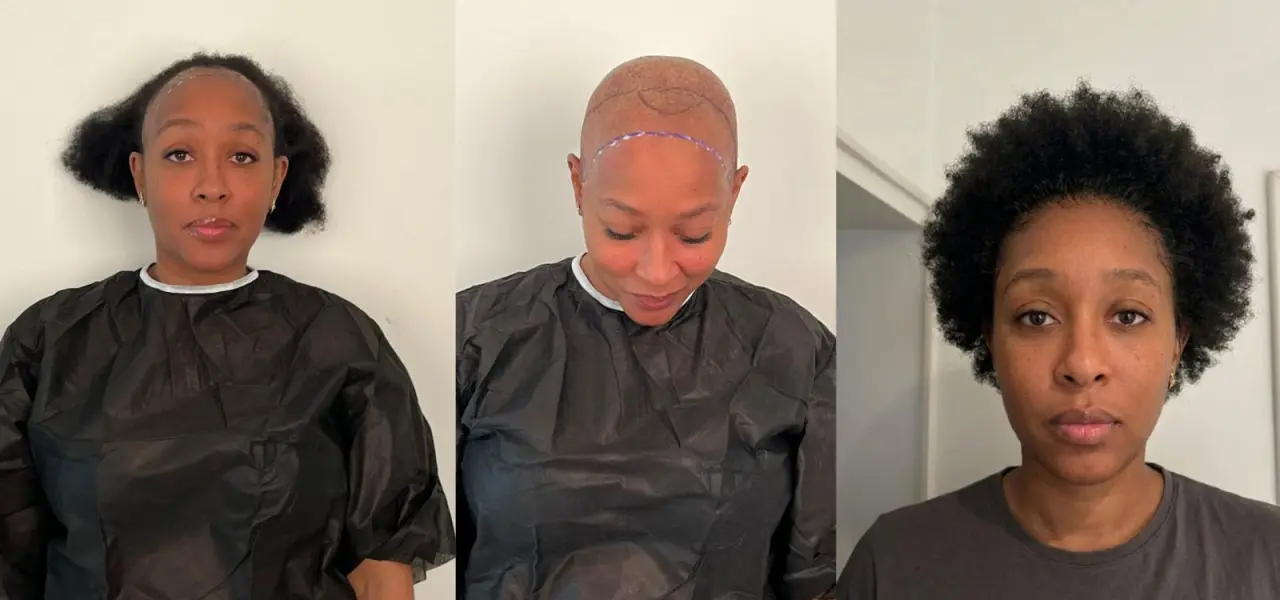
Results come down to more than a graft count, even though that's usually the number patients fixate on first. Donor density sets a ceiling on how much coverage is realistic. Curl pattern changes how full the final result actually looks. And the size of the thinning area decides whether one session gets the job done, or whether a second round was always going to be part of the plan.
Curly and coily strands actually work in a patient's favor here they create more visual volume per graft than straight strands do. Where things go sideways is when the front edge gets designed around a density goal the donor area was never going to support long-term. That's probably the single most common source of disappointment I see.
For women with extensive diffuse thinning, I try to say this upfront rather than after the fact: one session will likely improve density without bringing back the original volume, and a second, smaller session later is often the more honest path to what she actually wants.
| Timeframe | What to Expect |
| 2–4 weeks | Transplanted strands often shed; this is a normal, temporary phase |
| 3–4 months | New growth typically begins to appear |
| 6–9 months | Density becomes more visible; curl pattern starts to match the surrounding texture |
| 12+ months | Final thickness and texture are generally assessed at this stage |
Have Questions? Let's Chat on WhatsApp!
Get instant answers 24/7. Receive your doctor-led hair analysis within 1 day, plus pricing and booking support.
Start WhatsApp ChatWhat Does Recovery and Care Look Like for Afro-Textured Strands?
For a full day-by-day recovery timeline, see our Afro hair transplant Turkey guide. What follows are the care questions that come up most often from Black women specifically, around washing, sleep, and styling.
Caring for Afro Hair After Surgery
Most of this comes up naturally at the follow-up visit. Washing usually waits until the grafts have settled call it ten to fourteen days, following whatever gentle shampoo routine we've worked out before then. Sleep matters more than people expect, too: keeping the head slightly elevated and staying off the grafted area for that first week gives new grafts a real chance to anchor properly.
Braids, wigs, and sew-ins need longer. Several weeks at minimum, sometimes a full month, since anything pulling or pressing on the scalp can dislodge grafts before they've taken hold. Relaxers and other chemical treatments I ask patients to hold off on even longer often three months and only after I've confirmed the scalp and grafts have properly settled.
Protective Styles: Braids, Wigs, Sew-Ins and Tension-Based Looks
Protective styling comes up in nearly every consultation with Black patients, so it's worth walking through properly. Tight braids sitting directly over a grafted area put those new follicles at risk, plain and simple better to wait for the go-ahead first. Wigs that clip, tape, or glue onto the scalp fall into the same bucket, though a loose wig with no adhesive and no pressure on the treated zone can sometimes come back into rotation sooner.
Sew-ins tend to wait longest of all, since a cornrow foundation puts real tension across the whole scalp. Ponytails and buns aren't off the table entirely, but keep them loose, especially anywhere near the front edge, until healing is fully confirmed.
How to Choose the Right Clinic for Afro Hair Transplant
Price comparisons only tell part of the story. For an afro hair transplant for women specifically, a clinic's real experience with curly and coily texture matters more than almost any other factor. Before booking, it helps to check the following:
- Doctor involvement is a licensed physician present for the key steps, or is the entire case handled by technicians?
- Microscopic donor analysis does the clinic examine curl pattern and follicle angle before extraction, or use a generic protocol for every patient?
- Afro and coily case experience a generic before-and-after gallery doesn't tell you much; ask instead to see results from patients with a similar curl pattern and a similar loss pattern to yours, since that comparison says far more.
- Who performs channel opening this step shapes the final frontal design and density, so doctor-led channel opening is worth asking about directly.
- Daily case volume a clinic booking many procedures on the same day has less time for the individualized planning that afro-textured cases require.
Istanbul Vita Clinic was built around several of these points directly. The clinic caps its schedule at one to three procedures daily, its doctors — including specialists in afro and coily cases take part in channel opening rather than delegating it entirely, and every plan starts with a microscopic look at the donor area before a graft count is even discussed. If you're comparing clinics for a curly and coiled hair transplant in Turkey, that level of doctor involvement is worth weighing alongside price it's often the real difference between a generic plan and an afro hair transplant for women that's actually built around her.
Frequently Asked Questions
Can traction alopecia be treated without surgery?
Often, yes, if it's caught early and the tension-causing style is stopped. Surgery is usually discussed only once the area has stabilized and non-surgical care hasn't restored enough density.
Do coily curls need more grafts than straight strands for the same coverage?
Not necessarily. Coily strands add more visual volume per graft, so some patients reach a fuller look with fewer grafts than a straight-haired patient would need.
Is one session usually enough for female pattern loss?
That comes down to how extensive the thinning is. Localized cases often finish in one session, while widespread diffuse thinning may be planned as two smaller sessions from the start.
When can I get braids or a sew-in again after surgery?
Most surgeons ask patients to wait several weeks at minimum, and longer for tension-heavy styles like sew-ins. Your own timeline will depend on how the grafts and scalp are healing.
How is a female hairline design different from a male one?
Female hairlines are generally softer, more rounded, and set slightly higher at the temples, planned around facial proportions rather than a fixed template.
What if my donor area turns out weaker than expected on surgery day?
A responsible surgeon adjusts the graft plan in real time rather than overharvesting, and explains any changes before proceeding.
Can hormonal loss return after a transplant?
Transplanted grafts are typically permanent, but surrounding untreated strands can keep thinning if the underlying hormonal cause PCOS, menopause, or another factor isn't separately managed.
Do keloid-prone patients need to disclose this beforehand?
Yes. Keloid scarring is uncommon after these procedures, but sharing any personal or family history of unusual scarring lets the surgical team plan more carefully.

 conversation


