
 English
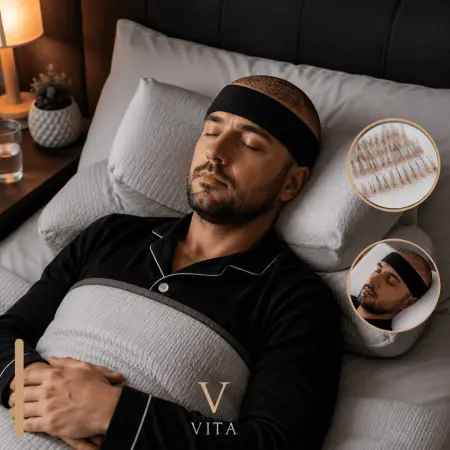
Table of Contents
There are so many patients who are surprised that even sleeping needs extra care after a hair transplant. It is not difficult, but the first few nights require some changes. Sleeping in the wrong position can put pressure on your new grafts and affect your healing. If you are worried about sleeping then you are not alone here. This is one of the most common questions after FUE and DHI hair transplant procedures. In this guide you will learn how to protect your grafts while sleeping positions are safe and what to expect during the first 10 nights after surgery.
Why Sleep Matters So Much for Hair Transplant Recovery
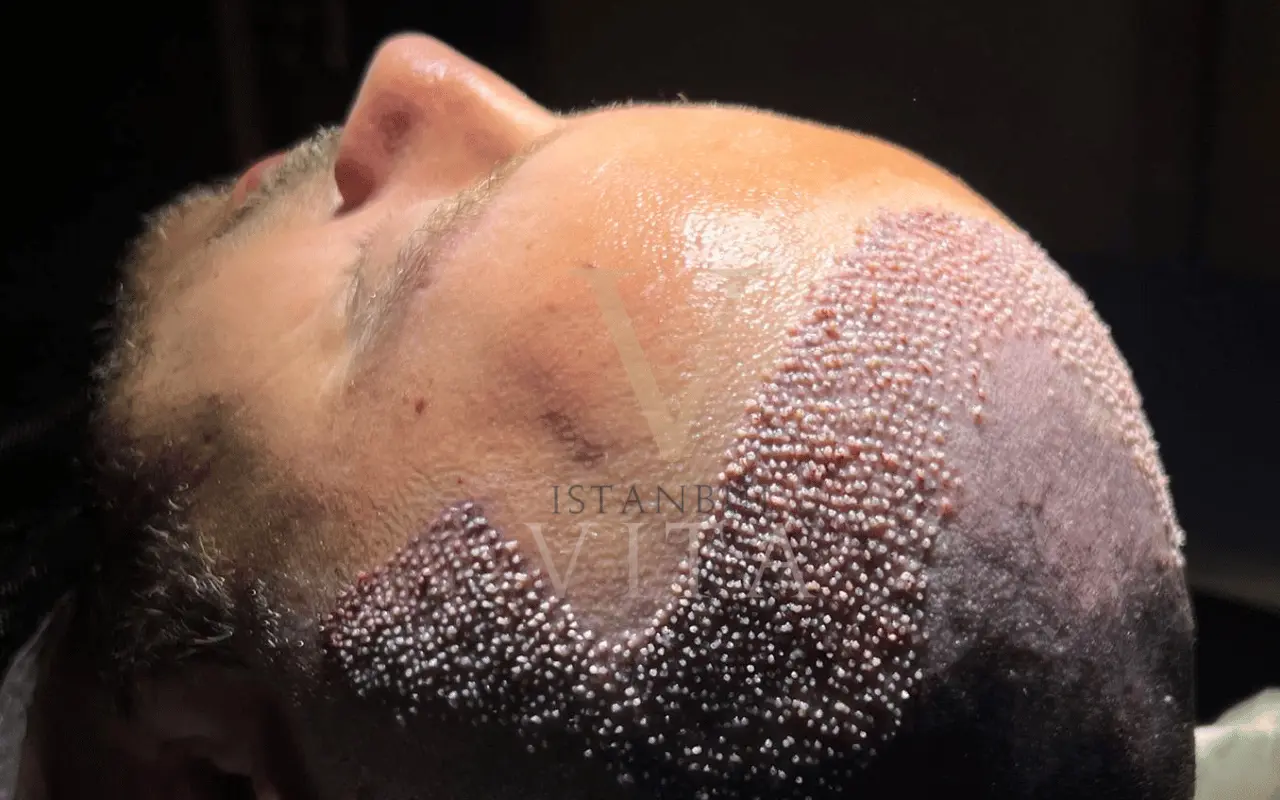
In the hours right after surgery, the newly placed grafts are not fully anchored yet. They're sitting in tiny channels in the scalp, held mostly by the body's natural clotting process rather than any real physical bond. Any friction, pressure or the direct contact like a pillow wrapping against the scalp, a hand brushing brushing the hairline in your sleep can dislodge a graft before it settles in. That is exactly why sleeping positions after hair transplant becomes such a central part of the aftercare. Right alongside washing routines and the medical schedules this is also very important. Swelling is the other elevation that matters early on like fluid pools wherever gravity takes it and if your head is flat then it often might go towards the forehead and eyes over the few first days.

Best Sleeping Position After Hair Transplant
For most patients, the safest hair transplant sleeping position is on your back, head elevated at roughly a 45-degree angle. This keeps pressure off the grafts entirely and helps manage swelling.
Why Elevation Protects Your Grafts
Elevating the head will reduce the blood pooling at the scalp. This will also lower the swelling and discomfort. It also means that no pillow surface contacts the transplanted area, since the back of the head and neck rest against the pillow, not the top or front of the scalp where grafts are typically placed.
Sleeping on Your Back vs. Side vs. Stomach
Back sleeping wins for the first several nights, hands down. Side sleeping puts direct pressure on grafts along the temples and hairline, and stomach sleeping is off the table entirely, since your face and forehead would press straight into the pillow. We'll cover exactly when side sleeping becomes safe again below.
How to Sleep After Hair Transplant: Night by Night (Days 1–10)
Recovery isn't identical from one night to the next and the precautions that matter most on night one loosen up considerably by day ten. Here's what changes.
First Night After Hair Transplant (Day 1)
This is the most delicate night of the process. Grafts are unsecured, swelling is just beginning, and the scalp is still numb in places from the anesthetic wearing off. Sleep strictly on your back, elevated at 45 degrees, using two or three stacked pillows or a recliner chair if one is available. Many clinics recommend a travel neck pillow to physically block sideways movement while you sleep.
Days 2–3: Still Critical
Swelling often peaks around day two or three, so elevation remains essential and grafts are still not firmly anchored. Keep the neck pillow in place and continue at the same angle. This is also when accidental scratching is most tempting, since mild itching tends to set in — resist it.
Days 4–7: Grafts Start Settling
By around day four, grafts begin adhering more securely to the scalp tissue, and the risk of dislodging one with light contact drops noticeably. Elevation is still worthwhile but doesn't need to be as extreme. Many patients reduce to a 30-degree angle.
Days 8–10: Gradual Return to Normal
Most surgeons give the green light to ease off strict elevation around day eight to ten, provided healing is on track. This is typically when patients can start experimenting with a lower angle and, cautiously, side sleeping.
| Day | Recommended Position | Pillow Setup | Key Precaution |
| Day 1 | Back, 45° elevation | Neck pillow + 2–3 stacked pillows | No touching scalp; grafts unsecured |
| Days 2–3 | Back, 45° elevation | Neck pillow | Swelling peaks; avoid scratching |
| Days 4–7 | Back, ~30° elevation | Neck pillow (optional by day 6–7) | Grafts settling; still avoid contact |
| Days 8–10 | Back, minimal elevation | Regular pillow, softer surface | Cautious side sleeping may begin |
Best Pillow After Hair Transplant
The right pillow after hair transplant setup does most of the heavy lifting, especially early on, when you can't rely on staying still through habit alone.
Neck (Travel) Pillow Method
A U-shaped travel neck pillow that is worn around the neck rather than under the head. This is one of the most effective tools that clinics recommend. It physically blocks the head from rolling to either side during sleep, which matters far more than willpower once you are actually asleep.
When Can You Stop Using a Neck Pillow?
Most of the patients can retire the night below somewhere between five and seven, once the grafts have anchored well enough that incidental contact is not a major risk. Your surgeon's specific time to always take priority over the general guidance.
Regular Pillow vs. Recovery Pillow
Once the elevation requirements ease, a firm and the low pillow will keep the head stable and it is preferable to a soft, deep one that encourages the head to sink and roll.
Can You Sleep on Your Side After a Hair Transplant?
Not immediately but it's not off-limits forever. Side sleeping puts direct, sustained pressure on grafts near the temples and hairline, which is exactly the friction you're trying to avoid in the first week. Most surgeons clear patients for careful side sleeping around day 10 to day 14, and only once the donor and recipient areas show solid signs of healing.
What Happens If You Accidentally Touch or Roll Onto Your Grafts?
Many patients accidentally touch or roll onto their grafts while they are sleeping, so don't panic. In the first 24 to 48 hours, the grafts are still delicate, but a small or gentle touch usually does not cause any serious damage.
Should You Panic If a Graft Falls Out?
Losing one or two grafts to accidental contact generally has the minimal impact on overall density, since the thousands are transplanted in a single session. If you notice bleeding, any visible dislodgement, or several grafts affected at once, the make sure to contact your clinic instead of waiting it out.
When Can You Sleep Normally After a Hair Transplant?
Most patients return to a completely normal sleeping position, including side and even stomach sleeping, somewhere between two and three weeks post-op. By that point, grafts are firmly rooted and swelling has fully resolved for the vast majority of people.
FUE vs. DHI: Does Sleep Recovery Differ?
Sleeping after FUE hair transplant and sleeping after DHI hair transplant follow largely the same rules. Because both techniques place unsecured grafts into the scalp. DHI sometimes involves slightly less trauma to the recipient area because of the implanter pen technique, which can mean marginally faster settling, but sleep precautions stay consistent across both methods.
Tips to Protect Your Hair Grafts While Sleeping
-
Set up your pillows before bed, not mid-sleep.
-
Keep the bedroom cool because overheating increases tossing and turning.
-
Avoid alcohol and heavy meals close to bedtime during the first week.
-
Ask a partner to check your position if you wake unsure whether you moved.
-
Consider a recliner for the first two nights if elevation feels unstable in bed.
Common Sleep Mistakes That Can Damage Grafts
The most frequent error is underestimating how easily people roll over unconsciously. Other common mistakes: ditching the neck pillow too early once itching calms down, sleeping flat "just for one night" out of discomfort, and using a soft, deep pillow that lets the head sink and shift.
Turkey vs. USA/UK: Aftercare Standards and Sleep Guidance from Clinics
The aftercare protocol can be different depending on where the procedure is performed. The clinics in Turkiye, particularly those who are handling the high patients for the medical tourism I have built standardized care packages that generally include an envelope, written in night by night instructions, and direct access to a care coordinator for the first 10 days. In the United States in the UK, the aftercare quality depends on the individual and the instructions can be less detailed unless you are working with a well established provider.
What Reputable Clinics (Like Istanbul Vita) Tell Patients
Clinics such as Istanbul Vita generally send their patients home with a physical neck pillow, a sleep schedule for the first ten nights, and also an open line to a coordinator in case something feels off at 2 a.m. That kind of structured follow up is a good marker of clinic quality wherever you are treated, since the sleep related complications are largely preventable with the right guidance.
Final Takeaway: Sleep Smart, Heal Faster
Sleeping after hair transplant surgery isn't something to overthink, but it deserves real attention for the first week to ten days. Back sleeping, a neck pillow, and a bit of elevation cover almost everything you need to protect your investment while your body does the rest of the work. Follow your clinic's specific timeline, make sure to not rush back to old sleeping habits too early, and trust that a few uncomfortable nights are temporary as compared to the results you're working toward.
Frequently Asked Questions
How should I sleep after a hair transplant?
You can sleep after the hair transplant on your back, had elevated at roughly 45° you must use a neck pillow for the first five or seven nights.
Can I sleep on my side after a hair transplant?
No you cannot sleep in the first week. Most of the surgeons cleared the questions besides sleeping around day 10 to 14
How long do I have to sleep upright after a hair transplant?
Generally you have to sleep upright after 5 to 10 nights. The taping the angle gradually as the healing progresses.
What happens if I touch my grafts while sleeping?
Light contact rarely causes the significant damage after the first couple of days though the ruling directly onto the area in the first 48 hours carries more risk.
Can I sleep flat after a hair transplant?
It is best to avoid it for the first week due to the swelling and craft vulnerability even if it feels more comfortable.
Can I use a normal pillow after a hair transplant?
Yes you can use a normal pillow after a hair transplant generally from day seven around and onwards.
When can I stop using a neck pillow after a hair transplant?
Most of the patient stopped between their five and seven and it totally depends on their healing progress.
Have Questions? Let's Chat on WhatsApp!
Get instant answers 24/7. Receive your doctor-led hair analysis within 1 day, plus pricing and booking support.
Start WhatsApp Chat
 conversation


