
 English
Table of Contents
Scroll through enough before-and-after photos and you'll start spotting the same problem. The grafts grew, the density looks full, but the hairline sits too low, too straight, or too symmetrical and it reads as "transplant" from across the room.
That's not a graft survival issue. It's a hairline design Turkey problem, and unlike thin density, it can't be quietly fixed with a top-up session later. Once a hairline is drawn and implanted, you're living with that shape for years.
If you're researching a hair transplant in Turkey right now, this is the one decision worth slowing down for. Here is the exact meaning of hairline design, how it is really designed by the surgeon, what makes it appear natural vs. unnatural, and how to verify beforehand at your clinic of choice.
What Is Hairline Design in a Hair Transplant?
Hairline design refers to the plan that determines where every individual graft will be planted the design of the line, its distance from your eyebrows, density of the anterior border, and direction of the hairs. It's planned in full before a single graft is implanted.
Some people search for this as hair line design, others as hairline reconstruction or hairline restoration it's the same process under different names. The terminology changes; the stakes don't.
A good hairline design has three layers working together:
- Shape the overall outline, following your natural temple points and forehead curve, not a generic template.
- Density gradient fewer, finer grafts right at the front edge, getting denser further back.
- Direction hair angled forward and slightly downward at the front, shifting direction naturally toward the crown.
Skip any one of these and the result looks "done," even with thousands of healthy grafts.
How a Natural Hairline Is Actually Designed
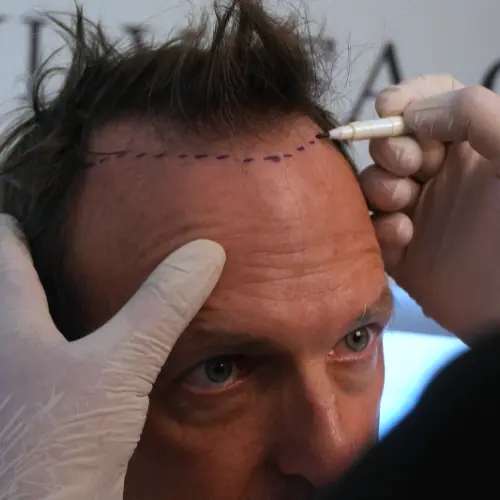
A natural hairline starts with measuring your face, not picking a shape off a screen. Surgeons look at three things before drawing a single line.
Facial symmetry analysis. Your hairline isn't centered on your nose it follows the natural curve of your forehead, browline, and temple points, which are rarely perfectly even. A hairline copied from someone else's face sits wrong on yours, even with identical measurements.
Age-appropriate hairline placement. A hairline that sits where it was at 18 looks wrong on a 40-year-old face proportionally too low and too juvenile. Good planning accounts for your current age and how your hairline is likely to behave over the next 10–15 years, not just how it looks on day one.
Natural hair growth direction. Real hairlines aren't perfectly straight; they have small irregularities a few hairs sitting slightly forward or back of the main line. This is what surgeons call a soft hairline transition, and it's the single biggest difference between a hairline that looks grown and one that looks placed.
This is also where personalized hairline design earns its name the same surgeon should be the one drawing your line and reviewing your photos in advance, not a technician working from a template chosen in a five-minute consultation.
Hairline Restoration vs. Hairline Reconstruction in Turkey: What's the Difference?
Hairline restoration rebuilds a hairline that's receded naturally; hairline reconstruction rebuilds one that's been damaged by scarring, a previous bad transplant, or trauma. The starting point is different, so the planning is different too.
| Hairline Restoration | Hairline Reconstruction | |
| Who it's for | Natural pattern hair loss, receding temples | Repairing scarring, burns, or a botched prior transplant |
| Main challenge | Designing a shape that suits current age and face | Working around scar tissue, damaged donor areas, or unnatural existing grafts |
| Donor planning | Standard donor area assessment | Often needs microscopic donor analysis to find unaffected, healthy follicles |
| Typical sessions | 1 session in most cases | Frequently needs 2 sessions for full correction |
| Risk if poorly planned | Hairline looks too low or too straight | Visible patchiness or mismatched density at the repair zone |
Both natural hairline transplant Turkey cases and reconstruction cases depend on the same core skill: a surgeon who can read your scalp's actual condition, not just follow a standard pattern.
Sapphire FUE vs. DHI: Which Technique Gives a Better Hairline?
For hairline work specifically, DHI tends to give finer control over single-hair placement at the front edge, while Sapphire FUE is faster for covering the denser zones behind it many clinics combine both in the same session.
| Factor | Sapphire FUE | DHI |
| Channel opening | Sapphire blade opens channels before implantation | Pen-style tool opens channel and inserts graft simultaneously |
| Best for | Mid-to-back density, larger sessions | The front hairline row, where angle precision matters most |
| Density control | Good | Excellent — finer control over micro-spacing |
| Speed | Faster for high graft counts | Slower, more time-intensive per graft |
| Scarring | Minimal, tiny round scars | Minimal, even smaller entry points |
| Ideal scenario | Filling crown and mid-scalp | Designing the natural-looking front line |
Neither technique fixes a poorly planned shape. The tool matters less than the hand and eye behind it this is where doctor-led treatment planning makes a measurable difference, since the person drawing the line is also the one deciding, graft by graft, exactly where it lands.
At Istanbul Vita, this planning process is supported by Vita Technique®, a doctor-led approach that begins with microscopic donor analysis rather than a standard template.The donor region is assessed based on the attributes of the grafts, including their thickness, consistency, and pattern of growth, enabling the distribution of various types of grafts into areas of the hairline best suited for each. The finer single-grafts may be used at the front while thicker grafts are placed at the back for a natural progression of density. This technique, when combined with proper design of the hairline and angle planning, hopes to yield results that would be natural not only after growth but also in the long run.
What Separates the Best Hairline Design Clinics in Turkey
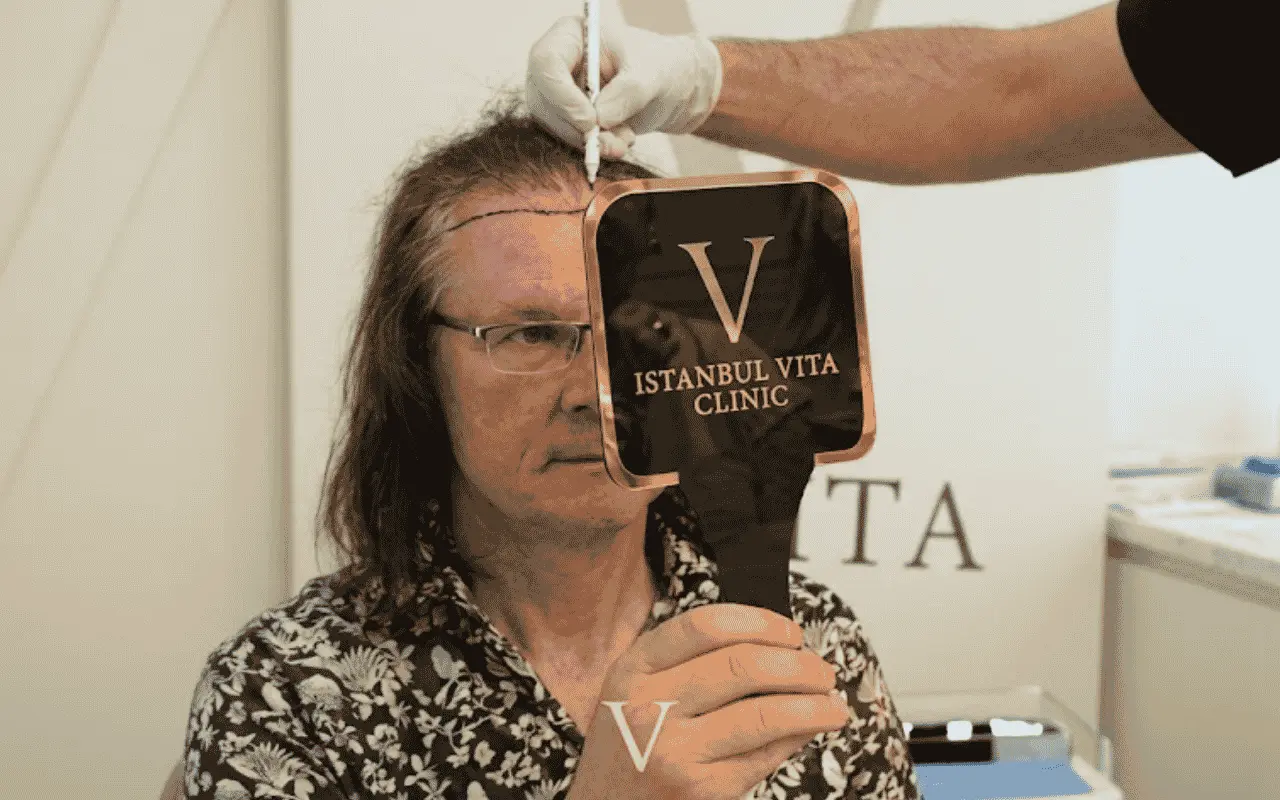
The strongest hairline design Istanbul clinics share three traits: the surgeon plans and reviews every case personally, the clinic limits daily volume instead of maximizing it, and it holds verifiable Turkish medical licensing.
Turkey performs a significant share of the world's hair transplants each year, which is exactly why volume has become a quiet quality risk. Some clinics run six, eight, even ten procedures a day across multiple operating rooms, with technicians not the doctor drawing the hairline and placing grafts.
A boutique model, by contrast, runs one to three procedures per day, which means the surgeon is actually present for hairline design and the bulk of the implantation, not just the consultation photo. Istanbul Vita follows this model, combining doctor-led treatment planning with Vita Technique®, a microscopic donor analysis approach that evaluates follicle characteristics before extraction even begins. In addition to all that, graft selection can now be carried out based on the graft size, texture, and type of growth, contributing to more tailored planning of the hairline formation, especially in difficult reconstructive cases or individuals having donor limitations. Moreover, the clinic is duly accredited by the Ministry of Health in Turkey, is certified with an International Health Tourism Authorization certificate, and offers multilingual assistance to the patients.
Licensing is the other thing worth checking before you book anything. A legitimate clinic treating international patients should hold:
- Authorization from the Turkish Ministry of Health
- An International Health Tourism Authorization Certificate, which specifically covers treating foreign patients
- Multilingual patient support, so nothing gets lost between your consultation and your aftercare instructions
A clinic that won't show you its license or its surgeon's actual caseload is telling you something about how it operates. None of these guarantee a perfect hairline on their own.
Hairline Design Cost in Turkey in 2026
Hairline design is not usually priced as a separate service. Instead, it forms part of the overall hair transplant package. In Turkey, comprehensive treatment packages generally remain significantly more affordable than those in the United States or the United Kingdom, even when using comparable techniques.
| Region | Typical Cost Range (2026) | What's Usually Included |
| Turkey | $2,300 – $4,600 | Surgery, hotel accommodation, VIP transfers, interpreter support, and post-operative aftercare (package contents may vary) |
| United Kingdom | $6,900 – $15,000 | Surgery only; accommodation and travel are usually extra |
| United States | $10,000 – $20,000 | Surgery only; accommodation and travel are usually extra |
The price difference is not necessarily a reflection of lower-quality care. Rather, it is largely driven by lower operating costs, staffing costs, and Turkey's well-established medical tourism infrastructure. That said, the lowest quote is rarely the best indicator of value. Packages priced significantly below the market average may reflect higher daily patient volumes or limited surgeon involvement rather than a genuine bargain.
In the process of comparison, do not only focus on the quote. Ask yourself whether it covers consultation, hairline design according to your needs, accommodation, airport transfer, medication and post-treatment products and follow-up visits. Most reliable Turkish clinics provide all-inclusive package services just to facilitate the procedure for foreign clients, so always insist on getting an itemized quote prior to comparison.
Before You Book: What Actually Matters
A natural hairline comes down to three things repeating throughout this guide: the surgeon plans it personally, the design accounts for your specific face and age, and the clinic can prove its licensing and caseload. Price and graft count matter far less than people assume going in.
If you're still gathering opinions, that's a reasonable place to be this is a decision worth getting right the first time rather than fixing later. Istanbul Vita offers a free consultation where a doctor reviews your hairline, face shape, and donor area directly, with more than 15 years of clinical experience behind the planning and no pressure to book on the spot. It's a useful next step whether or not you end up choosing us a second opinion on your hairline design costs nothing and tells you a lot.
How Hairline Design Is Planned at Istanbul Vita
At Istanbul Vita, hairline design is never based on a standard template. Every treatment begins with a doctor-led assessment of the patient's facial proportions, hair loss pattern, and long-term expectations. As part of Vita Technique®, a microscopic donor analysis is performed to evaluate graft characteristics such as thickness, texture, and growth pattern before extraction. This allows finer single-hair grafts to be selected for the front edge of the hairline, while stronger grafts can be distributed behind them to create a natural density transition. With a boutique model limited to one to three procedures per day, the doctor remains directly involved in both the planning process and the critical stages of implantation. Backed by more than 15 years of experience, a license from the Turkish Ministry of Health, and an International Health Tourism Authorization Certificate, Istanbul Vita combines personalized planning with internationally recognized standards of patient care for natural-looking hairline results.
Have Questions? Let's Chat on WhatsApp!
Get instant answers 24/7. Receive your doctor-led hair analysis within 1 day, plus pricing and booking support.
Start WhatsApp ChatFrequently Asked Questions (FAQ)
Does Hairline Design Come at Additional Cost While Having a Hair Transplant?
Yes, usually hairline design is covered by the hair transplant itself, therefore, there is no additional charge.
Can I Have My Hairline Lowered Through Hair Transplantation?
Yes, but only if it is right for your face measurements and quantity of your donor hair.
Which Method Would Be Best for Hairline Design – DHI or Sapphire FUE?
That would depend on your personal preferences; DHI is better for hairline design, while Sapphire FUE is more common to add density behind the hairline.
When Will I See the Final Results of My Hairline Design?
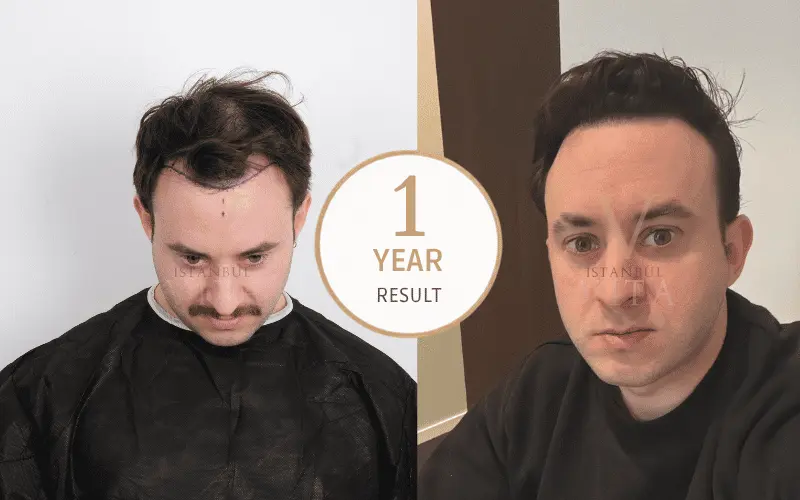
The final results are seen by most patients within 12 months after the surgery, yet hairline may continue growing further.
Which Things Should I Pay Attention To When Picking Hairline Design Clinics in Turkey?
Clinics with doctor-oriented hairline design, licensed medically, providing you with an individual treatment plan.
 conversation


