
 English
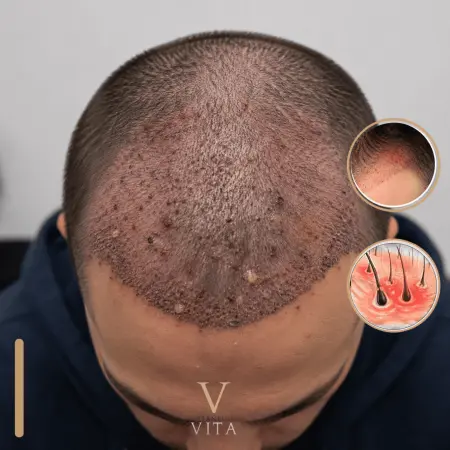
Table of Contents
After doing a hair transplant surgery redness, swelling, scabs, and itching on your head are the normal symptoms. But how can you tell if something is wrong? Hair transplant infections are very rare but knowing the early warning signs can help you to protect your graft and avoid other problems. Here is the explanation of what is normal during healing, what signs need medical attention and how good hygiene can lower the risk of infections. This guide breaks down how common infection actually is, what warning signs matter, and what separates a clinic with real surgical hygiene standards from one cutting corners.
How Common Is Hair Transplant Infection?
Hair transplant surgery is considered a minimally invasive procedure and when it is performed by a qualified surgical team under the sterile environment then the infection rates are low. Generally it is cited at one percent in the clinical literature. Both the donor site and the recipient site involve thousands of tiny incisions so the scalp is briefly more vulnerable than intact skin but the wounds themselves are small and shallow which limits how deeply the bacteria can penetrate.
Most of the complications that patients mistake for infection are actually the normal part of wound healing and these are crust formation, mild scab or temporary itching. The genuine infection after FUE hair transplant or DHI hair transplant procedures is very uncommon precisely because both the techniques avoid large open balance. The clinics that followed the strict clinic sterilization propose, those who are using a single instrument and maintain a controlled surgical environment can reduce that already small risk even further.
Signs of Hair Transplant Infection You Shouldn't Ignore
Knowing the real hair transplant infection symptoms will help you to act quickly instead of panicking over the normal healing. You just have to make sure to watch for a combination of these signs rather than just one in isolation:
- Pus or cloudy discharge from the recipient or donor area
- Increasing pain that gets worse instead of better after day 3–4
- Spreading redness that extends beyond the treated area
- Warmth and firm swelling that doesn't subside
- Fever or a general feeling of being unwell
- A foul odor coming from the scalp
An infected hair transplant is a medical situation, not something to self-diagnose from a search engine. If several of these symptoms appear together, contact your surgeon rather than waiting to see if it resolves on its own.
Normal Healing vs Infection After Hair Transplant
Most of what alarms new patients is actually the scalp doing exactly what it should. Here's a side-by-side look at what to expect during hair transplant healing versus what points toward a genuine problem.
| Symptom | Normal Healing | Possible Infection |
| Redness | Mild, fades within days | Spreading, worsening, warm to touch |
| Swelling | Peaks around day 2–3, then improves | Increases after day 4, firm and painful |
| Scabs / crusting | Expected, sheds naturally by week 2 | Thick, yellow crust with discharge underneath |
| Discharge | None, or minimal clear fluid | Pus, cloudy or foul-smelling fluid |
| Pain | Mild, decreases daily | Sharp, throbbing, or worsening |
| Fever | Absent | Present, often with chills |
How to Prevent Hair Transplant Infection
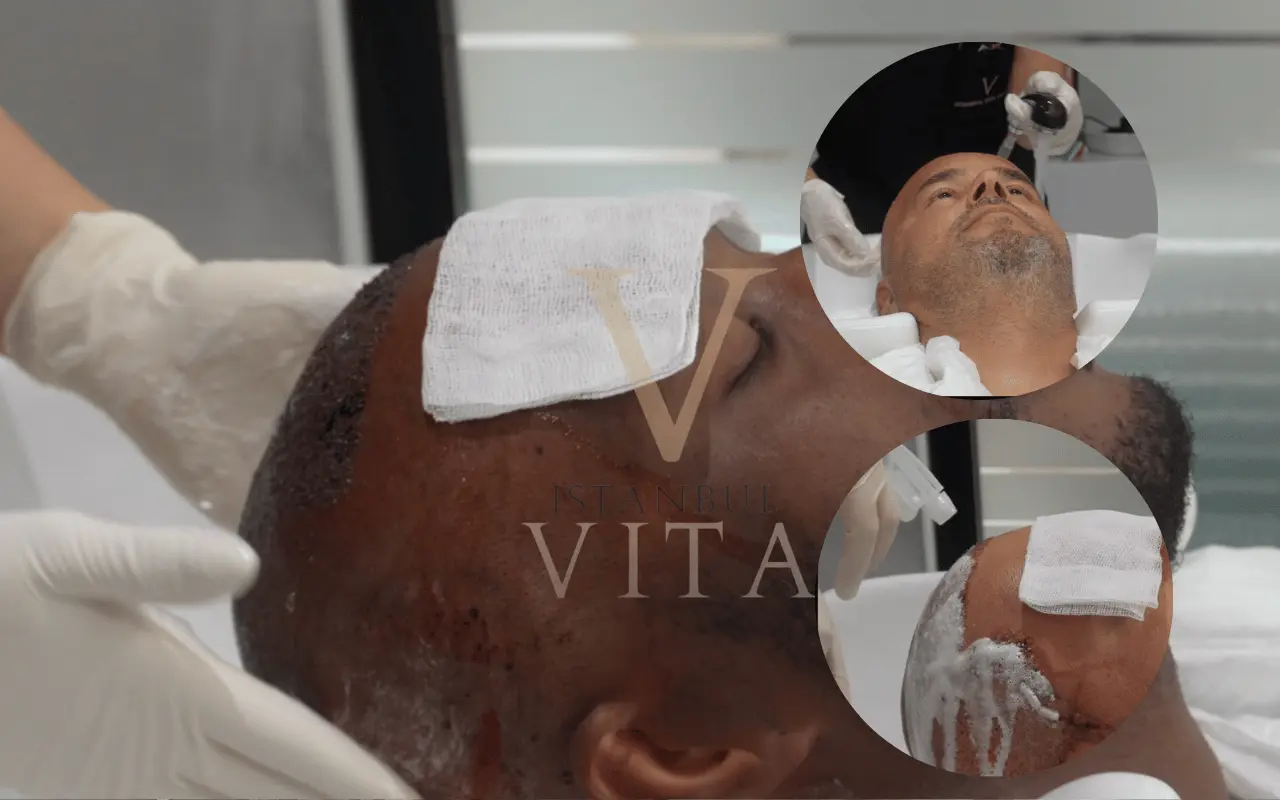
Infection prevention starts before you even sit in the surgical chair and continues for weeks afterward. A few habits are here that can make the biggest difference:
Before Surgery
Before surgery you have to make sure to choose a clinic that can clearly explain everything about surgical protocols like what sterile instruments they are using, if they are using single use needles and also check if they have properly equipped operating rooms. Also make sure to disclose your full medical history including any condition that can affect wound healing or immune response.
During the First Week
Make sure not to touch the grafts unnecessarily, follow the prescribed cleaning routine exactly the doctors provided, and don't skip antibiotic ointment or antibiotics after hair transplant if your surgeon has prescribed them. These are not the optional extras but they're part of the protocol that keeps graft survival rates high.
Ongoing Hygiene
Keep pillowcases and towels clean, avoid unwashed hands near the scalp, and steer clear of pools, saunas, and dusty or unclean environments until your surgeon clears you.
Hair Transplant Aftercare Tips for Faster Healing
Good aftercare does double duty — it protects against infection and supports better graft survival. Some of the most important habits include:
- Washing hair after hair transplant: Most clinics recommend a gentle, surgeon-approved washing routine starting around day 2–4, using lukewarm water and light, dabbing motions rather than direct pressure.
- Sleeping position: Sleeping slightly elevated for the first several nights reduces swelling.
- Sun and sweat: Avoid direct sun exposure and heavy exercise for at least 10–14 days.
- No scratching: Itching is common as follicular units settle, but scratching can dislodge grafts or introduce bacteria.
- Follow-up contact: Keep in touch with your clinic during the healing window rather than waiting until your next scheduled visit.
When Should You Contact Your Surgeon?
If you notice increasing pain after day 4 of you have pus, fever, spreading redness, or swelling that gets worse instead of improving, then you must have o contact your clinic as soon as possible. Sending a quick message or photo to your doctor is always better than waiting. A reliable clinic will expect these updates and support you during your recovery.
Does FUE Have a Lower Infection Risk?
FUE Follicular Unit Extraction and DHI both involve small, individual incisions rather than the linear strip removal that used in older FUT techniques. This generally means less exposed tissue and a lower theoretical infection risk. That said, the technique matters less than execution and a poorly managed FUE procedure in an unsterile setting can carry more risk as compared to a carefully performed procedure using any technique. The clinic's standards matter more than the method's name.
Have Questions? Let's Chat on WhatsApp!
Get instant answers 24/7. Receive your doctor-led hair analysis within 1 day, plus pricing and booking support.
Start WhatsApp ChatCan Poor Hygiene Affect Hair Transplant Results?
Yes, significantly. Bacterial infection in the days after surgery can damage follicular units before they've had a chance to establish blood supply, directly lowering graft survival and leaving patchy results. This is one of the strongest arguments for choosing a clinic based on documented sterilization practices rather than price alone — the cost of a poorly managed infection, in both results and health, far outweighs any savings.
Turkey vs USA/UK: What Patients Should Know About Clinic Standards
Medical tourism has made Turkiye one of the most searched destinations for the hair restoration and the reputable Turkish clinic that established the name like the Istanbul Vita to operate with the same sterile surgical standards that are expected in US or UK with accredited facilities, licensed medical staff and standardized aftercare protocols. The key for any patient regardless of destination is verifying the credentials directly like asking about the surgeon's qualification, request to see the facilities sterilization certifications and also read verified patient reviews rather than relying on the marketing alone. The distance from home does not have to mean at safety standards but it does mean doing the homework before booking
The Bottom Line
The good news is that most of the patients never experience a hair transplant infection. Choosing an experienced surgeon, also following your aftercare instruction, recognizing the early warning signs are all the things that are needed. A hair transplant is a safe, well established procedure when it is performed by the qualified team with the pepper sterilized environment then the infection remaining of its least common complication. Knowing what normal healing looks like and what genuinely warrants a call to your surgeon puts you in control of your recovery instead of guessing every scab or twinge. If you are evaluating the clinics then ask directly about their sterilization standards and aftercare support. And it is one of the clearest indicators of how the results
Frequently Asked Questions
Can a hair transplant get infected?
Yes, though it's uncommon. Because the procedure creates thousands of tiny incisions, there's always some infection risk, but with proper surgical hygiene and aftercare, rates stay below 1% in most clinical settings.
How common is hair transplant infection?
Infection is rare that is generally under 1% when the procedure is performed in a sterile environment with proper postoperative care.
What are the first signs of hair transplant infection?
Early signs include increasing pain after day 3–4, spreading redness, pus or cloudy discharge, and unusual warmth around the treated area.
Is redness normal after a hair transplant?
After the hair restoration process the mild redness is completely normal for the first several days. It will become concerning only if it spreads, intensifies, or is accompanied by warmth and pain.
Is pus normal after a hair transplant?
No. Pus or cloudy, foul-smelling discharge is not a normal part of healing and should be reported to your surgeon right away.
 conversation


