
 English
Table of Contents
One of the major reasons why people go to Turkey for hair transplants is the low cost involved; however, there are many other reasons. Some of the reasons why Turkey has gained popularity as a destination are:
- Hair transplant procedures conducted daily by clinics
- Highly advanced surgical facilities
- Travel arrangements made directly by the clinics
- Waiting time shorter than what is experienced in most Western countries
- The medical tourism industry having developed over many years
Convenience is another aspect that has been taken care of. Most of the well-established clinics provide airport transfer, arrange accommodation, employ interpreters and do post operative follow-ups, thus making life easy for Americans visiting for treatment.
How Much Is a Hair Transplant in Turkey?
Most patients' initial questions will be related to the cost of hair transplantation in Turkey.
The ultimate figure is not set. It changes according to various factors such as:
- Number of grafts needed
- Hair transplantation method (FUE, DHI, or Sapphire FUE)
- Condition of the donor area
- Complexity of hairline design
- Experience of the medical staff
- Content of the hair transplantation package
Your Hair Transplant Travel Checklist Before Flying to Turkey
Good preparation doesn't start the day you land. It starts weeks in advance.
Many trustworthy clinics will ask for scalp photos before you even arrive, simply because the doctor needs a clear picture of:
- Where the hair loss currently stands
- How dense the donor area is
- The overall texture and characteristics of your hair
- How many grafts the plan calls for
- What kind of coverage is realistic
With this information in hand, a proper treatment plan can be built before you ever set foot in Turkey.
It's also worth being upfront about any medications you're taking, existing health conditions, or previous hair restoration attempts. This information genuinely shapes the surgical plan.
One small but important tip: build a couple of extra days into your travel schedule after the surgery. It makes the whole recovery process far smoother before heading back to the US.
Choosing the Right Clinic Instead of the Cheapest One
Price will always catch your eye first, but it should never be the deciding factor.
Search "best hair transplant in Turkey" or "best hair transplant clinic in Turkey," and you'll get pages of results. That's a reasonable starting point, but no single ranking fits every patient's situation. What works for someone else might not work for you.
Instead, judge a clinic based on:
- How involved the doctor actually is in planning the procedure
- Their track record with international patients
- What the consultation process actually looks like
- Consistency in before-and-after results
- How clearly they explain their technique
- Whether expectations are realistic, not exaggerated
- The level of support offered after treatment ends
If you have Afro-textured hair, ask who performs the extraction before anything else. Cost, flights and recovery for US patients are covered in our African American hair transplant guide.
What Happens After You Arrive in Turkey?
Most international patients land in Turkey a day before their surgery. That gives the clinic time for a final consultation and any last medical checks.
Every clinic runs this slightly differently, but Turkey hair transplant planning usually covers:
- An in-depth consultation with the doctor
- A full scalp and hair assessment
- Evaluation of the donor zone
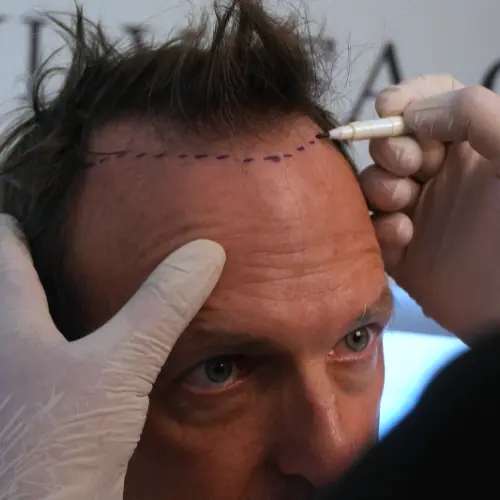
- Hairline design based on facial proportions
- Blood work, if required
- A review of medications and general health status
This visit matters more than most patients realize. An experienced doctor isn't just counting grafts. They're thinking about how to create a natural-looking result while protecting the donor area for years down the line.
For American patients specifically, this kind of individualized planning is one of the biggest advantages of choosing an established clinic.

What Happens During Hair Transplant Surgery?
The procedure itself is done under local anesthesia, so patients stay awake and pain-free the entire time.
Depending on your case, the surgical team may recommend:
- FUE (Follicular Unit Extraction)
- DHI (Direct Hair Implantation)
- Sapphire FUE
Which one fits you best comes down to several factors:
- The type of hair loss you're experiencing
- The quality of your donor hair
- General hair characteristics
- The density you're aiming for
- Your desired hairline shape
Rather than chasing "the best technique" as a general concept, it's far more useful to understand why a specific technique was chosen for your case.
Most sessions run somewhere between six and eight hours, depending on scope.
Patients get breaks throughout the day for meals, hydration, and rest.
Recovery Process
| Recovery Stage | What to Expect |
|---|---|
| Days 1–3 | Some swelling is completely normal, and small scabs will form around the transplanted areas. It's best to avoid touching or scratching the treated area so the newly placed follicles stay protected. |
| Days 4–10 | The clinic usually handles the first hair wash. Scabs gradually soften and flake off on their own. Most people feel ready to return to office work within about a week. |
| Weeks 2–6 | Shedding of the newly transplanted hairs — known as shock loss — is completely normal at this stage. It doesn't mean anything went wrong; the follicles beneath the surface remain healthy and active. |
| Months 3–6 | New growth begins to appear. Early hair often looks thin and sparse before it thickens up over the following months. |
| Months 9–12 | Most patients notice a real, visible improvement in density and overall hair quality by this point. |
| Months 12–18 | Final results become visible as the transplanted hair fully matures and blends naturally with the surrounding hair. |
Have Questions? Let's Chat on WhatsApp!
Get instant answers 24/7. Receive your doctor-led hair analysis within 1 day, plus pricing and booking support.
Start WhatsApp ChatReturning to the United States After Surgery
One real advantage of modern hair transplant techniques is that they don't require a long stay abroad.
Most Americans fly home just two or three days after their procedure, depending on what the clinic recommends.
Before departure, patients should get clear, written guidance on:
- How to sleep during recovery
- Washing the scalp properly
- Medication schedules
- Sun exposure limits
- Physical activity and exercise
- Alcohol consumption
- Smoking
- How to stay in touch with the clinic
Being able to reach the medical team after returning home makes a real difference if questions come up during recovery — and it's something patients consistently value.
Many clinics today, including Istanbul Vita, handle this through remote follow-ups — photos, video calls, and messaging apps — so ongoing guidance doesn't require another trip back to Turkey.
Frequently Asked Questions
Is a hair transplant in Turkey safe for US patients?
Yes, as long as you choose a clinic with genuinely qualified professionals and a solid treatment protocol. Checking credentials matters just as much as comparing prices — sometimes more.
How much is a hair transplant in Turkey for someone traveling from the US?
It depends on the number of grafts needed, the technique used, and what's included in the overall package.
How long should I stay in Turkey after surgery?
Most international patients stay somewhere between two and four days — enough time for the surgery itself, the initial post-op checkup, and medical clearance before heading home.
Will I need to return to Turkey for follow-up appointments?
Usually not. Most clinics offer remote consultations through photos, video, or messaging, which means you can recover comfortably at home while staying connected with your medical team.
When will I see the final results?
New growth typically starts three to four months after surgery. Progress builds gradually from there, with full results visible somewhere between 12 and 18 months.
How do I choose the best hair transplant clinic in Turkey?
Don't let marketing promises do the deciding for you. Look for a clinic that offers a genuinely personalized consultation, a clear explanation of the treatment plan, real doctor involvement throughout the process, and reliable support once treatment is over.
 conversation


