
 English
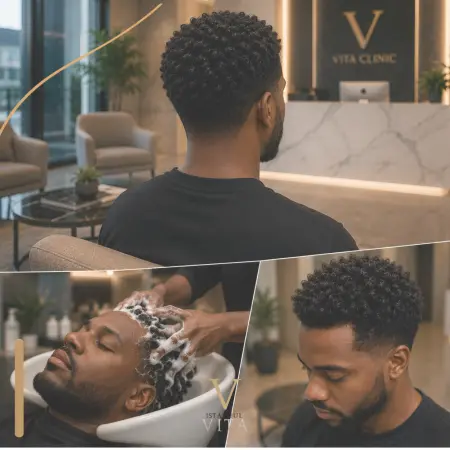
Table of Contents
Grafts holding steady doesn't mean tight braids, a heavy oil blend, or a fresh relaxer touch-up are suddenly fair game. There's a stretch between the early healing weeks and a fully settled scalp where the rules just aren't obvious, and most advice online still fixates on scabs and swelling instead of what to do with curls once that part is behind you. Black hair transplant recovery confusion tends to live right in that gap.
A checklist won't fix it. What helps more is rebuilding a routine around curly, coily, or tightly coiled texture without putting strain on the recipient area. Careful black hair transplant planning before the procedure actually makes this later stretch easier, since a plan built around your curl pattern from day one leaves less guesswork down the line.
None of this replaces what the treating team says. Pace differs person to person. Treat any timing mentioned here as a conversation starter, not a schedule carved in stone. Black hair transplant aftercare, honestly, is as much about staying in touch with your provider as it is about which products sit on the shelf.
How Should You Wash Black Hair After a Hair Transplant?
Washing loosens up once the earliest phase has passed. It moves from a clinical protocol toward something that feels more like a normal routine, just slower and a little more deliberate at first.
Building a Gentle Routine
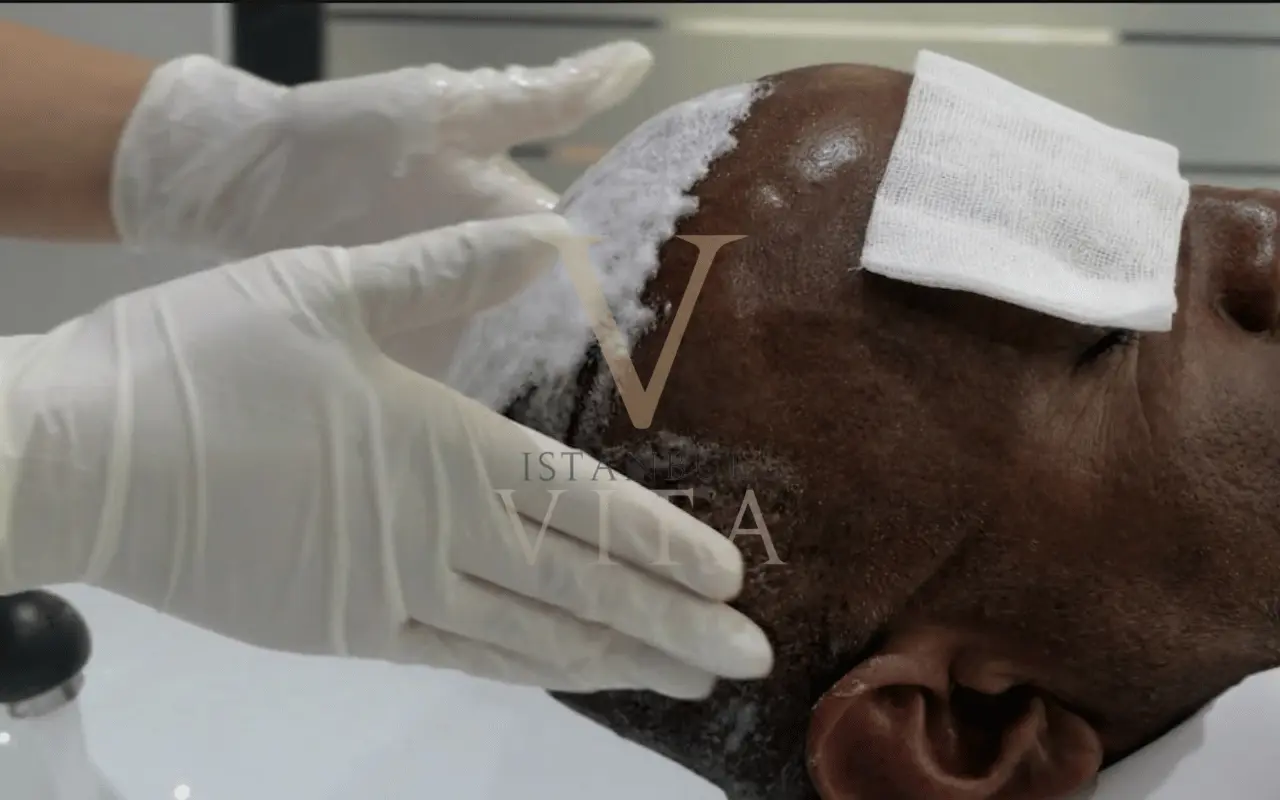
Frequency can increase as comfort improves. Water pressure matters more than people expect, too: a gentle stream avoids the kind of force that irritates a healing zone, while a strong jet straight at the scalp doesn't speed up anything.
Newly emerging strands are fragile. Finer than mature growth, usually. Pulling through knots too fast stresses both the strand and the skin underneath, so working section by section, starting at the ends, cuts that risk without eating up extra time.
Choosing Shampoo Without Buildup
Sulfate-free formulas tend to sit gentler, though "gentle" and "irritation-free" aren't the same thing. Fragrance, certain preservatives, and heavier conditioning agents can all set off sensitivity on treated skin, even under a "natural" or "for sensitive scalps" label.
Buildup is its own problem. Rich conditioners and styling creams linger on the recipient area if rinsing isn't thorough, and that residue can look like dullness or flaking that has nothing to do with actual healing. A clarifying shampoo clears it out, but reaching for one too often strips moisture that curly texture still needs.
How Can You Moisturize Transplanted Coily or Curly Strands?
Coily, tightly coiled texture dries out fast. Moisture isn't optional here. What matters is telling apart moisturizing the strand from loading up the scalp itself, because those are two different jobs.
Leave-In Conditioner and Lightweight Formulas
A lightweight leave-in worked mainly through the lengths, not massaged into the recipient skin, is usually a fine place to start once things feel less reactive. Heavier formulas can wait. Adding one new product at a time, instead of three, makes it much easier to trace the source if something irritates.
Introducing Oils and Curl Creams Gradually
Oils don't influence graft survival. They sit on top of skin and strand, not underneath, which is worth remembering before grabbing a heavier oil purely out of habit. Curl creams, mousses, styling lotions: same rule applies. Apply, wait, watch for redness or discomfort, then decide.
When Can You Return to Braids, Twists, Cornrows or Locs?
No single date works for everyone. Treating one as gospel is exactly where avoidable irritation tends to start.
Tension Over the Recipient Area
Traction, not the style itself, is the real concern. Tight parting, pulling during installation, added extension weight, repeated tension from loc maintenance, all of it places pressure on transplanted follicles even when the style feels fine to wear. Comfortable on day one doesn't mean it isn't tugging at sensitive skin underneath.
Choosing Looser Options During Early Regrowth
Loose twists, lighter extensions, shorter wear periods: these tend to forgive more while things are still settling. Leaving the recipient area itself alone, rather than parting or braiding right over it, usually beats avoiding protective styling altogether.
Take someone who books tight cornrows three weeks post-surgery because the texture finally feels "normal" again. The stylist pulls the parts snug along the hairline, straight across the treated zone, with no idea surgery happened there recently. Nothing goes wrong that day. But the area stays sore for days afterward, and that's a signal, not bad luck.
What Happens to Curl Pattern as Transplanted Growth Develops?
Transplanted follicles carry the same characteristics as the donor site. What shows up in the first few months, though, rarely looks like the eventual result.
Why Early Strands Look Different From the Final Result
Early growth can come in finer, sparser, less defined than expected. Easy to read as a bad sign. It isn't. Curl definition, density, and consistent direction take longer to show than the strands take to grow, and judging final texture off a handful of isolated hairs tends to cause worry that doesn't need to exist.
When Curl Texture Becomes Easier to Judge
Give it time and curl pattern gets easier to read as more strands emerge and lengthen, though exactly when that happens varies by individual. Curious about black hair transplant growth stage by stage?

When Is It Safe to Visit a Barber or Use Heat?
Not every grooming tool carries the same risk. Lumping barber visits in with heat styling under one blanket rule doesn't hold up.
Scissors, Clippers and Close Fades
Scissor trims sit lower on the risk scale than clipper work. A close guard or razor line-up means direct contact and friction across skin that might still be sensitive. Tell the barber exactly where the recipient and donor zones are before any clippers come out. It avoids a mistake that happens more often than people think.
Picture this: someone books a fresh fade a few weeks post-op because the donor zone looks patchy. The barber has no idea surgery happened and plans to run clippers straight across the crown. One heads-up before the appointment changes everything, guard length included.
Blow-Drying, Diffusers and Flat Irons
Cool or low settings, kept at a reasonable distance, forgive more than direct high heat parked on one spot for too long. Flat irons carry more risk simply from sustained contact and temperature. Checking with the treatment provider before returning to regular heat styling is worth that extra step.
Have Questions? Let's Chat on WhatsApp!
Get instant answers 24/7. Receive your doctor-led hair analysis within 1 day, plus pricing and booking support.
Start WhatsApp ChatWhat About Dye, Bleach, Relaxers and Texturizers?
Chemical processing lives in its own category. Separate from washing, separate from styling. It can irritate skin and weaken strands even once the earliest phase is over.
Sensitivity and Patch Testing
Permanent dye, bleach, relaxers, texturizers: all carry a risk of chemical irritation that doesn't vanish just because grafts have settled. Patch testing first, and never stacking more than one chemical process at once, lowers the odds of compounding damage on strands and skin that are still adjusting.
Why Timing Should Be Confirmed With the Medical Team
Healing speed, prior irritation, product strength, all of it shifts the calculation. That's exactly why a blanket waiting period isn't realistic advice for black hair transplant results. Sending current scalp photos to the treatment team before any chemical service beats guessing based on someone else's timeline.
Building a Long-Term Routine
Eventually the short list of restrictions fades into an ordinary routine, just one built with a little more awareness. This is really where black hair transplant recovery stops feeling like a set of rules and starts feeling like your routine again.
Daily and Weekly Habits
Realistic frequency, gentle detangling, sectioning before styling, moisture without heavy buildup, these all carry over from earlier in recovery. A satin bonnet or satin pillowcase at night cuts friction that would otherwise wear on curl definition and on skin still adjusting. Clean tools regularly. Introduce new formulas gradually. Irritation gets less likely once the routine settles in.
Staying in Touch With the Medical Team
Persistent redness, ongoing tenderness, unusual discharge, discomfort after a new product or style: all reasons to reach out rather than sit on it. That contact isn't a sign something's wrong. It's how a good recovery actually gets managed, and it might be the single most useful of all the black hair transplant recovery tips worth remembering. Istanbul Vita's follow-up support exists for exactly this, whether the question comes up in week six or month six.
| Hair-Care Choice | Lower-Risk Approach | What to Avoid |
|---|---|---|
| Washing | Gentle pressure, gradual return to routine | Aggressive scrubbing, frequent clarifying washes |
| Moisturizing | Lightweight leave-in, one product at a time | Heavy oils layered together, untested formulas |
| Protective styles | Loose, low-tension styling, shorter wear | Tight parts or heavy extensions over the recipient area |
| Barber visits | Scissors, informed guard-length clipper work | Close clipper passes without informing the barber |
| Heat | Low or cool settings, brief exposure | Prolonged high heat directly on one section |
| Chemical treatments | Patch testing, medical confirmation first | Combining dye, bleach and relaxer in one session |

FAQ
When can I wash Black hair normally after a hair transplant?
Depends on how the recipient area has healed. A gradual return, gentle at first, easing into a fuller routine, is generally safer than flipping a switch.
Can I use leave-in conditioner on transplanted strands?
Usually, once the scalp feels less reactive. Lightweight formulas applied mostly to the lengths, introduced one at a time, tend to work best.
When can I wear braids after a hair transplant?
No fixed date. Looser, lower-tension styles that skip direct pulling over the recipient area are the safer starting point, and worth confirming with the medical team first.
Can transplanted follicles grow into curls or coils?
Yes. They typically reflect the donor site's characteristics, though early growth often looks finer or less defined before the real curl pattern shows itself.
When can I dye or relax transplanted growth?
Only after patch testing and medical confirmation. Timing shifts with scalp sensitivity and healing progress, not a fixed calendar.
When can I visit a barber after surgery?
Scissor trims are the more forgiving option early on. Clipper work and close fades should wait until the barber knows exactly where the recipient and donor zones sit.
 conversation


