
 English
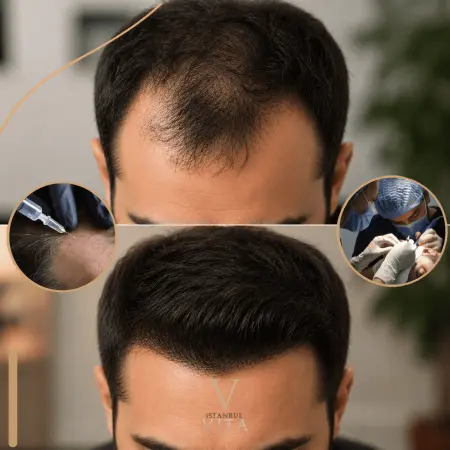
Table of Contents
A receding hairline usually follows a certain pattern that makes it easier to plan for restoration. Yet, in determining if transplantation is right, doctors need to look at more than just the pattern of recession. Other factors, donor hair and future patterns of hair loss, taken into account.
Patients arriving at this stage have typically already worked through the earlier questions:
- whether the hairline is receding or simply maturing
- what's causing it
- whether non-surgical options were worth trying first
What's often missing is a clearer picture of the decisions that shape the surgical outcome itself:
- how a case gets assessed
- why two hairlines that look nearly the same on the surface can lead to two different treatment plans
- what a finished result realistically looks like once the hair has grown in
Hair transplant planning begins long before the operating room, in the questions raised during consultation.
Can a Hair Transplant Restore a Receding Hairline?
Temple recession and frontal thinning tend to respond well to grafting because the border between hair-bearing and hair-losing skin is usually sharp and easy to map. That doesn't mean every case is treated the same way. How much can be restored, and how the new hairline should sit, depends heavily on the donor supply at the back of the scalp and on how far the recession has already progressed.
Two consultations can start with hairlines that appear almost identical and end with entirely different recommendations. One scalp might have thick, resilient donor hair and a pattern of loss that stopped progressing years ago. Another might show early signs that recession is still active, which calls for a more cautious design. Frontal hair restoration is built around what a particular scalp can support, not a fixed formula applied to every receding hairline that walks through the door.
What Doctors Consider Before a Receding Hairline Transplant
A photo rarely tells the whole story. Before any plan is proposed, a few things get looked at closely:
- Existing hair in the frontal zone: how much is worth keeping, and how much should be replaced.
- Donor availability: the density and strength of hair at the back and sides, since it has to cover both the current plan and anything needed years down the line.
- Expected outcome: what a natural, age-appropriate hairline actually looks like for that face, rather than a generic ideal.
- Future hair loss: whether recession is likely to continue, and how the design should account for it.
| Factor Reviewed | What Gets Assessed |
|---|---|
| Donor availability | Density and quality of hair at the back and sides of the scalp |
| Graft requirement | Estimated from the size of the recession and the density needed across the frontal zone |
| Patient expectations | Discussed directly, so the plan stays realistic for the hair and scalp involved |
| Future planning | Factored in early so the design ages well if recession continues |
How Many Grafts Are Usually Needed for a Receding Hairline?
A specific number of grafts will always be needed for hairline restoration, but it varies according to the individual patient's hair loss pattern and donor site. This is determined through an examination of photographs or in-person assessment.
| Situation | Approximate Graft Range |
|---|---|
| Mild frontal recession | 1000–1500 grafts |
| Moderate recession | 1500–2500 grafts |
| Advanced frontal restoration | 2500+ grafts |
These figures shift with how far the hairline has moved back, how wide the affected zone runs, and the density settled on between patient and doctor. A single, low hairline typically needs fewer grafts than a plan that also covers the temples and blends into the mid-scalp. A higher graft count doesn't automatically mean a stronger result, the number only matters in relation to the design it's supporting.
Why Natural Results Require Individual Planning
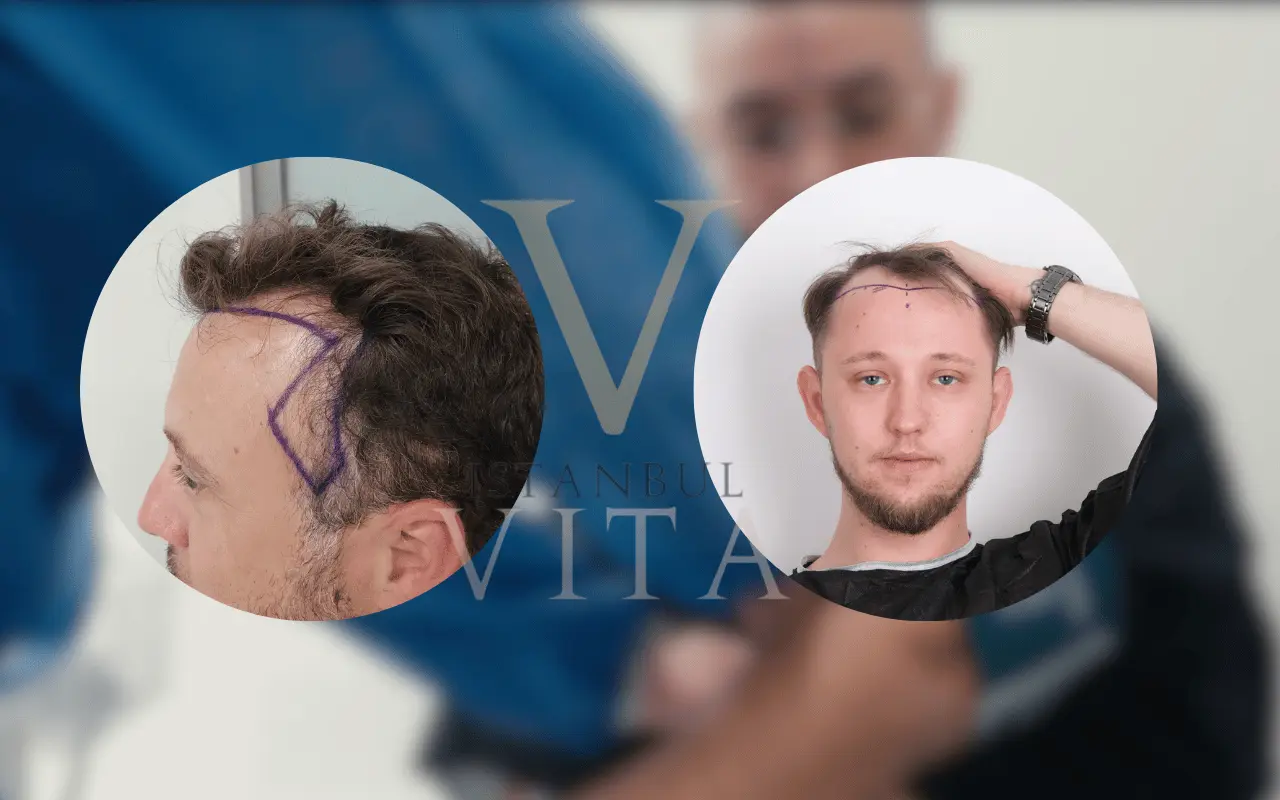
Reference photos come up often in consultations. A patient brings in someone else's before-and-after result and asks for the same thing. The problem is that a convincing hairline on one face can look off on another, since facial proportions, hair texture and the original recession pattern rarely line up between two people.
Copying a template instead of designing around the person sitting in the chair is one of the more common reasons a result ends up looking obviously done. Individual planning accounts for how the hairline frames the face, how density should taper from front to back, and how the whole thing is likely to age over the following years.
Expectations feed directly into this. Asking for an extremely low, ruler-straight hairline might be achievable with enough grafts, but it won't necessarily suit someone's age or bone structure.
| Factor | Realistic Expectation | Unrealistic Expectation |
|---|---|---|
| Hairline position | Matched to age, face shape and long-term stability | Set as low as physically possible |
| Density | Built up naturally, sometimes over more than one session | Maximum density expected instantly |
| Timeline | Improvement visible over 6–12 months, full result later | Finished look within a few weeks |
| Long-term outcome | Planned with possible future loss in mind | Assumed to never change again |
What Results Can Patients Expect After a Receding Hairline Transplant?
Results build up over time rather than appearing all at once. A rough timeline looks like this:
- Weeks 1–2: the transplanted area settles, redness and scabbing fade.
- Months 2–4: shedding of the newly placed hair is normal and expected before regrowth starts.
- Months 5–9: hair thickens, becomes easier to style, and the hairline starts taking its intended shape.
- Months 10–14: density and texture settle into their final form.
The biggest visible change tends to arrive later than most patients expect, which is why comparing early progress photos to someone else's six-month results can be misleading.
Have Questions? Let's Chat on WhatsApp!
Get instant answers 24/7. Receive your doctor-led hair analysis within 1 day, plus pricing and booking support.
Start WhatsApp ChatChoosing a Clinic for Receding Hairline Restoration in Turkey
The number of clinics offering treatment for a receding hairline in Turkey makes the decision harder, not easier. A few things tend to separate a solid choice from a rushed one.
Medical evaluation should happen before anything else gets discussed. A clinic willing to walk through donor capacity, hairline design reasoning and a realistic timeline before travel is offering the kind of detail a decision should actually rest on. Doctor involvement matters too — procedures where a doctor takes part in the key stages, rather than stepping back after the initial marking, tend to allow finer adjustments once the work is underway.
Communication is worth paying attention to as well. A clinic that discusses a specific hairline in detail, instead of repeating the same general script given to everyone, usually reflects how the actual treatment gets handled once dates are booked.
Common Mistakes Patients Make Before a Receding Hairline Transplant
A handful of recurring missteps tend to affect satisfaction more than the surgical technique chosen. Some of the more frequent ones:
- Choosing based on price alone: the lowest quote rarely reflects the planning and doctor involvement a receding hairline case needs.
- Expecting an extremely low hairline: what looks striking in a reference photo may not suit a different face or age once transplanted.
- Ignoring future hair loss: a design that doesn't account for continued recession can look unbalanced within a few years.
- Comparing graft numbers only: a higher count is no guarantee of a better outcome if the distribution doesn't fit the hairline.
Avoiding these usually comes down to one habit: weighing the depth of the evaluation over the speed of the quote when researching a hair transplant for receding temples or any other form of frontal restoration.
Frequently Asked Questions
Is hair transplant in Turkey risky?
Hair transplant surgery in Turkey is not riskier than any other surgery, provided that it is performed by skilled doctors. Selecting the right clinic for your procedure will reduce the risk of complications.
How many grafts are needed for a receding hairline?
The number of grafts in most cases lies between 1000 to 2500 or even more.
What is the best hair transplant technique for receding hairline?
One method does not suit all patients. FUE, Sapphire FUE, or DHI can be used based on the graft type, donor sites, and the plan for hairline reconstruction.
Am I eligible for a hair transplant just for temples?
Yes. Temple hair transplantation may be recommended for some patients who suffer from temple recession. The criteria would be the strength of the donor and stability of the hair loss.
 conversation


