
 English

Afro Hair Transplant Turkey: What International Patients Should Know Before Travelling
Booking a flight for restoration surgery is one decision. Understanding what actually happens between that booking and the recovery photos three months later is another matter entirely, and it's the part most people underestimate. For those with curly or coily hair, the anatomy itself raises a separate set of concerns, but the questions that keep people up at night before departure are rarely about surgical technique. They're about logistics. Timing. What to pack. Who to call if something looks wrong two weeks after landing back home. This piece sets the medical explanations aside, since those live in a more general Afro hair transplant in Turkey resource, and instead walks through the practical decisions a traveller actually faces.
By the time someone reaches this stage of research, the basic question, can this work for tightly curled strands, has usually already been answered elsewhere. What remains is messier: sequencing a trip, judging a provider from a distance, figuring out what "follow-up care" really means once you're back at your own desk job.
The order below roughly mirrors how the process unfolds for most travellers. Early research gives way to a remote consultation. That consultation, assuming it goes well, turns into a conversation about how to choose the right clinic. From there it's travel dates, the operation itself, and finally, the quieter stretch of months after landing home again.
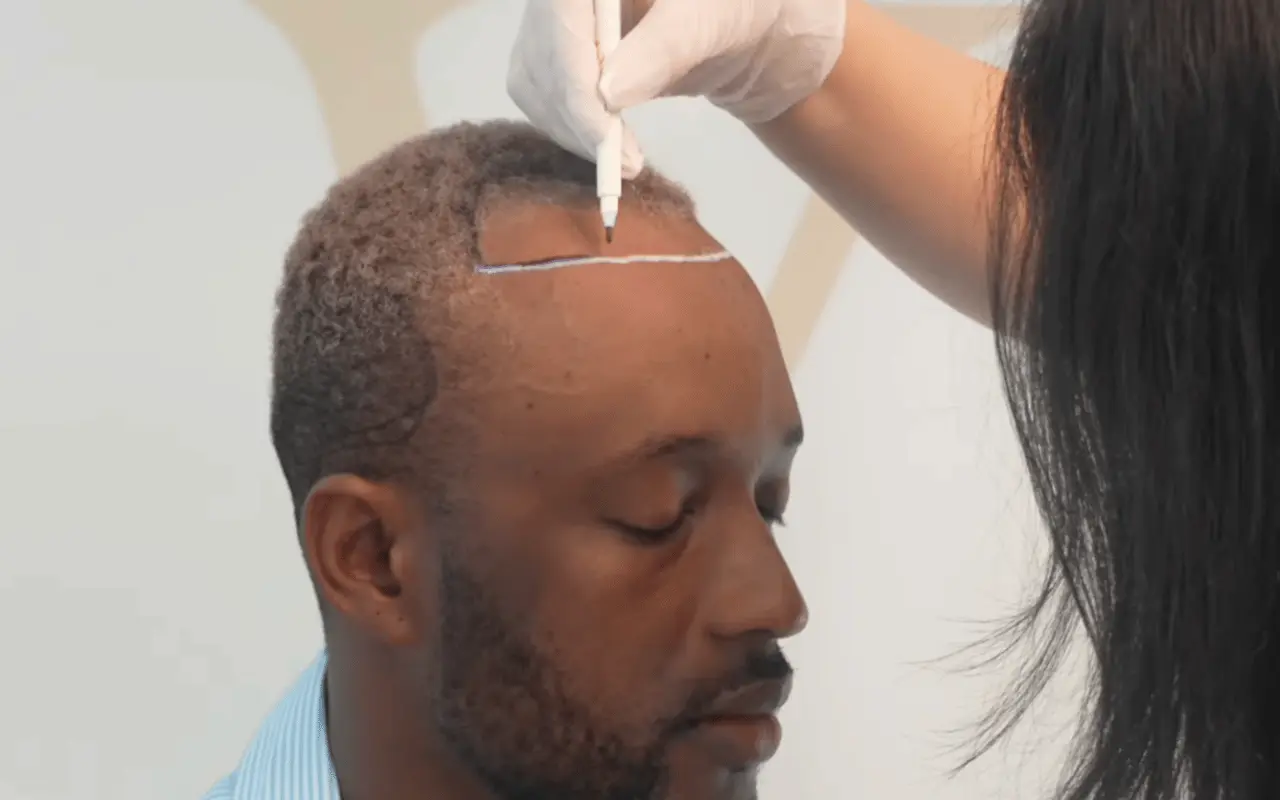
Is Turkey a Good Option for an Afro Hair Transplant?
Turkey's rise as a restoration destination isn't new, though what's changed more recently is the emergence of teams within that broader industry who've built real depth working specifically with textured, tightly curled strands. That's a narrower thing than it sounds. A doctor who has performed thousands of straight-strand procedures hasn't necessarily handled curled follicles at any real scale, and the two aren't interchangeable in terms of technical difficulty.
Cost tends to dominate the conversation whenever Turkey comes up, and understandably so, but price alone tells you little about whether a given team has actually developed judgment around this texture. What matters more is repetition: has this provider seen enough curly-textured cases to have refined how they approach donor assessment and extraction? Beyond the surgical side, there's also the scaffolding around the trip itself, coordinated scheduling, translation where needed, structured communication after the fact, which tends to matter more to first-time medical travellers than people initially expect.
How Does the Afro Hair Transplant Consultation Work Before You Travel?
Nobody boards a flight for this kind of procedure without some form of remote screening first. It's usually a video call, sometimes paired with a written intake form, occasionally both. The purpose is fairly narrow: give a doctor enough visual and historical information to sketch out an initial impression of donor density, the extent of loss, and how the strands curl, before anyone commits time or money to travel.
What Information Is Needed Before Arrival
Photographs do most of the heavy lifting here. Several angles, natural light, both the donor zone at the back and sides and whatever areas have thinned out. Alongside the images comes a history: any scalp conditions, medications currently being taken, prior transplant attempts if there were any. Curl pattern and the thickness of individual strands get noted early too, since those two variables shape, more than almost anything else, how many grafts a given donor area can safely yield.
What this remote step doesn't do is replace an actual physical exam once the patient lands. It exists so that if something looks concerning, thin donor supply, for instance, or a scalp condition that needs addressing first, that conversation happens weeks before departure rather than in a waiting room an ocean away from home.
How Do I Choose an Afro Hair Transplant Clinic in Turkey?
Here's where a lot of research goes wrong. Plenty of providers advertise curly restoration as though it's a simple checkbox added to an existing service menu, without ever explaining what, specifically, changes in their approach for this texture. A short list of direct questions tends to expose the difference fairly quickly:
- How frequently, in real numbers, does this team work with curly or coily strands?
- Can someone on staff explain, in concrete terms, why extracting a curved follicle differs from extracting a straight one?
- Who actually opens the recipient channels, and does a physician have a hand in that stage?
- Given that donor density with this texture often runs lower, what's the specific plan for preserving it?
- How does the team factor curl direction into where and how grafts get placed?
| What to Ask | Why It Matters |
|---|---|
| How often curly-textured cases come through the door | Volume builds the kind of judgment that avoids costly extraction mistakes |
| Whether a doctor handles key stages personally | Channel depth and angle directly affect survival and final direction of growth |
| The specific donor preservation plan | Density often runs differently with this texture, so generic planning falls short |
| Curl-aware implantation methods | Regrowth needs to follow the natural curl, or the result looks inconsistent |
A team with genuine depth in this area won't struggle to answer these with specifics. Vague reassurance, on the other hand, is usually a sign the experience being marketed is thinner than it sounds.
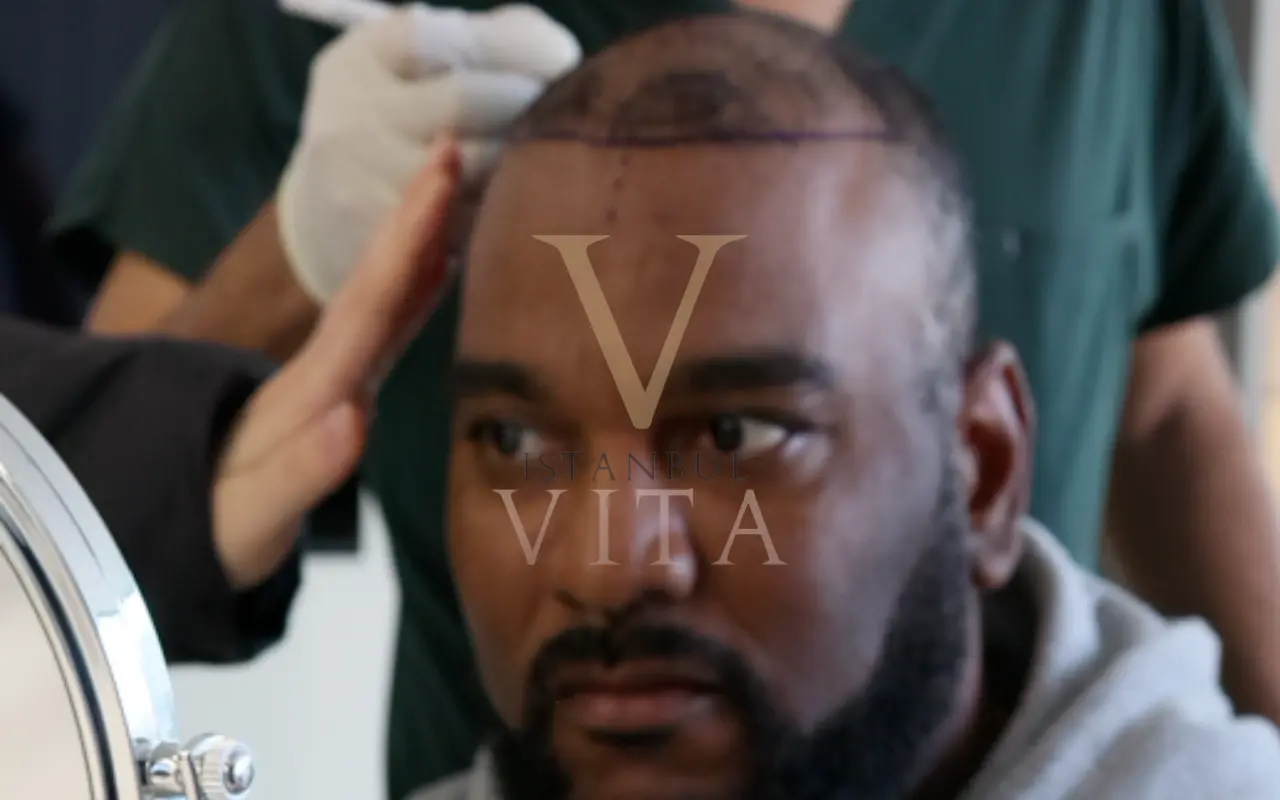
How Long Should I Stay in Turkey After an Afro Hair Transplant?
There's no single correct number here, since the technique chosen and the surgical plan both shift the timeline. That said, a single overnight stop is rarely realistic. Most trips stretch across several days at minimum.
Arrival and Pre-Surgery Assessment
The first day on the ground usually means an in-person consultation, essentially a chance to confirm what the remote assessment suggested weeks earlier, and adjust it if anything looks different up close. Bloodwork happens here too, along with a hands-on scalp exam and the final decisions around hairline shape and graft density.
Surgery Day
One extended session typically covers the procedure itself, though it sometimes stretches across two days depending on how many grafts are involved and which technique is being used. Curled, coiled follicles genuinely take longer to extract per graft than straight strands do; the path beneath the skin curves, and rushing that step raises the risk of damaging follicles during removal.
Recovery Before Flying Home
A brief window, usually a handful of days, gets built into most itineraries before departure. This gives the medical team a chance to check how the scalp is healing, remove any bandaging, and confirm nothing looks off before clearing someone to fly. How long that window needs to be varies from person to person; healing speed isn't identical across patients, and neither is the technique used.
Can I Travel Alone for an Afro Hair Transplant in Turkey?
Solo travel for this kind of procedure is common enough, particularly when the stay is short and airport transfers plus coordinator support are already arranged in advance. Just as often, though, someone brings a companion along, sometimes because English isn't their first language, sometimes simply because recovering from surgery feels easier with a familiar face nearby.
Neither choice carries an inherent advantage over the other. Comfort navigating an unfamiliar city on your own, and confidence communicating through a coordinator, tends to make solo travel workable. Wanting someone there during those first uncertain days of recovery is an equally legitimate reason to bring company instead.
Can I Fly After an Afro Hair Transplant?
The honest answer is: it depends, on how the individual is healing, and on what specific guidance the treating provider gives, rather than any fixed rule that applies across the board. Some providers clear patients to fly within a few days once the scalp's been examined and any bandages removed. Others prefer a longer buffer, largely based on which extraction method was used.
Long flights bring their own complications, extended time seated, cabin pressure changes, so guidance on protecting the healing scalp during travel, how to handle a headrest, which sleeping position to avoid, usually comes up before anyone boards. That advice should come directly from whoever performed the surgery, not from a general assumption picked up online, since recovery pace differs enough from one person to the next that generic timelines can be misleading.
What Happens After I Return Home From an Afro Hair Transplant?
Landing back home doesn't sever the relationship with the medical team, or at least it shouldn't. Most of the genuinely useful follow-up conversations happen in the months after surgery, not during the trip itself, since that's when healing questions actually start surfacing.
Remote Follow-up
Messaging apps and occasional video check-ins tend to carry this part of the relationship forward. Whether it's a coordinator or the treating doctor on the other end, the point is having somewhere to direct questions about scabbing, itching, or shedding, without needing to book another flight just to ask.
Progress Photos
Set intervals, often around one month and again at three months, and sometimes further out still, prompt requests for updated photos. These let the medical team track whether grafts are settling in and growing at a pace that matches expectations for that particular case.
When to Contact the Clinic
Anything that looks unusual, redness that won't calm down, swelling that lingers past what feels normal, any hint of infection, deserves a message right away. Waiting for the next scheduled check-in isn't the move here. A provider worth trusting stays reachable for these concerns no matter how much time has passed since the operation.
What Should I Bring to Turkey for an Afro Hair Transplant?
Beyond the medical planning, a shorter list of practical items tends to make the trip itself run more smoothly:
- A passport with validity that comfortably covers the travel window
- Whatever visa paperwork applies to the traveller's specific nationality
- Accommodation confirmed ahead of time, ideally with some help if the city is unfamiliar
- Airport transfers, which many providers arrange directly as part of the trip
- A reliable way to stay in touch, usually a messaging app already agreed on with the coordinator
Handling these details in advance frees up mental bandwidth for the parts of the trip that actually require attention, adjusting to a new place while preparing, physically and otherwise, for surgery.
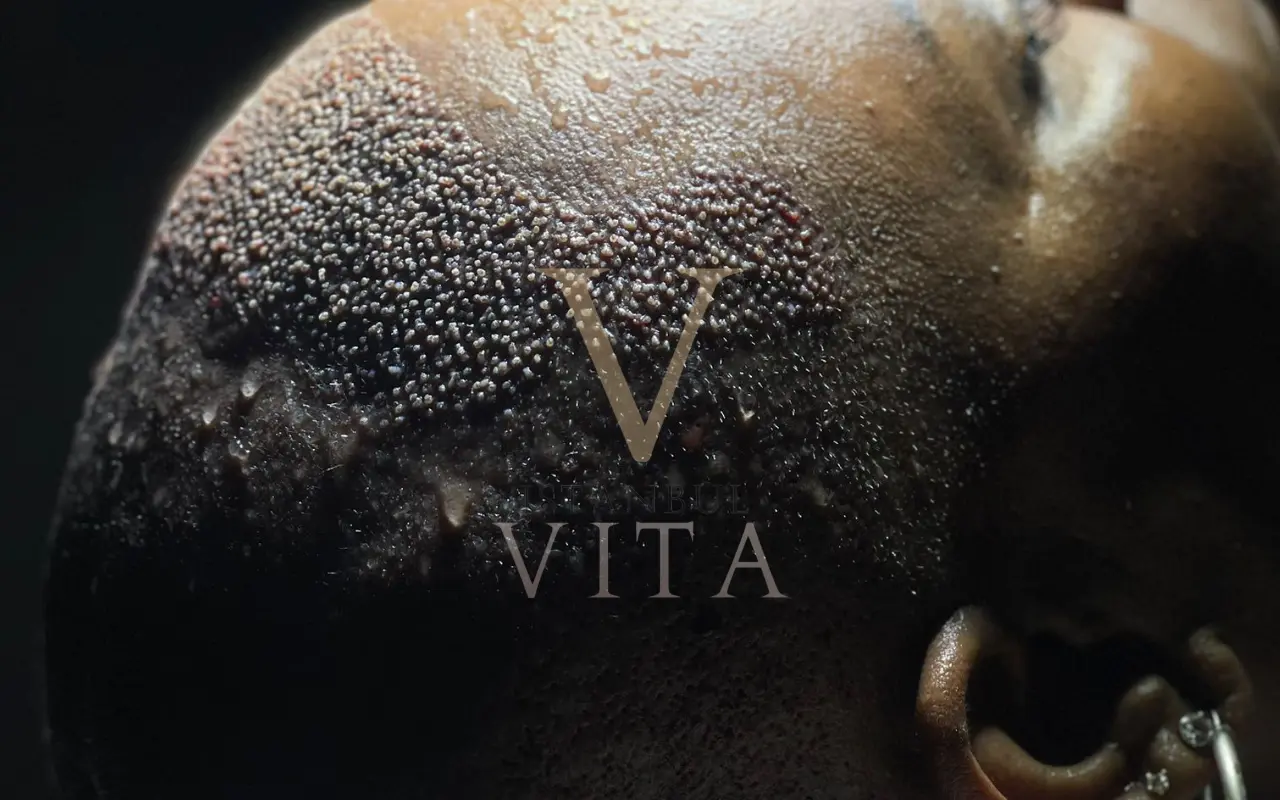
Who Performs Afro Hair Transplant Surgery at Istanbul Vita?
Istanbul Vita's approach to curly and coily cases runs through what the clinic calls the Afro Technique®, a planning method built specifically around how this texture behaves beneath the scalp rather than a generic protocol applied regardless of curl type. It starts before any extraction: microscopic donor analysis maps out follicle curvature, caliber, and density on an individual basis.
Curved follicles carry a higher risk of transection than straight ones do, which is part of why extraction planning here accounts for the angle and depth of each follicle rather than treating the donor area as uniform. Preserving that donor supply gets treated as an ongoing consideration throughout the procedure, not a single calculation made at the outset, particularly relevant given that donor density with this texture often runs more limited to begin with. When it comes time for implantation, curl direction guides placement, so that regrowth follows each patient's natural pattern instead of a default assumption.
Doctors at the clinic remain involved at key surgical stages, channel opening among them, aimed at keeping angle and depth consistent across the recipient area. That doesn't mean every technical task falls to the physician alone, but their involvement in planning and at critical moments in the procedure remains central to how these cases get handled.
None of this gets framed as a guarantee, because it isn't one. Results still depend on donor characteristics, strand caliber, and how an individual's scalp responds to surgery. What individualized planning offers instead is a more considered path through a texture that simply doesn't tolerate one-size-fits-all methods particularly well.
Have Questions? Let's Chat on WhatsApp!
Get instant answers 24/7. Receive your doctor-led hair analysis within 1 day, plus pricing and booking support.
Start WhatsApp ChatAfro Hair Transplant Turkey FAQ
Is Turkey a Good Option for an Afro Hair Transplant?
Turkey's restoration sector is large, and within it, a meaningful segment has genuine experience with curly and coily hair. The country matters less, in practice, than whether a specific provider can point to consistent, hands-on work with this texture.
Can International Patients Complete a Consultation Before Travelling?
Generally, yes. Most providers handling international cases with this texture start with a remote consultation built around photographs and a review of medical history, which helps confirm candidacy before any travel gets booked.
How Long Should a Trip for an Afro Hair Transplant Take?
Several days at minimum tends to be realistic, covering the initial in-person assessment, the surgical procedure itself, and a short recovery check before flying home again.
Can a Patient Travel Alone for This Procedure?
Plenty do, especially when transfers and coordinator support are arranged ahead of time. Others prefer bringing someone for comfort during recovery. Both approaches are common enough that neither should be seen as unusual.
How Soon Can a Patient Fly Home After Surgery?
That comes down to individual healing and the treating provider's specific guidance rather than a fixed rule. A short recovery window before departure is typical, followed by tailored advice on preparing for the flight itself.
How Does Follow-up Work After Returning Home?
Usually through messaging or occasional video check-ins, with progress photos requested at set milestones so the medical team can track healing remotely rather than in person.
What Questions Help Confirm a Clinic's Afro Hair Experience?
Worth asking: how often the team actually works with this texture, who handles donor evaluation and channel opening, and how curl direction shapes implantation planning.
Does Individualized Planning Eliminate Risk?
No, and it shouldn't be sold that way. Individualized planning, including approaches like the Afro Technique®, aims to address the anatomical realities of curly and coily strands more precisely, but the normal risks and variability inherent to any surgery remain in place.

 conversation


