
 English
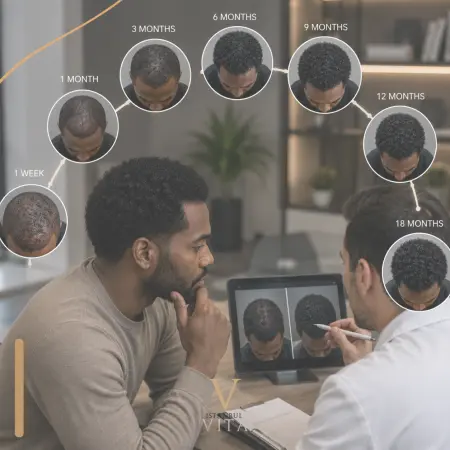
How Progress Really Unfolds After Surgery
Somewhere around week six, a lot of people start doing the same thing: standing under bathroom lighting, tilting their head at angles no mirror was built for, trying to decide whether anything has changed since last week. If that sounds familiar, you're not imagining it, and you're not the only one doing it either.
Nobody really explains this part beforehand. Healing, visible change, texture development, and overall coverage don't move on the same clock. They overlap, but each has its own pace, and that overlap is basically what an afro hair transplant results timeline comes down to. Mixing the stages up is what causes most of the worry people feel somewhere between week two and week nine.
This piece walks through what tends to happen at each stage, from month 1 through month 18, starting with the first days after the procedure and ending at the point things settle into what will likely be the final look. Still deciding whether the procedure itself is right for you? The afro hair transplant Turkey guide covers planning, technique, and candidacy in more depth. Here, though, the focus stays narrow: what changes, when, and whether it's on track.
Four Processes, Four Different Speeds
Picture four separate storylines running at once. The surface settles within a few weeks. New strands often begin forming under the skin long before anything shows. Texture usually arrives last, sometimes months after the first strands appear. Keep these apart mentally and the rest of this guide gets a lot easier to follow.
Month 1: Settling In
What You'll Actually See
Redness fades. Tiny scabs disappear. The donor strip calms down. That's most of what happens visually in the opening stretch. Between roughly the second and fourth week, quite a few people notice some of the newly placed strands falling out. Looks alarming. Usually isn't.
Shedding Isn't a Setback
This shedding, often called shock loss, happens because the follicle enters a resting phase, not because anything failed. The structure stays put under the surface and reactivates weeks later in most cases. What genuinely calls for a message to your clinic looks different: ongoing pain, swelling that won't ease off, or anything resembling infection. Shedding by itself doesn't belong in that group.
Months 2 to 3: The Quiet Stretch Nobody Warns You About
Why the Mirror Looks Unchanged
Weeks five through twelve are, frankly, the hardest stretch for a lot of people. The scalp looks calm. If anything, coverage can seem thinner than it did right after the procedure. There's little to point to, and that absence of visible change is exactly what makes this window feel so unsettling.
What's Building Beneath the Surface
Something is happening, though. Newly forming strands enter an early cycle even though nothing shows on top yet. This is the period where the biological groundwork for everything that follows gets laid down. Frustrating to sit through. Also completely expected.
Month 4: The First Real Signs of Change
Active Underneath, Quiet on Top
By around the sixteen-week mark, fine, sparse strands start appearing, easy to miss unless you're looking closely under good light. Activity under the surface and what's actually visible start pulling apart here, in a way that surprises a lot of people. A follicle can already be producing material well before that material becomes obvious to the eye.
Why the Pattern Isn't There Yet
One thing that catches people with tightly coiled backgrounds off guard: these early strands often come in straighter or looser than expected. Normal, not a red flag. Coil formation develops as the shaft matures and regains its natural angle, so flat or loose early strands don't mean much on their own.
Months 5 to 6: Coverage Starts to Take Shape
Early Fullness Appears
Things usually start feeling encouraging again around here. Coverage builds, the treated zone looks less sparse, and for a lot of people this marks the first point since surgery where progress genuinely looks like progress. Overall fullness is still far from final, but the direction of travel becomes obvious.
When One Side Looks Ahead of the Other
It's also common for one zone, often the hairline or crown, to seem ahead of the rest. Usually this just reflects ordinary variation in blood supply and individual response, not a problem. Development rarely arrives in even waves across the scalp, and small gaps between zones tend to close as things move along.
Months 7 to 9: The Texture Begins Returning
Why Coils Can Look Loose at First
Here's where things start diverging sharply from what someone with straighter texture would go through. Around this window, the treated area frequently shows hints of its true coil pattern, though it may still look softer or less uniform than the strands around it.
How the Pattern Tightens Over Time
The reason comes down to how closely coil formation is tied to shaft maturity. Tightly coiled structures simply need longer to fully express their geometry after being relocated. As the shaft keeps maturing, the pattern typically tightens up and lines up more closely with everything else on the head. It's one of the clearest ways this process looks different for coily backgrounds compared to straight or wavy ones.
Months 10 to 12: Approaching the One-Year Mark
Where Things Usually Stand by Now
By the ten-to-twelve stretch, there's usually a fairly solid sense of where things are heading, even if the picture isn't complete yet. Fullness keeps building steadily instead of dramatically, and the overall look starts feeling settled instead of transitional.
How Close Is This to the Final Look?
A lot of people feel, around here, like they're looking at something close to the end point. Often accurate. Still, coverage and coil pattern can keep refining themselves a bit further, especially since the underlying cycle for coily backgrounds tends to run longer than average before wrapping up completely.
Months 13 to 18: The Final Stretch of Change
Full Coverage and Settled Texture
This later window is generally where everything reaches its conclusion. Strands have usually thickened, the coil pattern has settled into its true shape, and the treated zone blends closely into everything around it. For most, this marks the final stage, though the exact point still shifts from one person to the next.
What Slows Down or Speeds Up This Stage
A handful of things shape how long this last stretch takes: how many follicular units went in, individual healing response, coil type, donor characteristics, and each person's own biological pace. None of it is something anyone can control directly, and that's exactly why lining your own progress up against someone else's rarely tells the full story.
Have Questions? Let's Chat on WhatsApp!
Get instant answers 24/7. Receive your doctor-led hair analysis within 1 day, plus pricing and booking support.
Start WhatsApp ChatWhen a Check-In With Your Clinic Makes Sense
Ordinary vs. Something to Mention
Most of what feels alarming, shedding, the quiet middle stretch, uneven zones, loose early texture, sits comfortably within the ordinary range. A few things do call for a message, though: swelling or redness that lingers well past what's expected, anything resembling infection, near-zero visible change by the six or seven month point, or a zone that seems entirely inactive rather than simply slower. A quick note to your clinic settles the question either way.
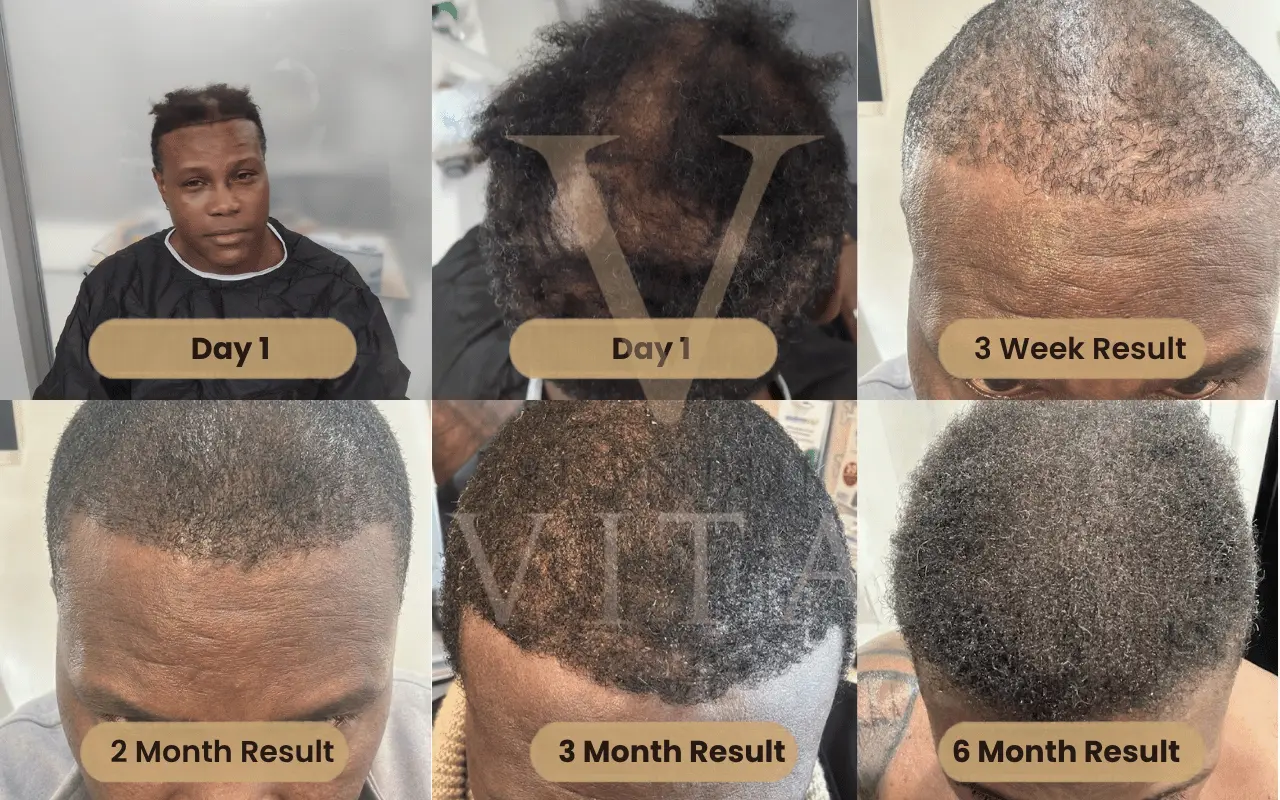
No Two Journeys Match Exactly
What Shifts the Pace
If there's one thing to carry away from all of this, it's that nobody's path looks identical. Coil type, donor strength, unit count, skin characteristics, even general health, all of it can shift how quickly things move. Progress that doesn't line up with someone else's photos at the same point isn't a bad sign. It's simply how this tends to go.
How Istanbul Vita Follows Progress Over Time
Looking Beyond What's Visible
Since results can unfold so differently from one person to the next, ongoing evaluation ends up mattering almost as much as the procedure itself. At Istanbul Vita, follow-up isn't limited to checking whether strands are appearing. Through the Afro Technique®, the clinic's doctors examine unit development on a more detailed level, looking at what's happening under the surface instead of relying only on how things look on top.
That includes treating coil formation as its own milestone, separate from early strand development, since the two rarely move at the same speed for coily backgrounds. Fullness gets tracked across the whole stretch rather than pinned to one single date, and the donor zone gets reviewed alongside the treated area for a fuller sense of how healing is settling in.
No single afro hair transplant results timeline fits everyone the same way. That's really the reason Istanbul Vita builds follow-up around the individual instead of a fixed schedule. Doctors stay involved in judging whether someone's progress fits their own coil type, donor strength, unit count, and healing response, not just measured against a generic template.
If you catch yourself comparing your own progress to someone else's post online, keep this in mind: coil type, donor makeup, unit density, and each person's healing pace all vary, and those differences can genuinely shift how things unfold without anything being wrong.
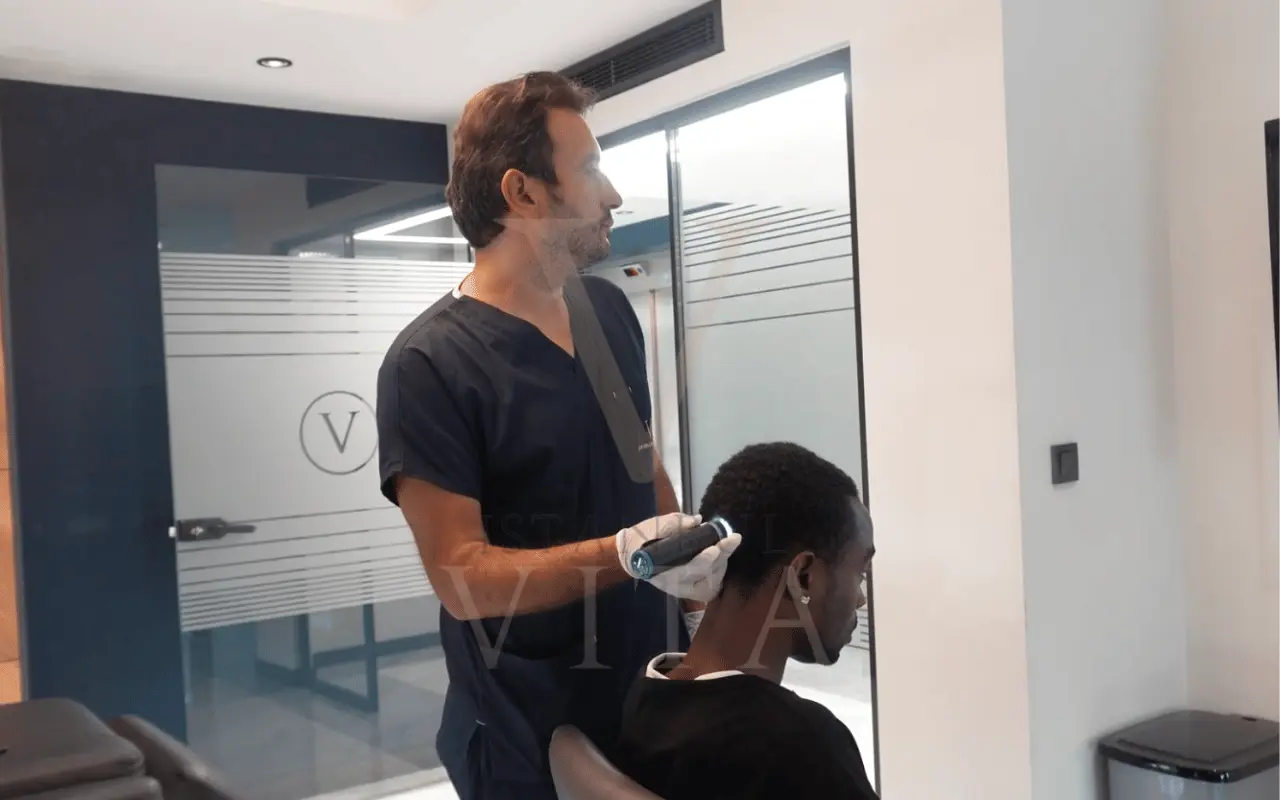
Talk to Someone Who Can Read Your Progress
A few weeks or months into your own journey and unsure whether what you're seeing lines up with where you should be? You don't have to guess alone. Istanbul Vita offers individualized follow-up that takes your own characteristics into account instead of applying a one-size-fits-all schedule. A personalized look can bring real clarity, and often, real peace of mind.
Frequently Asked Questions
How much change should I expect in the first few weeks?
Mostly healing rather than visible change, with some shedding of newly placed strands between weeks two and four being common and not a sign anything failed.
Why does coverage still look thin after a few months?
Follicles are often active under the surface well before anything looks fuller on top, with most people noticing their first real change around the sixteen-week mark.
When does the coil pattern start looking authentic again?
Usually later than the first visible strands, with true texture often emerging somewhere in the seven-to-nine window and continuing to mature well past that point.
Is it normal for one zone to look ahead of another?
Yes, small differences in pace between the hairline, crown, and other treated zones are common and usually just reflect ordinary variation in blood supply.
When should I actually reach out to my clinic?
Worth a message if swelling or redness lingers well past the expected window, anything resembles infection, or a zone looks completely inactive by month six or seven.

 conversation


