
 English
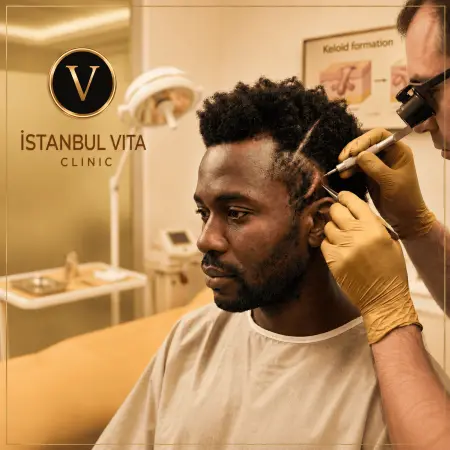
Table of Contents
What Is the Actual Keloid Risk After a Hair Transplant?
Afro hair transplant keloid risk after transplantation afro skin is elevated compared to the general public, but it's not an issue that will prevent one from having surgery.
Those with Afro-textured hair or dark skin have a genetic predisposition to keloids compared to those with light skin tones. The point is that while all members of this particular group won't form keloids, their skin type is predisposed towards doing so under certain conditions.
These include the surgical technique employed, the level of trauma experienced by the skin during surgery, and the level of post-surgical care offered to the scalp area. These factors are all within control through proper preparation and planning.
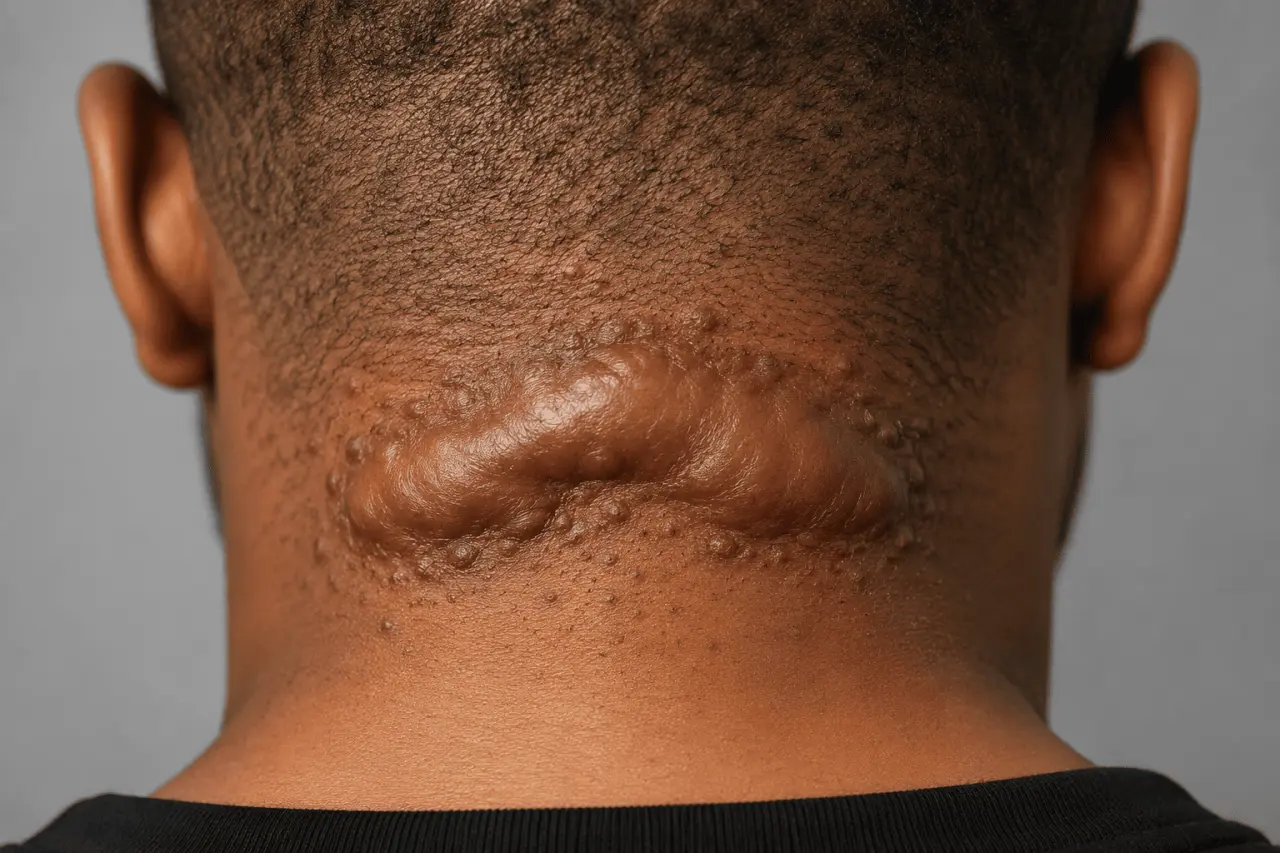
Keloids, unlike scars, extend past the area where the injury occurs and continue to grow even after the surgery is over.
In addition to that, keloids do not heal on their own and can even be itchy or tight, depending on the case. After forming a keloid, it becomes considerably harder to treat it rather than to prevent one.
This is important because the whole process of afro hair transplant keloid risk prevention depends upon that. Knowing ahead of time whether or not one is at risk of developing keloids is neither frightening nor useless.
Hair Transplant Keloid Risk: FUE vs. FUT — Which Is Safer?
The FUE procedure is greatly recommended to people who have a natural disposition to form keloids. Here's why:
In FUT (Follicular Unit Transplantation), a strip of skin is cut out of the scalp area, resulting in a long, linear scar that poses an undue risk for keloids in individuals predisposed genetically towards forming keloids.
In FUE (Follicular Unit Extraction), micro incisions of no more than 1mm in size are made on the scalp region. This makes for less damage to the dermis and a much lesser keloid formation trigger.
| Feature | FUE | FUT |
| Scar type | Tiny circular micro-dots | Long linear scar |
| Keloid risk | Lower | Higher |
| Recommended for keloid-prone skin | Yes | Generally not |
| Healing time | 7–14 days | 3–4 weeks |
| Suitable for fade / shaved styles | Yes | No |
| Visibility if hair is short | Minimal | Significant |
However, one critical consideration to make here is that keloid formations are possible even after FUE procedures.
There are case studies documenting such occurrences, and this is why it cannot be said that technique alone is enough; rather, after-care is equally essential.
5 Risk Factors That Raise Your Keloid Risk Before Surgery
1. Past personal history of keloids.
Should you have keloids previously formed in relation to any piercing, cut, or even previous surgery, then the chances of getting keloids increase significantly.
It doesn't mean that you're unfit for a surgical procedure but means that everything changes from now on.
2. Genetic predisposition
According to a case-control study, having a family history of keloids implies that you're 4.2 times more likely to develop afro hair transplant keloid risk because of your genetic predisposition. It's an unquestionable screening point.
3. History of previous keloids in the scalp.
Keloids are often recurrent and appear again at the same anatomical spot. Therefore, having had keloids on the scalp in the past means increased chances of afro hair transplant keloid risk in the future.
4. Inflammation issues in the scalp.
Acne, folliculitis, and seborrheic dermatitis create a ground for inflammatory response in the area and reduce the healing process chances.
5. Age-related hormone changes.
According to NCBI StatPearls, there's an increase in activity related to keloid formation in puberty and pregnancy.
Have Questions? Let's Chat on WhatsApp!
Get instant answers 24/7. Receive your doctor-led hair analysis within 1 day, plus pricing and booking support.
Start WhatsApp ChatKeloid Prevention: Before, During, and After Surgery
Prevention is not a one-time event. It involves a series of events spanning all three stages.
Before the Procedure
A comprehensive discussion of a patient's skin and family history is critical for afro hair transplant keloid risk.
Moderate to high-risk patients should consider test grafts. Pre-procedural PRP (Platelet-Rich Plasma) treatment is gaining momentum as a tool to prepare the scalp, with a 2025 meta-study showing that PRP contributes to an increase of 25.61 hairs/cm² on average and facilitates post-procedure recovery.
During the Procedure
A smaller punch (preferably 0.75 mm – 0.9 mm) helps avoid excessive trauma to the dermis. Angles and depths of extraction have to be adjusted according to the curved nature of Afro-textured follicles. High graft density needs to be avoided as overcrowding leads to restricted local circulation and hinders recovery.
Post-Procedurally
Here is when most people fall short and also when keloids can be avoided.
| Aftercare Tool | How It Helps | When to Use |
| Silicone gel sheets | Reduces collagen overproduction at wound sites | From 2–3 weeks post-op, ongoing |
| Corticosteroid injections | Flattens early keloid thickening if detected | At first sign of raised scarring |
| Dermatological follow-up | Allows early detection and intervention | 1 month, 3 months, 6 months post-op |
| Wound moisturisation | Prevents dry skin that re-triggers the healing response | Daily from week 2 onward |
| Sun protection on scars | UV exposure darkens scars and extends healing time | First 6–12 months |
Frequently Asked Questions
Can someone who is keloid prone with Afro textured hair be eligible for hair transplant?
Yes. The person cannot be denied access to this surgery due to keloid formation tendency. The surgeon is supposed to be able to make certain considerations while dealing with such individuals.
Have Questions? Let's Chat on WhatsApp!
Get instant answers 24/7. Receive your doctor-led hair analysis within 1 day, plus pricing and booking support.
Start WhatsApp ChatWhat are the reasons for the formation of keloids in patients going through hair transplant?
Keloids can form in an individual because of too much inflammation in the body. Keloids can also be formed because of the scar tissues that are formed after making the incisions during hair transplantation procedure.
What kind of hair transplant surgery is best for keloid patients?
There are those doctors who prefer using the Follicular Unit Extraction compared to Follicular Unit Transplantation.
This is because while performing the first method the surgeon makes several small incisions whereas in the second method he makes one big incision.
What Is a Test Graft? Should I Request One?
Test grafting means that a limited number of grafts will be placed in an inconspicuous location on your body, allowing your skin to heal before deciding on the entire procedure. This method can provide one of the most accurate assessments of your personal risk of developing afro hair transplant keloid risk. If this applies to you or your family, it may be worthwhile to discuss with your surgeon.
 conversation


