
 English

Table of Contents
When Can You Return to Work After an Afro Hair Transplant?
You've booked the days off, maybe told a colleague you're "handling a personal thing," and now the calendar is closing in. The scalp is still tender. Small scabs haven't cleared. And the meeting on your calendar isn't going anywhere.
Return to work after Afro hair transplant is a question most patients start asking before they even leave the clinic, because the honest answer isn't a number you can circle on a calendar. It's shaped by your job, how fast your own body settles, and what's still visible when you walk back into the room.
So instead of a single date, here's how job type, healing stage, and visible signs actually interact and where they don't.
Return-to-Work Timelines by Job Type
A laptop and a desk chair ask almost nothing of a healing scalp. A construction site asks quite a lot.
That gap is really the whole story here. Someone typing emails from a home office is dealing with dust levels close to zero and physical strain close to zero, while someone framing a house is combining sweat, movement, and constant contact with tools and headgear.
| Job Type | Realistic Time Off | Main Reason |
| Remote or work-from-home | 1–3 days | Minimal exposure, full control over environment |
| Office or desk-based | 3–5 days | Manageable swelling, low physical strain |
| Physically demanding work | 10–14 days | Sweating, bending, strain on the treated area |
| Outdoor roles with sun exposure | 10–14 days | UV exposure and heat can irritate the scalp |
| Dusty or contaminated settings | 10–14 days | Debris can settle on newly placed grafts |
| Roles requiring helmets or tight headwear | 14+ days | Pressure and friction on sensitive zones |
Treat this as a starting point, not a schedule. A surgeon who has actually looked at your scalp will always know more than a chart.
Medically Ready vs. Socially Ready to Return
Here's something patients rarely hear before surgery: being allowed to work and wanting to be seen at work are two separate questions.
By day four or five, most people are physically capable of sitting through a normal workday. Redness and a bit of swelling, though, tend to stick around a little longer than people expect, and that's usually the piece that actually delays someone's decision to walk back into an office.
One person shrugs it off and mentions the procedure to whoever asks. Another would rather sit through a client call from home for an extra week than field questions in the hallway. Both are completely reasonable. Your surgeon can tell you when your scalp is ready. Only you know when you are.
Recovery Stage vs. Workplace Considerations
It helps to know roughly what's happening under the surface before deciding how a given week at work is going to feel.
| Recovery Stage | Typical Timing | Workplace Impact |
| Swelling | Days 2–4 | May affect forehead or eye area; visible in person |
| Redness | Days 1–7 | Fades gradually; easy to notice up close |
| Scabbing | Days 5–10 | Present around the treated area; sensitive to touch |
| Sensitivity | Week 1–2 | Discomfort from pressure, headwear, or bumping the area |
| Sweating restrictions | Week 1–2 | Limits gym sessions, manual labor, heat exposure |
| General visibility | Week 1–2 | Gradually less noticeable as scabs clear |
None of this moves at exactly the same pace for every patient. Some people are past the visible stage by day six. Others are still a little pink at day ten.
Returning to Work With Visible Scabs, Swelling or Redness
For a remote job, this barely matters. Nobody on a video call is inspecting your hairline through a webcam.
Office work sits a step above that. Small scabs are usually manageable at a desk, and most coworkers either don't notice or assume it's nothing worth asking about. Client-facing roles are trickier a sales call, a presentation, a first meeting with someone new because appearance carries more weight in those moments, and some patients simply schedule those meetings for a week or two later rather than the first days back.
Physical labor changes the calculation entirely. Scabs that are fine to sit next to in a meeting room are not fine to sweat under a hard hat, so returning to that kind of role while healing is still active tends to cause more problems than it solves.
What's Actually Different for Afro, Curly and Coily Hair
Curl pattern doesn't change how fast a wound closes. A curved follicle heals on the same biological timeline as a straight one the shape underneath the skin isn't the thing slowing anything down.
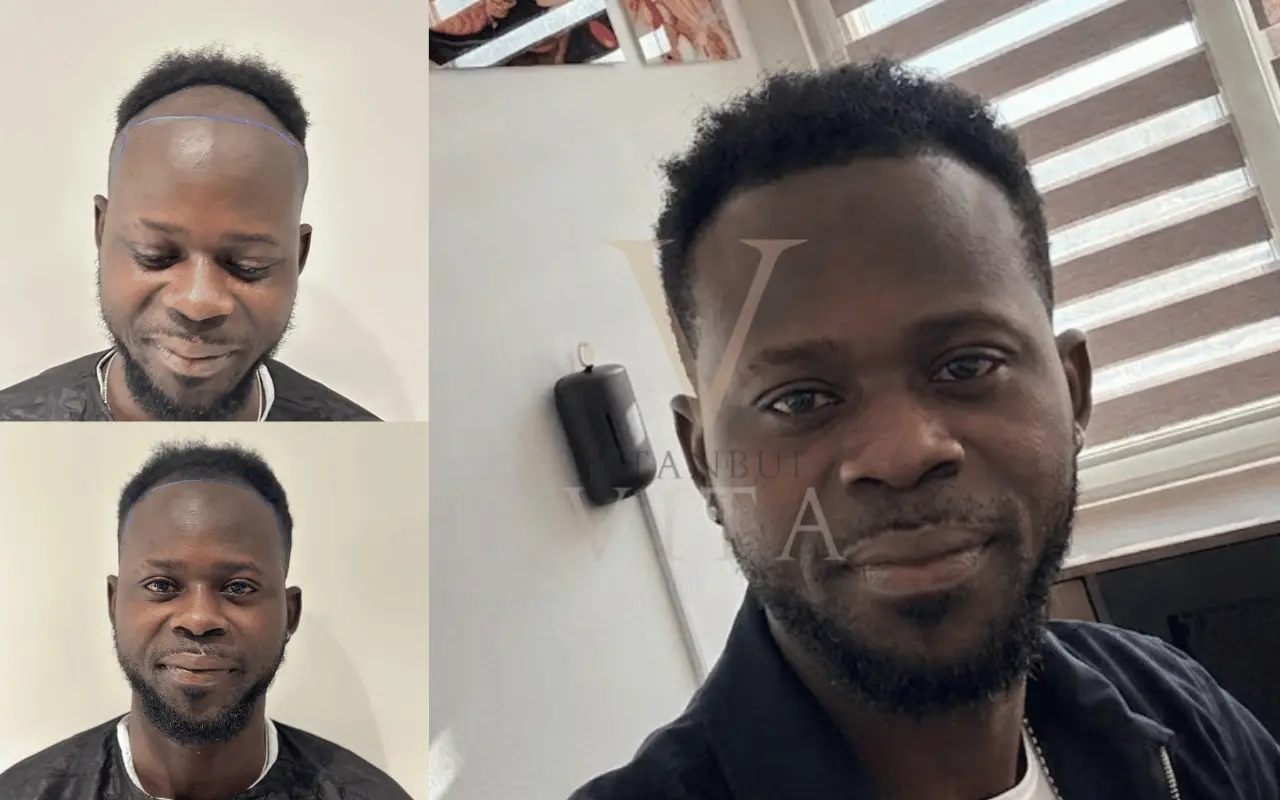
What it does change is what other people can see. Dense, textured strands often sit over the scalp in a way that hides swelling and scabbing better than fine, straight hair would, which quietly works in a lot of patients' favor during the first week or two.
Shaving changes that picture. If part of the donor or recipient area was shaved for the procedure, that section of scalp is more exposed, at least until new growth starts covering it again. How noticeable the recovery looks in an office setting often comes down more to shaving pattern and styling than to curl type itself.
Styling, Protective Styles, and Wigs During Early Recovery
Braids, wigs, tight buns, silk presses a lot of patients want to know how soon they can go back to their usual routine, especially Black women heading back into professional settings where appearance matters to them personally.
The honest answer is that pressure and friction near the treated area are the real concern, not the style itself. Tight braiding or a snug wig cap pressed against a healing scalp isn't a great idea in the first couple of weeks. A looser style, or simply going without added tension for a while, tends to be the safer route until a clinic confirms the area can handle more.
Have Questions? Let's Chat on WhatsApp!
Get instant answers 24/7. Receive your doctor-led hair analysis within 1 day, plus pricing and booking support.
Start WhatsApp ChatSweating, Dust, Sun and Headwear: Workplace Factors That Delay Return
Someone behind a desk is dealing with air conditioning and maybe a coffee spill. Someone on a roof in July is dealing with heat, sweat running down the scalp, and hours of direct sun. Those are not remotely the same recovery environment, even if both people had the identical procedure on the identical day.
Sweat irritates a healing area and raises infection risk, which is one reason gym sessions and manual labor usually wait a week or two. Sun does its own kind of damage a freshly treated scalp isn't ready for hours of UV exposure, so shade, hats cleared by a surgeon, or simply rescheduling outdoor shifts tends to make more sense early on. Dust settles into open skin the same way it settles onto furniture, which is part of why construction and similarly dirty environments sit near the bottom of the "return soon" list.
Hard hats and tight headwear cause more trouble than almost anything else on this list. Constant pressure and trapped heat against new grafts is a rough combination, so jobs that require them often need the longest runway before a safe return.
Planning Your Time Off With Istanbul Vita
At Istanbul Vita, this conversation happens before the procedure, not after because a construction worker and a remote software developer are never going to need the same amount of downtime, and pretending otherwise doesn't help anyone plan their trip properly.
Patients weighing curly and coiled hair transplant in Turkey often bring their job into the very first consultation and that context shapes the aftercare guidance they're given afterward. It's less about a generic printout and more about a plan that matches the actual work someone is going back to.
Frequently Asked Questions
Can I go back to a desk job three days after the procedure?
For a lot of people, yes. Some swelling or redness may still be there, and that's normal.
Is it okay to wear a hat during the first week?
Only if a surgeon has cleared it, and even then, tight or restrictive styles are usually avoided early on.
Does textured or coily hair heal more slowly?
Not biologically. Curl pattern affects how visible things look, not how fast the scalp actually heals.
Can I work from home the next day?
Light desk work, generally fine. Anything involving bending, lifting, or heat should still wait.
How long before physical labor is safe again?
Somewhere around ten to fourteen days for most patients, though a doctor's clearance always comes first.
 conversation


