
 English
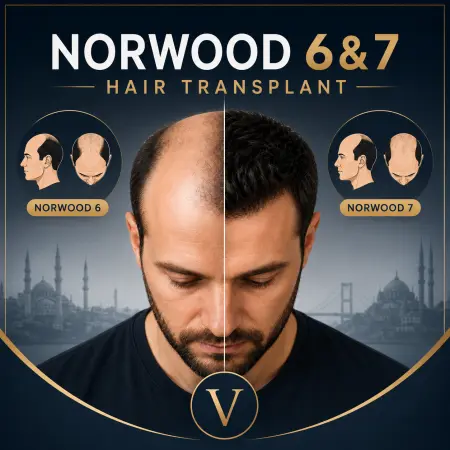
Table of Contents
The hair loss that occurs during Norwood 6 and 7 stages may be quite alarming for most individuals since there will be increased bald patches and the hairline will keep receding. But with the aid of current hair transplant procedures and proper planning methods, even severe hair loss cases can be significantly improved. Knowing the difference between Norwood 6 and 7 is a good start to finding the correct solution.
What Is Norwood 6? Understanding Norwood Scale 6 Hair Loss
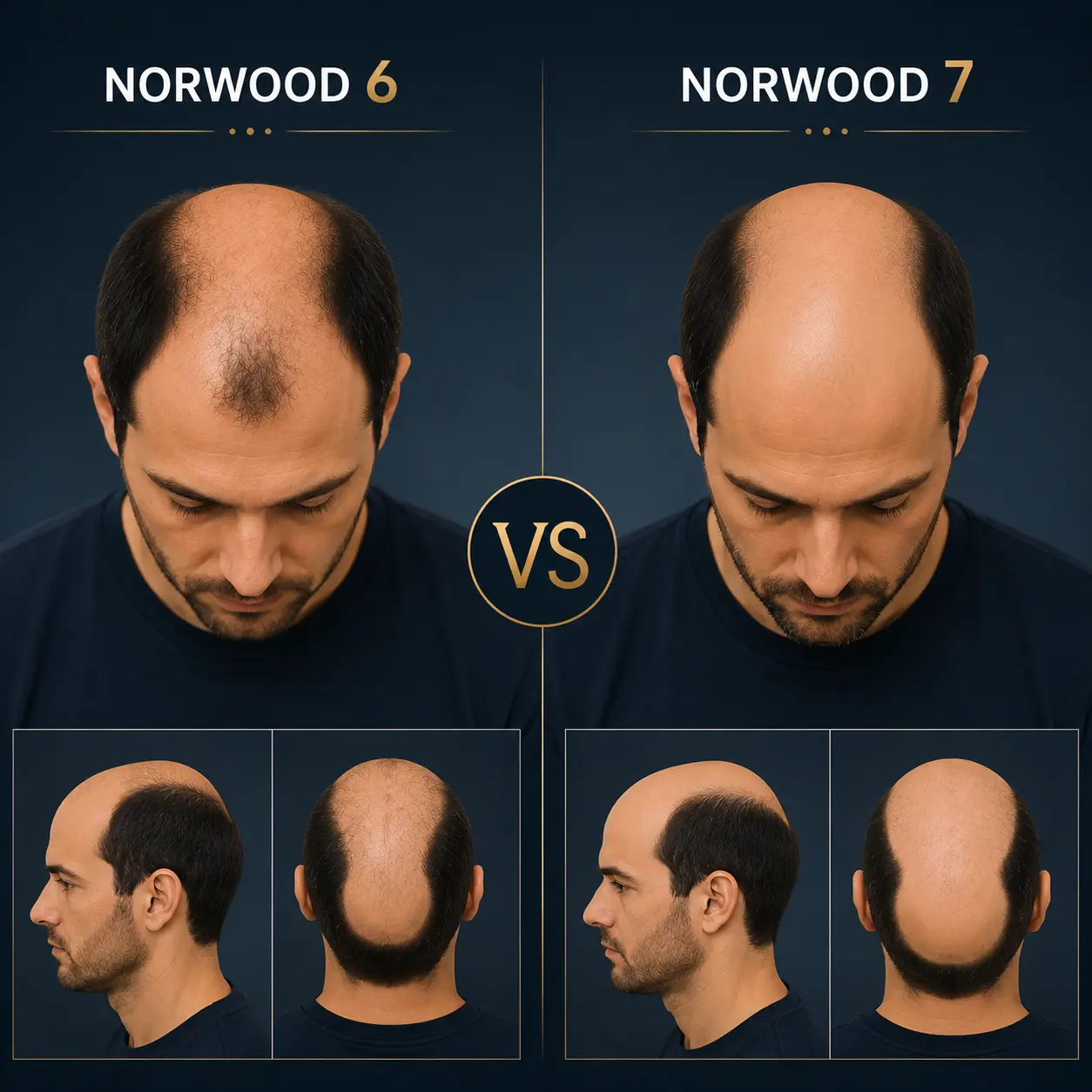
Norwood 6 is regarded as an advanced stage of the Norwood classification system that classifies male pattern baldness. At this stage, the hair loss in the crown region increases significantly, and the strip of hair between the front hairline and the crown disappears. In consequence, only the sides and back of the scalp maintain thick hair growth. Hair loss in the Norwood scale 6 stage is often easily noticed and requires careful planning in order to restore hair properly.
Norwood 6 Hair Loss Pattern and Common Examples
The Norwood 6 hair loss pattern is usually recognized by the large bald area that forms across the top of the scalp. In many Norwood 6 examples, the front hairline and crown region connect completely, leaving only the sides and back with visible hair density. The remaining hair in Norwood 6 hair cases may also become thinner over time, making the overall appearance of hair loss more noticeable.
Norwood 5 vs 6: What Changes at This Stage?
The difference between Norwood 5 vs 6 becomes more noticeable as the hair loss progresses further. In Norwood 5-6 stages, there is still usually a thin strip of hair separating the front hairline from the crown area. However, during Norwood stage 6, this strip disappears completely and the bald areas merge together. The overall hair density also becomes weaker compared to the previous stage.
How to Recognize Norwood Stage 6 Early
Some people might find it hard to recognize their entry into Norwood stage 6 since the process of hair loss is always gradual. One of the key symptoms is thinning hair at the bridge of the hairline and the crown region. As the condition worsens, this section becomes weaker until it vanishes. The presence of more visible scalp skin and less hair density on the scalp is another symptom of Norwood scale 6 hair loss.
What Is Norwood 7? The Most Advanced Stage of Hair Loss
Norwood 7 is considered the most advanced level of male pattern baldness in the Norwood classification system. At this stage, hair loss becomes very extensive, and only a narrow band of hair usually remains on the sides and back of the scalp. The top of the head often loses almost all visible hair density. Norwood 7 hair loss may also affect the donor area quality, which makes proper planning especially important before considering a Norwood 7 hair transplant procedure.
Norwood 7 Hair Loss Pattern and Typical Characteristics
The Norwood 7 hair loss pattern is recognized by severe hair loss across almost the entire top of the scalp. In many cases, the frontal hairline, mid-scalp, and crown area completely merge together, leaving only limited hair on the sides and back of the head. The remaining Norwood 7 hair is usually thinner and weaker compared to the earlier stages. Because of the advanced level of Norwood stage 7 hair loss, donor area management becomes much more important during hair restoration planning.
Norwood 6 vs 7: What Is the Real Difference?
The main distinctions between Norwood 6 and 7 can be observed in terms of the size of the bald patch and the state of the donor hair. Despite being similar in many aspects, Norwood 7 stage is typically more advanced than Norwood 6 and may add certain restrictions to hair transplant procedures. In both cases, donor hair is highly relevant for successful planning of hair transplant treatment.
- In the case of Norwood 6 hair loss, there is a noticeable hair density on the sides and back of the head.
- For Norwood 7, the bald patch gets bigger and the rest of the hair may look weaker.
- Hair transplant procedures for Norwood 6 stage may offer greater coverage than for Norwood 7.
- Hair transplant planning for Norwood 7 stage requires careful consideration of the donor area.
That is why Norwood 6-7 hair loss usually requires individualized treatment planning.
Norwood 7 Hair Loss: Is Restoration Still Possible?
Even though Norwood 7 hair loss is seen as one of the more advanced forms of hair loss, there are patients that still have the chance of hair restoration. Success in a Norwood 7 hair transplant depends on things like donor hair quality, the scalp condition, and the whole treatment plan. However, there are patients that see a change in the way their hair looks just by having limited coverage.
Can You Get a Hair Transplant for Norwood 6 or Norwood 7?
Many individuals can undergo hair transplant procedures in cases of Norwood 6 or Norwood 7 hair loss, but the process is generally more complex than hair transplant procedures performed in earlier stages. The state of the donor site, the number of grafts to be transplanted, and the expectations of the patient become extremely significant at this stage. In many cases of Norwood 6-7 hair transplant treatment, the primary objective is not to achieve high density but rather improved aesthetics and coverage.
Hair Transplant for Norwood 6: Success Rate and Expectations
The effectiveness of a Norwood 6 hair transplant is generally based on variables like the quality of the donor hair, grafting ability, and general planning of the process. Most people with Norwood 6 hair loss have been able to obtain satisfactory hair coverage and natural-looking results from the procedure. But this should be expected realistically because hair loss at an advanced level necessitates a compromise between density and coverage.
Norwood 7 Hair Transplant: Challenges and Possibilities
A hair transplant procedure in Norwood stage 7 is generally regarded as more difficult due to the extensive bald scalp and low amount of hair that can be used as donors. In most cases of Norwood stage 7 hair loss, the remaining hair becomes finer, affecting the entire planning process. Nevertheless, although such factors pose challenges, some people are still able to see positive changes from a Norwood 7 hair transplant.
How Many Grafts for Norwood 6 Hair Transplant?
The number of grafts required in a Norwood 6 hair transplant depends on various factors such as the size of the balding area, donor hair quality, and density desired. Many times, the patients suffering from Norwood 6 hair loss will need to undergo a large number of grafts so as to achieve better coverage.
On average:
• Approximately 4,000-6,000 grafts might be required in a Norwood 6 hair transplant procedure.
• Several sessions might be necessary for some patients depending on the donor availability.
• Density balance is the primary goal in most cases.
Since each Norwood 6 hair transplant is unique, graft planning must always be customized.
How Many Grafts Are Needed for Norwood 7?
A Norwood 7 hair transplant would require more grafts due to the greater extent of baldness and decreased donor hair availability. Due to the fact that achieving full hair density is not always possible in Norwood 7 hair loss, graft planning becomes especially significant in this case.
On average:
• Between 5,000-7,000 grafts can be estimated for some Norwood 7 hair transplant cases.
• Several sessions might be necessary depending on donor hair quality.
• Improvement in appearance is the main purpose of the procedure.
As donor hair shortage is more common among Norwood 7 hair loss cases, individual approaches must be used.
Norwood 6 and 7 Hair Transplant Before and After Results
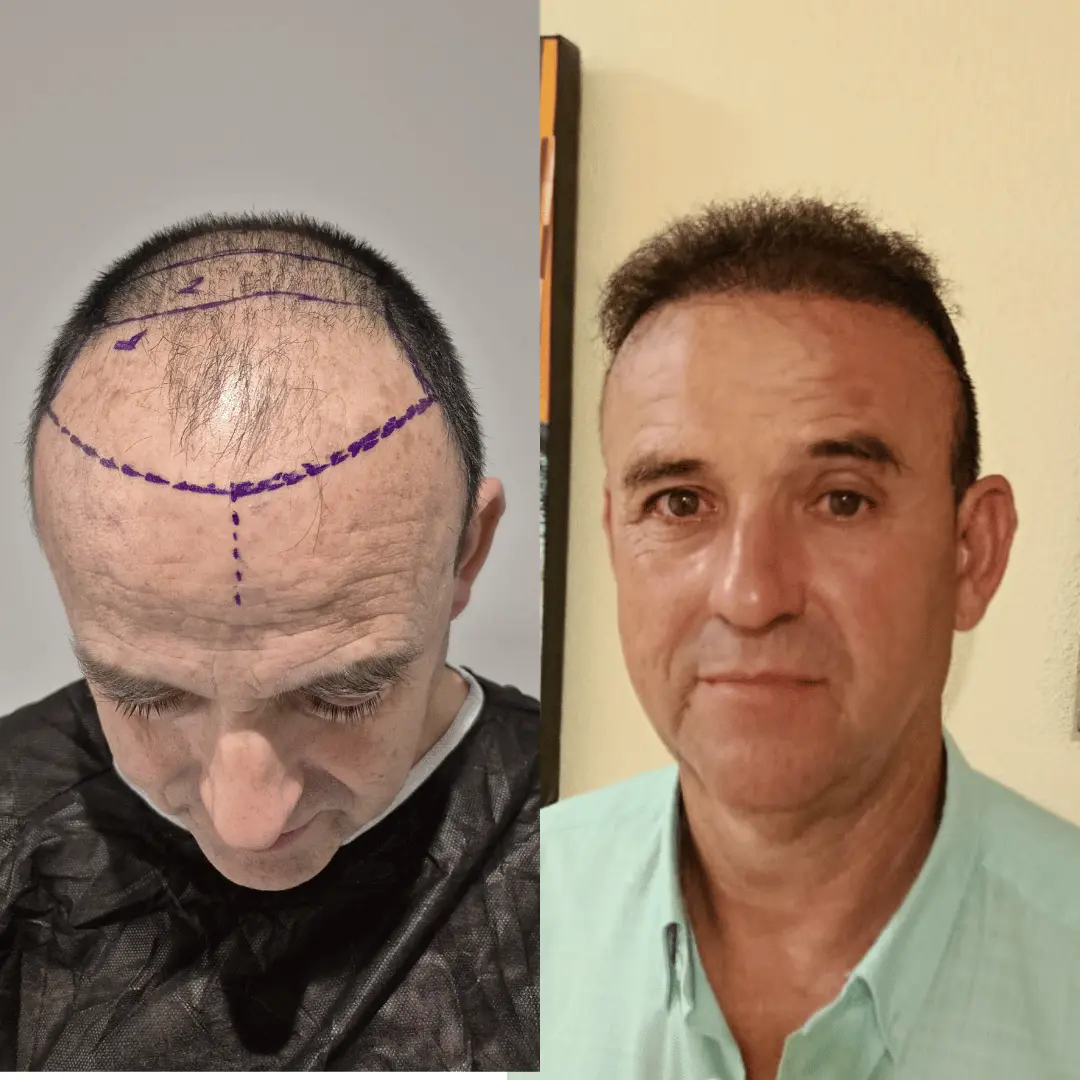
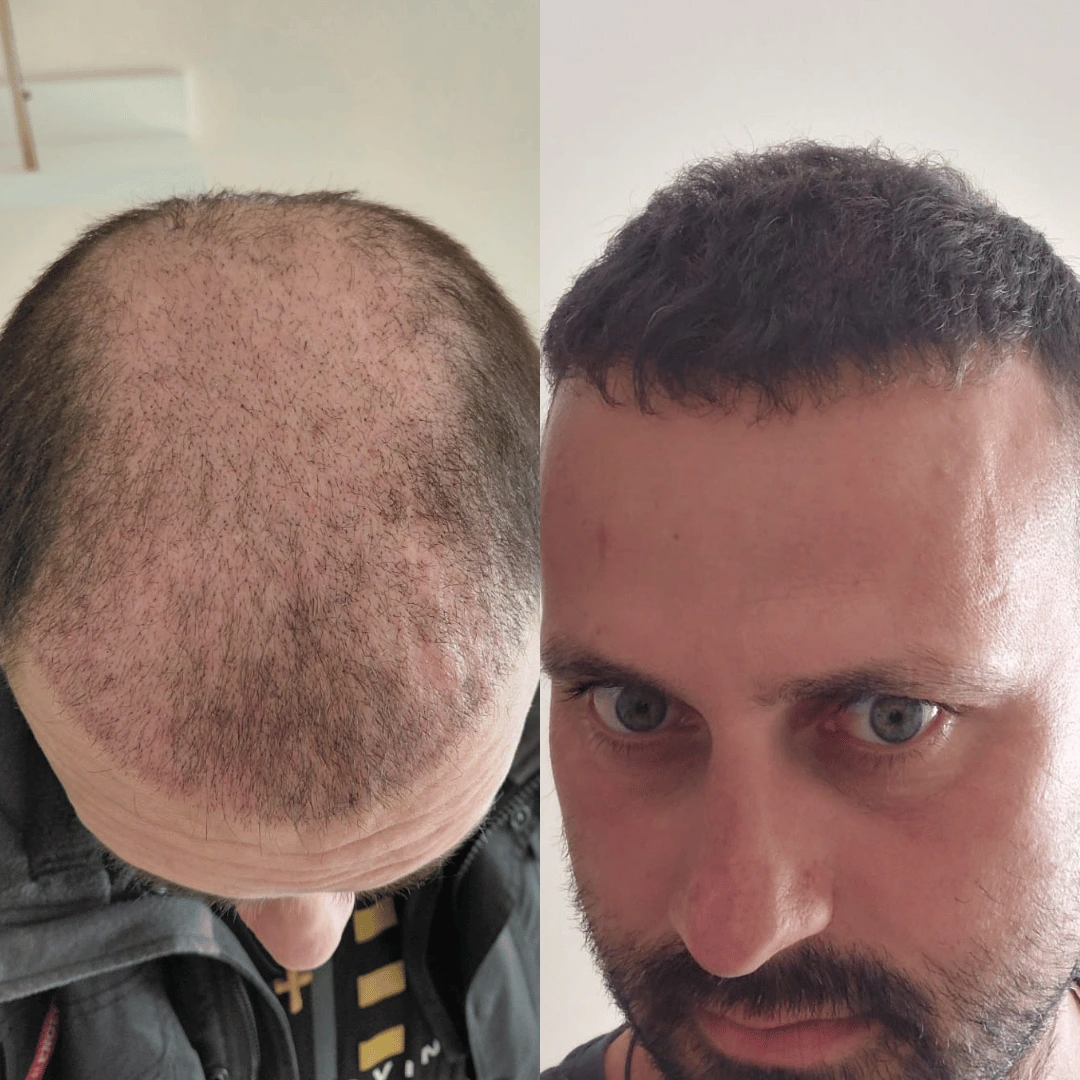
The effects of Norwood 6 and 7 hair transplant before and after procedures can depend on the quality of the donor hair, the amount of grafts, and the general health state of the scalp. Some individuals might get better results when it comes to density and coverage, while for others the result might not be so significant due to severe hair loss issues. In most cases of Norwood 6-7 hair transplants, even partial results will make a difference.
Norwood 6 Hair Transplant Before and After Examples
Norwood 6 hair transplant before and after examples generally demonstrate significant positive changes in the hairline and scalp coverage. While complete density is not necessarily attainable in all severe hair loss cases, there are often significant aesthetic changes in the appearance of hair following the procedure. The outcome largely depends on the quality of the donor hair, the number of grafts used, and their distribution during the transplant process.
Norwood 7 Hair Transplant Before and After Results
Norwood 7 hair transplant before and after results can vary greatly depending on donor hair condition and the severity of hair loss. Since Norwood 7 hair loss is considered one of the most advanced stages, achieving full density may not always be realistic. However, many patients are still able to see visible improvements in scalp coverage and overall appearance after the procedure. In some Norwood 7 hair transplant results, even limited restoration may create a more balanced and natural look.
Realistic Expectations for Advanced Hair Loss Cases
Those who suffer from severe hair loss need to go through the hair transplant procedure with realistic expectations. In the case of Norwood 6-7 hair loss, it is not necessary that the patient will have extremely dense hair after the hair transplant procedure. This is because many things determine the final results of the treatment, such as the quality of donor hair and scalp and the hair loss pattern.
Which Technique Works Best for Norwood 6–7 Hair Transplant?
The method that will be applied in a Norwood 6-7 hair transplant procedure varies depending on the patient. This is due to the fact that the quality of the donor hair, the condition of the scalp, and the amount of hair loss are not necessarily similar for each patient. Some patients might need FUE, while others would benefit more from DHI or combined techniques. Normally, this decision is made after analyzing the patient’s hair and donor area.
FUE vs DHI for Advanced Hair Loss
FUE and DHI are among the most commonly preferred techniques for advanced hair loss treatment. FUE is often used for covering larger bald areas because it may allow a higher number of graft extractions during the procedure. DHI, on the other hand, can provide more control during graft implantation and may help create denser-looking areas in certain parts of the scalp. In some advanced hair loss cases, both FUE and DHI techniques may be combined in order to improve overall hair transplant results.
Why Donor Area Planning Is Critical
Donor area planning is extremely important in advanced hair loss cases because the amount of available donor hair is limited. In Norwood 6-7 hair transplant procedures, using the donor area incorrectly may affect the possibility of future treatments and reduce overall coverage quality. For this reason, graft distribution and donor hair management should be planned carefully before the procedure. Proper donor area planning may help achieve more balanced and natural-looking hair transplant results.

Have Questions? Let's Chat on WhatsApp!
Get instant answers 24/7. Receive your doctor-led hair analysis within 1 day, plus pricing and booking support.
Start WhatsApp ChatWhy Choose Istanbul Vita Clinic for Advanced Hair Loss Treatment?
Istanbul Vita Clinic offers customized hair loss treatment planning for different levels of hair loss, including Norwood 6-7 hair transplant treatments. As advanced cases of hair loss usually demand meticulous distribution of grafts, planning becomes a vital element of the whole procedure. Prior to treatment, various elements such as the condition of donor hair, the state of the scalp, and the nature of hair loss are considered in order to find the best treatment plan. Different hair transplant methods can be used together, if necessary.
Some of the factors that may make the treatment process different at Istanbul Vita Clinic include:
Specialized Experience in Norwood 6–7 Hair Transplant Cases
Istanbul Vita Clinic has experience with advanced hair loss cases such as Norwood 6-7 hair transplant procedures, where graft planning and donor area management become more important. Since severe hair loss may require a more balanced distribution of grafts, detailed planning is considered during the treatment process in order to improve overall coverage and appearance.
Vita Technique®: Istanbul Vita’s Patented Micro-Planning Approach
Istanbul Vita Clinic also uses Vita Technique®, a patented micro-planning approach developed for more detailed hair transplant planning. The technique is based on microscopic donor area analysis and personalized graft distribution in order to create more natural-looking and balanced results. Within Vita Technique®, donor regions such as D1, D2, and D3 are analyzed separately so that grafts can be placed according to hair thickness, density, and natural hair growth direction. In advanced hair loss cases like Norwood 6-7 hair transplant procedures, this approach may help use the donor area more efficiently while improving overall coverage.
Combined DHI and Sapphire FUE Techniques for Advanced Hair Loss Coverage
In some advanced hair loss cases, Istanbul Vita Clinic may combine DHI and Sapphire FUE techniques in the same treatment plan. While Sapphire FUE can help cover wider bald areas by allowing high graft extraction, DHI may provide more controlled graft placement in targeted regions. Using these techniques together may help improve overall coverage and create more balanced hair transplant results in Norwood 6-7 hair transplant procedures. Patients who want to learn more about this approach can read about the Combined Technique.
Although Norwood 6 and 7 hair loss are considered advanced stages of baldness, modern hair transplant procedures may still provide noticeable improvements when the treatment is planned properly. If you would like to learn more about suitable treatment options for your hair loss condition, you can contact Istanbul Vita Clinic through our contact page for a personalized hair analysis and consultation.
Real Norwood 6 and 7 Hair Transplant Results
These are Istanbul Vita patients graded at this stage before surgery, photographed before the procedure and at the result. Graft numbers and technique differ with donor capacity and goals.
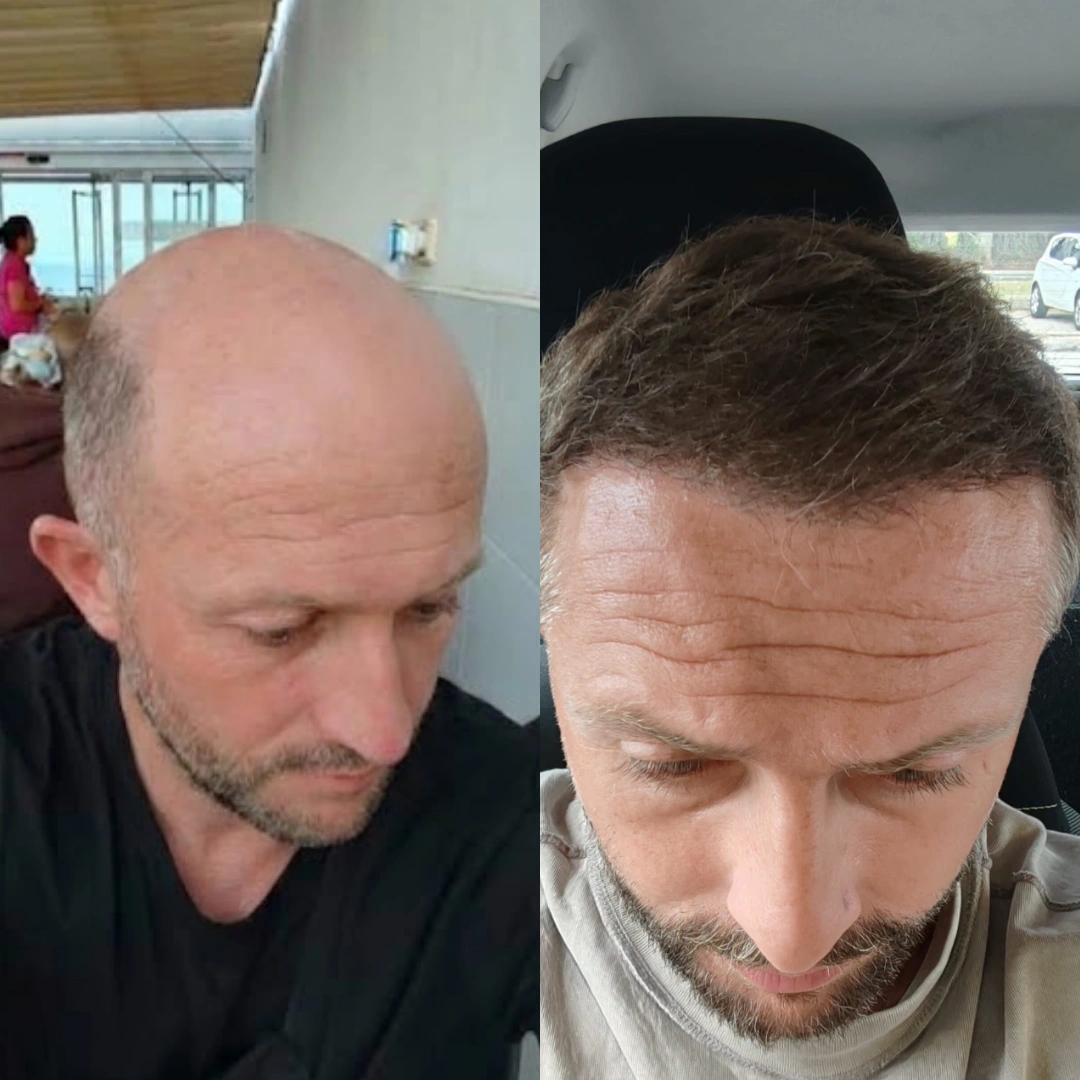
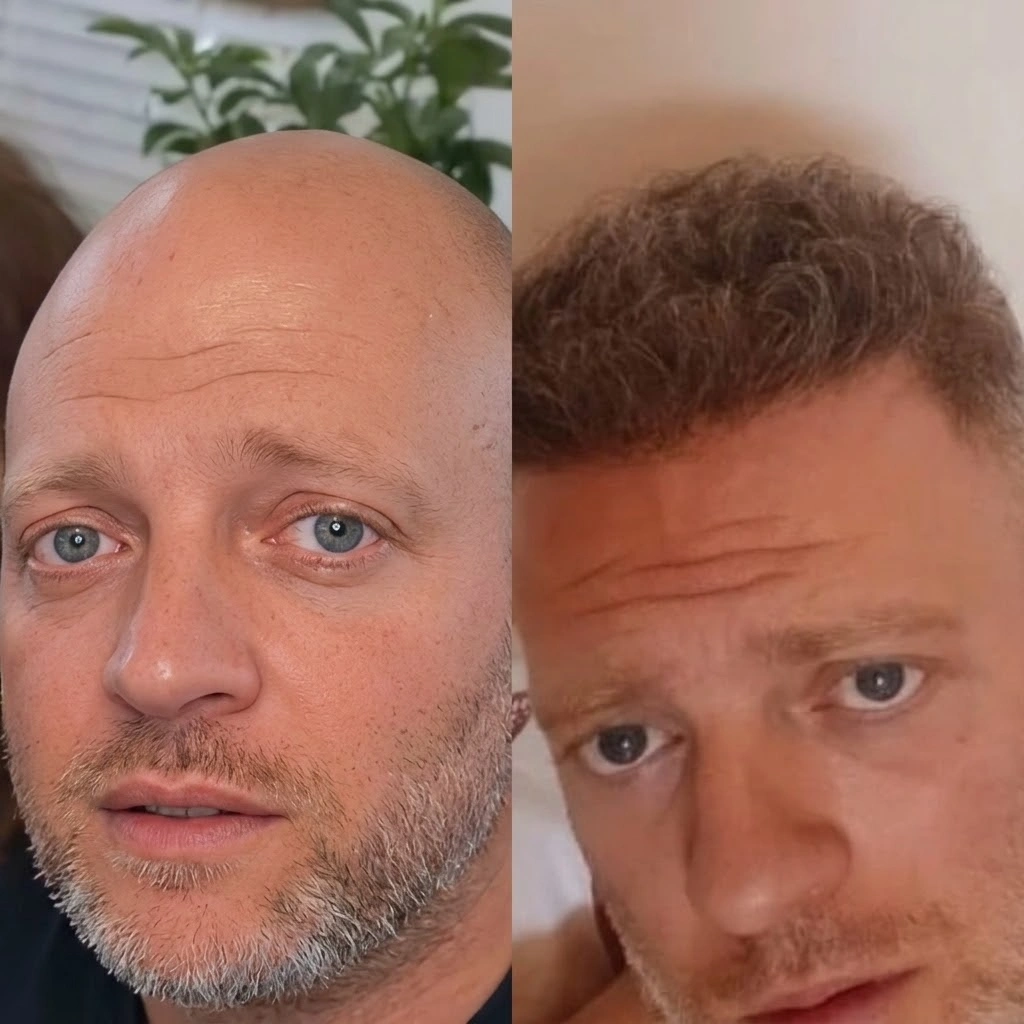
Advanced stages often need more grafts than a single technique handles best, which is why FUE and DHI are sometimes combined in one plan. See how the combined FUE and DHI hair transplant works at Istanbul Vita, with graft ranges and package prices.
Frequently Asked Questions
Can Norwood 7 hair loss become worse after a hair transplant?
Hair transplant procedures do not stop future hair loss progression completely. In some Norwood 7 hair loss cases, existing native hair may continue thinning over time. Because of this, long-term planning is usually important during the treatment process.
Is age important for Norwood 6-7 hair transplant procedures?
Age can sometimes affect treatment planning because hair loss patterns may continue changing over the years. Many clinics evaluate donor hair quality, scalp condition, and the stability of hair loss before deciding on a Norwood 6-7 hair transplant procedure.
Can body hair be used in Norwood 6 or 7 hair transplant procedures?
In some advanced hair loss cases, body hair may be considered as an additional donor source if scalp donor capacity is limited. However, this depends on factors such as hair texture, density, and compatibility with the existing scalp hair.
How long does recovery usually take after a Norwood 6-7 hair transplant?
The recovery period can vary depending on the number of grafts and the technique used during the procedure. Most patients are usually able to return to daily activities within a short period, while the final Norwood 6-7 hair transplant results may continue developing over several months.
 conversation


