
 English
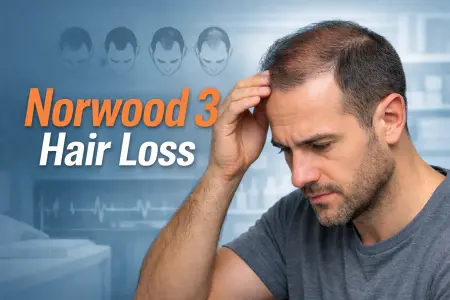
Table of Contents
If you find yourself wondering whether you have developed a Norwood 3 hairline, or how it compares to other Norwood stages on the Norwood scale, you are definitely not alone. Many men reach this stage without being fully sure what it means. Recognizing the signs of Norwood stage 3 early can help you better understand your hair loss situation and what your options are from there.
What Is Norwood 3 Hair Loss?
Norwood 3 hair loss is a stage on the Norwood scale, a system used to track how male pattern baldness develops over time. By this point, the changes in the hair are usually noticeable not extreme, but hard to ignore once you see them.
Most men first notice it around the temples. The hairline starts to move back a bit more than expected and takes on a clearer shape. This is what people usually mean when they say Norwood stage 3.
Sometimes, it’s not just the front. Thinning can also show up at the crown area. That’s called Norwood 3 vertex, or Norwood stage 3 vertex. Not everyone has this, but when it happens, it makes the overall change more obvious.
At this stage, hair loss is no longer just a small shift in the hairline. It’s part of the broader Norwood stages, where progression becomes easier to recognize.
What Are the Signs of Norwood 3 Hair Loss?
It is rare to find a man who wakes up one day and realises he is suffering from Norwood 3 hair loss. In the majority of cases, it takes some time because initially it starts in minor forms and then gradually develops to become very clear.
Norwood stage 3 is often identified by the formation of a new type of hairline. In this case, the recession occurs more prominently on the temples compared to other stages. This is what is usually referred to as the Norwood 3 hairline since it is more pronounced than before.
The symptoms to look out for during Norwood 3 hair loss include:
- Temple recession
- Uneven hairline appearance
- Loss of density at the front of the scalp
- Changes in the look of the hairline compared to before
Norwood 3 Hairline (Temple Recession)
In this phase, the hairline begins to recede even more at both temples. Rather than having a flat or mature hairline, it becomes deeper and more noticeable. This is the point when many men first notice Norwood stage 3.
Norwood 3 Vertex (Crown Thinning)
In some instances, hair loss does not confine itself only to the front of the head. It can also appear in the crown area, known as Norwood 3 Vertex or Norwood stage 3 vertex. This may begin as mild thinning but can become more visible over time.
Am I Norwood 3? A Quick Self-Check
Norwood 3 pattern baldness may not be instantly identifiable by all. recognize Norwood 3 hair loss. In many cases, the changes happen gradually, which makes it harder to clearly define the stage. However, there are a few simple ways to understand whether you might be at Norwood stage 3.
You may be experiencing a Norwood 3 hairline if you notice the following:
- Recession at both temples that is deeper than a typical mature hairline
- A more defined or slightly “M-shaped” hairline
- A visible change in your hairline compared to previous years
- Loss of density around the front area of the hair
If you’re unsure, it’s also worth checking the crown area. Signs of Norwood 3 vertex may include:
- Mild thinning at the crown (top of the scalp)
- A small circular area where the scalp becomes more visible
- Early signs of Norwood stage 3 vertex that weren’t present before
These signs don’t always appear all at once. Even one or two of them can indicate that you may be entering the Norwood scale 3 stage.

Norwood 2 vs 3: What’s the Difference?
A number of men find it hard to determine the difference between Norwood 2 vs 3. It could be because in the first stages, there is not much visible difference between the two. Hairlines recede in both cases, making it harder to distinguish the type of hair loss.
In the case of Norwood 2 hair loss, the recession is relatively mild. While the temples move backward, the hairline still looks natural and is not easily seen as male pattern baldness.
This all changes once the third phase begins. The recession becomes much deeper, especially around the temples, and the hairline takes on a more defined form known as the Norwood 3 hairline. At that point, it is no longer just a mature hairline.
Sometimes hair loss can happen at the crown too. This is called Norwood 3 vertex or Norwood stage 3 vertex. It does not happen to everyone, but when it does, it helps you notice the difference more easily.
Quick check:
- Hairline moves back a little but still looks natural → close to Norwood 2
- Hairline looks deeper and more visible → likely Norwood stage 3
- Thinning at the crown → could be Norwood 3 vertex
There is not always a clear difference between them. But when the change becomes more obvious, it usually means Norwood stage 3.
Norwood 3 vs 4: What Happens Next?
At Norwood stage 3, many men start thinking about what comes next. The changes can already be seen, but they do not always stay the same.
With Norwood 3 hair loss, recession usually starts around the temples. The front hairline looks more visible, but there is still a connection between the front and the crown. Sometimes thinning also starts at the crown, and this is called Norwood 3 vertex.
With Norwood 4, the recession becomes deeper. Crown thinning is easier to notice, and the space between the front hairline and the crown becomes larger.
One important difference is the connection across the scalp. In Norwood stage 3, it is still there. In Norwood 4, it gets weaker and the separation becomes easier to see.
When looking at the difference, it usually comes down to this:
- A more defined hairline with less spread → closer to Norwood 3
- Deeper recession with visible crown thinning → moving toward Norwood 4
- Early thinning at the crown → often called Norwood 3 vertex
Not everyone moves through the stages in the same way. Some people stay at Norwood stage 3 for years, while others progress faster.
Knowing the difference between Norwood 3 vs 4 is not only about labels. It helps you understand how your hair loss may change and when treatment options for male pattern baldness may be needed.
Is Norwood 3 Reversible?
Once people notice Norwood 3 hair loss, this question almost always comes up can it actually be reversed?
The honest part is, not really in most cases. At Norwood stage 3, the hair has already started changing in a more visible way. If the follicles are still active, there might be some improvement. But going fully back to how things were before is usually difficult.
That’s why most people shift their focus. Instead of trying to reverse everything, they try to slow it down. Treatments like finasteride or minoxidil are often used for male pattern baldness. They don’t work the same for everyone, but they can help reduce further loss.
Some also look into a Norwood 3 hair transplant. At this stage, the area that needs coverage is still relatively limited, which can make the result look more natural compared to later stages.
It also depends on the person. Some stay at Norwood 3 for a long time without major changes. Others keep progressing.
So no, Norwood 3 hair loss isn’t something that’s usually fully reversible but it’s still a stage where taking action can make a visible difference.
Can Balding Stop at Norwood 3?
A lot of men start thinking about this once they notice Norwood 3 hair loss. Does it keep going, or can it just stop there?
The truth is, it can go either way. Some people stay at Norwood stage 3 for a long time without seeing much change. Others notice that the hair keeps thinning slowly over time.
It mostly comes down to how your body reacts. Things like genetics and hormone sensitivity play a big role in male pattern baldness, so the pattern isn’t exactly the same for everyone.
Some try to manage it early. In such cases, medications such as finasteride or minoxidil can be applied in order to reduce the process. These medicines are not able to prevent alopecia, but they can ease its effect on an individual.
There are also cases where people choose a Norwood 3 hair transplant. That doesn’t stop the process itself, but it can change how the hair looks going forward.
So yes, balding can stop at Norwood 3 but it doesn’t always. For many people, it’s less about stopping it completely and more about keeping it under control.
Norwood 3 Hair Transplant: Is It Necessary?
Not everyone with Norwood 3 hair loss needs a transplant. It depends on how much the change is visible and what result the person wants.
At Norwood stage 3, hair loss is still not very advanced. Some men use finasteride and minoxidil to control it, especially if they want to slow it down and not change their look too much. At this stage, techniques with careful planning and natural hairline design can help a lot.
Choosing the right technique is important because it affects the end result. The method depends on how strong the hair loss is, which area needs work, and the level of density wanted.
This helps create natural-looking results. DHI is based on direct hair implantation with a special DHI pen. This method also helps place grafts at the right angles more precisely.
Vita Technique® is based on careful planning and graft selection.
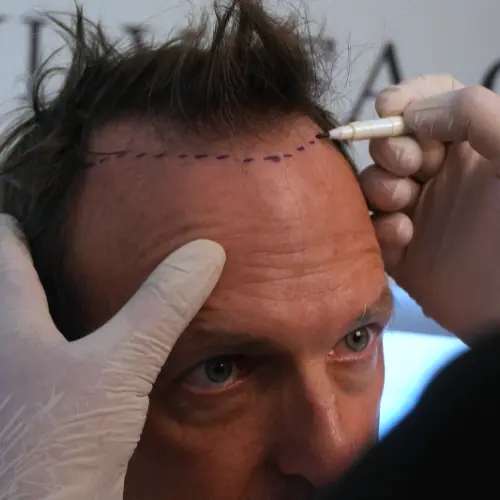
Some people notice the change more. When the temples become more visible, a Norwood 3 hair transplant can help improve the hairline and density. Because the area is still small, the result often looks natural.
There is no one right choice for everyone. Some people wait, while others choose early transplant before bigger changes start.
So, is a Norwood 3 hair transplant necessary? Not always. But for many people, it becomes an option when the hairline starts to look more different.
Have Questions? Let's Chat on WhatsApp!
Get instant answers 24/7. Receive your doctor-led hair analysis within 1 day, plus pricing and booking support.
Start WhatsApp ChatHow Many Grafts Are Needed for Norwood 3?
The number of grafts needed for Norwood 3 hair transplant can vary from person to person. It mostly depends on how much the hairline has receded and whether there is any thinning at the crown.
In many cases, Norwood 3 requires somewhere between 1,500 and 3,000 grafts. This range is usually enough to restore the hairline and improve density, especially around the temples.
However, not everyone needs the same amount. A few things can change the number:
- The depth of the recession at the temples
- Whether there is Norwood 3 vertex thinning
- The natural density of your existing hair
- The condition of the donor area
Some people prefer a softer, more natural hairline, while others want a fuller look. That choice alone can affect how many grafts are needed.
At Norwood stage 3, the area is still relatively limited, so the graft requirement is usually lower compared to more advanced stages. This is one of the main reasons why many people consider treatment at this point.
How many grafts are required for Norwood type 3? There is no exact number, but in most cases, the range is manageable and allows for natural-looking results.
What Causes Norwood 3 Hair Loss?
Norwood 3 hair loss does not happen from only one reason. It usually starts slowly.
For most men, it begins with how the body reacts to DHT. DHT is closely linked to male pattern baldness. Some people are more sensitive to it, and this makes the hair thinner over time. Then the hairline slowly starts to move back. This is how Norwood stage 3 usually begins.
Genetics is also important. If hair loss exists in the family, the chance of reaching Norwood stage 3 becomes higher.
Other things that can affect how fast it happens are:
- DHT sensitivity
- Family history of male pattern baldness
- Age
- Stress
Medical Treatments for Norwood 3
The majority of individuals suffering from Norwood 3 hair loss will not opt for more complex methods. Most of them prefer starting out with medical interventions first.
At Norwood stage 3, the goal is straightforward: delay the process and retain any remaining hair. The fact that follicles are still functional implies that certain methods can be effective at this stage.
Two common drug names emerge in almost all cases:Finasteride and Minoxidil. They are commonly prescribed medications in cases of male pattern baldness. Nevertheless, they differ in action mechanisms.
Finasteride primarily targets DHT. In the long run, lowering DHT levels can help slow down hair loss.
Minoxidil is a topical medication applied to the scalp. It is typically used to promote hair growth and improve thinning.
There is no universal effectiveness for both types of drugs. While some patients see tangible results, others just manage to slow down the process.
Occasionally, the two types of medications are used together. Moreover, Norwood stage 3 hair loss treatment is more effective when applied in the early stages.
Finasteride and DHT Control
Finasteride is normally suggested to men suffering from Norwood 3 hair loss since it has proven to be effective in addressing the hormonal aspect of male pattern baldness.
Its mechanism of action is relatively straightforward. Finasteride decreases the level of dihydrotestosterone in the body. In men with certain sensitivity to it, DHT makes hair follicles weaker, which is how hair thinning and recession occur, including at Norwood 3.
DHT inhibition does not necessarily solve all issues. However, it helps slow down the process and preserve the hair remaining at that point. Thicker hair may also result from its use in some cases.
Results vary among individuals, but it typically starts producing visible effects after several months of usage. Some experience changes while others only manage to preserve the amount of hair.
It is important to note that finasteride is normally applied in Norwood 3 stage as a way of slowing down hair loss.
Minoxidil and Hair Regrowth
The use of minoxidil in treating Norwood 3 hair loss is very common amongst people who wish to pursue an alternative to surgery.
This solution is applied externally to the scalp and is mostly meant to enhance the aesthetic look of the thinning areas. It can lead to fuller and denser-looking hair after some time, supporting overall hair regrowth.
During this Norwood stage 3, there is no effort made towards total hair restoration. Instead, minoxidil works to reduce the effect of hair loss and increase density. This product can be used during early stages of crown thinning, such as Norwood 3 vertex.
Patience is key when using this treatment, since some people show results after a few months, whereas others need to wait longer.
Minoxidil can be used on its own.Finasteride and minoxidil are often used together to better manage male pattern baldness
Best Hairstyles for Norwood 3
With Norwood 3 hair loss, the haircut you choose can change how everything looks. Sometimes even small differences in style make the hairline feel less noticeable.
Shorter styles are usually easier to manage. A buzz cut Norwood 3 look, for example, keeps everything even and reduces contrast. Some people also prefer leaving a bit more length in the front to soften the hairline.
A few options people often go for:
- Short, slightly textured cuts
- Buzz cut
- Light fringe in the front
- Medium length styles with some volume
There isn’t one perfect style. It really depends on your hair type and what you feel comfortable with. At Norwood stage 3, even small adjustments can make the overall look feel more balanced.
Final Thoughts: What Should You Do If You Are Norwood 3?
Arrival at Norwood 3 level of baldness might be considered a kind of achievement. Symptoms start showing, but there are numerous ways in which one can react to this problem.
One may just ignore the matter and try to protect the amount of hair one still has. On the other hand, medicines like finasteride and minoxidil might be taken in order to slow down the process while maintaining hair density. In case one desires greater changes, a Norwood 3 hair transplantation surgery is also an option.
Timing is important. Acting in a timely manner will make it easier to maintain your look without experiencing hair thinning.
There is no definite answer to the above question. The life situations of different people vary greatly, and so will their decisions regarding the future.
If you are not sure how to act now, consultation of an expert will definitely prove useful.
For further help, please visit our contact page.
At any stage, the practical questions are how many grafts you would need and whether your donor area can supply them. See how the DHI hair transplant is planned at Istanbul Vita, who it suits and what the packages cost.
Frequently Asked Questions (FAQ)
What is Norwood 3 vertex?
Norwood 3 vertex means the hair becomes thinner on the top of the head along with hairline receding. It is one of the Norwood stage 3 variants.
What treatment can be used for Norwood 3 hair loss?
Finasteride, minoxidil, hair transplanting with FUE or DHI methods are among common ways of dealing with this condition.
What is better for Norwood 3?
Some of the methods that can be used include Sapphire FUE, DHI transplanting, and many others, which should be selected according to individual features.
Does minoxidil work on Norwood 3 hair loss?
This treatment can make an effect on the hair thinning problem and promote hair growth.
Real Norwood 3 Hair Transplant Results
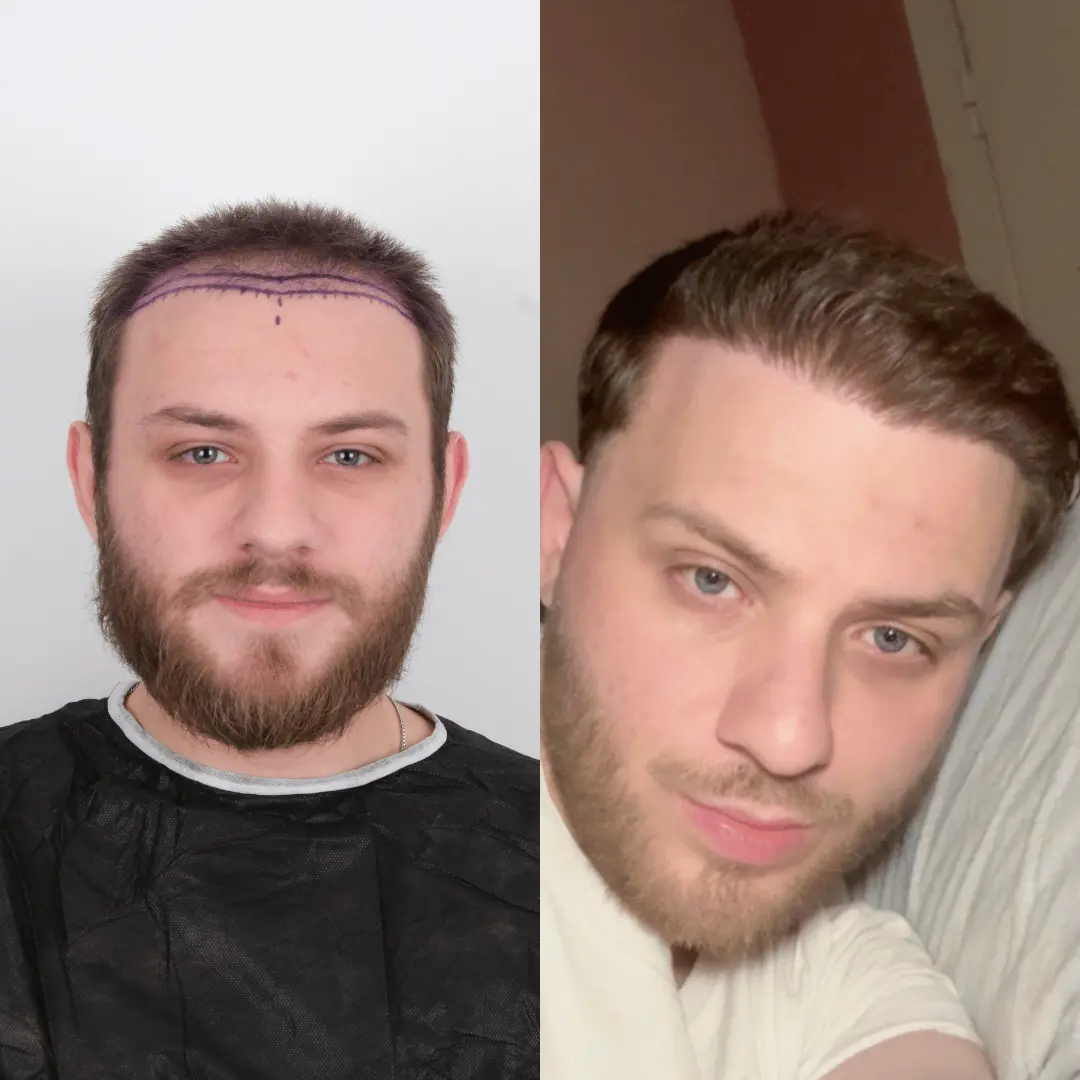
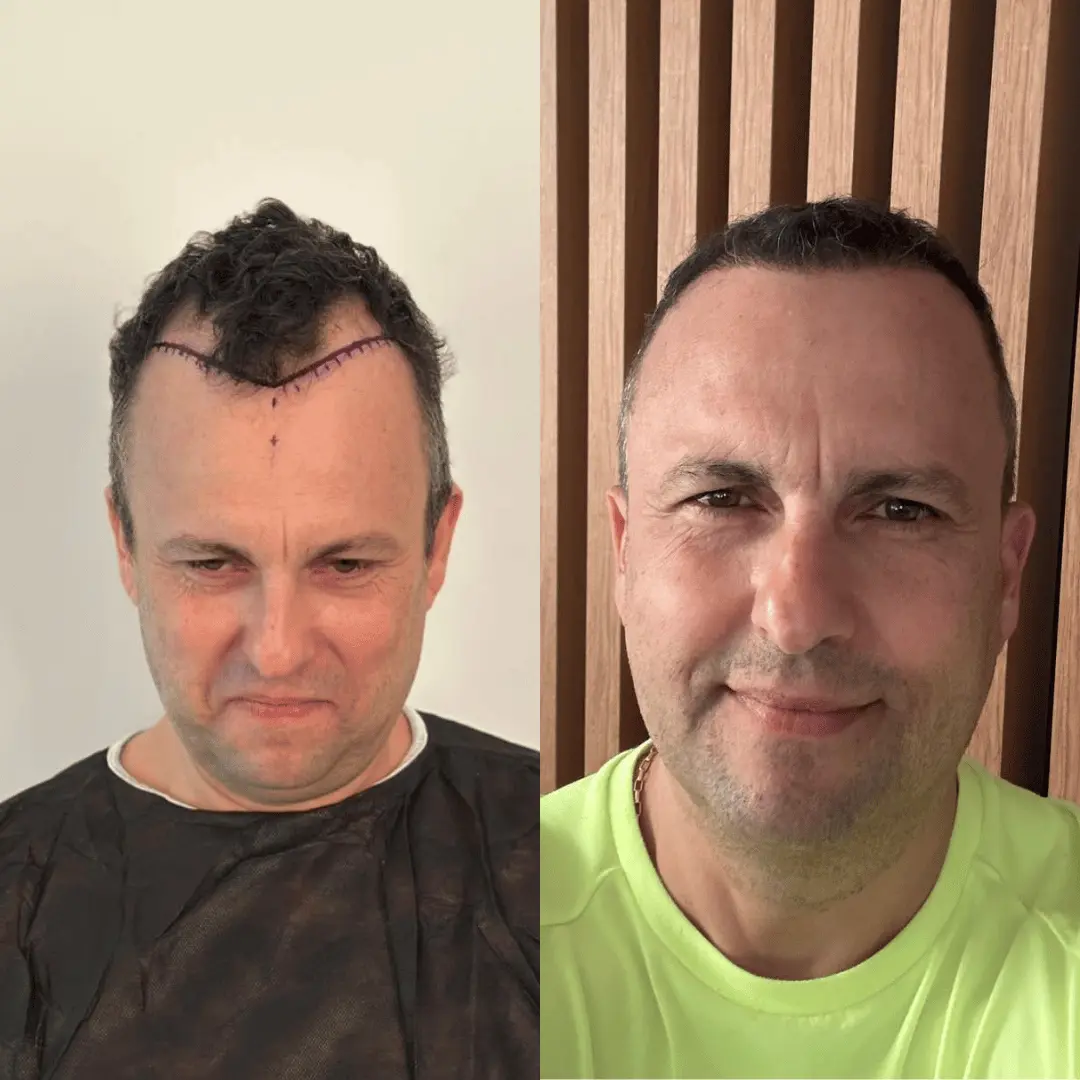
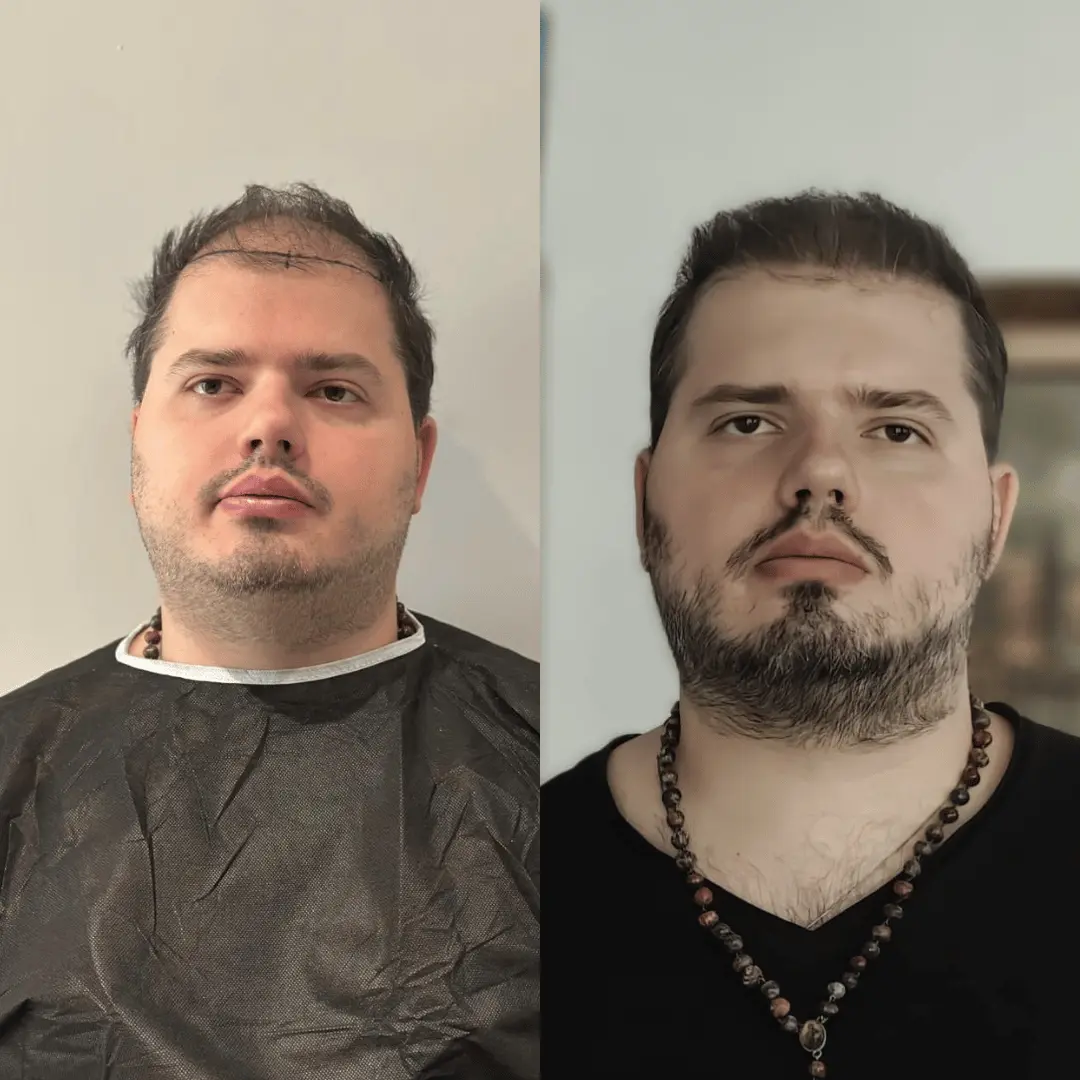
These are Istanbul Vita patients graded at this stage before surgery, photographed before the procedure and at the result. Graft numbers and technique differ with donor capacity and goals.
 conversation


