
 English
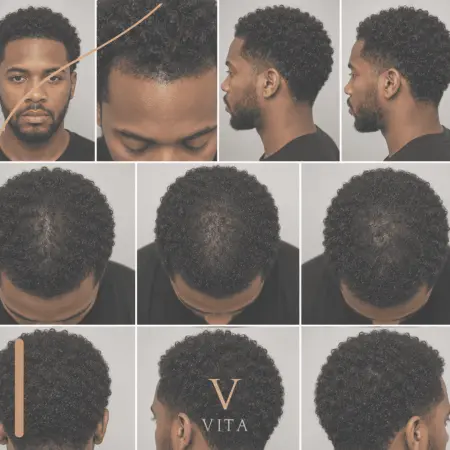
Table of Contents
What Should You Send for an Afro Hair Transplant Consultation?
You're not here for a general explanation of how restoration surgery works. You want to know what to send before an Afro-textured hair transplant consultation, and whether a screen and a handful of pictures can actually tell a surgeon anything useful about curly or coily texture.
Curl pattern changes things. So does shrinkage, styling, and how much shows on a given day. None of that makes an Afro hair transplant online consultation pointless it just means preparation matters more than it would for straight strands.
Which Photos Are Needed for an Afro Hair Transplant Consultation?
Six angles cover most of what a clinic needs to see.
Frontal View and Hairline
Straight on, eye level. This sets the baseline how far the line has moved, and where it's uneven. A tighter shot of just the edge helps judge thickness.
Temples, Left and Right
Loss at the temples rarely matches on both sides. Two separate shots, turned about 45 degrees each way, stop one side from being judged off the other.
Crown and Top-Down View
Taken from above. Probably the most commonly missed angle thinning at the crown often isn't visible from eye level, especially once styling sits over it.
Donor Area: Back and Sides
Extraction happens here, so texture and any old scarring need to be visible rather than assumed. Back, left side, right side three separate shots rather than one.
| Angle | Shows | Matters because |
| Frontal | Hairline shape | Sets the restoration goal |
| Hairline close-up | Edge thickness | Supports natural frontal design |
| Temples, both sides | Recession pattern | Often asymmetrical |
| Crown, top-down | Vertex coverage | Frequently underestimated |
| Back | Texture, scarring | Affects available supply |
| Sides, both | Consistency | Supports a realistic estimate |
How to Take Clear Consultation Photos
Lighting, Distance, and Focus
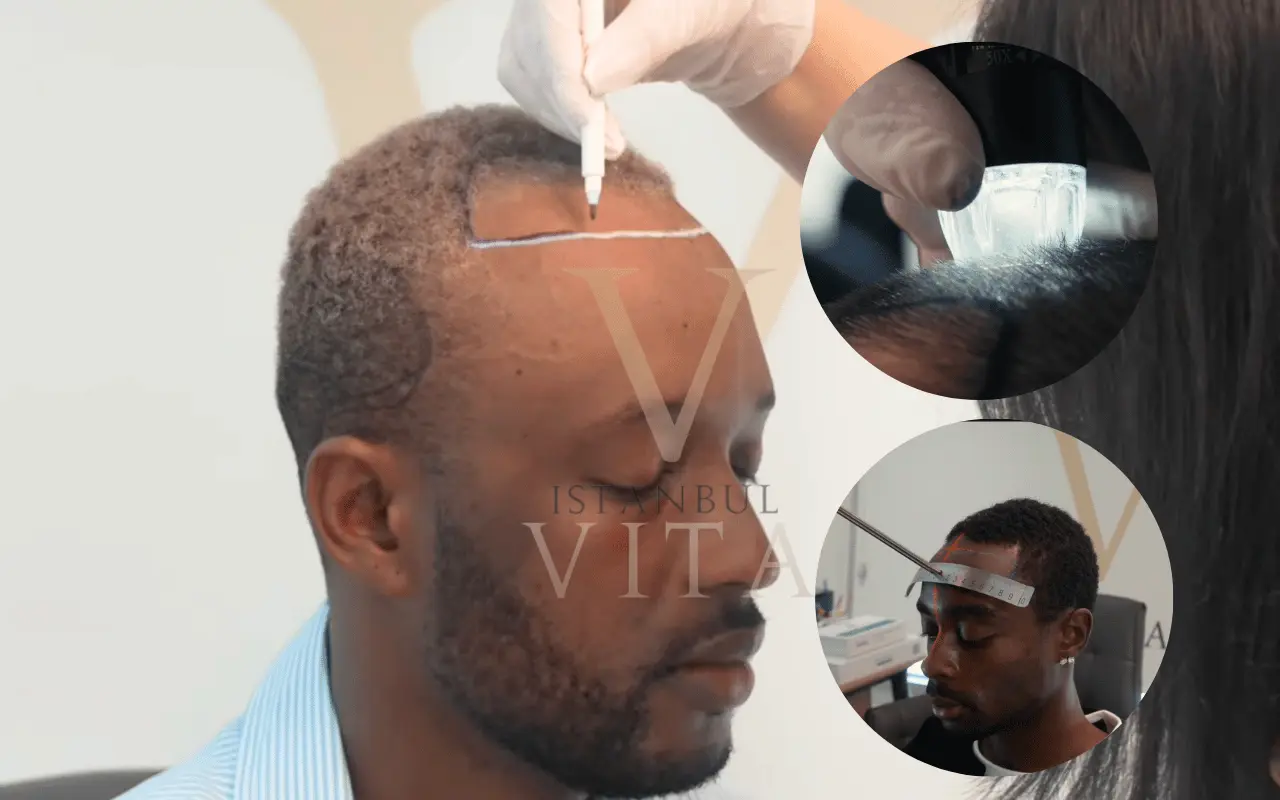
Daylight near a window beats indoor bulbs, which wash everything in yellow. Skip the flash it flattens detail and glares off the surface. Stand far enough back to keep the shot sharp, then take a couple more from slightly different distances. Getting hair transplant consultation photos right matters more here than people usually expect.
Positioning Your Hair So the Scalp Is Visible
No filters. Dry, unstyled strands give the most accurate read on thickness. If length gets in the way, move it aside rather than styling around it. Nobody's judging how good the picture looks only how accurate it is.
Afro-Specific Photo Challenges: Curl Pattern and Donor Visibility
Why Shrinkage and Density Can Hide the Donor Area
Coily texture photographs differently than straight strands. Shrinkage can make it look shorter and fuller than it actually is, and a tight curl pattern can sit over thinning without revealing it. Nothing wrong with that it's just something a reviewing team has to account for. It's also why 4A, 4B, and 4C patterns can look similar in a picture but behave very differently underneath, even at comparable thickness.
How to Reveal the Scalp Without Damaging Your Hair
Shaving beforehand isn't necessary. Parting a small section, lifting curls with fingers rather than a comb, and shooting from a couple of angles usually does it. Send one natural, everyday shot alongside a few that reveal what's underneath that combination tells a clinic more than either one alone. Skip anything involving tight pulling.
What Information to Send Alongside Your Photos
Pictures only cover part of it. A short written summary fills in the rest.
Medical History, Medications, and Previous Transplants
- Age and general health
- Current medications
- Any earlier transplant, with graft count if you know it
- Family history, if relevant
Hair Loss Pattern and Timeline
- When you first noticed it
- Whether it's stayed the same or gotten worse
- Tight braiding or heavy traction, if that applies
- What you're hoping for shape, thickness, timeline
A short paragraph covering these points is usually plenty.
What Can an Online Consultation Actually Tell You?
A well-prepared Afro hair transplant online consultation is genuinely useful. It isn't a substitute for a hands-on exam, and knowing where that line sits early helps set realistic expectations.
What Remote Assessment Can Reveal
Clear images plus honest background usually give a surgical team enough to map out loss pattern, rough supply, and general priorities. Often that's sufficient for a first-pass plan before anyone travels anywhere. This is the core of any Afro hair transplant assessment done at a distance.
What Still Needs In-Person Examination
Some things need a physical look. Curvature beneath the surface, exact figures under magnification, skin laxity none of that comes through a screen reliably. This isn't specific to any one clinic. Curved, tightly coiled follicles simply don't always match their surface appearance, and that gap only closes once someone examines things directly.
| Stage | Can usually suggest | Needs confirmation later |
| Loss pattern | General stage, location | Irregular or patchy detail |
| Supply | Rough visible amount | Exact figure under magnification |
| Graft range | A preliminary number | Final count |
| Technique | A likely direction | Confirmed choice |
Can Graft Count Be Estimated From Photos?
Yes a range, not a fixed number. Most clinics can offer that much once they've reviewed what you've sent, and it's a fair starting point for budgeting.
Why the Final Number May Change
Once someone examines things directly, true supply, skin elasticity, and curl behavior at the root can shift that number either way. That's not a sign the original estimate was careless it's the gap between what an image shows and what an exam confirms.
Have Questions? Let's Chat on WhatsApp!
Get instant answers 24/7. Receive your doctor-led hair analysis within 1 day, plus pricing and booking support.
Start WhatsApp ChatWhat Questions Should You Ask During an Afro Hair Transplant Consultation?
What you send is half of it. The other half is what you ask.
Questions About Afro Hair Experience
- How do you assess curved, tightly coiled areas specifically?
- How does curvature change your extraction approach?
- Do you have documented experience with textures like mine?
- How do you plan curl direction so results look natural rather than uniform?
Questions About Who Performs the Procedure
- Who plans extraction and channel opening?
- Which steps does a doctor perform directly?
- How is supply protected during extraction?
- Could the estimate change after an in-person visit, and by roughly how much?
None of this needs to sound like an interrogation. A clinic confident in its process answers specifically, not with vague reassurance.
How Istanbul Vita Evaluates Afro Hair Before Surgery
At Istanbul Vita, reviewing curly and coily cases goes beyond a glance at submitted images. What's sent gets weighed alongside donor strength, curl type, and long-term goals, with particular attention to how curved anatomy might affect extraction and placement later.
Microscopic Donor Analysis and the Afro Technique®
For these cases, the clinic applies its Afro Technique®, built specifically around curved, tightly coiled follicles. In person, this includes microscopic classification by curl direction, thickness, and density before extraction starts. The remote stage builds a preliminary picture; the physical exam that follows supports the final Afro Technique® plan.
A clear set of images and an honest summary of your situation is the most useful first step. It gives a surgical team something real to plan around, and gives you a much clearer sense of what to expect before anything is decided.
FAQ
What photos should I send for an Afro hair transplant consultation?
Six views cover it: front, hairline close-up, both temples, crown from above, and the back plus both sides of the donor area.
How many photos are needed for an online consultation?
Six to eight is typical. Extra angles rarely hurt they just add clarity.
Should I cut or shave my hair before taking consultation photos?
No. Parting a section or lifting curls by hand is usually enough to show what's underneath.
How should I photograph a coily donor area?
Good daylight, dry strands, and a couple of shots from slightly different angles after gently separating a section.
Can graft count be estimated from photos?
A preliminary range, yes. The confirmed number comes after an in-person exam.
Can a clinic choose the final technique from photos alone?
They can suggest a direction. Confirming it usually waits until things are examined directly.
What information should go with my photos?
Basic medical history, current medications, any past transplant, when loss started, and what you're hoping to achieve.
What questions should I ask during an Afro hair transplant consultation?
Ask how curved follicles are assessed, who performs extraction and channel opening, and whether the estimate might shift after seeing you in person.
 conversation


