
 English
Table of Contents
Yes, a properly performed hair transplant is permanent, but the word "permanent" applies to the transplanted follicles specifically that are treated not to your entire head of hair. That difference is where most of the confusion starts and people are concerned about the results after 10 years.
Why Transplanted Hair Resists Balding (DHT Resistance Explained)
Grafts are taken from the back and sides of the scalp and the donor area because those follicles carry genetic resistance to dihydrotestosterone (DHT), the hormone behind pattern baldness. Relocated to a thinning hairline or crown, they keep that resistance. This is why hair transplant permanent results are achievable at all: you're not curing baldness, you're redistributing hair that was never going to fall out.
Native Hair vs. Transplanted Hair — Two Different Timelines
Your native, non-transplanted hair follows its own path. If genetics were already causing loss, that process continues in untreated areas regardless of surgery. This is the most misunderstood part of long-term planning, and it's why is hair transplant permanent and "will my hairline change over time" are really two separate questions.
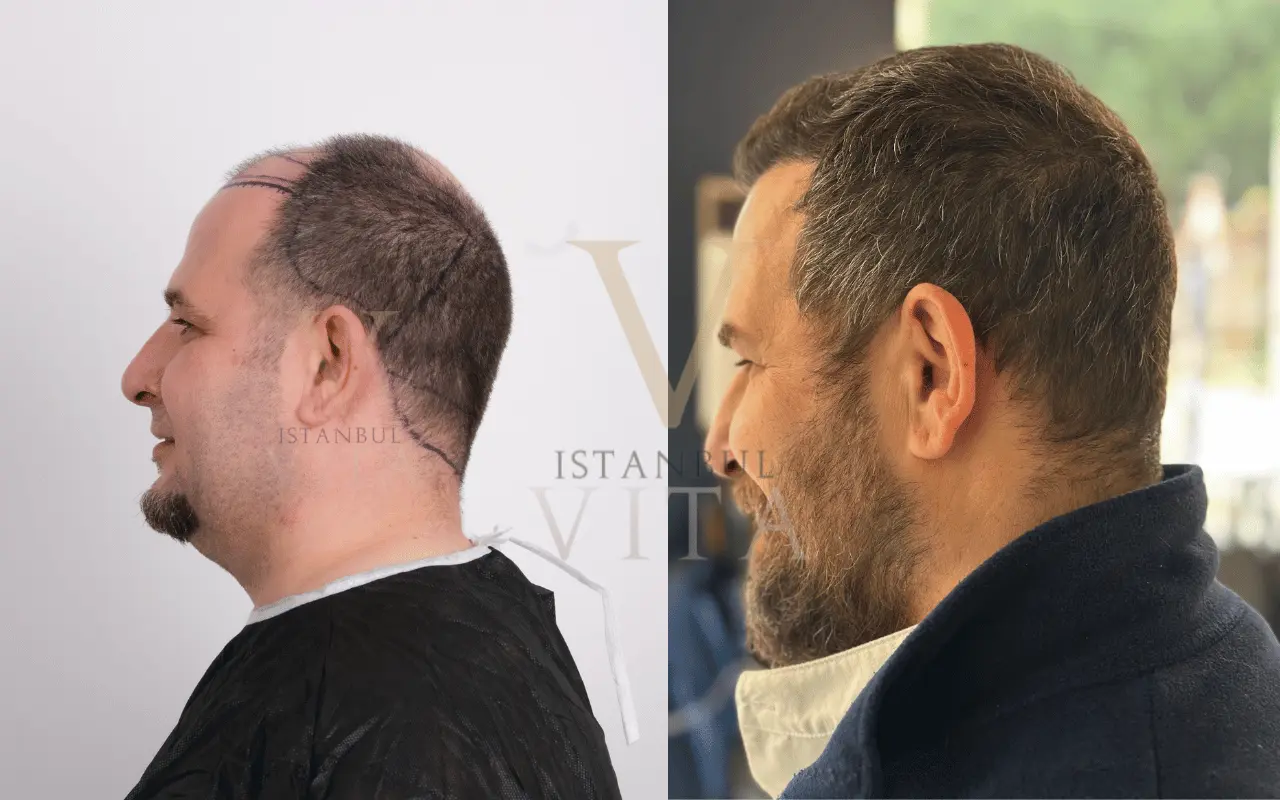
Hair Transplant After 10 Years: What the Results Actually Look Like
Ten years is long enough for swelling and scarring to fade completely and long enough to judge whether the original plan was sound. This is where hair transplant long term results stop being theoretical.
Hairline and Crown at the 10-Year Mark
In most successful cases, the hairline stays structurally intact. The crown, if addressed, shows more variability, since it's more exposed to ongoing native hair loss. A well-designed hairline holds its shape better than one that chases maximum density in a single session.
Hair Density and Graft Survival Rates Over Time
Graft survival rates from modern FUE and DHI generally range between 90–95% with experienced teams. Once a graft survives past 8–12 months, it behaves like permanent hair but the density loss after that point is almost always related to surrounding native hair, not the grafts themselves.
Does Transplanted Hair Go Grey or Change Texture?
Yes, and it's completely normal. Transplanted follicles age biologically like any other hair — they can grey, thin slightly in diameter, or shift texture. What they don't do is fall out due to pattern baldness. Aging and balding are two different mechanisms, and only one affects transplanted grafts.
Hair Transplant After 15 and 20 Years — Long-Term Aging Patterns
The real test of a hair transplant comes 15 or 20 years later. At that point, the outcome depends on how well the original hairline was planned and how much of your existing hair has continued to thin with age.
What Changes With Age vs. What Stays the Same
The transplanted zone tends to stay remarkably stable. What changes is everything around it and hairline recession in untreated temples, crown thinning, and natural greying. A surgeon who plans two decades ahead, not just for the first photo, produces a scalp that ages far more gracefully.
Table: Hair Transplant Timeline — 1 Year to 20 Years
| Timeline | What to Expect | What to Watch For |
| 6–12 months | New growth phase, initial density visible | Shedding cycle (normal), thin early growth |
| 1–2 years | Full graft maturity, final texture and density | Confirm results match the original plan |
| 5 years | Stable transplanted zone, possible native thinning begins | Early signs of untreated-area hair loss |
| 10 years | Transplanted hair holds; native hair may thin further | Hairline recession outside grafted area |
| 15–20 years | Aging changes (grey, texture); grafts remain in place | Overall balance between transplanted and native hair |
Can a Hair Transplant Fail or Fall Out After Years?
True graft failure years later is rare when the procedure was done correctly. What patients often mistake for "failure" is something else entirely.
Common Causes of Late Thinning (Not Transplant Failure)
Progressive native hair loss around the transplanted area, poor donor management during the surgery, or delaying medical therapy like finasteride or minoxidil, all these can make a good transplant look like that it is regressing, even though the grafts are intact.
How to Tell the Difference Between Native Loss and Graft Loss
The clearest signal: transplanted zones stay dense while thinning appears at the edges or in untreated areas. If density drops inside the grafted region itself, that's worth a consultation but it's the exception, not the rule.
Will You Need a Second Hair Transplant or Touch-Up Procedure?
Many patients never need a second session. Others do and that's not a sign the first procedure failed.
Signs You May Need a Revision Hair Transplant
New thinning in previously untreated areas, wanting additional density, or lowering a conservatively placed hairline years later are the most common reasons patients return for a touch-up procedure.
How Surgeons in Turkey Plan for Future Sessions From Day One
Experienced clinics map out donor capacity with future sessions in mind, rather than harvesting aggressively in one sitting. This kind of donor management makes a second procedure, if ever needed like straightforward instead of limited by a depleted donor area.
Why Long-Term Planning Matters More Than the Procedure Itself
The surgery is one day. The design decisions made before it shape how your hair looks for decades.
Hairline Design That Ages Well vs. Aggressive Designs
A hairline set slightly higher, with soft, irregular edges that look like a natural growth, consistently ages better than a low, dense, razor straight line. The hair transplant results that look impressive at 28 can look artificial at age 45 if the design didn't account for continued aging.
FUE, DHI, and Sapphire FUE — Does Technique Affect Longevity?
FUE, DHI, and Sapphire FUE all extract and place individual follicular units, and long-term survival rates are broadly comparable when performed skillfully. The bigger factor is the surgeon's judgment on placement, angle, and density limits but not the technique's name.
Turkey vs. USA and UK: Trust, Standards, and Long-Term Support
American patients considering surgery abroad want reassurance on safety and accountability, and this is where clinic selection matters more than country of origin.
Clinic Standards, Surgeon Experience, and Accreditation
There are so many capable hair transplant clinics in Turkiye that are operating in modern and licensed medical facilities. They do follow the district standards for hygiene and patient safety. The best clinics are the one who are trans about who perform each stage of the procedure. Involve experience doctors in the planning and surgery and provide clear information about their medical team and patient outcomes. Istanbul Vita, this includes sharing the surgeon credentials, documenting a long term patient and keeping the surgeon actively involvement in both treatment planning and the procedure itself. That level of transparency is not guaranteed simply because clinic charges higher prices in the United States or UK.
What American Patients Should Verify Before Booking
Ask who performs the actual graft placement, request results from patients five or more years out not just fresh post-op photos and confirm what aftercare support looks like once you're home. A clinic confident in its long-term results answers all three without hesitation.
The American Patient's Journey: Travel, Procedure, and Aftercare
Planning the trip is often less complicated than patients expect, but a few steps separate a smooth experience from a stressful one.
Before You Fly — Consultation and Planning
A remote consultation, usually via video call and photos, establishes your Norwood stage, donor capacity, and realistic goals before you book a flight. This is also when hairline design and graft count get discussed in detail.
What Happens During Your Time in Turkey
Most of the trips run 3 to 4 days and in that there is in person consultation, the procedure itself that is unit 4 to 8 hours and then a follow up check on the next day before flying home. The clinics are providing hotel transfer, accommodation and translator support into the package, which matters more than it sounds for first time medical traveler
Long-Distance Follow-Up After You Return Home
Good clinics don't disappear once you land back in the US. Expect scheduled photo check-ins at set intervals that are often 3, 6, and 12 months with a coordinator that is available to answer questions without needing to fly back.
How to Protect Your Results for 10+ Years
Long-term success is a shared responsibility between the surgeon's plan and your maintenance afterward.
Finasteride, Minoxidil, and Donor Area Management
For patients who have ongoing genetic loss, finasteride and minoxidil are the most evidence-backed tools for slowing native thinning, keeping surrounding hair fuller longer. Protecting the donor area from over-harvesting also preserves options for any future revision hair transplant.
Lifestyle Habits That Support Long-Term Density
You have to take good care of your scalp regularly. Make sure that you are avoiding any chemical treatment. Also managing your stress, and addressing the nutritional gaps, all these things play a very important role in how the transplanted and native hair ages over the decades that follow.
Final Thoughts: Choosing a Clinic That Thinks Long-Term
A hair transplant is not a single event and it is the decision that you lay out over decades. The clinics that produce the strongest hair transplant after 10 year results are the one that are planning for your hairline and 45 and 55, not just a six month photo. If you are researching the options in Turkey then you can ask about long-term case studies, to our management and get follow up looks like once you are back to your home. Istanbul Vita speak to all three, with real multi year documentation, and belong on your short list.
Frequently Asked Questions
Does a hair transplant last forever?
The grafts themselves are permanent in the vast majority of cases, thanks to DHT resistance. Your overall appearance can still change due to native hair loss elsewhere.
What happens 10 years after a hair transplant?
The transplanted area typically stays stable and dense, while untreated areas may continue to thin depending on genetics and age.
Can transplanted hair fall out after 10 years?
Individual grafts rarely fail this far out. Patients usually notice thinning in native, non-transplanted hair nearby instead.
Does a hair transplant age naturally?
Yes. Transplanted hair can grey and change texture with age like the rest of your hair, while staying resistant to balding.
Will I need another hair transplant?
Not always. Some patients need a second session years later to address new native thinning or add density; many never do.
Does transplanted hair turn grey?
Yes, greying is a normal aging process that affects transplanted follicles the same way it affects any other hair.
Can native hair continue to fall out?
Yes. A transplant doesn't stop genetic hair loss in untreated areas, which is why many patients pair surgery with medical therapy.
How long do FUE results last?
FUE results are considered permanent for the transplanted grafts, with outcomes comparable to other modern extraction techniques when performed by an experienced surgeon.
Have Questions? Let's Chat on WhatsApp!
Get instant answers 24/7. Receive your doctor-led hair analysis within 1 day, plus pricing and booking support.
Start WhatsApp Chat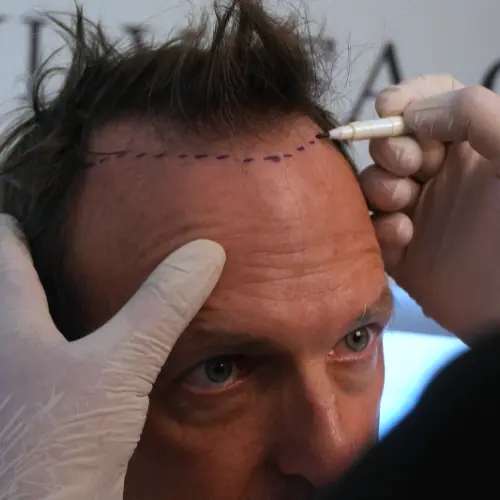
 conversation


