
 English
Table of Contents
Dandruff is considered one of the most common scalp conditions around the globe. Every person in his lifetime has had it once, but not many understand the nature of dandruff, its causes, and if it can cause hair fall. The first thing people want to know about dandruff is, if it causes hair fall or it is just a cosmetic issue.
It is not as straightforward as yes or no. Dandruff alone does not affect hair follicles; however, neglecting it can cause inflammation, imbalance of microbes, and continuous irritation of the scalp, leading to hair fall and thinning.
What Is Dandruff?
Dandruff is a widespread scalp problem that results in excessive flaking of the skin on your head. You might notice these flakes are often white or yellowish, and they can be accompanied by itching, redness, or an oily scalp. Many people think that dandruff is caused by not keeping clean, but that’s a myth—it’s not contagious either!
Surprisingly, nearly half of the world's population deals with dandruff, making it one of the most widespread skin conditions out there. While it tends to be more prevalent among teenagers and young adults, many find that it lessens as they get older. Although dandruff is usually harmless, if left untreated, it can lead to ongoing inflammation that can harm scalp health.
Common Symptoms of Dandruff
- White or yellowish flakes on your shoulders and scalp.
- Itchy sensation on your scalp
- A scalp that feels either too greasy or dry.
- Mild redness or itching.
- In severe situations, there may be temporary hair loss.
While dandruff may appear to be a minor concern, persistent symptoms should be taken seriously, especially if they are accompanied by hair loss.
What Causes Dandruff in Hair?
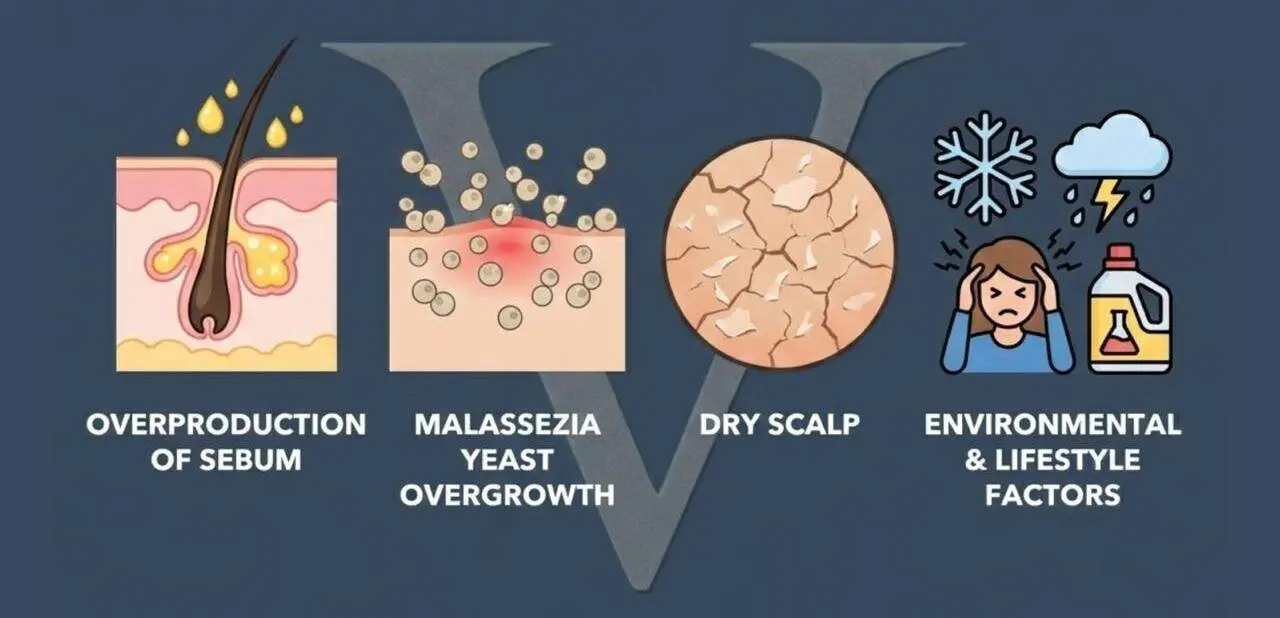
Getting to the bottom of what causes dandruff is key to finding the right treatment. It’s not just one thing that leads to it; rather, it’s a mix of biological, environmental, and lifestyle influences.
Overproduction of Sebum
Sebum is that oil substance that your scalp makes to protect your hair and skin. When you have an excess amount, however, it may create an imbalance leading to a microorganism, especially yeast, growth.
Malassezia Yeast Overgrowth
There is Malassezia yeast that occurs normally in the scalps of many people. The problem is that it can overgrow, triggering an inflammatory reaction of your immune system. As a consequence, your skin starts to renew itself rapidly, resulting in flaky skin.
Dry Scalp
It might be quite surprising, but even if you have a dry scalp, you can experience problems with flakes. Another thing to ask is whether a dry scalp can cause hair fall out. To put it plainly, a dry scalp itself does not affect your hair this way. However, when it remains untreated for a long time, it damages your scalp, which will make your hair undefended to breaking.
Environmental and Lifestyle Factors
Cold and dry weather, air pollution, chronic stress, poor nutrition, and harsh hair products can all exacerbate dandruff and cause scalp inflammation.
Different Types of Dandruff That Can Affect Hair Health
Not all dandruff is the same. Different scalp conditions can produce dandruff-like symptoms, and some have a stronger association with hair loss than others.
Seborrheic Dermatitis vs Dandruff
Seborrheic dermatitis and dandruff are often confused, but they’re not the same. While dandruff is frequently viewed as a less severe form of seborrheic dermatitis, the latter is actually a more serious inflammatory condition.
What are the symptoms of seborrheic dermatitis?
- Thick, oily scales
- Reddish or grayish spots
- Ongoing itching
- Swelling around the hair follicles
The problem can even go beyond the head, and areas such as your eyebrows, ears, and creases around the nose can also become involved. If there is a chronic inflammation, it will damage the hair follicles, and then one wonders whether hair loss can be triggered by seborrheic dermatitis. The answer might be yes.
Fungal Infections
Some fungal scalp infections can be confused with dandruff since there will be other symptoms apart from scaling, including itching, tenderness, swelling, or blistering. Scalp fungi can affect hair follicles, altering their normal hair growth cycles temporarily.
Scalp Psoriasis
Psoriasis is an autoimmune disease that leads to an accelerated turnover of skin cells, which results in the presence of silvery flakes and irritated spots. Itching caused by such a skin disorder can cause hair loss at a certain spot on the scalp where it is irritated.
Lichen Planopilaris
Lichen planopilaris is a relatively rare scalp disease that can lead to scarring alopecia. While it may have flaking and redness just like dandruff does, it is important to visit a doctor.
How Dandruff Contributes to Hair Shedding
Chronic inflammation can weaken the way hair follicles are anchored. If someone scratches too much, it can cause mechanical breakage of the hair. On top of that, sebum buildup can clog the follicles, and an imbalance of microbes can interfere with hair growth cycles. This is why many patients tend to experience more shedding during severe dandruff flare-ups.
Can Dandruff Cause Hair Loss Long-Term?
In most situations, hair loss caused by dandruff is just a temporary issue. Once we get the inflammation under control and bring the scalp back to health, hair usually starts to grow back. But if the inflammation goes untreated for too long, it could make existing hair loss problems, like androgenetic alopecia, even worse.
Dandruff and Hair Loss: The Role of Inflammation
Dandruff and hair loss share a strong association due to the presence of inflammation. The skin microenvironment can be altered by inflammatory activities since the scalp is part of the skin.
Oxidative Stress
During inflammatory responses, oxidative stress takes place, and this causes damage to hair follicles, thereby speeding up the aging process of hair. Researchs suggests that oxidative stress plays a role in hair loss and thinning.
Immune System Factors
People who suffer from weak immune system could experience severe dandruff problems because of factors like HIV, chronic disease, or stress.
Do Bald People Get Dandruff?
It is one of the most common inquiries made by many individuals. Dandruff is a type of skin condition that affects the scalp and does not affect the hair. No matter whether you are totally bald, you may suffer from itching, scaling, and redness. If you are bald, then the flakes will be very obvious due to the absence of hair on the scalp.
How to Stop Dandruff and Protect Hair Health
It is important to understand how to avoid dandruff to prevent hair loss caused by dandruff.
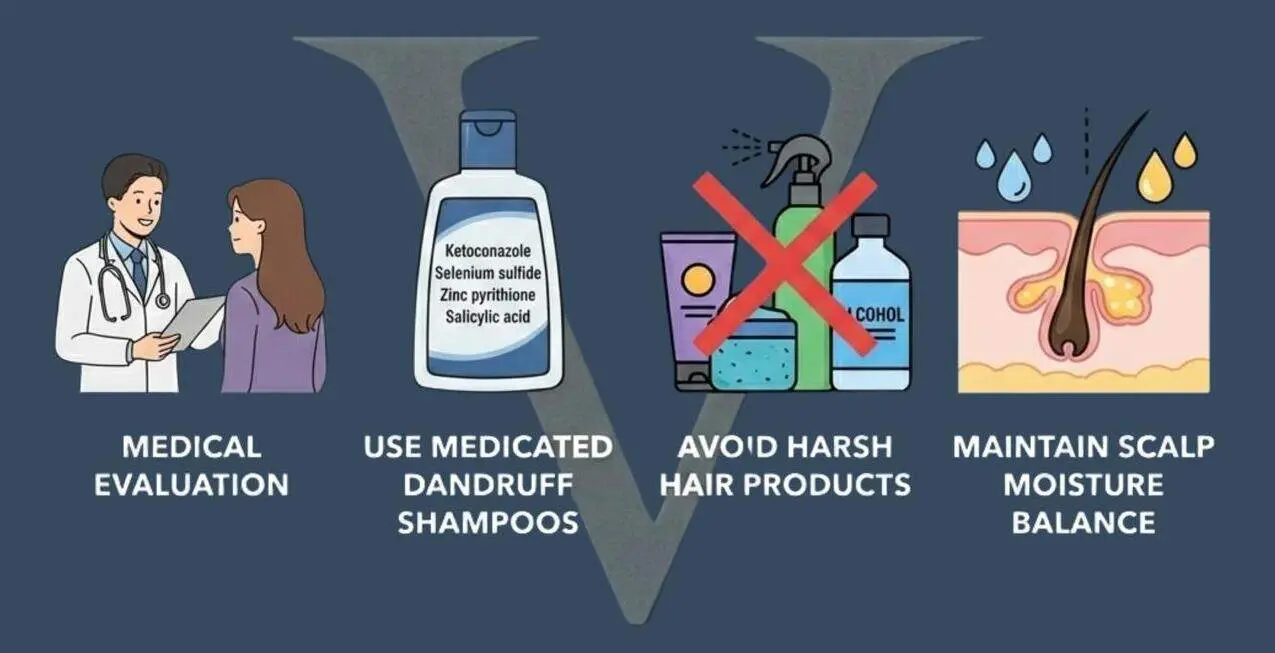
Medical Evaluation
Dandruff and hair loss are certainly health conditions that should undergo professional medical consultation to determine other causes that might have led to these symptoms, including infections and immune disorders.
Use Medicated Dandruff Shampoos
The clinically tested ingredients in shampoos for treating dandruff include:
-
Ketoconazole
-
Selenium Sulfide
-
Zinc Pyrithione
-
Salicylic Acid
These components inhibit yeast growth and inflammation.
This information is for informational purposes only. Consult your doctor before use.
Avoid Harsh Hair Products
Hair products that contain sulfates and alcohol should be avoided as they irritate the scalp.
Maintain Scalp Moisture Balance
An excessive amount of humidity or dryness can be resolved using a healthy hair regimen.
Can Dry Scalp Cause Hair Loss?
While a dry scalp isn’t likely to permanently damage the hair follicles, if it persists, it may:
- Weaken your hair
- Make you itchy, thus encouraging scratching
- Break down your scalp’s natural defense
Therefore, controlling dryness is vital.
How to Recover from Dandruff Hair Loss
Most cases of dandruff hair loss can be reversed.
Regrowth Timeline
Recovery of the hair usually starts after 2 to 4 months from when the irritation is resolved.
Advanced Supportive Treatments
Mesotherapy
By promoting better microcirculation, mesotherapy can provide better nourishment for vulnerable hair follicles that may need some special attention.
Hair Transplant Solutions
If you suffer from non-dandruff related hair loss that’s permanent, hair transplants will be perfect for you. We at IstanbulVita have advanced transplant options such as Sapphire FUE and DHI available for you, to help restore your hair and maintain your scalp’s health at the same time.
Summary: Can Dandruff Cause Hair Loss?
While the straightforward answer is no, since dandruff doesn’t directly cause hair loss, if you neglect treating it, then the weakening of hair follicles due to the presence of dandruff and other related problems can lead to hair fall.
It is necessary to find out what problem causes your dandruff be it seborrheic dermatitis, fungal infection, excessive dryness, inflammation, or any other disease so that you could start solving it. Healthy scalp equals healthy hair, and solving your problems at an early stage can make a real difference.
Here at Istanbul Vita, we consider the overall condition of your scalp when working with you to restore and enhance your hair and hair follicle health.
Frequently Asked Questions (FAQ)
What is dandruff?
Dandruff is a pretty common issue that many people face. It shows up as those annoying white or yellowish flakes on your scalp, which happen when your skin cells shed more quickly than usual. Dandruff is not contagious and is not caused by poor hygiene. In most cases, it is linked to scalp sensitivity, sebaceous activity, and an overgrowth of Malassezia yeast, which triggers inflammation and faster skin renewal.
Does dandruff cause hair loss?
It is not the dandruff itself that causes permanent hair fall. But when the problem persists and is left untreated, it may cause chronic inflammation of the scalp skin. This may be followed by irritation and scratching of the head, which could damage your hair follicles.
Does seborrheic dermatitis cause hair loss?
Certainly, seborrheic dermatitis can cause hair loss in some instances. The problem is that with ongoing inflammation, especially when there is too much oil and irritation at the hair follicle, it becomes weak leading to increased hair loss. The good news is that hair loss associated with seborrheic dermatitis can be reversed with proper treatment.
Do bald people get dandruff?
Yes, it's true that people without hair can still get dandruff. Dandruff targets the scalp's skin, not the hair, so those with little or no hair can still face problems like flaking, itching, redness, and seborrheic dermatitis. Interestingly, dandruff might stand out more on a bald scalp because there’s no hair to cover up the flakes.
How to stop dandruff?
Getting rid of dandruff starts with figuring out what’s behind it. You’ll want to use medicated anti-dandruff shampoos, wash your scalp regularly, avoid any products that could irritate your skin, manage your stress, and don’t hesitate to seek medical help if the symptoms stick around.
What causes dandruff in hair?
Dandruff develops as a result of multiple biological and environmental factors, including Malassezia yeast overgrowth on the scalp, imbalanced sebum production, scalp sensitivity and inflammation, cold or dry weather changes, chronic stress or hormonal fluctuations, and the use of unsuitable or aggressive hair care products, making it essential to identify the dominant trigger for effective long-term control.
Have Questions? Let's Chat on WhatsApp!
Get instant answers 24/7. Receive your doctor-led hair analysis within 1 day, plus pricing and booking support.
Start WhatsApp Chat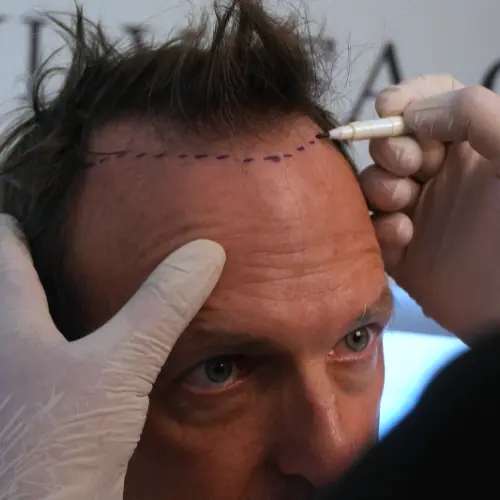
 conversation


