
 English
Table of Contents
Crown restoration does not involve grafting additional hair into an already thinning part of the scalp. The number of grafts required will depend on the size of the crown, density, donor area, and how the hair in that particular area naturally grows. The hair in the crown grows in spiral whorls, so it's important to plan accordingly.
Why Is Crown Restoration More Complex Than Hairline Work?
The crown tends to be trickier to work on simply because its growth pattern has to be rebuilt with real precision. It doesn't offer the same visual reference points the hairline does. There's no defined edge here, no single direction to follow, which makes freehand judgment far more important.
With the hairline, the priorities are fairly clear: framing the face, respecting the natural recession line, and building density up front. The crown asks for something else entirely, since the direction of growth keeps rotating around the whorl.
| Area | Main Planning Goal |
|---|---|
| Hairline | Natural framing, direction, and facial balance |
| Crown | Whorl recreation, coverage, and density transition |
Restoring a crown isn't a matter of simply covering a bare scalp. Every single graft has to align with the surrounding pattern, or the result won't hold up when viewed from different angles.
Even a slight miscalculation in placement angle can show up under bright light or from a top-down view. That's precisely why the placement strategy tends to carry more weight than the total graft number on its own.
How Does the Crown Whorl Affect Graft Placement?
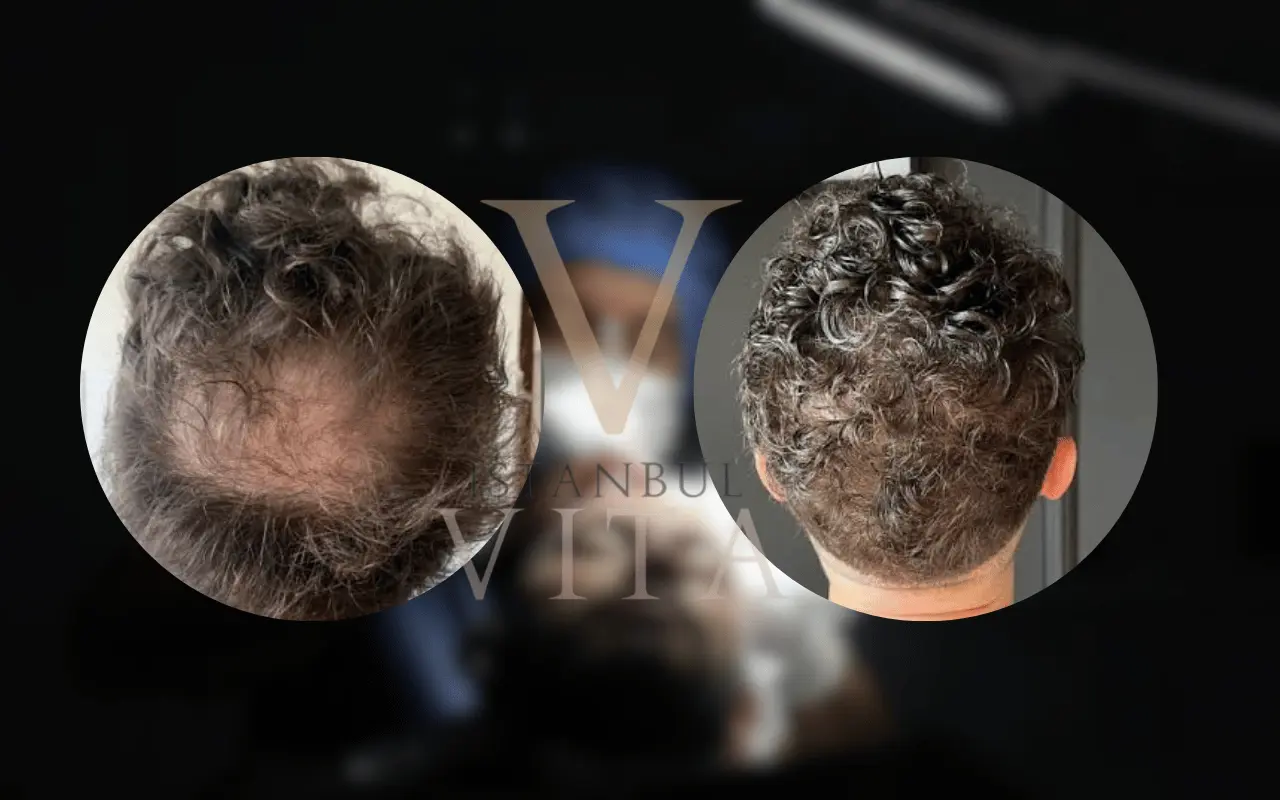
Every person's crown is shaped by a spiral pattern that's genuinely their own; hair fans outward from a central point and rotates as it moves across the scalp. Because of that, there's no such thing as placing crown grafts in a single, uniform direction.
Before any procedure begins, the surgeon needs to closely examine several things:
- the direction of the existing whorl
- the natural angle of hair growth
- the density already present in the area
- how transplanted follicles will blend with native ones
Even with a strong graft count, a poorly angled or overly flat placement can make the crown look unnatural. Although a good graft count can be achieved, if the angle is incorrect or too flat, the crown will not appear natural.
This is exactly why a thorough pre-treatment evaluation of the crown matters so much. In both cases, the same number of grafts can produce very different outcomes due to a prior knowledge of the natural pattern.
How Many Grafts Are Usually Needed for a Crown Hair Transplant?
No fixed amount of grafts exists in crown cases. What's actually needed depends on how large the thinning area is, how much density remains, how much donor hair is available, and how much coverage the patient is hoping for.
As a rough guide, cases tend to fall somewhere along these lines:
| Crown Condition | Possible Graft Range |
|---|---|
| Early thinning | 1,000–1,500 grafts |
| Moderate thinning | 1,500–2,500 grafts |
| Larger crown loss | 2,500+ grafts |
They're just guidelines and not hard-and-fast rules. The crown area of two patients who appear to have similar crowns may actually need completely different procedures depending on the factors of follicle thickness, current hair coverage, and susceptibility to future hair loss.
One thing worth noting: the crown often covers more visual territory than people initially assume, so distributing grafts carefully matters a lot here. Piling on grafts without thinking about donor preservation down the road can limit what's possible later on.
Why Does the Crown Require Special Density Planning?
Here's something that surprises a lot of patients. The crown is one of the areas where perceived density can play tricks on the eye. Since it's viewed from above, even minor gaps in coverage become obvious under the right (or wrong) lighting.
Not everyone will have the goal of maximizing density in all areas. In most cases, the objective is simply having as little visible scalp as possible while integrating new hair with existing hair.
A good outcome usually comes down to balancing:
- graft placement
- existing density
- individual hair characteristics
- how visible the scalp is
- coverage in the surrounding area
Take two hypothetical cases: a crown with only moderate density but excellent blending will often look more natural than one with higher density but the wrong growth direction.
When Do Crown Hair Transplant Results Appear?
If there's one thing to know about crown restoration going in, it's that patience matters here more than almost anywhere else. Because the area has a more complicated growth pattern and typically spans a wider region, changes tend to show up more slowly than they would with frontal restoration.
| Period | Expected Changes |
|---|---|
| First weeks | Healing and natural shedding |
| Months 3–4 | Early growth begins |
| Months 5–8 | Visible improvement starts |
| Months 9–12 | Increasing density and coverage |
| Months 12–18 | Final maturation and texture |
Around the four- or five-month mark, it's common for patients to feel a bit anxious. Growth can look uneven or incomplete at this stage. That's usually nothing to worry about; it's simply part of the timeline while new follicles continue to develop and thicken.
Have Questions? Let's Chat on WhatsApp!
Get instant answers 24/7. Receive your doctor-led hair analysis within 1 day, plus pricing and booking support.
Start WhatsApp ChatWho Is a Good Candidate for Crown Restoration?
Not everyone dealing with crown thinning is automatically ready for restoration right away. An effective assessment must take into consideration not only the current status of the hair loss but also how this condition is expected to progress in the future.
Usually, good candidates have several common features:
- stable, non-progressive hair loss
- enough donor hair available
- realistic expectations around density
- clearly defined thinning in the crown area
Some situations call for a closer look before moving forward, particularly when there's:
- ongoing, fast-moving hair loss
- diffuse thinning spread across the scalp
- a donor area that's already limited
Protecting the donor supply is a core part of this planning process. The goal isn't only improving the crown today. It's making sure future options stay open too.
Why Does Donor Planning Matter in Crown Restoration?
How much coverage can realistically be achieved comes down to the donor area. The amount of the hair must be controlled carefully, particularly in situations where the hair loss on the crown area coexists with the frontal hair recession.
This is really why crown restoration works best as a long-term strategy rather than a one-time fix. The best results can be achieved by combining the need for now and in the future.
Frequently Asked Questions About Crown Hair Transplant
How many grafts are needed for crown restoration?
It depends on how large the thinning area is, the density that remains, and how much donor hair is available. Smaller cases might only need around 1,000–1,500 grafts, while more extensive thinning can call for 2,500 or more.
Is crown restoration harder than hairline restoration?
Generally, yes. The crown demands more careful planning since hair grows in a spiral rather than a single, predictable direction.
Why does the crown take longer to show results?
It covers a wider surface and requires more visual blending, progress tends to build gradually. Most patients see the clearest improvement somewhere between months 9 and 18.
Can the crown and hairline be treated together?
Yes. As long as the donor area has enough capacity to support both regions, they're often addressed within the same treatment plan.
 conversation


