
 English

Table of Contents
Short answer: Ben Affleck has never publicly said he had a hair transplant. How consistent his hairline has looked over the years is why the question keeps coming up, but photos alone cannot confirm whether a procedure took place.
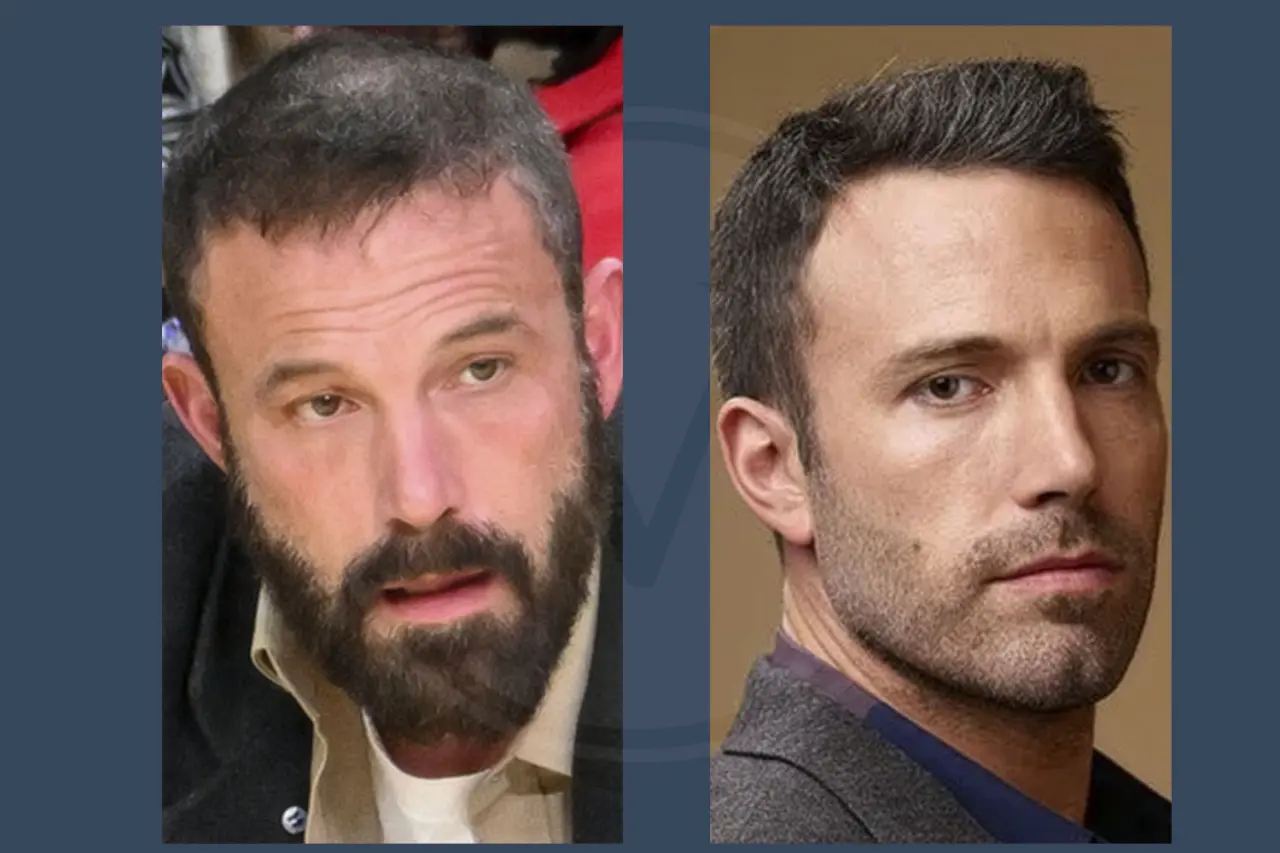
One of the most well-known leading males in Hollywood for a very long time is Ben Affleck. The question of whether Ben Affleck had a hair transplant has been raised by numerous fans and experts over the years due to small variations in his hairline. Affleck has never publicly addressed the subject, but visual evidence from various stages of his career points to the potential for a professional hair restoration treatment. His case is now frequently referenced in celebrity hair transplant discussions, especially when analyzing subtle, natural-looking results.
Sapphire FUE
A leading option for creating a natural, refined hairline. The symmetry and fullness of Affleck’s front line suggest the possibility of Sapphire FUE.
- Smaller incisions than traditional steel blades
- Reduced trauma to surrounding tissue
- Faster healing and less visible scarring
- Precise control over graft placement angle and density
This technique is well-suited for creating natural-looking hairlines with subtle density gradation.
DHI (Direct Hair Implantation)
Allows precise control over angle, direction, and density. The smoother distribution of Affleck’s frontal hair could match a DHI-based approach.
- Maximizes graft survival through minimal handling
- Allows real-time angle and direction adjustment
- Enables higher density in smaller areas
- Requires longer operative time but produces highly natural results
DHI is often preferred for frontal hairline work where precision is critical.
Combined Technique
Frequently used in celebrity cases to achieve both natural framing and high density.
Smart FUE Technique and Modern Hair Restoration
If Ben Affleck pursued hair restoration, the most likely approach would involve advanced follicular extraction methods. Smart FUE (Follicular Unit Extraction) represents a refinement of traditional FUE, incorporating:
- Motorized extraction: Reduces trauma to follicles and improves graft survival rates
- Precision angle control: Extracts hair at the exact angle it grows, preserving natural appearance
- Minimal scarring: No linear scar in the donor area, allowing short hairstyles post-procedure
- High graft viability: Typically 85–95% of transplanted hairs survive and grow
Smart FUE is favored by celebrities seeking natural results because it allows for gradual density building across multiple sessions without visible donor-area damage.
Estimated Graft Requirement for Ben Affleck's Pattern
Based on visual analysis of his early hair loss, a professional restoration would likely require:
| Area | Estimated Grafts | Purpose |
|---|---|---|
| Frontal hairline restoration | 1,200–1,600 | Recreate natural hairline and frame |
| Temple definition | 600–800 | Restore recession points |
| Frontal density enhancement | 400–600 | Increase thickness in thinning areas |
| Total estimate | 2,200–3,000 grafts | Single or staged sessions |
This range is typical for men with his degree of recession seeking a natural, age-appropriate result. Celebrities often spread this across two sessions to allow healing and to refine density gradually.
Before and After: Observable Hairline Changes
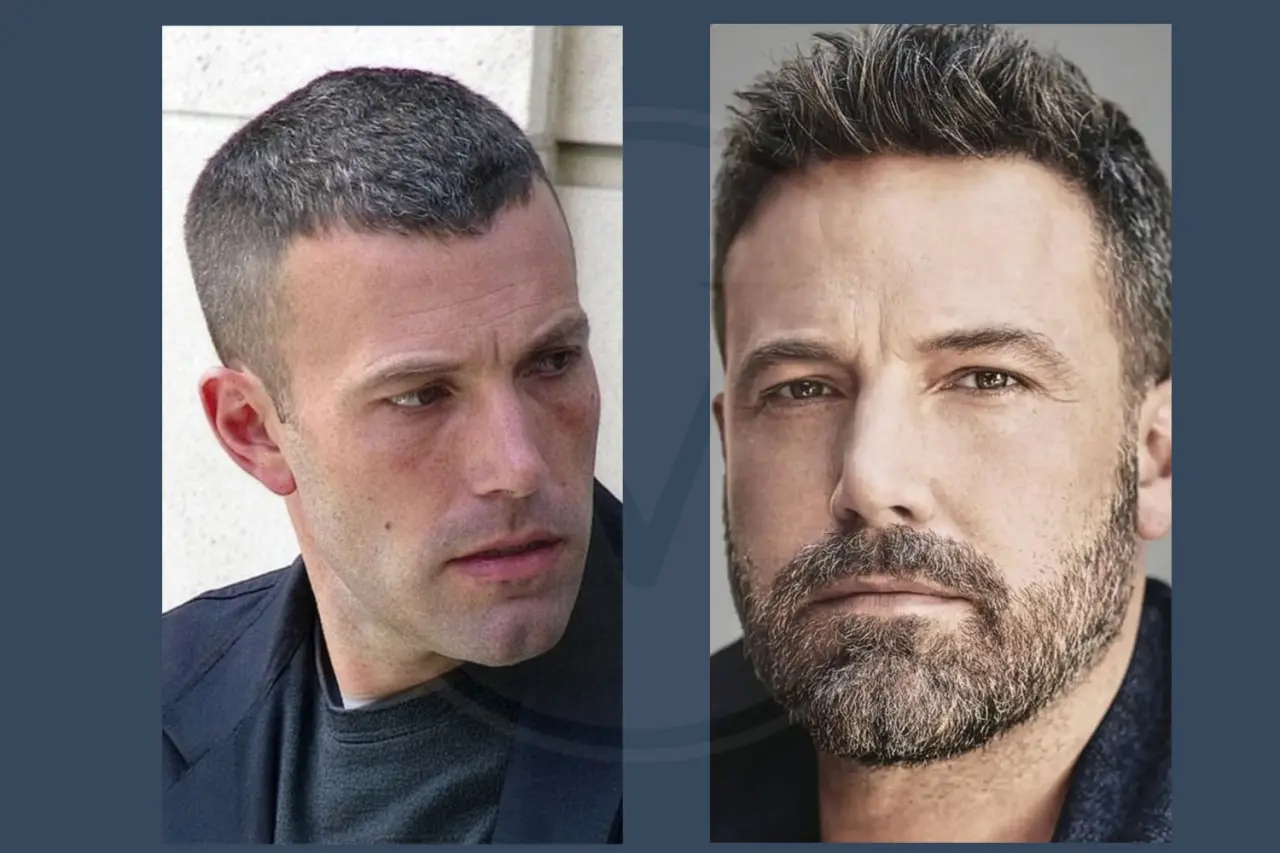
Comparisons across decades reveal consistent improvements:
- 2000–2008: Visible temple recession and frontal thinning
- 2010–2015: Fuller temples, denser frontal region, more defined hairline
- 2015–present: Maintained density and hairline definition
The stability of these improvements over more than a decade is consistent with successful hair transplantation, where transplanted hairs are genetically resistant to further loss. However, other factors, including styling, lighting, and age-related stabilization of hair loss, could also explain these visual changes.
Eligibility, Risks, and Medical Limitations
Hair transplantation is not suitable for everyone. Candidacy depends on several factors that must be evaluated by a qualified physician:
| Eligibility Factor | Requirement | Why It Matters |
|---|---|---|
| Stable hair loss pattern | Loss must have plateaued or progressed predictably | Prevents over-transplanting areas that may recede further |
| Sufficient donor hair | Adequate density in back and sides of scalp | Determines how many grafts can be safely harvested |
| Realistic expectations | Understanding of natural density limits and timeline | Prevents disappointment; results take 12–18 months to fully mature |
| Overall health | No uncontrolled bleeding disorders, active infections, or immunosuppression | Affects wound healing and graft survival |
| Age consideration | Typically 25+ years old; younger patients need careful planning | Younger men may experience continued loss in untreated areas |
Common Risks and Complications
While modern hair transplantation is generally safe, potential complications include:
- Shock loss: Temporary shedding of transplanted or surrounding native hair (usually reversible within 3–6 months)
- Infection: Rare but serious; requires immediate medical attention
- Scarring: Minimal with FUE, but possible if post-operative care is neglected
- Unnatural appearance: Results depend heavily on surgeon skill and patient compliance with aftercare
- Numbness or altered sensation: Usually temporary but can persist in the donor or recipient area
These risks underscore the importance of choosing an experienced, board-certified surgeon and following all post-operative instructions carefully.
Doctor, Clinic, and Verifiable Credentials
Any hair transplant procedure should be performed by a qualified medical professional. Key credentials to verify include:
- Medical license: Valid, current license from the country's medical board
- Specialization: Training in dermatology, plastic surgery, or hair restoration
- Facility accreditation: Clinic meets safety and hygiene standards
- Published case studies: Before-and-after documentation with patient consent
- Professional memberships: Membership in recognized hair restoration societies (e.g., International Society of Hair Restoration Surgery)
Istanbul Vita is a hair transplant clinic in Istanbul, Turkey, staffed by physicians including Dr. Harun Eymen Alakaya, Dr. Mustafa Ayhan Balcı, Dr. Özge Miray Gültekin, and Dr. Tuğçe Yılmaz Arslan. The clinic offers Sapphire FUE, DHI, and combined techniques. Patients considering any procedure should independently verify credentials, review patient testimonials, and consult with multiple providers before making a decision.
Techniques That Could Produce Ben Affleck-Like Results
Combined Approach
Many surgeons use FUE for bulk graft harvesting and DHI for precise frontal placement, balancing efficiency with aesthetic control.
Timeline and Recovery Expectations
Hair transplant recovery follows a predictable pattern:
- Days 1–7: Redness, mild swelling, and scabbing in both donor and recipient areas
- Weeks 2–4: Scabs shed; transplanted hairs may appear to fall out (normal shock loss)
- Months 2–4: New hair growth begins; initially fine and light
- Months 4–8: Visible thickening and darkening of new hair
- Months 8–12: Continued maturation; results become increasingly natural
- Month 12–18: Final density and appearance achieved
Full results require patience. Premature judgment before 12 months can lead to unnecessary concern.
Hair Transplant Candidacy and Contraindications
Individuals who should avoid or delay hair transplantation include those with:
- Active scalp infections or inflammatory conditions
- Uncontrolled bleeding disorders or use of blood thinners without medical clearance
- Severe immunosuppression (HIV/AIDS, post-transplant patients)
- Unrealistic expectations or body dysmorphic disorder
- Rapidly progressive hair loss (may benefit from medical management first)
- Insufficient donor hair density
A comprehensive medical consultation is essential before proceeding. No reputable surgeon will operate without thorough evaluation and patient education.
Have Questions? Let's Chat on WhatsApp!
Get instant answers 24/7. Receive your doctor-led hair analysis within 1 day, plus pricing and booking support.
Start WhatsApp ChatWhy Ben Affleck's Case Remains Speculative
Without official confirmation or medical records, any claim about Ben Affleck's hair restoration is inference based on visual comparison. Factors that complicate definitive analysis include:
- Photographic variables: Lighting, angle, styling, and hair product use affect appearance
- Age-related changes: Hair loss can stabilize naturally; density may appear to improve with age
- Alternative explanations: Topical treatments, hair fibers, or partial hairpieces could explain changes
- Privacy: Celebrities are not obligated to disclose personal medical procedures
Medical professionals analyzing his case note the consistency and longevity of improvements, but acknowledge that visual evidence alone cannot confirm a procedure.
Hair Transplant in Turkey: Quality and Cost Considerations
Turkey has become a major destination for hair transplantation due to:
- Experienced surgeons: Many trained internationally and perform thousands of procedures annually
- Advanced technology: Clinics invest in latest FUE and DHI equipment
- Cost efficiency: Procedures typically cost 40–60% less than in North America or Western Europe
- All-inclusive packages: Often include accommodation, transfers, and post-operative care
- Medical tourism infrastructure: Established support for international patients
However, quality varies significantly. Patients should verify surgeon credentials, review extensive before-and-after galleries, and read independent patient reviews before committing.
FAQ, Frequently Asked Questions
How Did Ben Affleck’s Hair Loss Begin?
The following images from the early 2000s demonstrate typical male-pattern hair loss symptoms: Temple recession that is noticeable A Norwood 2-3 hairline form Diminished density in the frontal area These characteristics are consistent with androgenetic alopecia, the most prevalent kind of hair loss among men, including many famous people. Gradual temple recession on both sides Norwood Scale 2–3 hairline pattern (early to moderate recession) Reduced density in the frontal region Maintained hair thickness at the crown These signs align with androgenetic alopecia, the most common form of hair loss in men. The pattern is also one of the most responsive to modern hair transplant techniques.
What Type of Hair Loss Did Ben Affleck Have?
Affleck’s hair pattern is consistent with: Temporal recession Frontal hairline weakening This type of male-pattern hair loss is also one of the most suitable patterns for modern hair transplantation.
What Type of Hair Transplant Might Ben Affleck Have Had?
Since Affleck has never disclosed any procedure, all assessments are based on: Visual comparison Medical knowledge of hair transplant techniques Typical patterns seen in hair restoration cases The improvements in his hairline and density are consistent with these modern techniques:
How Many Grafts Would Ben Affleck Likely Have Needed?
Given the level of recession and density loss seen in earlier images, Affleck would normally require: Reconstruction of the frontal and temple: 1,800–2,400 grafts Enhancement of density: 400–700 grafts Total estimated: 2,000–3,000 grafts Celebrities who desire a natural, age-appropriate hairline frequently fall into this bracket.
Ben Affleck Before & After: How Did His Hairline Change?
Comparisons across the years reveal significant improvements: Restored temple areas A fuller and more youthful frontal hairline Improved density across the top A more even, thicker overall appearance These noticeable changes explain the rise in searches such as “ben affleck hair transplant before after.”
Thinking of Starting Your Own Hair Restoration Journey?
The foundation of successful hair restoration is: Accurate analysis Strong donor evaluation A personalized treatment plan Proper planning is the key to natural, long-lasting results.
Is It Possible To Get a Hair Transplant Like Ben Affleck in Turkey?
Turkey is known throughout the world for its superior, realistic-looking hair restorations that employ cutting-edge methods like Sapphire FUE. DHI Reconstruction of a high-density hairline Clear fixed-price bundles With careful preparation and execution, patients with comparable hair loss patterns and a strong donor area can indeed look like Ben Affleck.
Did Ben Affleck have a hair transplant?
There is no official confirmation. However, consistent improvements in his hairline and density suggest the possibility of a hair restoration procedure.
 conversation


