
 English
Table of Contents
The Mistake Most Afro Hair Patients Make Before Booking
You've researched different hair transplant options, but choosing the right technique is one of the most important decisions for Afro-textured hair. Because curved follicle structures require careful handling, the choice between FUE and DHI can affect the overall approach and planning of the procedure.
The DHI side of that choice is worth understanding on its own: our DHI hair transplant in Istanbul page shows how the Choi implanter controls the angle each follicle is placed at.
This isn't a small detail. Afro hair has its own unique curl structure below the skin the follicle curls even before exiting the scalp. With an incorrect procedure from your doctor, the hair is already damaged before even being implanted. After three months of your treatment, you will realize whether the hair grows sparsely or does not grow at all.
Before deciding between FUE and DHI, it is important to understand how Afro-textured hair differs from other hair types. Our detailed Afro hair transplant guide explains the follicle structure, planning process, and techniques used for this type of restoration.
FUE vs DHI for Afro Hair: Which Technique Is Safer?
DHI is usually the preferable procedure in case of afro hair transplant surgery. However, an FUE using a slightly adjusted punch also becomes viable, depending entirely on your donor site density and curl angle.
Here's the core difference:
| Feature | FUE (Follicular Unit Extraction) | DHI (Direct Hair Implantation) |
| Extraction tool | Circular punch (0.7–1.0mm) | Choi implanter pen |
| Channel creation | Separate step (slits made first) | Simultaneous extraction + implantation |
| Risk for afro hair | Higher — curved follicles increase transection risk | Lower — more control during placement |
| Density achievable | Moderate | High |
| Scarring | Minimal dot scars | Minimal dot scars |
| Recovery time | 7–10 days | 7–10 days |
| Best suited for | Mild-to-moderate thinning, experienced surgeons only | Most afro hair cases |
Why Does the Technique Matter for Afro Hair Transplants?
Afro hair doesn't just look different on the surface. The follicle itself grows at a sharp curve beneath the skin, sometimes forming a full U-shape. A regular circular FUE punch, which can be very effective for straight or curly textures, may become misaligned and cut the follicle during extraction.
Skilled doctors experienced with afro-textured follicles use curved punches, oscillating punches, or slower rotations to ensure the instrument follows the natural curve beneath the skin. One procedure used by some clinics is Sapphire FUE, which involves creating micro-incisions with a sapphire blade. This is why experience with curved and coiled follicles is important when selecting the right technique. A general transplant clinic that treats mostly Caucasian patients may not have the calibration or technical refinement required for this texture.
What to Expect After FUE and DHI for Afro Hair
Regardless of whether you opt for FUE or DHI, the recovery process and hair regrowth are expected to take a similar amount of time. In cases where one has afro-textured hair, the entire process might take longer than for straight hair due to the nature of the curls of the follicles.
- 0–2 weeks: Redness, scabbing, and small crusts around the grafts are normal parts of the healing process.
- 2–6 weeks: The transplanted hairs begin to shed. This is known as shock loss and is an expected stage of recovery, not a sign that the procedure has failed.
- 3–4 months: New hair starts to grow. Early growth is usually thin and fine.
- 6 months: Around 50–60% of the final result is typically visible.
- 12 months: Most of the final result can be seen, with the hair's natural curl pattern, texture, and density becoming more noticeable.
- 18 months: Final density and texture are fully established. For afro hair, this stage may take slightly longer than for straight hair because of its unique growth cycle.
Although FUE and DHI follow similar growth timelines, recovery and final outcomes can vary depending on individual characteristics, the technique used, and the quality of surgical planning. In general, afro-textured follicles tend to progress 4–6 weeks more slowly than straight ones at each stage. For this reason, clinics that promise full results within 9 months may be underestimating the natural growth cycle of afro-textured patients.
Choosing Between FUE and DHI
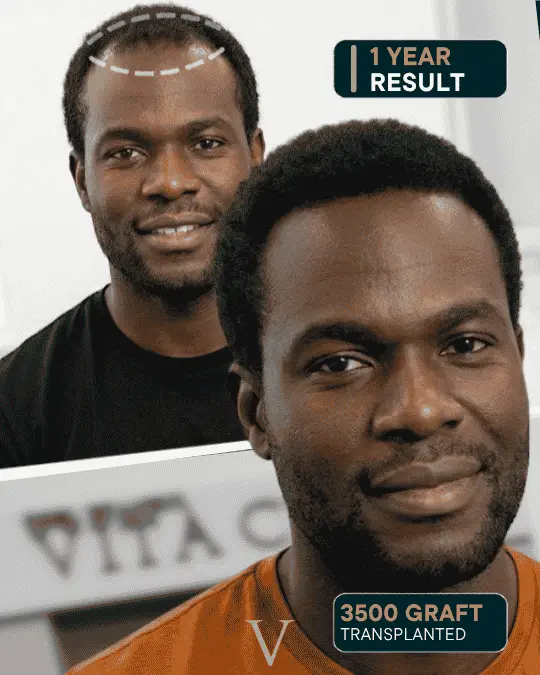
With afro-textured hair, there are a few factors that play into whether one should go with FUE, DHI, or Combined FUE & DHI during hair transplants.
- DHI is a good choice when density, accurate placement, and graft survival are top priorities. This procedure is more often recommended for afro hair, especially for hairline restoration.
- Sapphire FUE is the preferred choice for restoring larger areas of the scalp, provided the clinic has experience with the unique characteristics of afro hair.
- If your needs involve both large coverage and high-density implantation, consider a Combined FUE & DHI approach. Using Sapphire FUE for larger treatment areas and DHI for smaller, more precise areas such as the hairline can make the procedure more effective. The Combined FUE & DHI technique was pioneered at Istanbul Vita.
- Standard FUE should only be considered if the clinic has proven expertise in afro hair transplant due to the increased risk of follicle transection.
However, the technique is only one part of the equation. The surgeon's experience with afro-textured hair, together with meticulous treatment planning and selecting the most appropriate method for each area of the scalp, plays the most decisive role in achieving natural-looking results.
Have Questions? Let's Chat on WhatsApp!
Get instant answers 24/7. Receive your doctor-led hair analysis within 1 day, plus pricing and booking support.
Start WhatsApp ChatReady to Find Out Which Technique Suits Your Hair?
If you're weighing your options and want an honest assessment of what your specific hair type needs graft count, technique, timeline, and realistic cost the team at Istanbul Vita offers free consultations that are genuinely informative, not just a sales call.
Frequently Asked Questions
Can the Same Procedure Be Applied to All Patients with Afro Hair?
No, afro hair requires individualized planning; same procedure cannot be applied to all patients due to curl pattern differences. significantly
Is It Necessary to Combine FUE and DHI for Every Patient?
No. A Combined FUE & DHI approach is not necessary for every patient. It is typically recommended when different areas of the scalp require different implantation techniques to achieve the best possible outcome.
Is FUE or DHI Better for Afro Hair?
DHI is often preferred for Afro hair because it allows more precise graft placement and better control over implantation angles. However, FUE can also be a suitable option when performed with the correct extraction technique and by a surgeon experienced with curved Afro follicles. The best choice depends on the patient's follicle structure, donor area, and hair restoration goals.
Why Is Afro Hair More Challenging for FUE Extraction?
Afro hair follicles often have a curved structure beneath the scalp, which can make extraction more technically demanding. The extraction angle, punch size, and handling of grafts must be carefully planned to reduce the risk of follicle damage during the FUE procedure.
Does DHI Provide Higher Density Than FUE for Afro Hair?
DHI may offer more control during graft placement, which can be beneficial when creating density in specific areas such as the hairline. However, the final density depends on several factors, including donor capacity, graft quality, hair characteristics, and the surgeon's approach rather than the technique alone.
 conversation


