
 English
Table of Contents
Postpartum hair loss is a common experience for many women after childbirth, yet it can feel concerning when it begins. You may start to notice increased shedding and wonder when does postpartum hair loss start, how long it will last, and whether it is something to worry about.
In most cases, hair loss postpartum is temporary, but the intensity and duration can vary. Learning about the causes of postpartum hair loss, the mechanism of the postpartum hair loss process, and the available treatments for hair loss can enable you to deal with this issue better.
What Is Postpartum Hair Loss?
Postpartum hair loss is a medical condition that affects women after childbirth and results from changes in the hormones within the body. Increased levels of estrogen during pregnancy prevent the hair from falling out since they stimulate its growth period. The hormone levels drop after childbirth, resulting in hair entering the shedding stage simultaneously. The loss of hair that occurs postpartum falls under a category of temporary hair shedding, also called telogen effluvium. This condition doesn't involve the loss of hair permanently, but it's just a reaction of the body recovering from pregnancy. Women tend to observe the loss of hair several months after delivery when brushing, washing, or combing it. It may be distressing for women but is a natural process.
What Causes Postpartum Hair Loss?
Postpartum hair loss is mainly caused by hormonal changes that occur after childbirth. During pregnancy, estrogen levels increase and help keep hair in the growth phase for longer, which means less daily shedding. After delivery, estrogen levels drop rapidly. This abrupt shift results in an increased number of hair follicles being in their resting state, resulting in hair loss experienced by postpartum mothers over the next few months. This disorder is known as telogen effluvium, a form of temporary hair loss resulting from an interruption in the natural growth cycle of hair. The hair fall in this case is not permanent, nor does it occur because of any health complications; it is simply a natural response of the body to the hormonal shift following childbirth.
There could be other causes of hair loss following childbirth, such as stress, fatigue, or lack of nutrients. In many cases, these factors don’t directly cause the condition but can make the shedding more noticeable or slightly prolong the process.
When Does Postpartum Hair Loss Start?
Postpartum hair loss does not usually begin immediately after childbirth.The time frame for most women is two to four months following childbirth, when their bodies have started to adjust to hormone fluctuations.
During pregnancy, hair remains in the growth phase for longer due to higher estrogen levels. Once hormone levels drop after childbirth, more hair follicles shift into the shedding phase at the same time, which is why the hair loss becomes noticeable after a short delay.
This timing can vary from one person to another. Some women may notice signs earlier, while others experience it a bit later. Knowing when hair loss begins after pregnancy may help in setting appropriate expectations and reducing anxiety levels.
Postpartum Hair Loss Timeline: What to Expect
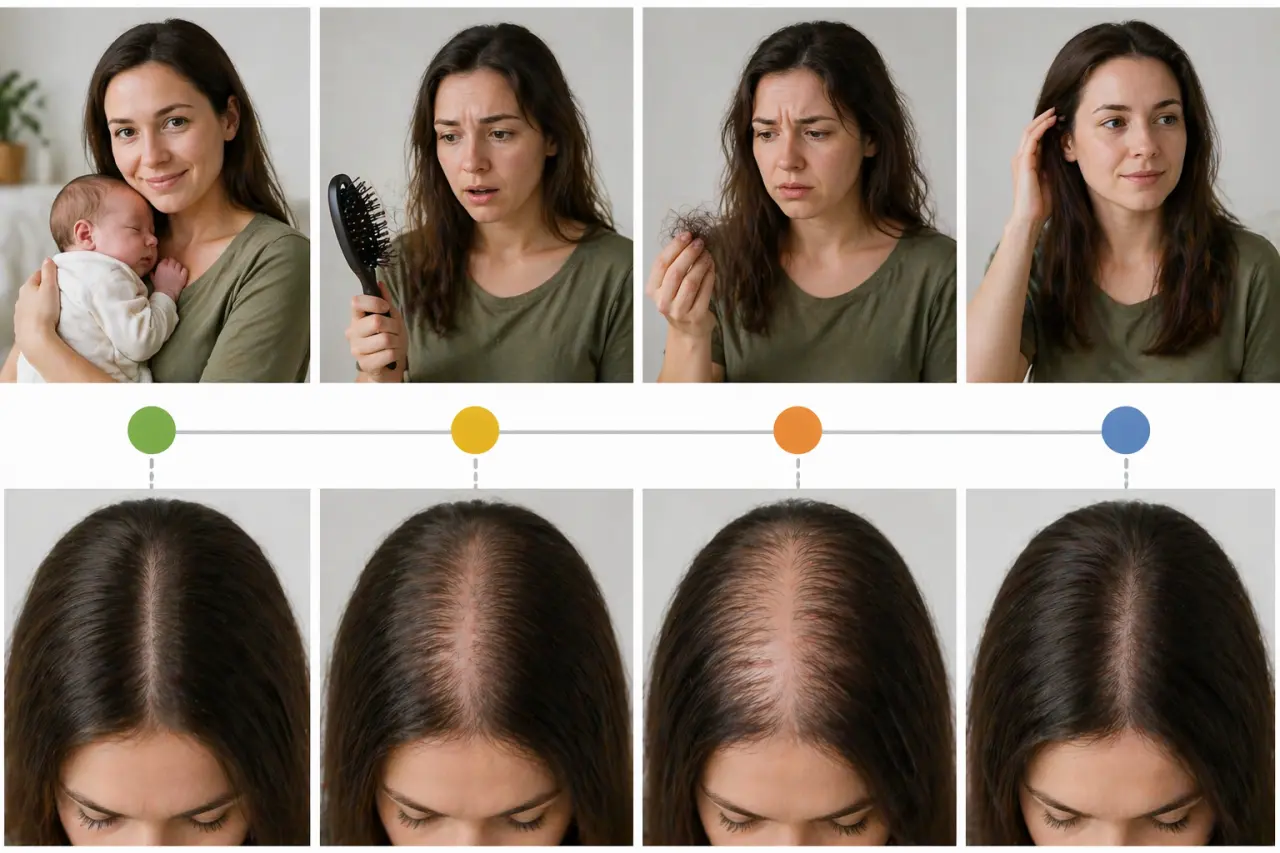
Postpartum hair loss does not happen all at once. Instead, it follows a gradual timeline that many women experience after childbirth.
In the first couple of months, most women do not notice any significant change. Hair may still feel fuller, as it did during pregnancy. Around 2 to 4 months postpartum, increased shedding usually begins as hormone levels continue to adjust.
The shedding becomes more noticeable between 3 to 6 months after childbirth, which is often when postpartum hair loss reaches its peak. During this time, you may see more hair falling out while brushing or washing.After this period, the shedding typically starts to slow down. For most women, hair loss improves within 6 to 12 months postpartum, as the hair growth cycle gradually returns to normal.
However, this timeline is not the same for everyone. While some women will heal quicker, others will have shedding that lasts for a long time, based on things like stress, diet, and general well-being.
When Does It Peak?
Postpartum hair loss usually reaches its peak between 3 to 6 months after childbirth. This is when the shedding becomes most noticeable, and you may start seeing more hair fall during daily activities like brushing or washing. Although this phase can feel intense, it is typically temporary and part of the natural hair growth cycle adjusting after pregnancy.
How Long Does It Last?
Postpartum hair loss does not last forever. For most women, the shedding phase continues for a few months and gradually improves as the body returns to its normal hormonal balance.
In general, postpartum hair loss can last anywhere between 6 to 12 months after childbirth. During this time, the hair growth cycle slowly stabilizes, and new hair begins to grow.
However, the duration may vary from person to person. Some women may notice improvement sooner, while others may experience a longer shedding period depending on factors such as stress, nutrition, and overall health.
| Time Period | What to Expect |
|---|---|
| 0–2 months postpartum | Little to no noticeable hair loss |
| 2–4 months postpartum | Shedding begins to increase |
| 3–6 months postpartum | Hair loss reaches its peak |
| 6–12 months postpartum | Shedding slows down and regrowth begins |
When Does It Stop?
Postpartum hair loss usually begins to slow down after the peak shedding phase. For most women, this happens around 6 months after childbirth, as the body gradually returns to its normal hormonal balance.
In many cases, hair shedding stops completely within 6 to 12 months postpartum, once the hair growth cycle stabilizes. New hair growth may also become more noticeable during this time.
However, recovery time can vary. Some women may see improvement earlier, while others may experience a longer process depending on factors such as stress, nutrition, and overall health.
Is Postpartum Hair Loss Normal?
Yes, postpartum hair loss is completely normal and affects many women after childbirth. It is a natural response to hormonal changes and not a sign of a serious health problem.
During pregnancy, higher estrogen levels reduce daily shedding, which means less hair falls out than usual. After delivery, this balance shifts, and the hair that was previously retained begins to shed at once. This can make the hair loss feel more intense than it actually is.
Although it may seem concerning, postpartum hair loss is usually temporary and part of the body’s natural recovery process. In most cases, hair growth gradually returns to normal over time.
How Much Hair Loss Is Too Much?
It is normal to notice increased hair shedding after childbirth, but it can be difficult to tell how much is too much. In most cases, losing more hair than usual is part of postpartum hair loss and does not indicate a serious problem.
However, there are certain signs that may suggest the shedding is more than expected. If you notice excessive hair falling out in large amounts, visible thinning, or areas where the scalp becomes more noticeable, it may be worth paying closer attention.
In some cases, postpartum hair loss can feel more intense due to how quickly the shedding happens. This does not always mean something is wrong, but if the hair loss continues beyond the typical timeline or becomes patchy, it may be helpful to seek professional advice.
Bald Patches: Should You Be Concerned?
Typically, hair loss after childbirth does not lead to bald patches. It usually occurs evenly across the scalp, making the hair appear thinner without creating visible gaps.
However, if bald patches begin to appear during this period, it may not be related to postpartum shedding. There could be other underlying causes, such as alopecia areata or different types of hair loss.
Hair loss that occurs in patches, develops quickly, or continues to worsen over time should be monitored more closely. While there is no need to be overly concerned, consulting a specialist can help you better understand the condition.
Postpartum Hair Loss After 1 Year: Is It Still Normal?
For the majority of women, hair loss associated with postpartum is resolved by one year following delivery. Since hormones return to pre-birth levels, normal hair cycles resume their function and hair sheds less. Nevertheless, in the event hair loss persists past 12 months following delivery, the condition is likely due to a cause other than hormones. There could be an underlying reason for the extended shedding process that involves issues related to nutrition or stress. For some individuals, recovery might take more time as the body adjusts to new changes. Nonetheless, continued hair loss past one year postpartum calls for additional measures to be taken. Therefore, consulting with a professional will give insight into the cause of the issue, making it easier to determine further action.
Postpartum Hair Loss Treatment Options
For most women, nothing special needs to be done for postpartum hair loss. It usually settles down on its own once the body finds its balance again after pregnancy.
Still, that doesn’t mean you have to just wait it out without doing anything. Small things can make this period easier. Even something as simple as being gentler while brushing your hair, tying it less tightly, or avoiding heat styling for a while can help reduce how dramatic the shedding feels.
Food also plays a bigger role than most people expect. When you’re tired, skipping meals or eating irregularly is common, but that can make the hair feel weaker. Keeping a simple, balanced routine often makes a difference over time.
There isn’t one single solution that works for everyone. Some women notice improvement just by adjusting their habits, while others prefer adding supportive products into their routine.
If it starts to feel like the shedding isn’t slowing down or looks different than expected, getting it checked can be a good idea. Not because something is necessarily wrong, but just to be sure everything is on track.
How to Stop and Manage Postpartum Hair Loss
It may be impossible to eliminate postpartum hair loss altogether instantly, but the process can be made less difficult.
Some of these simple yet effective strategies include:
• Handling your hair delicately: Avoid pulling on the strands too hard, whether when brushing or wearing tight hairstyles.
• Minimizing the use of heated styling tools: Daily straightening and curling of the hair can worsen its condition during this period.
• Keeping your hair regimen straightforward: You may not necessarily require an extensive hair care routine since your hair is undergoing changes as it is.
• Monitoring your diet carefully: Your hair requires adequate nutrition, which is directly dependent on your diet. Starvation or poor eating habits can make hair loss seem more prominent.
• Allowing yourself some time: The most challenging part about postpartum hair loss is that it seems like a lot, although it will eventually slow down.
Should you find the extent of hair loss unusually heavy or if there is no improvement after a reasonable period, consulting with professionals can provide valuable insight.
Have Questions? Let's Chat on WhatsApp!
Get instant answers 24/7. Receive your doctor-led hair analysis within 1 day, plus pricing and booking support.
Start WhatsApp ChatHow to Prevent Postpartum Hair Loss
Although it might not always be feasible to completely avoid hair loss, it is crucial to understand that it mostly occurs due to hormonal changes following pregnancy and childbirth. Nevertheless, some recommendations can be provided to decrease the extent of hair fall.
To begin with, attention should be paid to general well-being, which implies maintaining proper nutrition and hydration while getting enough sleep. Additionally, one should treat their hair gently to minimize the strain.
Despite the fact that following such guidelines might not entirely eliminate postpartum hair loss, they can contribute to limiting its severity and promoting hair growth.
Vitamins, Supplements and Nutrition
Nutrition is also critical in ensuring that the hair remains healthy. While one would initially think about postpartum hair loss vitamins and supplements, nutrition serves as a key step here. It is important to get enough of iron, protein, zinc, biotin, and vitamin D. Without these, hair shedding could occur at a higher rate and last for a longer period than expected. Taking supplements such as postpartum hair loss vitamins could be helpful but it is not necessarily something that must be done. Sometimes, eating three balanced meals and drinking plenty of water could do the trick.
Best Hair Care Products for Postpartum Hair Loss
Where hair loss after giving birth is concerned, it is crucial to pay attention to what kind of products you use. It is better not to focus on those cosmetic products available without prescriptions, but rather go with those products backed up by some medical considerations.
Some of the products may seem appropriate as far as their effect on your hair quality is concerned. However, there are some products whose impact is limited solely to the external improvement of the hair texture.
From that point of view, it is a good idea to try using some products that were developed with regard to the physiological needs of the patient and would allow her to restore the condition of her scalp and hair.
In addition, it is important to avoid any treatments, chemicals, and products that might irritate your skin or have an aggressive impact.
If you are not sure what products are better for your case, you may want to seek expert opinion in this matter.
When to Seek Professional Help
Hair loss post-birth is normally a temporary phenomenon that improves over time. Sometimes, however, it can make sense to examine hair loss more closely. When the shedding process prolongs beyond its normal duration, intensifies, or begins to become less uniform, it might make sense to explore further. At times, hair loss might have origins other than just hormones. An accurate examination may prove helpful in understanding any causes of hair loss and determining what measures, if any, might need to be taken. Occasionally, when hair loss turns out to be chronic or does not resolve itself according to expectations, more sophisticated approaches may become necessary. At those times when hair loss is no longer seen to be a temporary issue, hair restoration might become the preferred choice. Should you get to such a stage, we can help you explore professional hair restoration options.
For a personalized assessment and treatment options, you can visit our contact page.
Postpartum Hair Regrowth: What to Expect
After the shedding phase, many women begin to notice signs of hair regrowth. This usually happens gradually, as the hair growth cycle starts to return to normal.
New hair may first appear as short, fine strands, especially around the hairline. These are often referred to as “baby hairs” and can become more noticeable over time.
Hair regrowth does not happen overnight. It may take several months for the hair to regain its previous thickness and overall appearance. During this period, patience is important, as the process can feel slower than expected.
The rate of regrowth can vary from person to person. Factors such as overall health, nutrition, and stress levels can influence how quickly the hair recovers.
Although the process may take time, postpartum hair regrowth is a natural part of recovery for most women.
Frequently Asked Questions
Can breastfeeding cause postpartum hair loss?
Breastfeeding itself does not directly cause hair loss. However, hormonal changes that continue after childbirth, along with increased nutritional demands, may contribute to ongoing shedding.
Does postpartum hair loss affect all women?
Not every woman experiences postpartum hair loss in the same way. While it is very common, the severity and duration can vary depending on individual factors.
Can cutting your hair reduce postpartum hair loss?
Cutting your hair does not stop hair loss, but it may help improve the appearance of volume and make shedding feel more manageable.
Is it safe to dye your hair during postpartum hair loss?
Hair dye is generally considered safe, but it is recommended to avoid harsh chemicals if the scalp feels sensitive during this period.
Can stress make postpartum hair loss worse?
Yes, high stress levels can contribute to increased shedding or prolong the duration of postpartum hair loss.
Will my hair return to its original thickness?
In most cases, hair gradually returns to its previous thickness once the growth cycle stabilizes. However, this may take several months.
Can postpartum hair loss happen more than once?
Yes, postpartum hair loss can occur after each pregnancy, although the intensity may differ each time.
Are natural remedies effective for postpartum hair loss?
Some natural approaches may support overall hair health, but they are not guaranteed to stop hair loss entirely.
 conversation


