
 English
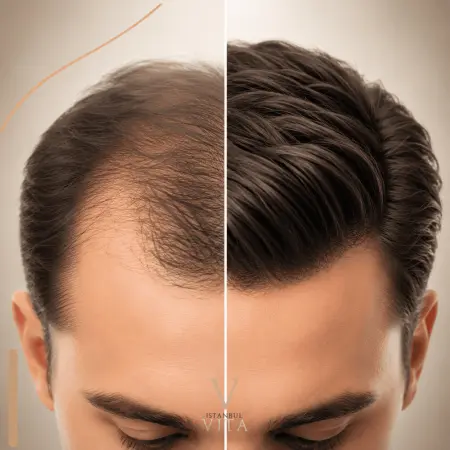
Table of Contents
One of the most misunderstood concepts in hair transplantation surgery is natural hair density. Patients often think that for their hair transplantation to be successful, they need to get back their initial hair density and volume after suffering from hair loss. However, in order to look natural, the success of hair transplantation cannot be achieved only because the number of grafts implanted is high. Many factors, such as the quality of the donor site, hair traits, etc., play an important role here. But can hair transplantation deliver natural hair density?
Density vs Fullness: What's the Real Difference?
People mix density and fullness up constantly. They sound like synonyms, but they're not, and the gap between them explains a lot of confusion around what a hair transplant can realistically deliver.
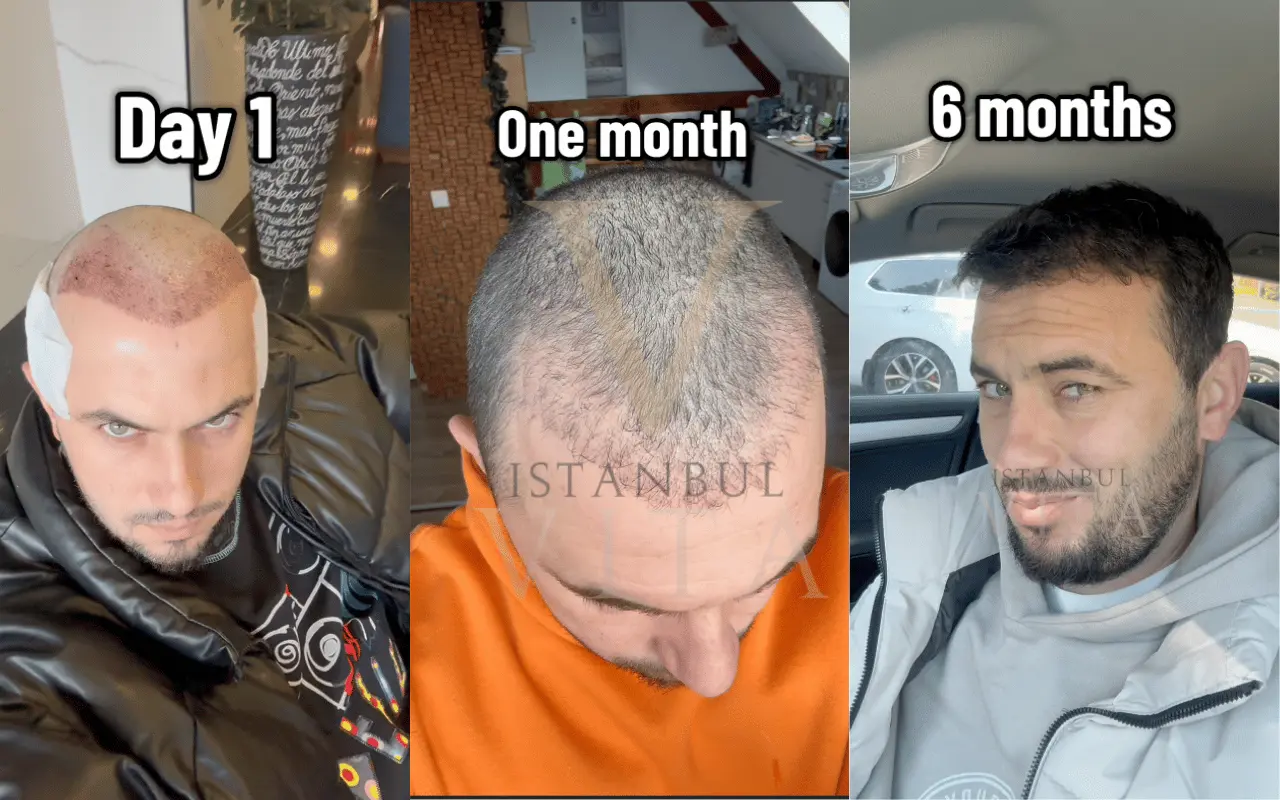
High density hair is a number, the count of follicular units packed into one square centimeter of scalp. Fullness is something else entirely. It's the impression you get looking at someone's hair from across a room. And here's the part that trips people up: you can have moderate density and still look strikingly full, purely because of how that hair is distributed and styled.
Follicular Unit Density
A follicular unit is a small cluster. Usually one to four hairs, growing from a single point on the scalp. Native density varies a lot from person to person. On a normal scalp, usually 80-120 follicular units are observed in a square centimeter. That comes up to 200-300 hairs in one square centimeter. When speaking about graft density from a surgeon's point of view, it is defined as the number of such follicular units transferred into the recipient area in a square centimeter. One number defines pretty much all the aspects of a natural look of the result.
More Grafts Don't Mean a Fuller Look
Cramming in the maximum possible number of grafts sounds like the obvious move. It isn't, not always. Blood supply in the scalp is finite, and grafts placed too close together end up competing for the same nutrients. However, push the density limit too far, and you will be gambling the fate of graft survival, which means not all follicles will survive.
Hence, experienced clinics recognize that sometimes a well-balanced moderate density may have more fullness in the reflection rather than a dense distribution with patchy growths.
Optical Density: Why Thicker Hair Looks Denser
Not all density looks the same to the eye. Two people can share the exact same grafts-per-cm² number and still look completely different in terms of coverage. That gap comes down to something called optical density.
Hair Shaft Thickness (Caliber) and Its Visual Effect
Caliber is the thickness of an individual strand. It does more visual heavy lifting than most people expect. The thicker the hair, the greater is its physical volume, and thus the ability to reflect more light and create an illusion of more coverage even when the number of grafts used is lesser. This is why there is a need to differentiate between hair thickness and hair density: a person having thick hair needs fewer grafts for achieving fuller results.
It's also why a rushed consultation is a bad sign. Doctors who actually assess hair caliber before planning tend to produce results that look right, not just results that hit a target number.
How Hair Color and Scalp Contrast Play Tricks on the Eye
Color contrast matters too. Dark hair against a pale scalp shows more visible skin between strands than hair that closely matches skin tone. Two patients can technically land on the same density and walk away with very different impressions of scalp visibility. This isn't talked about much, but it's just as important as the raw numbers.
The Density Illusion: How Doctors Create a Natural Look
This is probably the part most patients never hear about before their procedure. A quality surgery team is not looking for the biggest number possible; they are creating an optical illusion by placing their grafts in certain areas to create more fullness optically than physically present on the head.
Layering and Implantation Angle Planning
Implantation angle does quiet, unglamorous work here. When grafts are angled to slightly overlap, following your hair's natural growth direction, you get layering that maximizes coverage without needing maximum graft counts. Get the angle wrong, though, and even a high graft number can end up looking thin or oddly directional.
This kind of precision sits at the core of the Vita Technique®, used at Istanbul Vita Hair Transplant Clinic. The method starts with microscopic donor and recipient site analysis, grafts get sorted by thickness and texture before anything is implanted, and uses 0.6-0.7 mm sapphire punches for tighter channel placement. In suitable cases that allows density up to 80-100 grafts per cm², but the number on its own isn't the point. It's paired with angle-controlled placement aimed squarely at looking natural, not at breaking a record.
Zonal Graft Distribution for a Believable Hairline
Natural hair isn't evenly dense across the whole head, and a convincing transplant shouldn't pretend otherwise. Achieving believable outcomes depends on placing grafts in various ways for each different zone, light towards the hairline and getting progressively denser as one moves towards the middle of the scalp and crown. It is a minute planning detail but it can make all the difference.
Safe Density vs Maximum Density
Here's something rarely explained upfront: safe density and maximum density are two different targets. Chasing the wrong one can work against you.
Why "More Grafts" Can Threaten Graft Survival
Every scalp has a ceiling. Pack grafts too tightly and you compress the blood vessels feeding each follicle, which drags down survival rates across the board. In practice, an overly ambitious density target can leave you with a patchier result than a more conservative plan would have.
Donor area health takes a hit too. Aggressive extraction chasing a bigger number thins out the donor zone itself, limiting what's left for any future sessions, poor donor management with long-term consequences.
Natural Hair Density by Hair Type
Realistic hair transplant density isn't one universal number. Your natural hair type changes both what's achievable and what will actually look right once it grows out.
Straight Hair
The straight hair type falls flat and thus provides minimum coverage per follicle. The straight-haired individual will require more grafts to create the same appearance of density achieved by a patient with wavy or curly hair using fewer grafts.
Wavy Hair
Wavy hair has natural lift and movement that helps it cover the scalp more effectively. That small volume advantage means wavy-haired patients frequently get away with less aggressive density and still land a full-looking result.
Curly Hair
Curly hair takes this further. The coil pattern creates real volume and shadow, essentially multiplying what each individual graft contributes visually. Curly-haired patients often end up with impressively full results at densities that would look comparatively sparse on straight hair.
Afro Hair
Afro hair transplant planning is its own discipline, and it deserves to be treated as one. The tight coil of afro hair doesn't just curl above the scalp. It curves beneath the skin too, which changes how follicles need to be extracted and implanted at every single stage. Get the curved follicle path wrong during extraction and graft quality suffers.
Natural Hair Density by Hairline Zone
Density shouldn't be uniform even within one person's scalp. It's one of the most overlooked parts of planning, and often the difference between a transplant that passes at a closer look and one that doesn't.
Hairline Zone: Why Less Density Looks More Natural
The hairline should actually carry the lowest density. The natural hairline should be very uneven and soft. This is made up of small, individual follicular unit transplants and not large clusters. The overcrowding of the area is one of the most common causes of an artificial-looking hairline.
Mid-Scalp Zone: Balancing Coverage and Realism
The mid-scalp is where density builds gradually. This transitional area usually mixes two and three-hair follicular units, bridging the softness of the hairline with fuller coverage further back.
Crown Zone: The Most Challenging Area for Density Planning
The crown is widely considered the hardest zone to plan for. Hair grows in a natural whorl pattern here, and getting convincing crown density right takes careful angle control, often more grafts than other zones, while still respecting how much the blood supply can handle. It's usually the last priority in a multi-session plan, precisely because getting it wrong is easy and getting it right takes real experience.
How Many Grafts Per cm² Is Actually Realistic?
Almost everyone asks this eventually, and it deserves a straight answer based on actual clinical numbers rather than marketing language.
Average Density Ranges in Successful Hair Transplants
Techniques differ quite a bit in what they can realistically deliver. Classic FUE, using 0.9-1.0 mm punches, generally supports around 35-40 grafts per cm² and tends to come with a longer recovery because of larger extraction wounds. The DHI method, which inserts follicular units using a pen-type instrument immediately after the creation of channels, can use a bit more grafts, about 40-45 units per cm², with somewhat less damage to the tissue. The even finer methods that use sapphire tools, such as Vita Technique®, have even more potential with up to 80-100 grafts per cm² for appropriate cases due to small 0.6-0.7 mm punches.
Worth being honest about one thing: those upper numbers reflect ideal conditions: strong donor supply, cooperative hair characteristics, precise technique. Not a guarantee for every single patient.
What Determines Your Personal Maximum Safe Density
Your own ceiling depends on several things working together: donor area strength, scalp elasticity, hair caliber, the technique used, how many sessions are planned. Which is exactly why a number you find online won't tell you much about your own case. An individualized consultation, ideally with the doctor who'll actually be operating rather than a sales coordinator, remains the only reliable way to know what's realistic for you specifically.
Frequently Asked Questions
How can I increase the density of my hair?
When hair loss is apparent, the only procedure to increase density is through a hair transplant.
What is the average density of hair for men?
In general, men have an average of 80-120 follicular units per cm², about 200-300 strands of hair. The average number of hair strands is different for each ethnic group and even for each person.
How do I know if I have dense hair?
A simple ponytail will help. If your ponytail circumference is under 2 inches, hair is likely thin; over 4 inches usually points to dense hair.
Can you alter your natural hair density?
The density can be supported through treatments like PRP, minoxidil, or mesotherapy. However, a hair transplant will be the only way for genetic loss.
Have Questions? Let's Chat on WhatsApp!
Get instant answers 24/7. Receive your doctor-led hair analysis within 1 day, plus pricing and booking support.
Start WhatsApp Chat
 conversation


