
 English
Table of Contents
Notice something shifting at the temples? Before assuming the worst, it's worth knowing that for a lot of black men, this is nothing more than growing up, hair-wise. No genetics involved, no cause for alarm. Where things get murky is texture: curl pattern can make a completely ordinary shift look like something else entirely. And that confusion matters, because getting an afro hair transplant right starts with reading this correctly, not guessing.
Coily strands catch light in ways straight hair doesn't. A fresh line-up one week, a few days of humidity the next, and suddenly the same person looks completely different in the mirror. None of it means anything on its own. What follows is a breakdown of what normal maturation actually looks like for black men, where it differs from early androgenetic alopecia, and when a second opinion beats another round of squinting at old photos.
What Is a Juvenile Hairline?
Low, round, close to the brow. That's the childhood version, and for most people it holds its ground until the late teens or early twenties. Exact timing swings widely from person to person, so there's no fixed rulebook here.
Here's the twist with coily texture: this early stage often reads thicker than it technically is. That's volume from curl, not position. Two guys could share the exact same underlying line and look nothing alike depending on how tight their coils sit.
What Is a Mature Hairline?
Somewhere in early adulthood, temples ease back a bit. The rounded edge softens into something closer to a gentle M or V. Ordinary. Expected, even, and it happens across ethnicities and textures alike, not as a warning sign but as part of getting older.
People miss the part that actually matters: it stops. The movement is gradual, then it plateaus. It doesn't keep creeping backward forever, and unlike genuine loss, it doesn't thin what's sitting just behind the front edge.
Signs Your Hairline Is Maturing Normally
A few things tend to separate ordinary settling from something worth flagging. Symmetry, for one, recession on both sides rather than just one. Thickness right behind the edge stays put. Movement has clearly slowed, maybe stopped. And the crown looks untouched.
None of these prove anything in isolation, genetics rarely work that cleanly. But stack them together and a pattern usually emerges, one that points toward a texture simply finding its adult form rather than anything more serious.
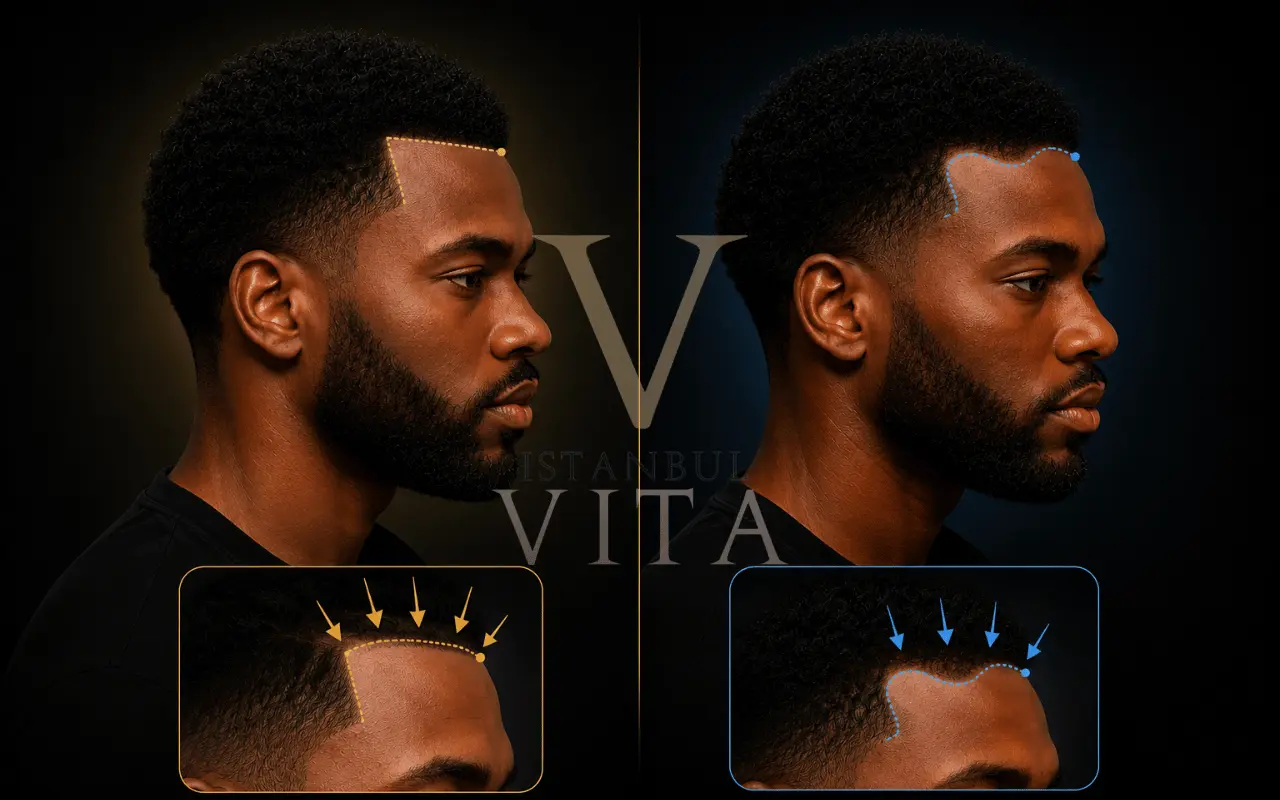
Mature Hairline vs Juvenile Hairline in Black Men
Shape and position, that's the real difference, not texture itself. Juvenile sits lower, rounder. The adult version sits a touch higher, with sharper corners at the temples. Curl pattern amplifies the contrast though, since coily strands can visually hide or exaggerate how far things have actually moved.
Mirror judgments fail people here constantly. A dramatic-looking overnight change is often just an ordinary shift paired with how texture reads at different lengths, wet one day, shrunk up the next.
Why Hairlines Look Different in Black Men
A handful of texture-specific factors change how all this reads visually, independent of whatever's actually happening underneath.
Afro-Textured Hair and Follicle Angle
Type 4 strands often grow from follicles curving beneath the scalp before they ever surface, unlike the straighter exit path of other textures. This curve changes appearance at different lengths, and it's exactly why a well-designed Afro hairline needs angle-specific planning. A generic template just doesn't translate here.
Temple Shape, Curl Pattern and Regional Density
Looser coils reveal more scalp at a given thickness. Tighter ones mask early movement for far longer, sometimes years longer. Neither pattern predicts genuine loss any better than the other; the difference is entirely visual, nothing biological about it.
Line-Ups, Edge-Ups and the Illusion of Recession
A sharp barber edge cuts a clean geometric line that sits just behind where hair actually grows. Fresh off the clippers, things can look more recessed than reality, purely because visible strands got trimmed, not lost.
Common Mistakes When Judging Your Hairline
People misread what they're seeing constantly, and a handful of everyday habits explain most of it.
- A brand-new barber edge temporarily exaggerates how far back things appear
- Shrinkage pulls coily strands up significantly once dry, shifting the picture day to day
- Childhood photos show the juvenile version, an unfair baseline for judging an adult shape
- Overhead bathroom lighting dramatizes temple recession far beyond what daylight shows
- Wet strands lie flatter and lower, making things look denser and further forward than once dry
Any single factor can spark a false alarm on its own. Stack a few together, and it's easy to see why so many convince themselves something's wrong when, really, nothing has changed at all.
Does a Mature Hairline Mean Hair Loss?
Not by itself. One is repositioning. The other, genuine loss, is an actual drop in density, whether up front, at the crown, or both. Sometimes they overlap. One doesn't cause the other automatically, though.
Progression tells the real story. Ordinary settling stabilizes and stays put, full stop. Androgenetic alopecia keeps advancing instead, gradually, often with visible thinning further back too.
Mature Hairline vs Receding Hairline
Genetics drive androgenetic alopecia, largely through DHT sensitivity, and Black men aren't exempt from this, though presentation varies person to person. A genuinely receding pattern keeps moving and frequently comes with crown thinning. The adult version, meanwhile, reaches a stopping point and just stays there, sometimes for decades.
Have Questions? Let's Chat on WhatsApp!
Get instant answers 24/7. Receive your doctor-led hair analysis within 1 day, plus pricing and booking support.
Start WhatsApp ChatComparison Table: Juvenile vs Mature Shape
| Feature | Juvenile | Mature |
|---|---|---|
| Position | Low, near the brow | Slightly higher |
| Temple contour | Rounded or squared | Softer M or V |
| Forehead exposure | Minimal | Mild to moderate |
| Typical timing | Childhood to late teens | Late teens onward, varies widely |
| Progression | Stable | Gradual, then stops |
| Tied to loss? | No | Not on its own |
When Should Black Men Consider Hair Transplant?
Only when recession keeps going well past a typical adjustment period. Or when density visibly drops rather than just repositions. Or the crown joins in. Short of that, an adult shape settling into place isn't medical territory, and it doesn't call for treatment of any kind.
What a Professional Assessment Looks At
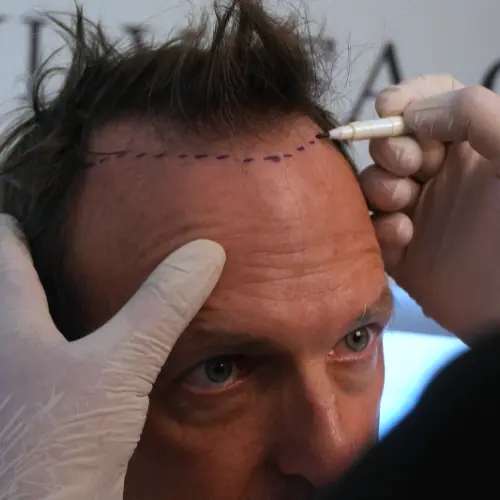
A trained eye weighs curl pattern, follicle angle, donor supply, and family history all together, never reading one feature alone. That's precisely what happens during a professional Afro hair transplant consultation: separating ordinary adjustment from something that might genuinely benefit from intervention, without assuming the answer beforehand.
Still unsure after all this? An individual assessment tends to clear things up faster than another month of comparing photos taken in different bathrooms, different lighting, different everything.
Why Accurate Afro Hair Assessment Matters
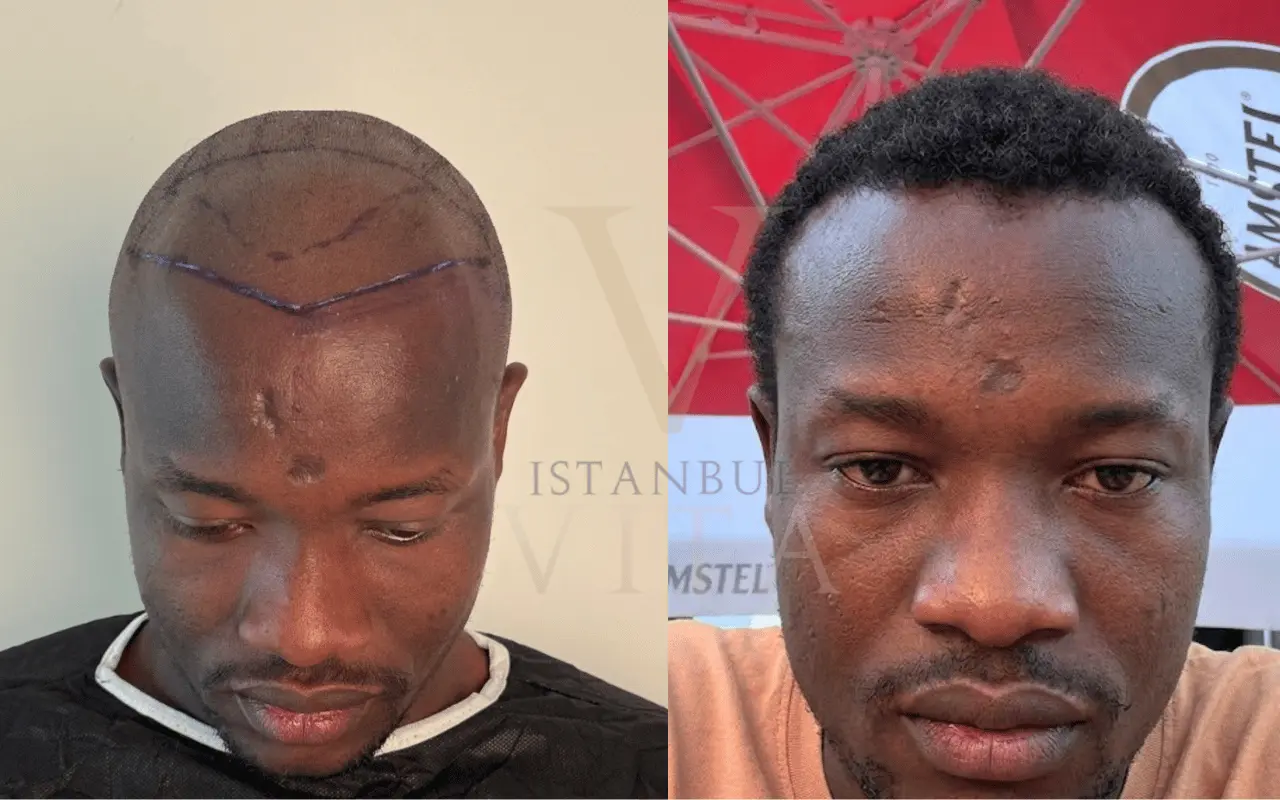
Getting this distinction right is exactly what a professional assessment is designed to do, and it's an area where Istanbul Vita has developed extensive experience working with Afro-textured hair. Rather than relying on a single photo or the visible hairline alone, the evaluation considers factors such as curl pattern, follicle angle beneath the scalp, donor availability, and how the hairline is likely to age over time.
To support this process, Istanbul Vita uses Afro Technique®, an approach developed specifically for coily and tightly curled hair. Instead of applying the same planning principles used for straighter hair types, it adapts the assessment and treatment strategy to the unique characteristics of Afro-textured follicles.
Treatment is not always the answer, and a thorough consultation may simply confirm that what you're seeing is a normal stage of hairline maturation. But if you're unsure whether your hairline reflects natural change or progressive hair loss, an individualized assessment can provide the clarity needed to make an informed decision.
FAQ
What does a mature hairline look like in Black men?
Usually a touch higher, softer at the corners, while thickness right behind it holds steady and curl pattern stays the same.
Is my hairline maturing or receding?
Ordinary adjustment stabilizes eventually. Genetic recession, on the other hand, tends to keep going and may pull the crown in too.
Do Black men have different hairlines than other groups?
The underlying process is basically the same everywhere. Texture, shrinkage, and grooming habits like line-ups just change how it reads at any given moment.
Can a mature hairline turn into a receding one?
The adjustment itself doesn't cause further loss. But genetic thinning can start independently at any point, which is why it's still worth watching over time.
Does everyone go through this?
Most men do, in some form. Timing and extent differ quite a bit, though, and genetics call most of the shots.
When should a Black man see a specialist about it?
If recession keeps going well past what feels like normal adjustment, or the crown starts thinning visibly, a professional look beats guessing every time.
 conversation


