
 English
Table of Contents
If your curls are tight and coily and you're researching a transplant, there's one thing worth understanding before anything else: the back and sides of your scalp the zone surgeons harvest from aren't an unlimited resource. For Afro-textured strands specifically, this region behaves differently than straight or wavy types, and protecting it properly can make the difference between a natural, lasting outcome and permanent scarring. You might already know your texture is unique. What you may not know yet is why that uniqueness changes the entire surgical approach. Understanding the principles behind Afro-textured hair transplant helps explain why donor area preservation is such an important part of long-term success.
Is the Donor Area Safe in Afro Hair Transplant?
In principle, yes but only when the surgical team understands the structural difference between straight and curly follicles. The hair transplant donor area is the section at the back and sides of the scalp where permanent, DHT-resistant follicles are located. In afro procedures, this region requires a more cautious, individualized approach because each strand grows beneath the skin in a curved rather than straight path. Extract it carelessly, and you risk damaging follicles that took a lifetime to grow and won't return.
Why Is the Donor Area More Vulnerable in Afro Hair?
Coily texture isn't simply "curlier" on the surface. The follicle itself bends beneath the skin, sometimes in a spiral or C-shape, which changes how deep and at what angle a surgeon needs to work.
Curved Follicles and Preservation of the Harvesting Zone
Because the follicular path curves under the scalp, extraction tools must follow that path precisely. A straight punch used on a curved strand increases the likelihood of transection where the follicle is cut mid-shaft rather than removed intact. Transected units typically won't survive, and repeated transection across the same zone gradually thins it out, sometimes permanently.
Why Overharvesting Is More Common in Afro Hair
Overharvesting occurs when too many grafts are removed from one section, leaving it visibly sparse or patchy. With tighter curl patterns, surgeons sometimes underestimate how many attempts a single extraction takes due to the curve, which without careful mapping can quietly push a procedure past safe limits. This is exactly why pre-surgical planning matters more here than with straighter textures.
How Is the Donor Area Evaluated Before Surgery?
A responsible clinic never estimates graft numbers by eye. Evaluation should combine visual inspection with magnified analysis of density, caliber, and curl pattern.
Microscopic Donor Analysis
This analysis allows the surgical team to classify follicles by thickness, growth direction, and curl depth before a single graft is touched. This step is particularly valuable in afro procedures, since it reveals how each strand behaves beneath the surface information that simple visual assessment cannot provide.
Density Mapping and Safe Graft Planning
Once analysis is complete, the surgeon maps how many units can be safely removed without compromising future coverage. The table below illustrates how planning typically differs between straight/wavy and afro-textured cases.
| Factor | Straight / Wavy Texture | Afro / Coily Texture |
| Follicle path | Straight, predictable | Curved, sometimes spiral-shaped |
| Transection risk | Lower | Higher without specialized technique |
| Extraction speed | Faster | Slower, more meticulous |
| Safe daily graft limit | Can be higher | Typically more conservative |
What Happens to the Donor Area After a Hair Transplant?
Healing follows a fairly predictable pattern, though timelines can shift slightly depending on technique and individual skin response.
Healing Timeline of the Harvesting Zone
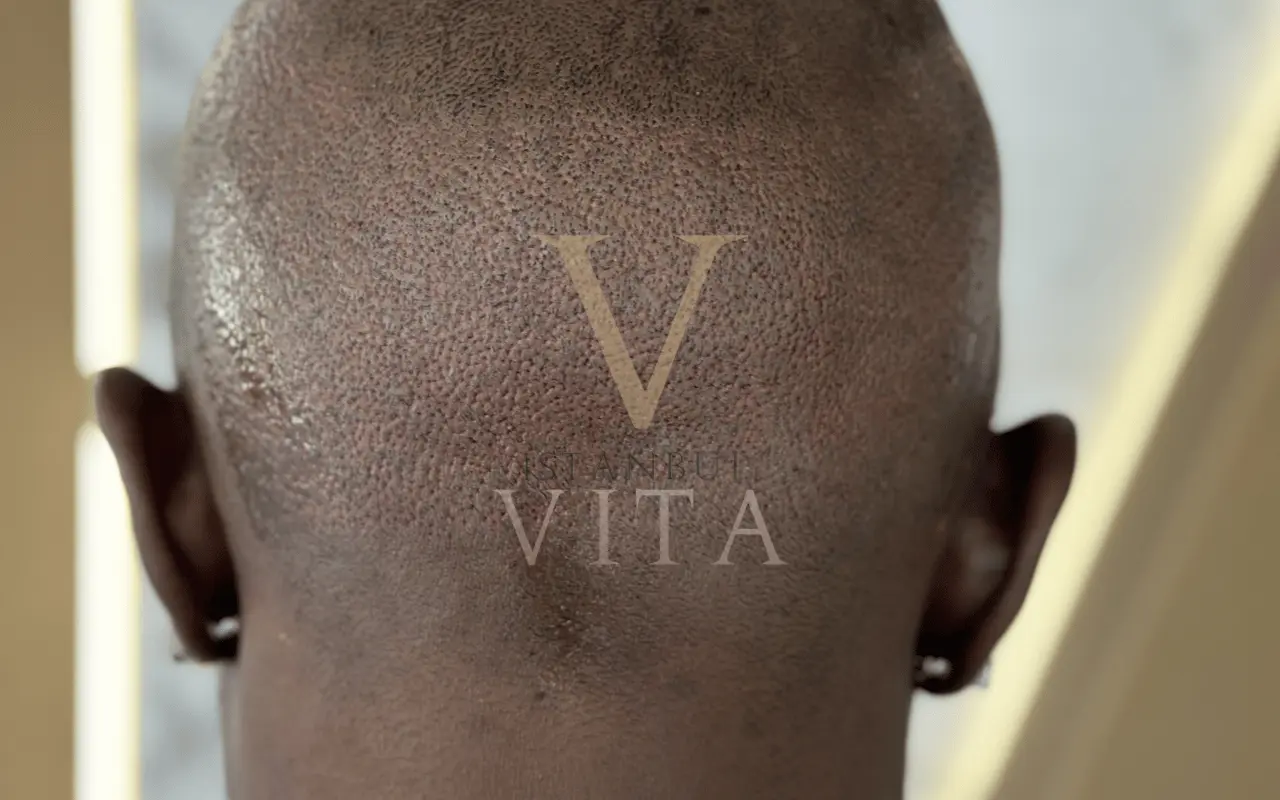
Redness and tiny scabbing usually settle within 7 to 10 days. Most patients can resume normal routines within two weeks, though full settling of the skin texture can take a few months.
Does Donor Hair Grow Back?
This is one of the most searched questions among people considering surgery, and understandably so. The individual follicle removed during extraction does not regenerate but the surrounding scalp, if not overharvested, retains enough density that thinning is rarely noticeable to the eye. That's the entire purpose of careful graft planning: leaving the zone visually full even after extraction.
What Does a Healthy Supply Area Look Like?
A well-managed zone should show even, consistent density with no visible patches, minimal scarring, and a natural blend between extracted and non-extracted follicles. If you can run your fingers through it without noticing bald patches, that's typically a good sign.
What Can Permanently Damage the Donor Area?
Some forms of damage are reversible with time; others are not. Knowing the difference helps you ask the right questions before booking a procedure.
Overharvesting
Removing more grafts than the region can sustainably provide leaves visible thinning that no amount of healing time can fully reverse.
Poor Extraction Technique
Rushed or inexperienced extraction increases transection rates, especially in curved strands, leading to patchy regrowth and unnecessary tissue trauma.
Oversized Punch Tools
Larger punches create bigger wounds per graft. On coily texture, this compounds the existing risk of transection and can leave more noticeable micro-scarring across the extraction site.
Signs of a Poorly Managed Extraction Site
| Sign | What It Usually Means |
| Visible patchy thinning | Likely overharvesting or poor graft distribution |
| White or raised scarring | Possible transection or oversized extraction tools |
| Uneven density across zones | Insufficient pre-surgical mapping |
| Prolonged redness beyond 3 weeks | Possible irritation or poor aftercare |
What If You Don't Have Enough Donor Hair?
Limited supply is common and it isn't necessarily a dealbreaker.
Can You Still Have an Afro Hair Transplant?
In many cases, yes, though expectations may need adjusting. A skilled surgeon will be transparent about what coverage is realistically achievable rather than promising results the existing supply can't support.
Have Questions? Let's Chat on WhatsApp!
Get instant answers 24/7. Receive your doctor-led hair analysis within 1 day, plus pricing and booking support.
Start WhatsApp ChatAlternative Planning Options
Options may include prioritizing the hairline and frontal zone over full density, spacing procedures across sessions to allow recovery, or combining transplantation with supportive treatments that strengthen existing strands rather than relying solely on new grafts.
Can an Overharvested Zone Be Improved?
Partial improvement is often possible, though full restoration of a heavily overharvested area is unrealistic. Camouflage techniques, strategic redistribution in future sessions, and scalp micropigmentation are sometimes used to visually soften the appearance of thinning. This is precisely why getting it right the first time carries so much weight correction is always more limited than prevention.
How to Choose a Clinic That Prioritizes Donor Safety
Not every clinic treats the harvesting zone with the same level of caution. When researching an afro hair transplant, a few questions can reveal a lot: Does the clinic perform microscopic analysis before surgery? Is extraction doctor-led or handled entirely by technicians? Is there a daily patient cap that allows enough time per case?
Istanbul Vita, for example, is known for a boutique model that limits the clinic to just 1–3 international patients per day, allowing doctors rather than technicians alone to lead key stages of extraction and channel opening. With more than 15 years of experience and techniques such as the Vita Technique® and Sapphire FUE, the clinic's approach to microscopic analysis is built specifically around avoiding the pitfalls described above: transection, overharvesting, and inconsistent density. For patients researching curly and coiled hair transplant in Turkey, this kind of individualized planning is often what separates a natural-looking outcome from a visibly thinned one. The clinic is licensed by Turkey's Ministry of Health and holds an International Health Tourism Authorization Certificate, and supports international patients in 13 languages through native-speaking coordinators useful when discussing something as detail-sensitive as this.
If you're unsure whether your texture and existing density are suitable for a safe, well-planned procedure, a proper consultation ideally one that includes real evaluation rather than a quick estimate is the most reliable way to find out. You're not alone in asking these questions; they're exactly the ones a good surgeon expects and welcomes.
Frequently Asked Questions
Does donor hair grow back after a hair transplant?
No, an individually extracted follicle does not regenerate. However, when extraction is planned carefully, the surrounding zone retains enough density that no visible gap appears.
What happens to the donor area after a hair transplant?
It typically shows mild redness and small scabbing for about a week to ten days, with most visible signs fading within two to three weeks.
Not enough donor hair for a transplant what are the options?
A surgeon can prioritize the most visible zones, such as the hairline, and plan realistic coverage rather than attempting full density from a limited supply.
What does a bad donor area look like after surgery?
Patchy thinning, visible scarring, or uneven density across the scalp are the most common indicators of poor planning or technique.
How long does donor area healing take?
Surface healing generally takes 10 to 14 days, while underlying skin texture can continue settling for a few months.
 conversation


