
 English

Table of Contents
Ask five different providers the same question about curly texture and you'll rarely get five matching answers. Most sound confident. Few of them know what they're talking about, and the gap tends to show up months later, never during the sales pitch. Curved follicles sit differently beneath the scalp than straight ones, and that single fact changes extraction and placement in ways no price quote will ever reveal.
The rest of this guide explains how to evaluate each of these criteria, which questions to ask before booking, how to interpret before and after photos without being misled, and the warning signs people often overlook when comparing clinics. If you're considering an Afro-textured hair transplant in Turkey, understanding the process beforehand can also make it easier to choose the right clinic.
What Makes a Reliable Afro Hair Transplant Clinic?
No certificate hangs on a wall proving this kind of skill. It shows up instead in small, checkable details, the same ones that keep coming up when people describe why they'd recommend someone to a friend.
The Core Criteria That Actually Matter
Roughly in order of importance:
- A documented history with curly and coily work specifically, not just general FUE or DHI numbers
- Direct doctor involvement in assessment and, ideally, in opening the recipient sites
- An approach that adjusts for curl direction and curvature instead of running one protocol for everyone
- A willingness to talk through limitations rather than promising unlimited density
- Before-and-after material that covers long-term healing, not just the first week
Every one of these can be checked directly. Some surface naturally in conversation. Others only come up once someone asks to see documented history instead of a curated highlight reel.
Why This Differs From Choosing a General Hair Transplant Clinic
Being excellent with straighter strands doesn't automatically carry over. The underlying skill overlaps, but the technical demands don't line up perfectly. A glowing reputation built on one type says surprisingly little about how a team handles curl and curvature in another.
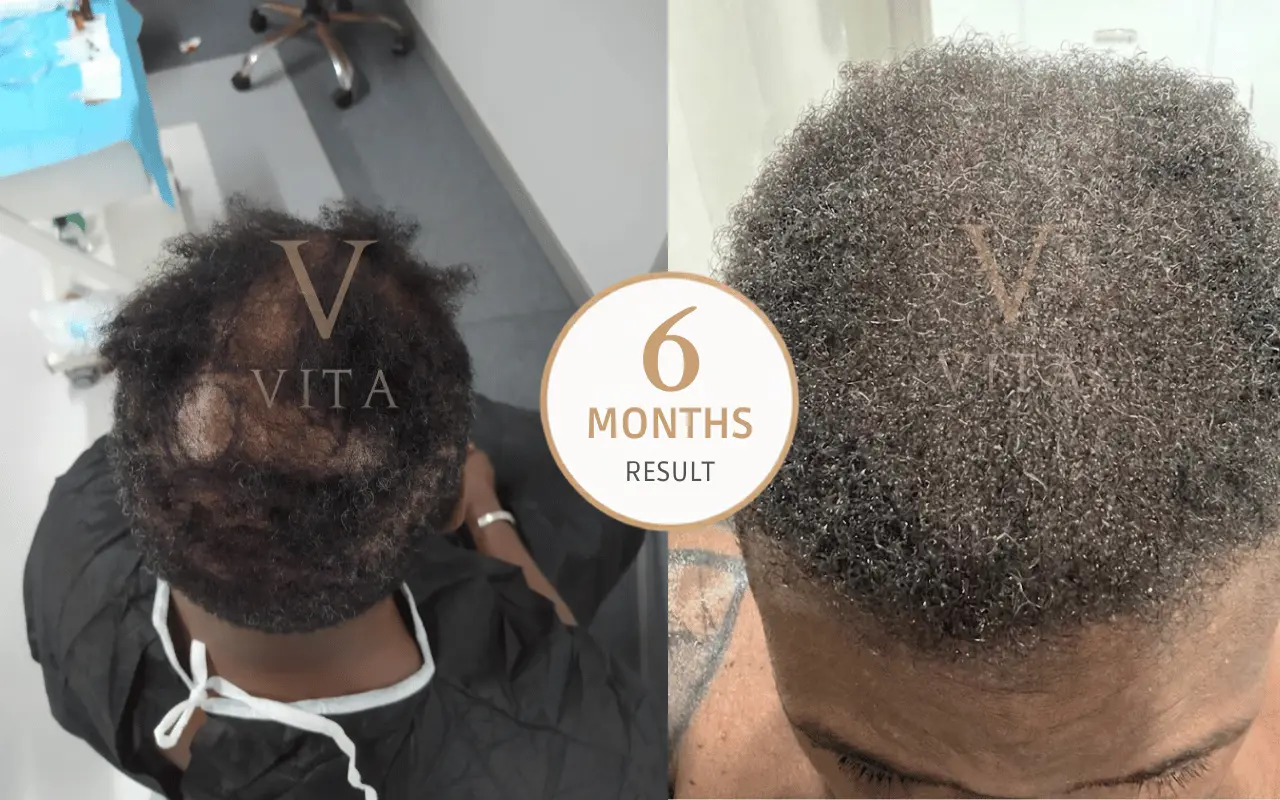
Why Afro-Textured Hair Changes How a Clinic Should Be Evaluated
Here's the short version of the anatomy: follicles here often run at an angle beneath the skin instead of straight down, and that affects extraction angle, density estimates, and how easily grafts get damaged during removal.
What matters for choosing a provider is more practical than technical. Does the surgical approach actually change for curved follicles, or is it the same protocol no matter who walks in? That single question sorts people faster than most portfolio reviews.
What to Ask During an Afro Hair Transplant Consultation
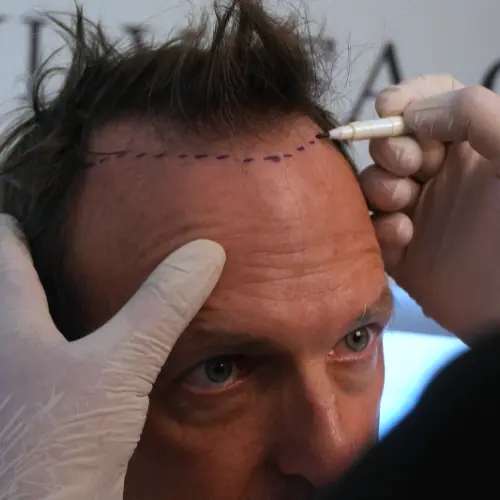
A short conversation reveals more than any website. What counts isn't only what gets said, but how easily it comes out.
Consultation Checklist: Questions to Ask Before Booking
| Question to Ask | Why It Matters |
|---|---|
| How many cases like mine have you documented? | Reveals background beyond overall procedure volume |
| Who carries out the assessment? | Shows whether a doctor or a technician makes the key calls |
| Who opens the recipient channels? | Angle and depth here shape how natural things look afterward |
| How do you plan for curl direction during implantation? | Tells you whether it's treated as a factor at all |
| Is microscopic analysis part of the process? | Points to a more precise, individualized method |
| How do you protect against overharvesting? | A common risk with curlier textures |
| What are the realistic limits given my supply? | An honest answer here says more than almost anything else |
How to Read Afro Hair Transplant Before-and-After Photos Correctly
Most people scan for density and stop there. That habit misses plenty, since photos can be chosen and lit to flatter an outcome without technically lying about anything.
Signs the Curl Pattern Was Respected
Growth should follow the surrounding pattern rather than looking flattened or oddly uniform. When every section faces the same direction, that's usually a template at work, not something tailored.
Signs of Overharvesting or Unbalanced Density
Check the source region too, not only where things were placed. Thinning patches or unevenness there suggest the extraction wasn't handled with much care. Solid work tends to be shown without anyone having to ask twice.
Why Long-Term Photos Matter More Than Day-1 Results
Swelling and fresh grafts dominate anything from the first week, which tells you almost nothing useful about the eventual result. Real maturity takes closer to a year, so material from that stage carries far more weight than anything earlier.
What Evidence Shows a Clinic Has Real Afro Hair Experience?
A good consultation only goes so far. A few things can be confirmed more concretely than a conversation allows.
Documented Case History and Physician Involvement
Ask specifically for examples matching yours, not general transplant work. A team with genuine background here won't hesitate, and can say who handled which stage of the surgery.
Personalized Planning vs. One-Size-Fits-All Approaches
Listen to how a provider describes its own method. Something like "we assess this case by case" carries more weight than a polished pitch. Teams willing to admit limitations, instead of only showcasing wins, tend to be the ones worth trusting.
Have Questions? Let's Chat on WhatsApp!
Get instant answers 24/7. Receive your doctor-led hair analysis within 1 day, plus pricing and booking support.
Start WhatsApp ChatRed Flags That Signal a Clinic Isn't Prepared for Afro Hair
A few warning signs blend into the background when people are comparing options on price alone.
Promises That Should Make You Pause
- Guaranteed density figures given before any real look
- A quoted number without reviewing close-up photos first
- A treatment plan that sounds the same no matter who's asking
- Zero mention of protecting the source area long-term
Vague Answers About Who Actually Performs the Surgery
Hesitation about who does the assessment or opens the channels says something on its own. Straightforward answers here remain one of the more reliable signals available.
Comparing Clinics: Evaluation Criteria, Not Rankings
Ranking named providers against each other doesn't help much, since circumstances differ from person to person. A consistent checklist works better than any ranked list would.
| What to Check | What It Tells You |
|---|---|
| Documented history with curly or coily texture | Confirms genuine background with this specific type |
| Physician role in assessment | Shows whether a doctor or a delegate calls the shots |
| Explanation of curl-direction planning | Indicates this is treated as a real factor |
| Long-term before-and-after material | Shows healed results rather than early swelling |
| Openness about source-area limits | Reflects honesty over a sales-driven pitch |
How Istanbul Vita Approaches Afro-Textured Hair Planning
Istanbul Vita offers one useful reference point for how this kind of tailored approach gets structured, worth mentioning without treating it as a blanket recommendation.
Physician-Led Donor Analysis and Curl-Direction Planning
Channel opening at Istanbul Vita is done by its own doctors, and assessment relies on the Vita Technique®, a method built around microscopic classification by thickness, texture, and growth pattern. Several doctors on the team focus specifically on this texture, and curl direction along with long-term preservation of the source area are handled through what the practice calls its Afro Technique® approach.
What This Looks Like in Practice
Both the source and recipient areas get mapped out before surgery starts, with graft types assigned by natural growth pattern rather than a single fixed routine. None of this promises a specific result for any one patient, since supply and pattern vary quite a bit from case to case. It shows one way a practice can build its process around this texture's demands instead of defaulting to a generic FUE routine.

Frequently Asked Questions
How do I know if a clinic has real Afro hair transplant experience?
Ask to see documented cases matching yours and confirm who handles the assessment and channel opening.
Is a higher price always a sign of the best afro hair transplant clinic?
No, price alone says little about a provider's actual background with curly or coily texture.
Why does curl direction matter in an Afro hair transplant?
It determines how natural the result looks against the surrounding growth pattern.
What should I look for in before-and-after photos specifically?
Check the source area for overharvesting and favor images taken 9 to 12 months after surgery.
 conversation


