
 English
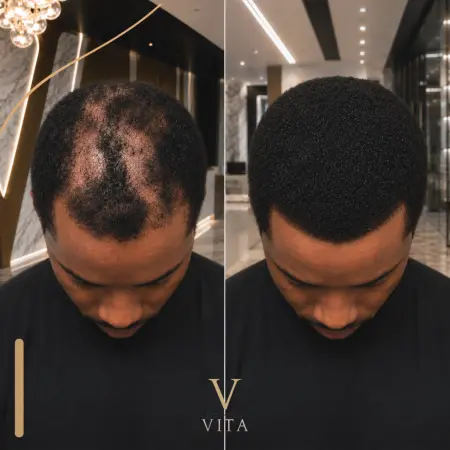
Table of Contents
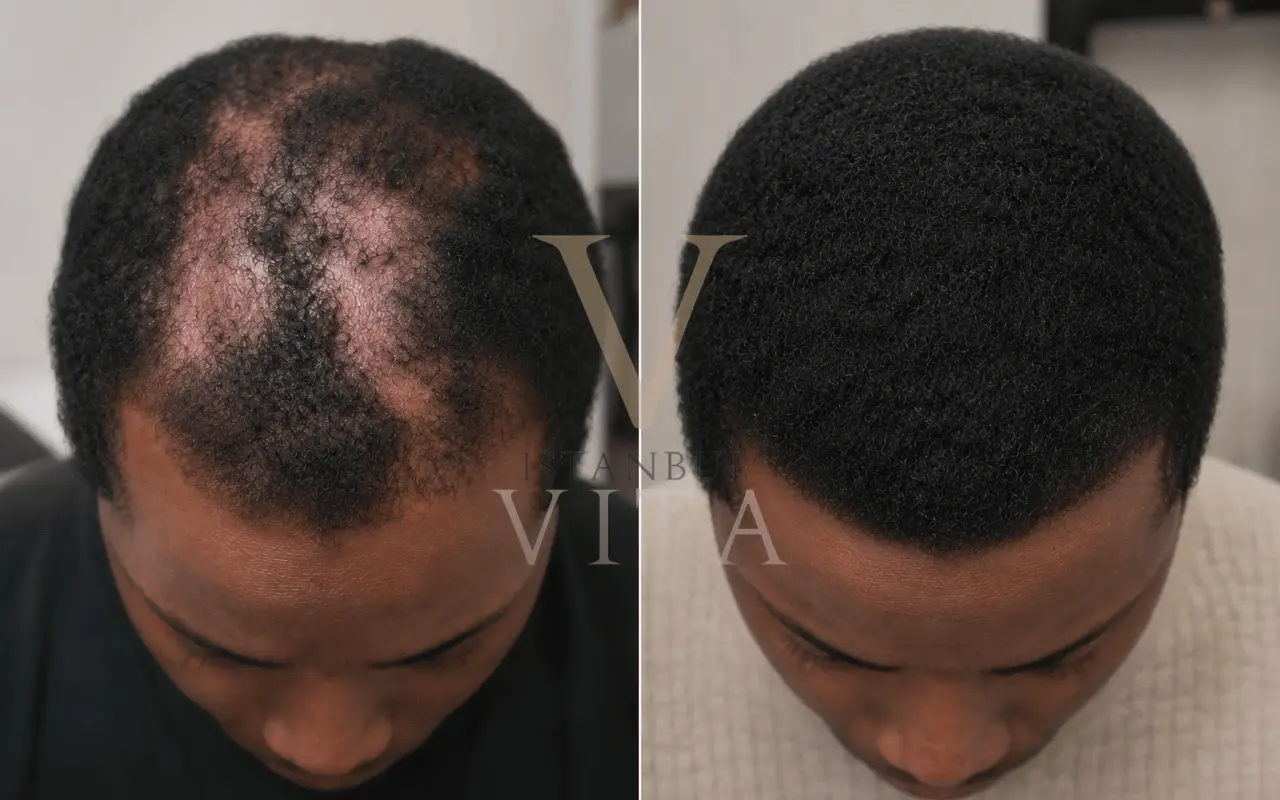
Can Scarring Alopecia in Afro Hair Be Treated with Hair Transplant?
A bald patch that keeps spreading, no matter what gets tried, brings a very specific kind of dread. This isn't ordinary shedding. Once scar tissue forms, the real question becomes whether any of that coverage can come back at all.
For people with tightly curled or coily strands living with a scarring condition, a scarring alopecia afro hair transplant may eventually be possible, though never automatically. The tissue has to be confirmed inactive. A physician has to review the full picture before any plan takes shape. There's no blanket promise here.
Anyone researching options through an Afro hair transplant in Turkey guide will notice this category of loss gets handled differently than typical thinning. That's deliberate. Once inflammation and scarring are part of someone's history, timing and expectations shift along with the approach.
What Is Scarring (Cicatricial) Alopecia?
Cicatricial alopecia describes a group of conditions where inflammation destroys follicles and leaves scar tissue in their place. Once that happens, the affected spot can no longer produce growth. The damage is permanent, locally.
Central centrifugal cicatricial alopecia, or CCCA, is the form seen most often in people of African descent, particularly Black women. It typically starts at the crown and widens outward, thinning the region across months or years rather than overnight.
Other variants exist. Lichen planopilaris, frontal fibrosing alopecia, and folliculitis decalvans fall under the primary category; secondary cases can follow trauma, infection, or radiation. Each carries its own inflammatory pattern beneath the surface.
When Is Hair Transplant Actually Possible?
Timing decides almost everything with cicatricial conditions. A procedure attempted while inflammation is still active tends to fail, since the same process that destroyed the original follicles often goes on to attack the new ones.
Active vs Inactive Disease
Active means itching, tenderness, redness, or continued shedding. Inactive means those signs have settled over time, and the tissue has entered real calm.
Disease Stability
One good month proves nothing. Dermatologists typically want twelve months or more of consistent calm before treating someone as a surgical candidate.
Scalp Biopsy
Biopsy remains the most reliable way to confirm where things stand, revealing whether follicular openings still exist and whether inflammation has genuinely resolved at a cellular level.
Donor Assessment
Before moving forward with CCCA or any related form, a thorough afro donor assessment checks whether enough healthy supply remains. This also weighs vascularity in the recipient region, since poor circulation limits graft survival regardless of technique.
Have Questions? Let's Chat on WhatsApp!
Get instant answers 24/7. Receive your doctor-led hair analysis within 1 day, plus pricing and booking support.
Start WhatsApp ChatHow Is Hair Transplant Planned for a Scarred Afro Scalp?
Planning here differs from a standard case, mainly because scar tissue behaves unlike healthy skin.
Microscopic assessment of both the extraction and recipient zones maps which areas hold workable follicular units and which remain compromised. Graft yield in scarred tissue generally runs lower, so expectations get set realistically before anything begins.
Angle and curl pattern need individual attention too. Grafts placed into scarred tissue require careful matching to the surrounding direction of growth, or the result can look uneven even when the grafts themselves survive.
| Aspect | Standard Afro Hair Transplant | Procedure for Scarring Alopecia |
|---|---|---|
| Pre-surgical evaluation | Consultation and donor check | Consultation, biopsy, and stability review |
| Waiting period | Not typically required | Often 12+ months of confirmed inactivity |
| Survival expectations | Generally predictable | Variable, dependent on vascularity |
| Follow-up | Standard post-op care | Extended monitoring for recurrence |
How Does Istanbul Vita Approach Scarring Alopecia in Afro Hair?
At Istanbul Vita, cases like this are never treated as routine. The Afro Technique® emphasizes individualized assessment of the extraction area, confirmed stability, curl pattern analysis, and detailed planning before any procedure is considered.
Physicians who specialize here review dermatological history and biopsy findings as part of the evaluation, since decisions rely on judgment rather than a fixed protocol. Anyone researching an afro hair transplant consultation benefits from a team experienced in curly and coiled textures, since that experience often shapes both safety and outcome.
Rather than a general promise, the approach centers on determining, case by case, whether someone's tissue has reached a point where moving forward makes sense.
FAQ
Can scarring alopecia be treated with hair transplant?
In select cases, yes, but only once inactivity is confirmed and the area is stable. Dermatologist clearance comes first.
Can you have a hair transplant with CCCA?
It may become possible after a confirmed period of calm, not while inflammation is present. Each case is judged on its own.
Have Questions? Let's Chat on WhatsApp!
Get instant answers 24/7. Receive your doctor-led hair analysis within 1 day, plus pricing and booking support.
Start WhatsApp ChatIs hair transplant safe for scarring alopecia?
Safety depends on stability and the quality of available supply. Attempting surgery during active inflammation risks graft failure.
When can you have a hair transplant after scarring alopecia?
Most physicians look for at least 12 months of confirmed inactivity, supported by biopsy results. Timing still varies case by case.
Can CCCA come back after hair transplant?
Yes, it can become active again even after a successful procedure. That's why long-term monitoring stays part of the plan.
Who is a good candidate for hair transplant after CCCA?
Someone with confirmed inactivity, sufficient supply, and dermatologist clearance. These factors are weighed together, never separately.
Does afro hair transplant planning differ for a scarred scalp?
Yes, curved follicles, vascularity, and uneven density all call for more detailed planning than a standard procedure, often including extra imaging.
 conversation


