
 English
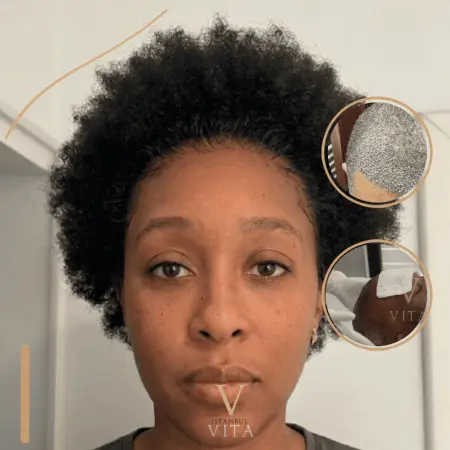
Table of Contents
When Should Hair Transplant Scab Removal Actually Happen?
Most people bring this up in the first few days after surgery, usually somewhere between "just curious" and "did I mess something up." Truth is, there's no single date that fits every scalp. Washing itself can usually begin fairly early, often inside that first week, but the crusts are a different story: they're meant to come off on their own, and for most patients that finishes somewhere around day 10 to 14.
Some patients rush this. A crust looks ready, feels a little flaky, and the temptation to just get rid of it is real. That's exactly how grafts get disturbed before they've had the chance to settle in properly.
Anyone researching a curly and coiled hair transplant in Turkey will run into this question even more, since dense curls make it harder to actually see the scalp and judge what's ready to come off and what isn't.
Hair transplant scab removal, in short, works better as a passive process than an active one. You wash gently, you wait, and you let your clinic's specific instructions guide the timing rather than a number pulled from a forum post.
Why Do Scabs Form After a Hair Transplant?
Simple answer: the skin's been punctured over and over in a pretty small space. Nothing more mysterious than that. As things heal underneath, blood, lymph fluid and a bit of tissue debris dry up on the surface and form a thin crust over each graft. Think of a scraped knee, except instead of one wound you've got it happening at hundreds or thousands of tiny points across the scalp.
Normal Healing Signs vs. Signs That Need Attention
Redness, itching, small scabs, mild tenderness: these show up in nearly every case during the first week and don't mean anything has gone wrong. Spreading redness is different. So is pus, a bad smell, or a fever. Those get reported to the clinic, not managed with a home remedy someone recommended online.
First Wash After Hair Transplant: Gentle Washing vs. Scab Removal
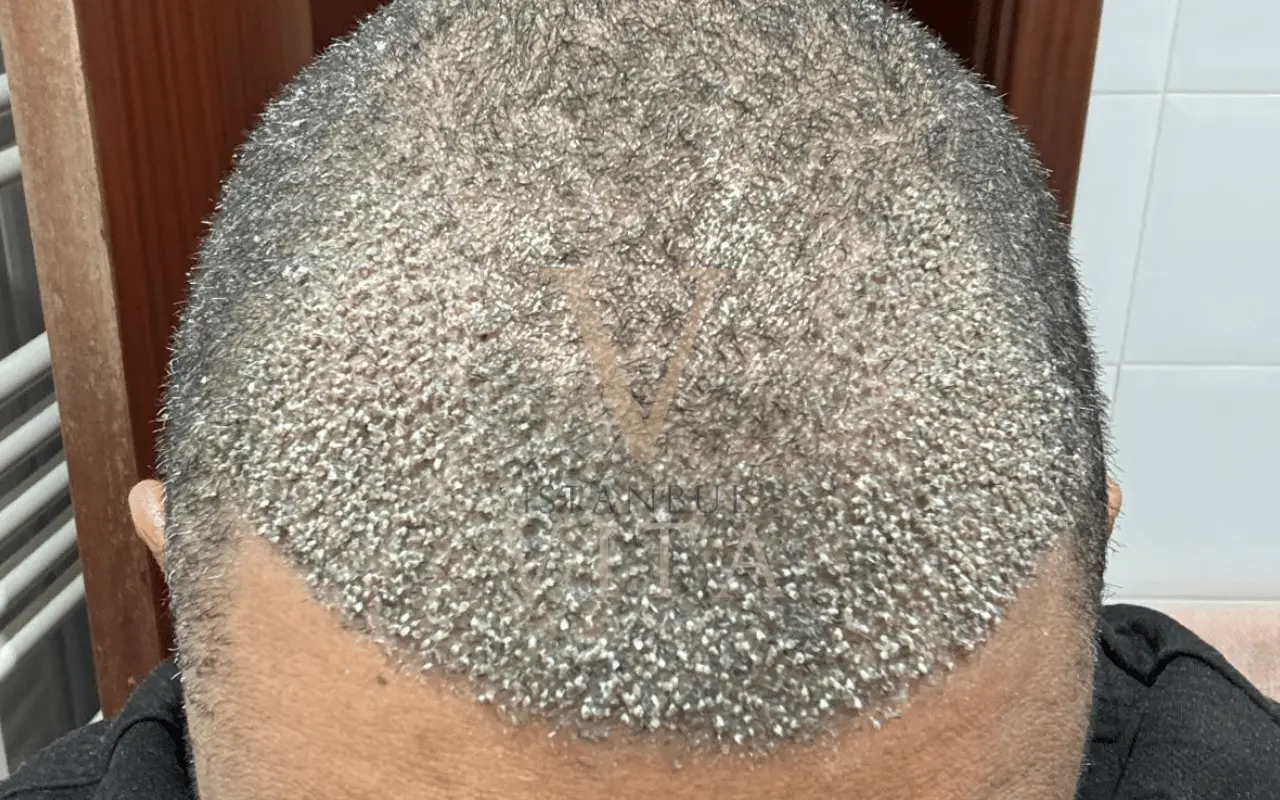
People often assume these are the same thing. They're not. Washing is about softening buildup with a mild cleanser and low water pressure, nothing more aggressive than that. Scab removal is a separate event that shouldn't be forced; it happens once a crust is genuinely loose enough to come away with almost no effort.
The Difference Between Cleaning the Scalp and Removing a Crust
One clears surface debris. The other lifts material that's still partly attached to the skin. Confusing the two is where problems start. A crust that resists a soft touch and some light foam simply isn't ready yet, no matter how many days have passed since surgery.
A General Hair Transplant Scab and Washing Timeline
Take the table below as a general sketch, not something set in stone. Graft density, the technique used, and plain individual biology all play a role in how fast someone heals, so these numbers are patterns to expect, not guarantees. And whatever your clinic's aftercare sheet says about your case beats anything written here.
| Stage | What Typically Happens |
| Day 1 | Scalp is tender, sometimes swollen. Washing usually hasn't started yet. |
| Day 3 | Many clinics introduce a first gentle foam wash around this point. |
| Day 7 | Crusts are commonly thinner and softer; daily washing continues at home. |
| Day 10 | Crusts often start releasing on their own during normal washing. |
| Day 14 | Most crusts have cleared for most patients, and things feel closer to normal. |
Two patients operated on the same morning can look nothing alike by day 10. That's not unusual, and it doesn't mean either one is healing incorrectly.
Washing and Scab Removal for Afro-Textured, Curly and Coily Hair
Skin doesn't heal differently based on curl pattern. That part is worth saying plainly, because it gets misunderstood a lot. Afro-textured, curly, and coily strands go through the exact same biological repair process as straight hair. What actually differs is access, literally being able to see the scalp and reach the area you're trying to clean.
Tight coils sit close to the head and curve as they grow outward, which can bury a crust from view entirely or make it look thicker and more stubborn than it really is.
Why Dense Curls Change the Washing Approach
Curls clump. Water and foam need a bit more time to actually reach the scalp underneath them, and rushing that step, pressing through the curls to speed things along, increases the odds of catching a crust that isn't ready to move yet. Washing in smaller sections, rather than the whole scalp in one pass, tends to work noticeably better here.
How to Clean Without Pulling, Scratching or Twisting Grafts
Fingertips and foam. That's the early-stage approach, full stop. No firm rubbing, no scrubbing motion, and definitely no finger-combing through the curls, since a strand can still be firmly rooted to its graft even when the crust surrounding it looks ready to lift off. Twisting or detangling should wait.
Later on, once grafts have had real time to anchor, some patients move to a more deliberate fingertip technique for loosening stubborn crusts. That step only makes sense once a clinic has actually reviewed the healing and given the go-ahead. It isn't something to decide alone based on how things look in the mirror.
What Happens If Scabs Are Removed Too Early or Left Too Long?
Neither is great. Forcing off a crust too soon risks disturbing a graft before it's properly settled. On the other end, letting heavy buildup sit for an extended stretch makes it harder to keep the recipient area genuinely clean, which isn't ideal either.
| Approach | Possible Concern |
| Too Early | May disturb a graft before it has fully anchored. |
| Too Late | Prolonged buildup can make proper scalp cleaning more difficult. |
| Balanced Approach | Gentle daily washing lets crusts release on their own timing. |
A shed strand with a bit of crust attached during a normal wash is common enough, and on its own it usually doesn't mean a graft has been lost. Whether it actually has isn't always obvious from appearance alone, though, which the FAQ section below gets into.
Have Questions? Let's Chat on WhatsApp!
Get instant answers 24/7. Receive your doctor-led hair analysis within 1 day, plus pricing and booking support.
Start WhatsApp ChatPost-Procedure Care and Support at Istanbul Vita
Healing doesn't always go exactly to plan, and that's fine, it's what our aftercare team is there for. At Istanbul Vita, you're not left guessing on your own. Curly and coily hair isn't treated as a special case here; it's simply part of the daily work, and donor analysis, hairline planning and texture-specific care are handled by doctors who've done this many times before. If anything about your scalp looks or feels different than expected, reach out. Send a photo if that's easier, and someone who actually knows your case will take a look.
Frequently Asked Questions
Can removing scabs damage transplanted grafts?
Yes, when it's forced before the crust naturally loosens, because it may still be attached to the follicle beneath it. Waiting for it to release during gentle washing sidesteps that risk almost entirely.
What if a graft comes out with a scab?
Rare once grafts have had proper time to anchor. Usually what's come away is surface material attached to a shed strand, not the follicle itself, though when in doubt, ask the clinic rather than assume the worst.
What if scabs are still there after 10 or 14 days?
Some people just take longer, and that alone isn't cause for alarm. Keep washing gently as instructed, and bring it up at your next follow-up if the buildup still feels significant.
When can I wash my hair normally after a hair transplant?
Once crusts have cleared and the scalp no longer feels sensitive, most patients ease back into their normal routine. Timing varies by case, so this is one to confirm with your own clinic.
Can I rub or massage my scalp to remove scabs?
Not in the early weeks. Foam and light fingertip contact only. A more deliberate massage technique for loosening crusts sometimes comes later, but only once a clinic has confirmed the healing stage supports it.
Is scab removal different for Afro-textured hair?
Not biologically. The healing process is identical. What changes is visibility and access, since dense curls can hide crusts and make a section-by-section washing approach more practical.
How can I tell a scab from a lost graft?
Honestly, not always with certainty just by looking. A shed strand attached to a crust is common and doesn't automatically mean a follicular unit is gone, but fresh bleeding, visible tissue, real pain, or plain uncertainty are all good reasons to check with your clinic rather than guess.
 conversation


